Unearthing Ancient Wisdom: Amanda Edmiston’s "The Time Traveller’s Herbal" Invites a Journey Through Botanical History
FOR IMMEDIATE RELEASE
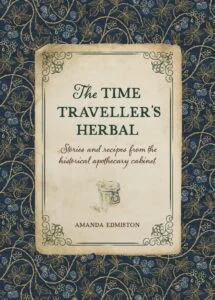
[CITY, STATE] – [DATE] – In an era increasingly seeking connection to nature and forgotten traditions, herbal storyteller Amanda Edmiston, through her venture Botanica Fabula, offers a profound journey into the past with her latest work, The Time Traveller’s Herbal: Stories and Recipes from the Historical Apothecary Cabinet. This new publication, now available in all good bookshops and online, challenges contemporary perceptions of herbalism, repositioning its practitioners from historical "cunning women" to pioneering figures of early science and custodians of invaluable traditional knowledge.
Edmiston’s unique approach blends meticulously researched historical fact with evocative storytelling, inviting readers to embark on an immersive exploration of the plants that have shaped human history, culture, and health. The book promises not merely a collection of remedies but a sensory expedition through time, revealing the intricate tapestry of folklore, scientific observation, and human experience woven around the plant kingdom.
A Return to Roots: The Main Facts of Edmiston’s Vision
At its heart, The Time Traveller’s Herbal is a passionate argument for the enduring relevance of ethnobotanical wisdom. Amanda Edmiston, known for her captivating narrative style, positions herbalists of old as more than mere healers; they were astute observers, experimental scientists, and vital repositories of their communities’ understanding of the natural world. Far from the simplistic labels of "witch" or "wise woman," these individuals were early pioneers, meticulously documenting plant properties and developing remedies that, in many cases, laid the groundwork for modern pharmacology.
The book distinguishes itself by offering readers a direct, almost visceral, experience of historical landscapes and their botanical inhabitants. Edmiston’s narrative style is designed to transport the reader, much like a time traveller, to specific moments in history, allowing them to "discover the stories, folklore and herbal remedies that vitally weave their way through the fabric of our world." This immersive technique is exemplified by an early chapter that plunges the reader into a 200 AD Scottish floodplain meadow, a rich ecological and historical site near Edmiston’s home.
Central to this initial journey is the exploration of Meadowsweet (Filipendula ulmaria), a plant whose creamy blossoms and distinctive scent hold deep historical and mythological significance. Edmiston masterfully connects the plant’s traditional medicinal uses – particularly its pain-relieving and fever-reducing properties, precursors to modern aspirin – with ancient Celtic myths, most notably the tale of the Morrigan, the enigmatic phantom queen, and the legendary warrior Cu Chulainn. This intertwining of botany, history, and folklore forms the bedrock of Edmiston’s storytelling, culminating in practical recipes for a soothing Meadowsweet bath and a restorative cordial, designed to bring ancient remedies into contemporary practice.
A Chronological Weave: Tracing the Narrative Journey
The narrative arc of The Time Traveller’s Herbal, as introduced in its opening chapters, is an invitation to shed modern preconceptions and embrace a deeper, more intuitive connection with the natural world. Amanda Edmiston, as our herbal storyteller, begins by establishing the profound legacy of historical herbalists, challenging the often-misleading labels applied to them throughout the ages. She sets the stage for a journey that transcends mere factual recounting, aiming for an experiential understanding of botanical history.
The journey commences not at a fixed point, but within a "time spiral," a concept that underscores the fluid and interconnected nature of history. Edmiston, through her evocative prose, guides the reader back to a specific moment: 200 AD, a period ripe with ancient beliefs and an intimate relationship between humans and their environment. Her methodology is deeply personal, rooted in her own meditative walks through wild landscapes, particularly a specific floodplain meadow in Scotland where two rivers converge behind a historic castle. This ecologically significant site serves as a recurring muse, its flora and geographical features acting as anchors for historical reflection.
As the narrative unfolds, Edmiston meticulously reconstructs the ancient landscape. Familiar modern architectural constructs vanish, replaced by the subtle shifts in tree lines—larch giving way to ancient oak, and blackthorn thickets stretching untamed by human intervention. Yet, the immutable elements of nature, the curve of the rivers and the contours of the hills, provide a reassuring sense of continuity, a geographical certainty that grounds the temporal leap. The presence of a bustling Pictish village on the opposite bank of the confluence further cements the historical setting, illustrating a vibrant human presence interacting with this ancient ecosystem.
It is within this vividly painted landscape that Meadowsweet makes its entrance. The "scent of salicylates," a "faintly medicinal allure, partially sweet notes, partially antiseptic," acts as a sensory beacon, drawing the reader closer to the creamy clouds of flowers blurring the riverbank. This sensory immersion culminates in a moment of imaginative encounter, a "phantom" figure that quickly dissipates, prompting Edmiston to reflect on the power of suggestion and the plant’s own historical associations.
The act of preparing a simple Meadowsweet infusion from a flask of hot water serves as a bridge between direct experience and ancient lore. As Edmiston sips, a story whispers to her, revealing the plant’s deep connection to the Morrigan, the shapeshifting phantom queen of Celtic mythology. The detailed retelling of the Morrigan’s encounter with the warrior Cu Chulainn – her transformations into an eel, a wolf, and a white heifer, and his unwitting healing of her injuries through blessings – is a masterful narrative stroke. This myth not only imbues Meadowsweet with a mystical quality but also illustrates the historical reverence for its healing properties, culminating in Cu Chulainn carrying the plant on his belt, relying on its soothing power for his wounds and fiery temper.
The narrative gracefully transitions from myth to practical application, inviting readers to consider how these ancient insights can be woven into their modern lives. By linking the Gaelic name for Meadowsweet, crios Chu-chulainn (Cu Chulainn’s belt), to its historical use as "bride-wort," Edmiston underscores the plant’s multifaceted cultural significance. The provided recipes for a soothing bath and a "cordial for a phantom queen" are not just instructions; they are tangible invitations to engage with this rich botanical heritage, bridging the gap between historical narrative and contemporary wellness practices. The journey, while momentarily concluding, leaves the reader with a palpable sense of the "twist in time," a visceral awareness of the ebb and flow of years, and a desire to continue this unique herbal storytelling adventure.
Supporting Data: Weaving History, Mythology, and Science
Amanda Edmiston’s work stands on a robust foundation of interconnected disciplines, meticulously bringing together historical ethnobotany, Celtic mythology, and the nascent science of traditional herbalism.
The Unsung Scientists: Herbalists Through the Ages
For centuries, the figures now collectively referred to as herbalists were the primary healthcare providers in their communities. Edmiston rightly re-evaluates their historical standing, moving beyond the pejorative "witch" or the romanticized "wise woman" to acknowledge their crucial role as empirical scientists. These individuals possessed an intimate, generational understanding of local flora, observing plant growth patterns, seasonal changes, and the effects of various preparations on the human body. Their knowledge, often passed down orally and through apprenticeship, constituted a vast, informal pharmacopoeia. The gradual marginalization of these practitioners, particularly during periods of intense social and religious upheaval, represents a significant loss of traditional ecological knowledge, a void Edmiston seeks to bridge. The very act of discerning which plant parts to use, when to harvest, and how to prepare them for specific ailments required a systematic, almost scientific, approach long before formal scientific methodologies were established.
Scotland’s Ancient Landscape: A Tapestry of Time
The setting of Edmiston’s initial time-slip, a wild floodplain meadow in Scotland, is far more than a picturesque backdrop. Floodplain meadows are dynamic ecosystems, historically vital for agriculture, foraging, and as meeting places. Their unique hydrology supports a diverse array of plant species, many with medicinal properties. The presence of a castle signifies a strategic location, often chosen for defensive purposes, further hinting at the long human history intertwined with the land. Transporting the reader to 200 AD in this specific location is significant; this was a period in Scotland marked by the ebb and flow of Roman influence, with native Pictish communities maintaining distinct cultural and spiritual practices. The bustling Pictish village imagined on the opposite bank highlights a vibrant, pre-Christian society deeply connected to its natural surroundings, where knowledge of plants would have been integral to daily life, ritual, and healing.
Meadowsweet: A Botanical Powerhouse and Mythic Muse
Meadowsweet (Filipendula ulmaria), or Queen of the Meadow, is a cornerstone of Edmiston’s narrative, and for good reason. Botanically, it is a beautiful plant, common in damp meadows and along riverbanks, characterized by its creamy-white flowers and sweet, almond-like scent. Its historical use is extensive and well-documented. Long before synthetic aspirin, infusions of Meadowsweet were used for pain relief, fever reduction, and anti-inflammatory purposes due to the presence of compounds like salicylates. Indeed, the genus name Filipendula itself hints at its medicinal properties, with some etymologies linking it to "thread-hanging" roots used in remedies.
Beyond its medicinal applications, Meadowsweet has a rich folklore. It was a strewing herb, used to sweeten the air in homes and churches. Its association with weddings earned it the name "bride-wort," and its delicate beauty made it popular in floral arrangements and confetti. Edmiston’s linking of Meadowsweet to the Morrigan, a powerful and complex figure in Celtic mythology, elevates the plant beyond mere utility.
The Morrigan and Cu Chulainn: Celtic Echoes in the Meadow
The Morrigan is not a simple "phantom queen" but a multifaceted goddess often associated with war, fate, death, and sovereignty. She is a shapeshifter, capable of transforming into various animals, particularly crows, wolves, and eels, as depicted in the Cu Chulainn myth. Her presence at battlefields, influencing outcomes and claiming fallen warriors, underscores her formidable power. The story recounted by Edmiston, wherein the Morrigan offers her love to Cu Chulainn and, upon rejection, repeatedly attempts to thwart and injure him, only to be unwittingly healed by his blessings, is a classic example of Celtic mythological narrative. It highlights themes of pride, consequence, and the often-ambiguous nature of divine intervention.
Cu Chulainn, the legendary Ulster warrior, is a hero of immense strength and martial prowess, but also one prone to ríastrad (battle frenzy) and, as Edmiston hints, not always admirable in his personal conduct. His encounter with the Morrigan is a pivotal moment in his saga, demonstrating the perils of disrespecting powerful deities. The inclusion of other folkloric figures like the Bean nighe (washerwoman, a harbinger of death) and the Caointeach (keening woman, another death omen) further enriches the Celtic mythological context, painting a vivid picture of a world where the veil between the mundane and the supernatural was thin.
Amanda Edmiston’s Method: Storytelling as a Vehicle for Knowledge
Edmiston’s "Botanica Fabula" approach is a testament to the power of narrative in conveying complex information. By intertwining personal observation, historical research, and mythological tales, she makes the subject matter accessible and deeply engaging. Her technique encourages readers to move beyond passive consumption of information and to actively imagine, feel, and connect with the stories and plants. This method is particularly effective in demonstrating how traditional knowledge was not merely a collection of facts but a living, breathing tradition passed down through stories, rituals, and direct experience. The recipes provided are not simply instructions but invitations to participate in this lineage, to re-enact ancient practices and experience their benefits firsthand.
Official Responses: The Voice of the Herbal Storyteller
Amanda Edmiston herself articulates the core philosophy behind The Time Traveller’s Herbal. "Many of my stories, the recipes and tastes that accompany them, originate in the places I walk," Edmiston explains, underscoring the deeply personal and experiential nature of her work. "I stop, take a moment, sit and look around me, I start to notice the plants and the changes afforded by time, both seasonal change and historical." This observational discipline, combined with a profound respect for the historical and mythological layers of a landscape, is what allows her to create such rich and authentic narratives.
Her intent is clear: to demystify the past and empower the present. "The herbalist has had many names throughout the ages – cunning woman, wise woman, witch? All hiding the truth of what they are: early pioneers of science, and fountains of traditional knowledge," she states. This re-framing is central to her mission, aiming to restore the dignity and scientific acumen of these historical figures. Edmiston invites her audience to "step into the spiral of history and discover the stories, folklore and herbal remedies that vitally weave their way through the fabric of our world," emphasizing the interconnectedness of human history with the botanical realm. Her book is not just a collection of information, but a call to re-engage with our natural heritage and recognize the profound wisdom embedded within it.
Implications: Reclaiming Heritage, Cultivating Connection
The publication of The Time Traveller’s Herbal carries several significant implications for contemporary readers and the broader cultural landscape.
The Revival of Lost Knowledge and Traditional Ecological Wisdom
In an age grappling with ecological crisis and a disconnection from natural systems, Edmiston’s work serves as a powerful reminder of the wealth of traditional ecological knowledge (TEK) that has been marginalized or lost. By meticulously documenting historical uses and folklore, the book contributes to the vital process of reclaiming and revitalizing this wisdom, offering sustainable and holistic approaches to well-being that are rooted in deep respect for the natural world.
Fostering a Holistic Understanding of Health and History
The Time Traveller’s Herbal encourages a holistic perspective, demonstrating how physical health, mental well-being, cultural identity, and historical understanding are deeply intertwined with the plants around us. It challenges the reductionist view of medicine, suggesting that remedies are not just chemical compounds but are imbued with layers of meaning, story, and collective human experience.
Inspiring Personal Connection and Environmental Stewardship
By immersing readers in historical landscapes and connecting them with the stories of individual plants, Edmiston inspires a greater appreciation for the local environment. Her methodology encourages readers to look at their own surroundings with fresh eyes, fostering a sense of curiosity and personal connection to nature. This renewed engagement can, in turn, cultivate a stronger sense of environmental stewardship and a desire to protect these vital botanical resources.
Educational and Cultural Enrichment
The book offers a unique educational tool, making history, botany, and folklore accessible and engaging. It provides a cultural bridge, allowing readers to understand the beliefs, practices, and daily lives of people from different eras through the lens of their relationship with plants. This enriches our understanding of human ingenuity and resilience across millennia.
Empowering Self-Sufficiency and Mindful Living
The inclusion of practical recipes for infusions, baths, and cordials empowers readers to engage directly with herbal traditions. While always accompanied by necessary caveats regarding safety and medical consultation, these practical applications offer a pathway to greater self-sufficiency in personal care and promote a more mindful approach to health and wellness, encouraging a thoughtful engagement with natural remedies.
The Time Traveller’s Herbal is more than a book; it is an invitation to rediscover a profound legacy, to walk through history with purpose, and to re-establish a meaningful connection with the vibrant, living world that surrounds us. It is a testament to the enduring power of plants to heal, inspire, and tell stories across the vast expanse of time.
Important Disclaimer:
FolkloreThursday and this article do not offer medical advice. Information regarding folklore practices and remedies is provided for entertainment and historical context only. Readers are strongly advised to consult a qualified medical professional before attempting any herbal remedies or practices described herein, especially if pregnant, nursing, or suffering from any medical condition. Individual reactions to herbs can vary, and proper identification of plants is crucial to avoid adverse effects.