Stomp Stomp Chomp: Unleashing Unadulterated Joy in the World of Tabletop Gaming
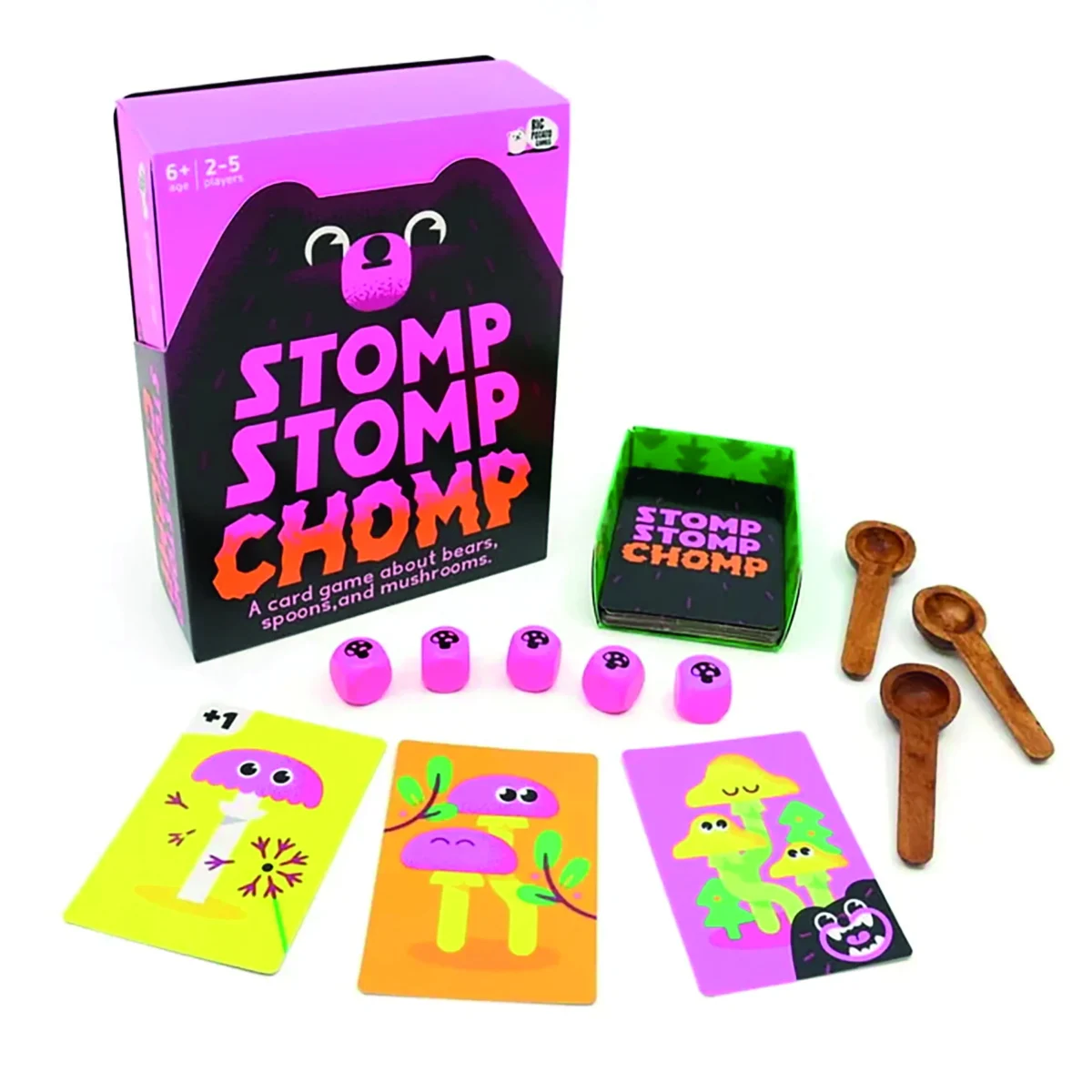
In an era dominated by sprawling, intricate board games that demand hours of strategic contemplation, there remains a vital and beloved niche for experiences designed purely for spontaneous fun and shared laughter. Not every game aspires to the epic scope of a Twilight Imperium, nor should it. Sometimes, the most memorable moments arise from simplicity, speed, and a healthy dose of chaos. This is precisely where Stomp Stomp Chomp, the vibrant new offering from Big Potato Games and designed by the acclaimed Phil Walker-Harding, finds its stride, delivering a high-energy, family-friendly escapade that guarantees smiles and boisterous excitement.
At its core, Stomp Stomp Chomp is a testament to the power of intuitive design, crafting an experience where everyone feels involved, from the youngest participant to the most seasoned gamer. It’s a game built to break the ice, ignite competition, and forge hilarious memories, proving that a truly great game doesn’t need a rulebook thicker than a novel to captivate its audience.
Unpacking the Mayhem: How Stomp Stomp Chomp Plays
The premise of Stomp Stomp Chomp is disarmingly simple, yet it skillfully weaves together elements of chance, quick reflexes, and communal interaction to create its signature chaotic charm. Players embark on a whimsical mushroom hunt, but what begins as a tranquil foraging expedition quickly escalates into a madcap dash for fungal glory.
The Mushroom Hunt Begins
The game kicks off with players taking turns to flip cards from a central stack, revealing a bounty of colorful mushrooms. These discovered fungi are placed in the center of the table, forming a tempting pile that will soon become the object of frantic competition. The primary goal is straightforward: collect the most mushrooms by the end of the game.
The Ritual of "Stomp Stomp Chomp"
Before each card flip, the game introduces a delightful and inclusive ritual that immediately sets a playful tone. All players at the table join in a fun, rhythmic chant of "Stomp stomp chomp," simultaneously raising their thumbs. This collective action isn’t just for show; it’s a simple, egalitarian mechanism to determine who gets to flip the next card. The player whose thumb is chosen (often based on a pre-agreed method like "last to raise" or "most unique position") earns the privilege of revealing what lies beneath the next card. This interactive element ensures continuous engagement, preventing any player from feeling disengaged during others’ turns.
Beware the Bear!
While the mushroom cards are the coveted prize, lurking among them are images of mischievous bears, usually nestled in the corner of certain cards. These seemingly innocuous illustrations hold the key to the game’s pivotal turning point. The tension mounts with each flipped card, as players hold their breath, hoping to avoid revealing a bear. However, the true chaos ignites when the third bear card appears on the table.
The Great Spoon Race and the Dice Dilemma
Upon the revelation of the third bear, the player who flipped it immediately undergoes a dramatic transformation: they become the "bear" themselves! This instant role reversal is the game’s ingenious central mechanic. The newly designated bear must then embark on a lightning-fast quest. A designated spoon, placed approximately "a 10-second run away" (a delightfully vague but perfectly functional measure of distance), becomes their target. The bear’s mission: to race to grab this spoon, symbolizing their urgent desire to "gorge" on the revealed mushrooms.
Crucially, this physical interlude isn’t just for the bear. While one player is off on their speedy sprint, the remaining players are far from idle. They seize this precious window of opportunity to roll dice. Each die that lands on a mushroom symbol allows a player to steal a mushroom card from the central pile. This simultaneous, frantic action keeps everyone actively involved, creating a dynamic tension between the racing bear and the mushroom-snatching hunters. The brief, intense period of the bear’s absence is a microcosm of the game’s high-octane fun, brimming with anticipation and swift decision-making.
Victory in the Forest
Once the bear returns with their spoon (or the 10-second window closes, depending on local house rules), the round concludes. The game continues through several rounds, with different players potentially becoming the bear, until the card deck is exhausted or a pre-determined number of rounds is played. The ultimate victor is the player who has amassed the largest collection of mushrooms, proving themselves the most adept (or luckiest) hunter in the forest.
The Genesis of Joy: Design & Development
Stomp Stomp Chomp doesn’t appear out of thin air; it’s the product of a deliberate design philosophy and a publisher dedicated to accessible fun. Its creation is a fascinating example of how thoughtful game design can transform simple mechanics into an unforgettable experience.
Phil Walker-Harding’s Midas Touch
The game’s designer, Phil Walker-Harding, is no stranger to crafting engaging and highly replayable games that appeal to a broad audience. Known for elegant designs that often blend simple rules with surprising depth, Walker-Harding has an impressive portfolio that includes beloved titles like Sushi Go!, Bärenpark, and Silver & Gold. His work consistently demonstrates a keen understanding of how to create satisfying gameplay loops without overwhelming players with complexity.

For Walker-Harding, the appeal of games like Stomp Stomp Chomp lies in their immediate accessibility and the sheer joy they generate. "My aim is always to design games that bring people together, fostering laughter and shared experiences rather than intense strategic isolation," a philosophy evident in Stomp Stomp Chomp. "The challenge is to distil that essence of fun into mechanics that are simple enough for a child to grasp in minutes, yet engaging enough to keep adults coming back for ‘just one more go.’ The physical elements and the sudden role changes in Stomp Stomp Chomp were designed specifically to amplify that spontaneous, uninhibited fun." This game perfectly aligns with his reputation for creating games that are easy to learn, quick to play, and immensely satisfying.
Big Potato Games: Masters of Merriment
The publisher, Big Potato Games, has carved out a distinct niche in the tabletop industry as purveyors of quirky, engaging party games. Their catalog is filled with titles that prioritize interaction, humor, and straightforward rules, making them perfect for social gatherings and family nights. Games like Blockbuster, Colourbrain, and Herd Mentality exemplify their commitment to designing experiences that are instantly gratifying and inclusive.
Bringing Stomp Stomp Chomp into their fold was a natural fit for Big Potato Games. "We are constantly searching for games that embody our core mission: to make people laugh, connect, and have genuinely good times together," stated a spokesperson for Big Potato Games. "When we saw the prototype for Stomp Stomp Chomp, we knew it had that undeniable spark. The blend of chanting, frantic racing, and collective dice rolling creates an energy that is uniquely ‘Big Potato.’ It’s a game that transcends age barriers, proving that pure, unadulterated fun is truly universal." Their expertise in marketing and producing such titles ensures that Stomp Stomp Chomp arrives on shelves as a polished and appealing product, ready to deliver on its promise of merriment.
Crafting the Chaos: The Development Journey
While specific details of Stomp Stomp Chomp‘s development journey are proprietary, the evolution of any successful party game typically involves extensive playtesting to fine-tune the balance of chaos and control. Designers and publishers meticulously experiment with rule variations, component design, and pacing to ensure the game consistently delivers its intended experience. For Stomp Stomp Chomp, this would have involved perfecting the timing of the "10-second run away," optimizing the number of dice for simultaneous play, and ensuring the bear mechanic felt exciting rather than frustrating. The result is a game where the chaotic elements feel intentional and contribute positively to the overall fun, rather than detracting from it.
Beyond the Laughter: Why Stomp Stomp Chomp Resonates
The immediate appeal of Stomp Stomp Chomp is its ability to generate laughter and excitement, but its success is rooted in several deeper design choices that ensure its lasting resonance with players.
A Symphony of Sensation: Physicality and Sound
One of the game’s most distinguishing features is its integration of physical and auditory elements. The collective chant of "Stomp stomp chomp" isn’t just a rule; it’s a sensory experience that builds anticipation and fosters group cohesion. The act of raising thumbs adds a simple yet engaging physical dimension to decision-making. Most notably, the "bear" transformation introduces a burst of physical activity with the race for the spoon. In an increasingly digital world, games that encourage players to move, shout, and interact physically provide a refreshing and memorable contrast. The tactile nature of the wooden spoons and the rolling of chunky dice further enhance this multi-sensory engagement, making the game feel dynamic and alive.
Bridging the Generational Gap
Stomp Stomp Chomp excels as a true family game, effortlessly bridging the gap between children and adults. For younger players (aged 6+), the game offers simple, easily digestible rules, the thrill of physical movement, and the sheer silliness of becoming a "bear." It encourages quick reactions, basic counting skills (for mushrooms), and social interaction without complex strategy. Adults, on the other hand, appreciate the game’s low cognitive load, allowing them to relax and enjoy the pure, unadulterated fun. It serves as an excellent social lubricant, sparking laughter and shared moments without requiring intense focus or commitment. This makes it an ideal choice for family game nights, where everyone can participate on an equal footing and genuinely enjoy each other’s company.
The Power of Quick Rounds and High Replayability
With an estimated playtime of just 10 minutes per game, Stomp Stomp Chomp is the epitome of a "quick-fire" experience. This brevity is a significant asset, especially in family or party settings where attention spans can vary. Short rounds mean that players are rarely out of the action for long, and the desire for "just one more go" becomes almost irresistible. The dynamic nature of the bear transformation, with different players taking on the role, ensures that each playthrough feels fresh and unpredictable. This high replayability factor provides exceptional value, making it a game that will be pulled off the shelf again and again.
Components That Count
The game’s components, though few, are thoughtfully designed. The 20 cards feature clear, engaging artwork that is immediately appealing. The inclusion of a card dispenser streamlines gameplay, making it easy to draw new cards. The three sturdy wooden spoons add a satisfying tactile element and are central to the game’s most exciting physical mechanic. Five dice ensure that multiple players can roll simultaneously during the bear’s absence, maintaining the frantic pace. These quality components enhance the overall play experience, demonstrating Big Potato Games’ commitment to delivering a well-rounded product.
The Market Landscape: A Niche Carved
Stomp Stomp Chomp enters a vibrant and growing segment of the tabletop gaming market, one that values speed, accessibility, and high-energy interaction above all else.
The Rise of Casual Gaming
The tabletop industry has witnessed a significant surge in the popularity of casual and party games. As board gaming moves further into the mainstream, there’s a growing demand for titles that are easy to introduce to newcomers, don’t require hours of setup, and can be played in a relaxed social setting. These games often serve as excellent "gateway" experiences, introducing individuals to the joy of tabletop gaming without the intimidation factor of heavier strategic titles. Stomp Stomp Chomp perfectly embodies this trend, offering an immediate and satisfying experience that caters to a broad demographic.

Companions in Chaos: Similar Games
Stomp Stomp Chomp finds itself in good company alongside other beloved fast-paced, real-time party games. The original review aptly compares it to Chicken Vs Hotdog, another title known for its frantic energy and ability to entertain both children and adults. Other games that share a similar spirit include:
- Taco Cat Goat Cheese Pizza: A lightning-fast card game reliant on quick reflexes and pattern recognition.
- Happy Salmon: A highly physical game where players shout out actions and perform them with others.
- Splat!: A dice-rolling game that involves rapid counting and grabbing.
These games, much like Stomp Stomp Chomp, succeed by stripping away complex rules and focusing on direct, often noisy, interaction. They thrive on the spontaneous energy of the players, turning simple mechanics into uproarious fun. Stomp Stomp Chomp distinguishes itself within this category through its unique combination of chanting, card-flipping, dice-rolling, and a physical race, offering a fresh take on the high-energy party game formula.
The Lasting Footprint: Implications & Future
The success of Stomp Stomp Chomp carries several implications for the tabletop industry, its creators, and the broader culture of play.
Reinforcing a Genre
By delivering a product that is both critically acclaimed and enthusiastically received by players, Stomp Stomp Chomp further solidifies the viability and importance of the party and family game genre. It demonstrates that there is a consistent and healthy demand for games that prioritize accessibility, fun, and social connection over intricate strategy. This success encourages publishers and designers to continue innovating within this space, ensuring a diverse and welcoming entry point for new players into the world of tabletop gaming.
Beyond the Tabletop: Social Benefits
In an age where digital screens often dominate leisure time, games like Stomp Stomp Chomp offer a valuable alternative. They actively promote face-to-face interaction, communication, and shared laughter, fostering stronger bonds between family members and friends. The physical activity involved, however brief, also provides a welcome break from sedentary entertainment. The game’s ability to consistently generate genuine smiles and boisterous laughter underscores its role as a powerful tool for social well-being and collective joy.
A Future of Fun?
The positive reception of Stomp Stomp Chomp bodes well for its longevity and potential future developments. It could inspire spin-offs, themed expansions, or simply become a perennial favorite in game collections worldwide. For Big Potato Games, it reinforces their reputation as a leader in accessible party games, potentially leading to further collaborations with talented designers like Phil Walker-Harding. For Walker-Harding, it further cements his legacy as a designer capable of creating compelling experiences across a spectrum of complexity, from light family fare to more strategic offerings. The game’s design, focused on core fun, ensures it will remain relevant and enjoyable for years to come.
Conclusion
Stomp Stomp Chomp arrives as a refreshing burst of energy in the tabletop landscape, a game that doesn’t pretend to be more than it is, but delivers exactly what it promises: unadulterated, chaotic fun. Its ingenious blend of simple card-flipping, a memorable chant, sudden bear transformations, and a frantic spoon race creates an experience that is fast, hilarious, and genuinely engaging for all ages. It’s a testament to the fact that some of the best gaming experiences are found not in intricate mechanics or sprawling narratives, but in the shared laughter and spontaneous joy that erupts around a table. For anyone seeking a dose of high-energy entertainment that bridges generations and guarantees smiles, Stomp Stomp Chomp is an unequivocal recommendation.
Game Information
Category: Family & Party
Designer: Phil Walker-Harding
Publisher: Big Potato Games
Time to Play: 10m
Players: 2-5 Players
Age: 6+
RRP: £15
What’s in the Box?
- 20 Cards
- Card dispenser
- 3 Wooden spoons
- 5 Dice
- Rulebook
Review by Lance Freeman