The Perennial Line: Re-evaluating the Legacy of ‘Adam the Gardener’ and the Poetics of the Instructional Strip
Introduction: A Horticultural Mystery in Ink and Newsprint
In the landscape of mid-20th-century British media, few figures were as quietly ubiquitous as "Adam," the eponymous lead of the long-running comic strip Adam the Gardener. Originally published in the Sunday Express during the 1940s and 50s, the strip served a dual purpose: it was a pragmatic guide for a nation of budding horticulturalists and a masterclass in the economy of the comic form.
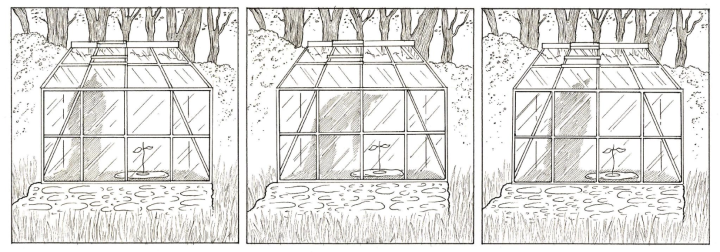
A recent retrospective and creative response by contemporary cartoonist Malcy Duff, centered on a 1953 collected edition of the work, has reignited interest in the creators behind the shovel—Cyril Cowell and Morley Adams. Duff’s reflections, accompanied by his original strip The Uncertain Man, transition the conversation from mere nostalgia to a deeper semiotic analysis of the comic panel as a "cultivated space." This report examines the historical context, artistic merits, and the enduring philosophical implications of a strip that treated the backyard garden as a vast, exploratory sandbox.
Chronology: From Puzzle Pioneers to Sunday Staples
The evolution of Adam the Gardener is inextricably linked to the broader history of British newspaper supplements and the post-war emphasis on domestic self-sufficiency.
The Early 20th Century: Laying the Groundwork
The creative partnership was formed by two men whose backgrounds in education and entertainment perfectly suited the instructional comic format.

- Morley Adams (1876–1954): A prolific writer and entrepreneur, Adams is credited with popularizing the crossword puzzle in Great Britain. His firm, Morley Adams Ltd., became a powerhouse for newspaper puzzles and quizzes. His 1915 work, Toy Making at Home: How to Make a Hundred Toys from Odds and Ends, established his philosophy of creative recycling and "do-it-yourself" instruction.
- Cyril Cowell (1888–1967): An illustrator with a keen eye for the natural world, Cowell was best known for his "Twitchy Whiskers" series. His ability to anthropomorphize nature while maintaining anatomical accuracy made him the ideal choice to render the intricate details of soil, root systems, and pest control.
1940s–1953: The Peak of Popularity
The strip gained immense traction during and immediately after World War II, a period when the "Dig for Victory" campaign had turned gardening into a national duty. By 1953, the year of the edition reviewed by Duff, the strip had moved beyond wartime necessity into a form of meditative domesticity. The collected volumes became essential reference books for a generation of suburbanites.
2026: The Contemporary Re-Evaluation
Malcy Duff’s recent critique treats the 1953 edition not as a manual, but as "expertly paced poetry." Duff’s perspective as a modern cartoonist allows for a deconstruction of the strip’s temporal and spatial mechanics, leading to the creation of The Uncertain Man, a modern artistic dialogue with Cowell and Adams’ original vision.
Supporting Data: The Mechanics of the Instructional Panel
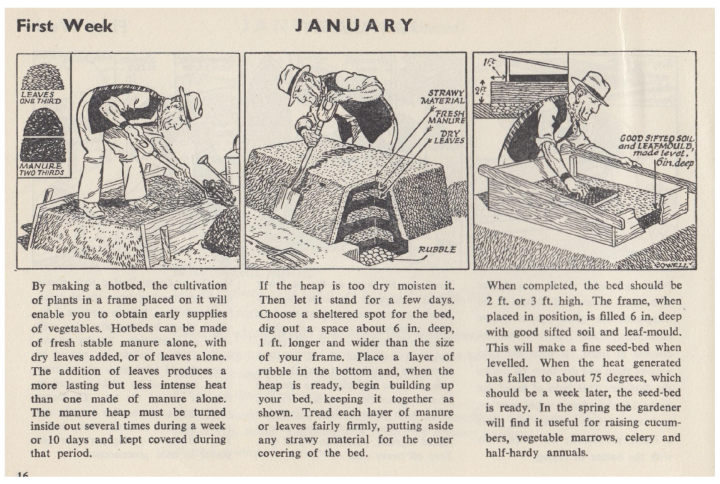
To understand why Adam the Gardener remains a subject of study, one must look at the technical sophistication of its layout. Unlike narrative strips of the era (such as The Perishers or Andy Capp), Adam utilized a "deconstructed" panel style.
The "Sandbox" Effect
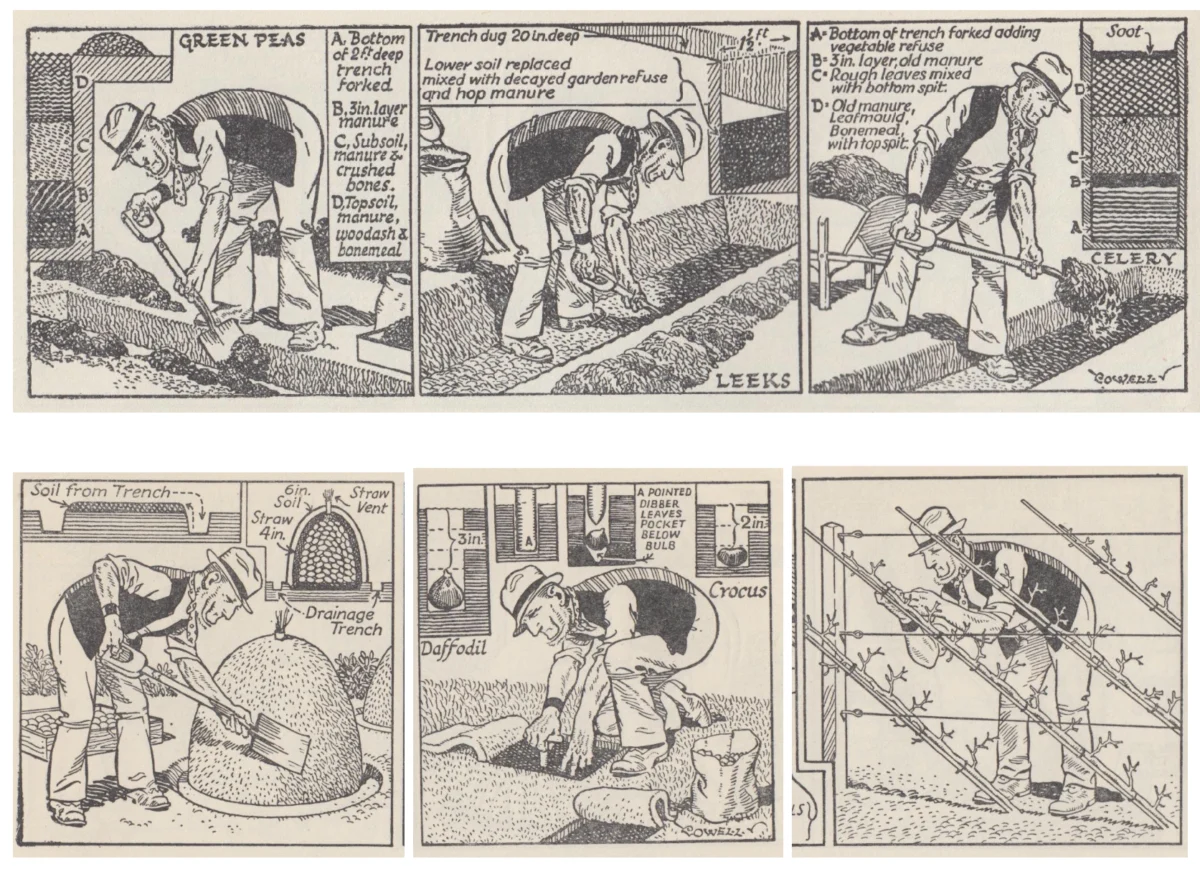
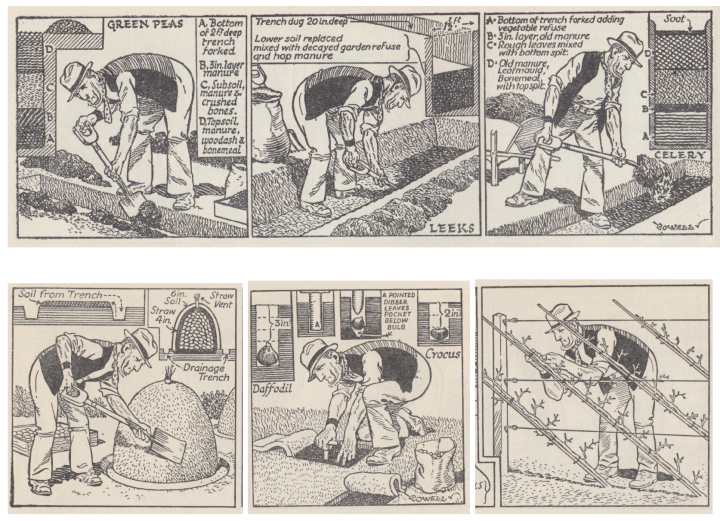
Duff notes that the panels often resembled "deconstructed crossword puzzles." Within a single frame, Cowell would often include:
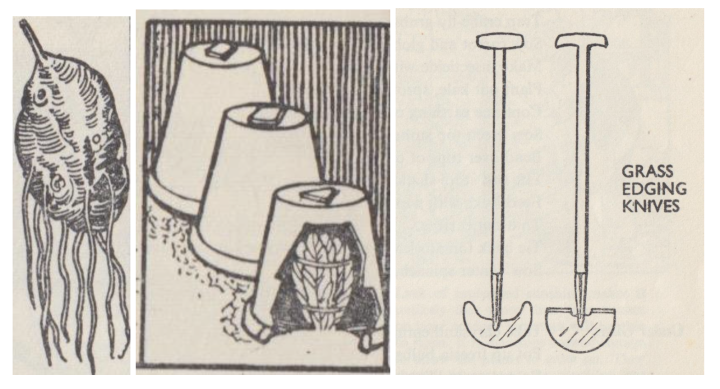
- Cutaways: Detailed views of soil layers or root structures.
- Instructional Insets: Small boxes demonstrating specific knots, tool grips, or pruning angles.
- Temporal Overlays: Depictions of a plant’s past (seed), present (growth), and future (harvest) within the same visual field.
This multi-dimensional approach prefigures modern avant-garde comics, specifically the work of Richard McGuire (Here), by offering a non-linear viewing of time and space.
The Stoic Protagonist
The character of Adam himself is a data point of intrigue. Across decades of strips, Adam is rarely, if ever, seen with an open mouth. He is a silent, stoic laborer. Duff’s analysis suggests that Adam is "holding his breath," a figure of pure action who exists only in the service of the garden. This passivity allows the reader to project themselves onto the character, transforming the strip from a story about a gardener into a guide for the reader.
Critical Reception and Artistic Response
The modern reception of Adam the Gardener has shifted from the practical to the existential. Malcy Duff’s commentary provides a primary source for how contemporary artists view this archival material.
The Physicality of the Reader’s Experience
Duff highlights the "greasy potatoes" and "vinegar-sobbed skies" of the Friday night fish-and-chip shop, where old newspapers—and thus Adam’s garden—would eventually end up. This highlights the ephemeral nature of the medium; the strip was a living document, often read in the shed, placed under rocks to keep from blowing away, and stained by the very earth it described.
"The Uncertain Man": A Creative Synthesis
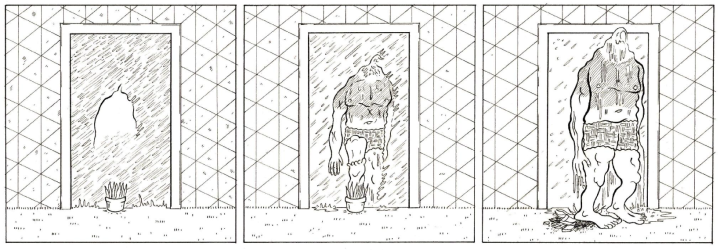
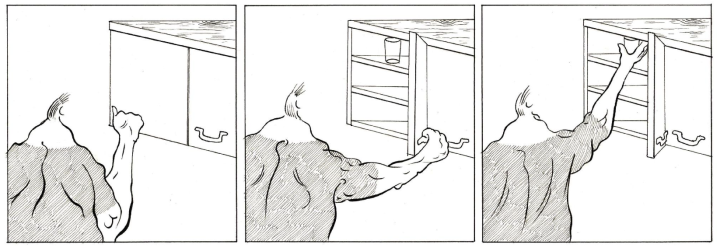
In his response strip, Duff explores the "gutters"—the empty spaces between panels. He asks questions that the original creators left unanswered:
- What does Adam dream about?
- Has Adam ever been on a train?
- If Adam took his hat off, would half his head come off too?
By posing these questions, Duff highlights the "mystery" of the instructional form. The very clarity of the gardening advice creates a vacuum around the character’s humanity, making Adam a "Swamp Thing of the allotment"—a creature born of the line and the compost.
Implications: The Comic Panel as a "Cultivated Space"
The enduring legacy of Adam the Gardener suggests several implications for the study of comics and instructional media.
1. The Intersection of Labor and Art
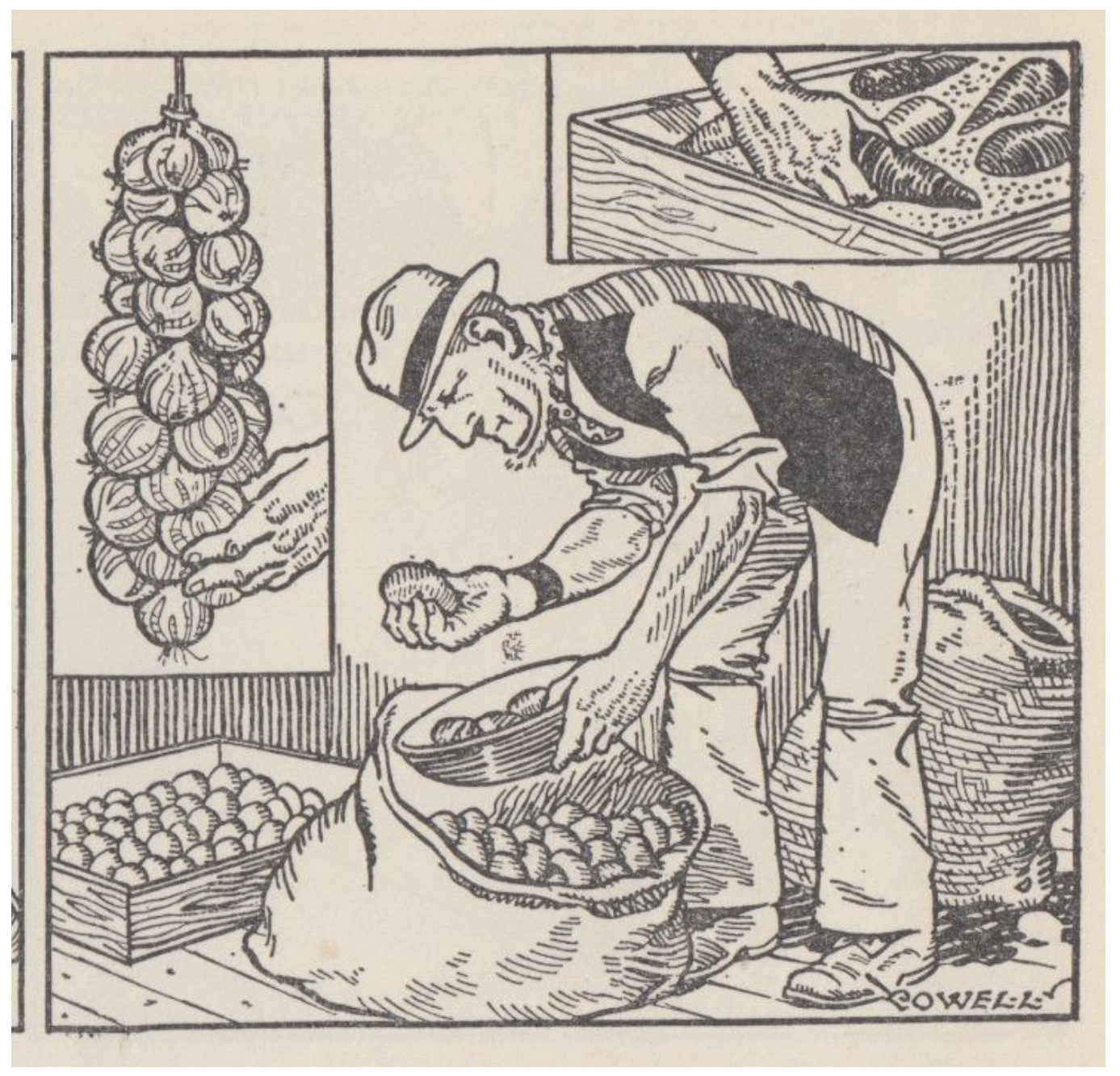
The strip posits that the "green fingers" of the gardener are synonymous with the "inky fingers" of the cartoonist. Both involve a solitary, obsessive devotion to a "plot"—be it a piece of land or a sequence of panels. The "hunch" of the drawing board mirrors the "hunch" over the potato tower. This suggests that the act of creation, whether biological or artistic, requires a similar religious kneeling before the medium.
2. Environmental Controlled Narratives
Adam’s garden is a controlled environment. He decides what lives and what is "annihilated" (pests, weeds). This reflects a 1950s worldview of man’s dominance over nature. However, through a modern lens, this control feels "anxiety-inducing." When read in a collection, the "daily" tasks are compressed into minutes, making the garden’s growth feel unnaturally fast—a "buried alive pop drinker’s coke bottle cap" shooting from the ground.
3. The Infinite Allotment
Finally, the strip suggests that the "panel" is the garden of the page. It is a trimmed, organized moment plotted into infinite empty space. The implication for modern creators is the realization that a comic doesn’t just tell a story; it manages an environment.
Conclusion: The Eternal Break
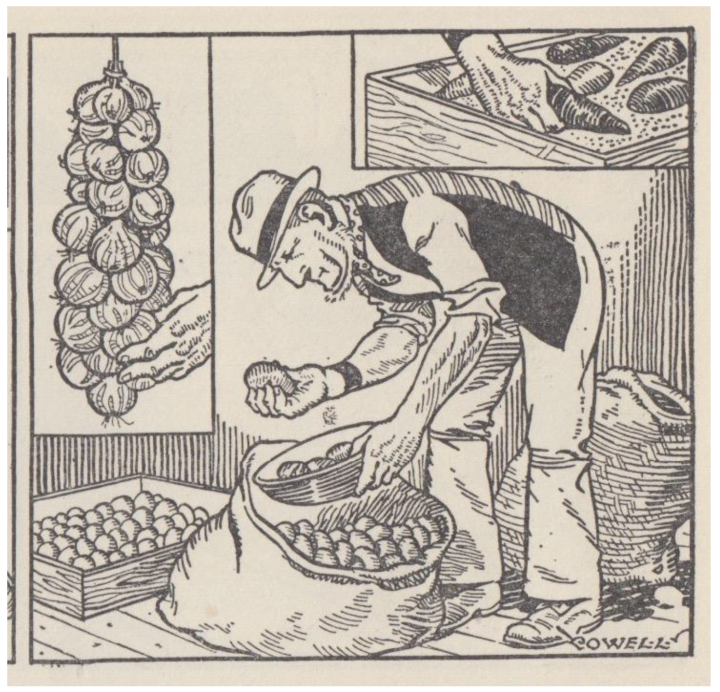
In his final reflection, Malcy Duff identifies a rare moment of stillness on page 125 of the 1953 edition: a wordless panel where Adam stares at a single potato. In a world of constant labor and instructional noise, this moment of reflection stands as a testament to the strip’s hidden depth.
Adam the Gardener was more than a column in the Sunday Express; it was a weekly invitation to build a world. As modern readers look back at the work of Cowell and Adams, they find not just a guide for growing vegetables, but a blueprint for how to inhabit a space with care, attention, and a touch of silent mystery. Whether the reader is a gardener or a "non-gardener without a garden," the strip remains a vital reminder that every mark on a page—and every seed in the ground—is an act of hope.