Tactical Geometry: How ‘Beast Breaker’ Reinvents the Turn-Based RPG Through Physics-Based Combat
The indie gaming landscape is often the breeding ground for genre-defying experimentation, but few titles manage to successfully marry disparate mechanics as cohesively as Beast Breaker. Developed by Vodeo Games—the studio founded by Asher Vollmer, the visionary behind the mobile phenomenon Threes!—Beast Breaker stands as a masterclass in "tactical pinball." By combining the precision of physics-based trajectory games with the depth of a turn-based role-playing game (RPG), the title offers a refreshing departure from the conventional menu-driven combat that has defined the genre for decades.
In Beast Breaker, players step into the tiny paws of Skipper, a courageous mouse tasked with defending a vibrant world from the "Mosaics"—monstrous, mechanical-organic entities that threaten the safety of the woodland inhabitants. What follows is a journey that is as intellectually demanding as it is visually charming, challenging players to think three steps ahead while calculating the literal angles of their success.
Main Facts: A New Paradigm of Precision Combat
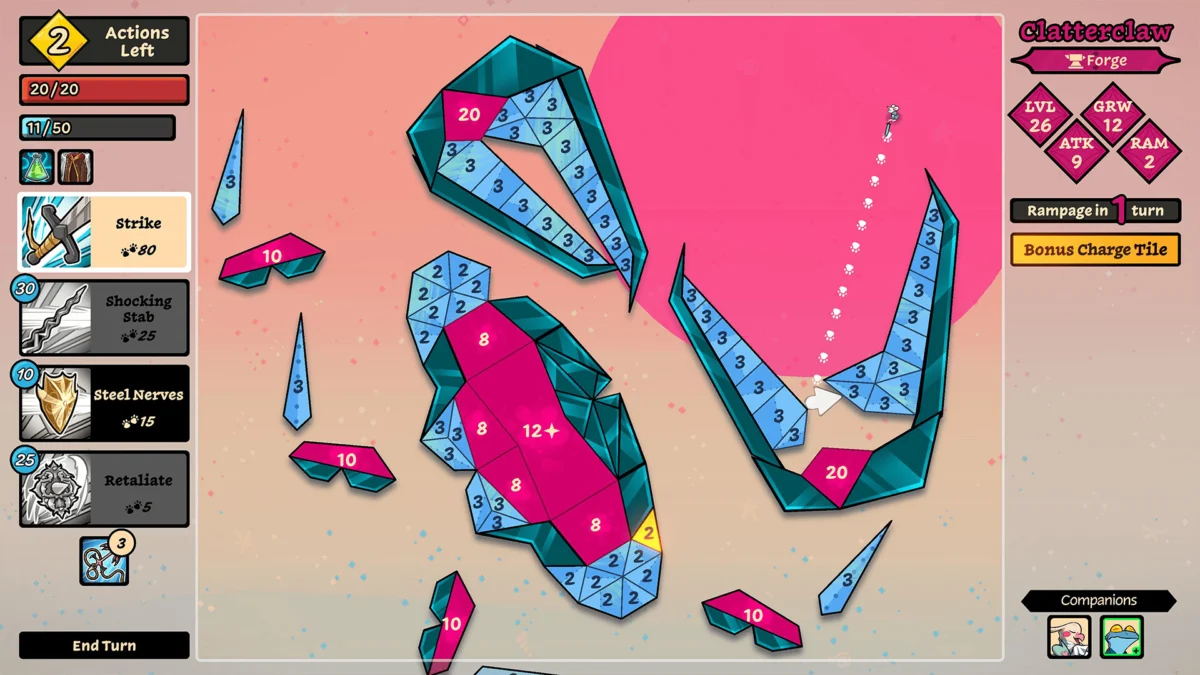
At its core, Beast Breaker is a game about momentum and geometry. Unlike traditional RPGs where a character stands stationary and selects "Attack" from a list, Skipper’s actions are determined by the player’s ability to "sling" him across the battlefield. The game utilizes a physics engine reminiscent of Peggle or classic pinball, but applies these rules to a high-stakes encounter with giant monsters.
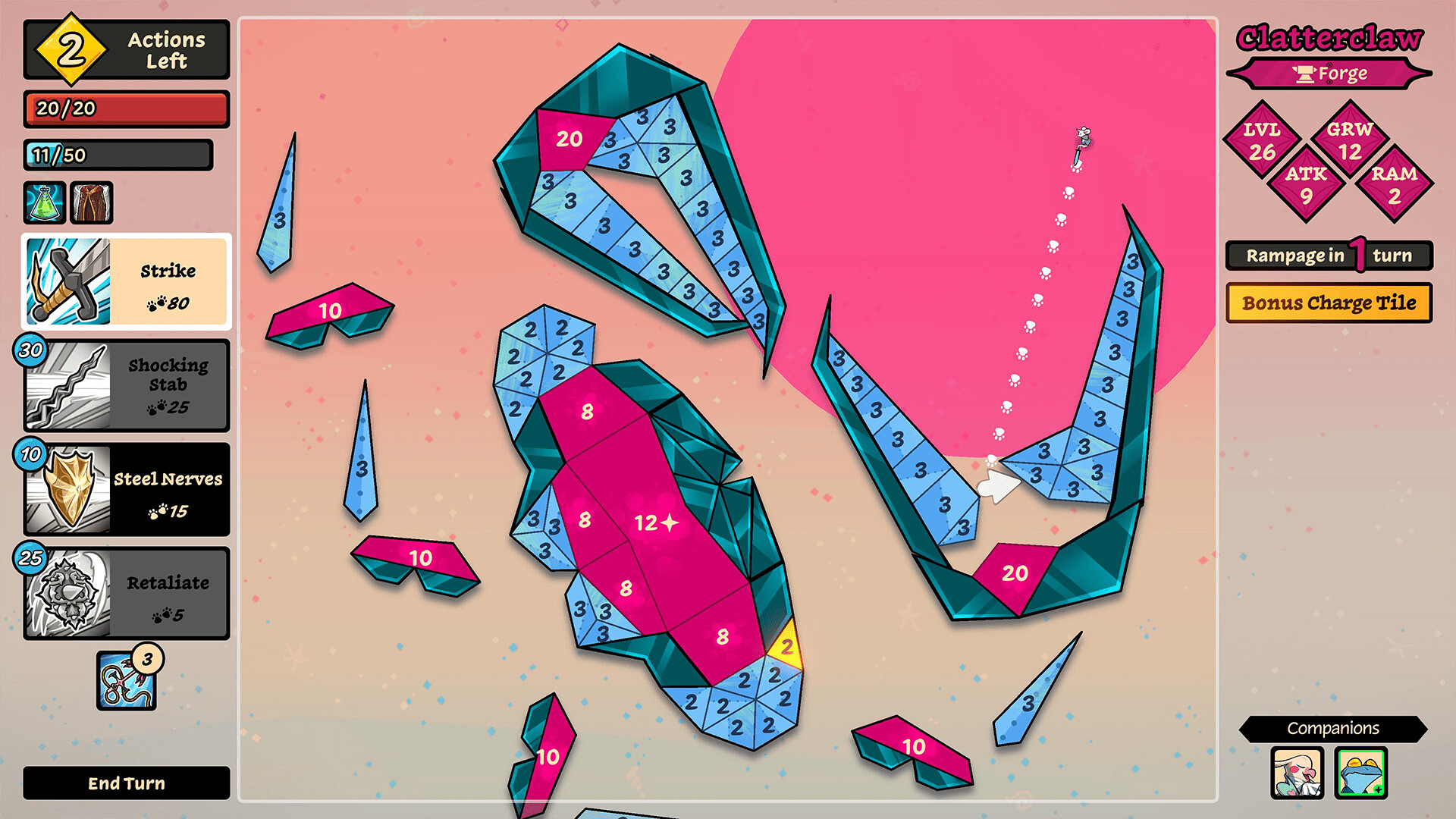
The primary objective in any given encounter is to dismantle the "Mosaic" beasts. These enemies are not monolithic sprites; rather, they are composed of hundreds of individual hexagonal tiles, each representing a different part of the creature’s anatomy. Some tiles are purely defensive shields, others are "black parts" that act as indestructible obstacles, and the most vital are the "core parts"—highlighted in red—which represent the monster’s actual health pool.
To win, players must navigate Skipper through the internal structure of the beast, bouncing off shields to reach the vulnerable cores. The tactical depth arises from the "Turn Limit" system: players are granted three moves per turn. Once these moves are exhausted, the Mosaic beast reacts, shifting its position, transforming its shape, or launching devastating area-of-effect attacks. This creates a rhythmic tension between aggressive offense and the necessity of ending a turn in a "safe zone" to avoid incoming damage.
Chronology: From Humble Origins to Village Savior
The narrative structure of Beast Breaker follows a traditional hero’s journey but scales it down to a "micros-perspective" that enhances the sense of scale when facing monsters.
The Awakening of Skipper
The story begins in the modest surroundings of Skipper’s grandmother’s house. The initial pacing is deliberate, establishing a "cozy" atmosphere that contrasts sharply with the looming threat of the Mosaics. Skipper is not a legendary warrior by birth; he is a small creature thrust into extraordinary circumstances. The early stages of the game serve as a tutorial not just for the mechanics, but for the world-building, as players meet a cast of charming NPCs who provide context for the mechanical plague infecting their land.
The Rise of the Mosaics
As the story progresses, the stakes escalate from localized skirmishes to a full-scale defense of the village. The chronology of the game is marked by the appearance of increasingly complex beasts. Early encounters feature static monsters that serve as "learning puzzles," but later stages introduce Mosaics that can regenerate parts, move across the screen, or hide their weak points behind layers of armored plating.
The Evolution of the Arsenal
A significant portion of the game’s timeline is dedicated to the "Beast Breaking" loop: defeating a monster, harvesting its unique components, and returning to the forge. This progression system ensures that the player’s power growth is tied directly to their victories. By the mid-game, the simple "fling and bounce" mechanic evolves into a complex tactical dance as players unlock new weapon classes that fundamentally alter the game’s physics.
Supporting Data: The Mechanics of Destruction
To understand why Beast Breaker resonates with both casual players and hardcore strategists, one must look at the data-driven design of its combat system.
The Mosaic Anatomy
The monsters in Beast Breaker are masterpieces of procedural-feeling design. Each beast is a "breakaway" puzzle.
- Shield Parts: These act as the primary buffer. Hitting a shield consumes one "hit" but does no damage to the boss’s health bar.
- Core Parts (Red): These are the win conditions. Each red tile has a numerical value (e.g., a "3"). This indicates how many times Skipper must strike that specific tile before it breaks and subtracts health from the beast.
- Power Cores: Some beasts contain specialized nodes that, when destroyed, disable specific enemy attacks or movement abilities.
Weapon Archetypes and Playstyles
The game features four distinct weapon classes, each providing a different mathematical approach to the battlefield:
- Sword and Shield: The most balanced option, allowing for steady bounces and a defensive stance that mitigates damage if the player ends their turn in an enemy’s strike zone.
- The Hammer: A high-impact weapon that focuses on "breaking" through clusters of shields. It moves slower but can clear paths for subsequent turns.
- The Bow: This weapon introduces a "ranged" physics mechanic, allowing Skipper to fire projectiles that bounce independently, effectively doubling the number of "hits" per turn if aimed correctly.
- The Spear: Designed for "piercing" maneuvers, the spear allows Skipper to dash through multiple tiles in a straight line, ignoring the standard bounce physics to reach deep-seated core parts.
Turn Economy
The "Rule of Three" is the most critical data point for players to manage. Because the enemy transforms after every three moves, players must calculate the "exit trajectory" of their third move. Ending a turn inside a red "attack zone" results in health loss, making Beast Breaker as much a game of positioning as it is of destruction.
Official Responses and Development Philosophy
Vodeo Games, the developers behind Beast Breaker, have been vocal about their desire to create "snackable" games that do not compromise on depth. In various industry interviews and developer logs, the team has highlighted that the inspiration for Beast Breaker came from a desire to make the "moment-to-moment" action of an RPG as engaging as the long-term strategy.
Asher Vollmer, the studio’s lead, has noted that the goal was to eliminate "filler" in the RPG experience. In a traditional RPG, a player might spend hours grinding low-level enemies with the same repetitive inputs. In Beast Breaker, every single "fling" requires a calculation of angle, velocity, and potential impact.
Furthermore, the team emphasized the importance of the "non-action" gamer. The turn-based nature of the physics means that while the game looks like a fast-paced pinball machine, the player has unlimited time to aim. This "stop-and-think" approach was a deliberate design choice to make the game accessible to those who enjoy strategy but lack the twitch reflexes required for traditional action titles.
The studio’s commitment to "sustainable development" also reflected in the game’s scope. Rather than a bloated 100-hour odyssey, Beast Breaker is a focused, polished experience that respects the player’s time—a philosophy that has earned it high praise among indie critics and at events like Dreamhack.
Implications: The Future of the "Physics-RPG"
The success and unique positioning of Beast Breaker have several implications for the future of indie game development and the RPG genre at large.
1. The Death of the "Attack" Command
Beast Breaker proves that turn-based combat does not have to be synonymous with static menus. By replacing a button press with a physical interaction (the sling), Vodeo Games has opened the door for other developers to explore "tactical physicality." We may see a rise in "Physics-RPGs" that use gravity, momentum, and collision as the primary language of combat.
2. Accessibility in Strategy
By blending the "casual" familiarity of pinball with the "hardcore" complexity of a mosaic-based boss fight, the game bridges a significant demographic gap. It serves as an entry point for casual players into the world of complex RPG builds and resource management, while offering enough "min-maxing" potential to satisfy veterans of the genre.
3. Narrative Through Interaction
The game demonstrates how narrative can be told through mechanical scale. The "small mouse vs. giant monster" trope is a common one, but in Beast Breaker, you feel the size difference because you are physically navigating the monster’s body. This creates a level of ludonarrative harmony that is often missing in traditional RPGs where a mouse and a dragon might occupy the same amount of screen space during a battle.
Conclusion
Beast Breaker is more than just a quirky indie title; it is a sophisticated reimagining of how we interact with digital enemies. By turning the "boss fight" into a living, breathing puzzle and the player character into a projectile of tactical intent, Vodeo Games has delivered one of the most inventive RPGs of the decade.
Whether you are drawn in by the charming story of Skipper and his grandmother or the rigorous challenge of dismantling a multi-layered mechanical beast, Beast Breaker offers a compelling argument for the continued evolution of turn-based strategy. It is a game that demands you look at the world through angles and trajectories, proving that sometimes, the best way to save the world is simply to find the right bounce.
Beast Breaker is currently available for purchase on Steam, offering a unique experience for those looking to break away from the conventions of the genre.