The Metal-Clad Revolution: Roboquest VR Arrives on Meta Quest 3 with Cross-Platform Co-op
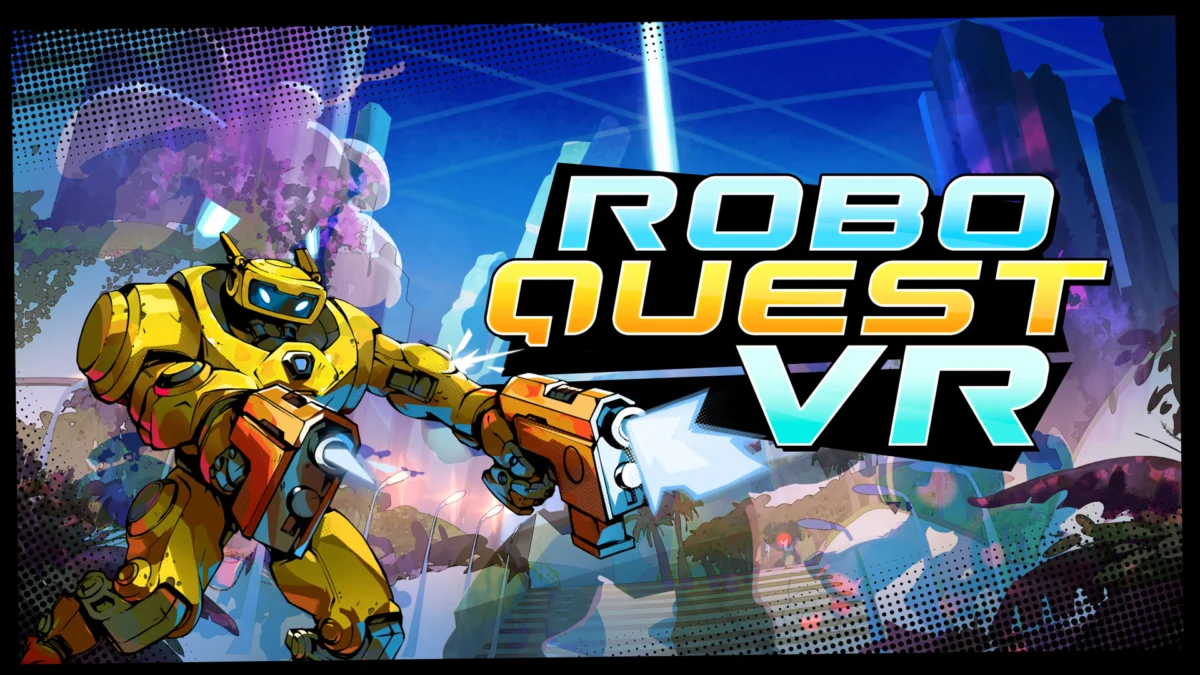
The landscape of virtual reality gaming is often defined by the tension between "built-for-VR" titles and "flat-to-VR" ports. While the former often boasts superior ergonomics, the latter frequently offers the depth and polish of high-budget PC and console productions. Bridging this gap is Flat2VR Studios, a developer born from the community’s desire to see mainstream hits reimagined for the headset. Their latest achievement, the official VR adaptation of RyseUp Studios’ hit roguelite Roboquest, has officially landed on the Meta Quest 3 and 3S, marking a pivotal moment for standalone VR enthusiasts.
The launch is not merely a platform expansion; it coincides with the rollout of a comprehensive two-player co-op mode. This update introduces full cross-play functionality, uniting the VR communities across SteamVR, PlayStation VR2 (PSVR 2), and Meta Quest. For a genre defined by high-speed kineticism and chaotic combat, the addition of collaborative play—and the hardware accessibility of the Quest—positions Roboquest VR as a heavyweight contender in the 2025 VR software lineup.
I. Main Facts: A Complete Re-imagining for Standalone Hardware
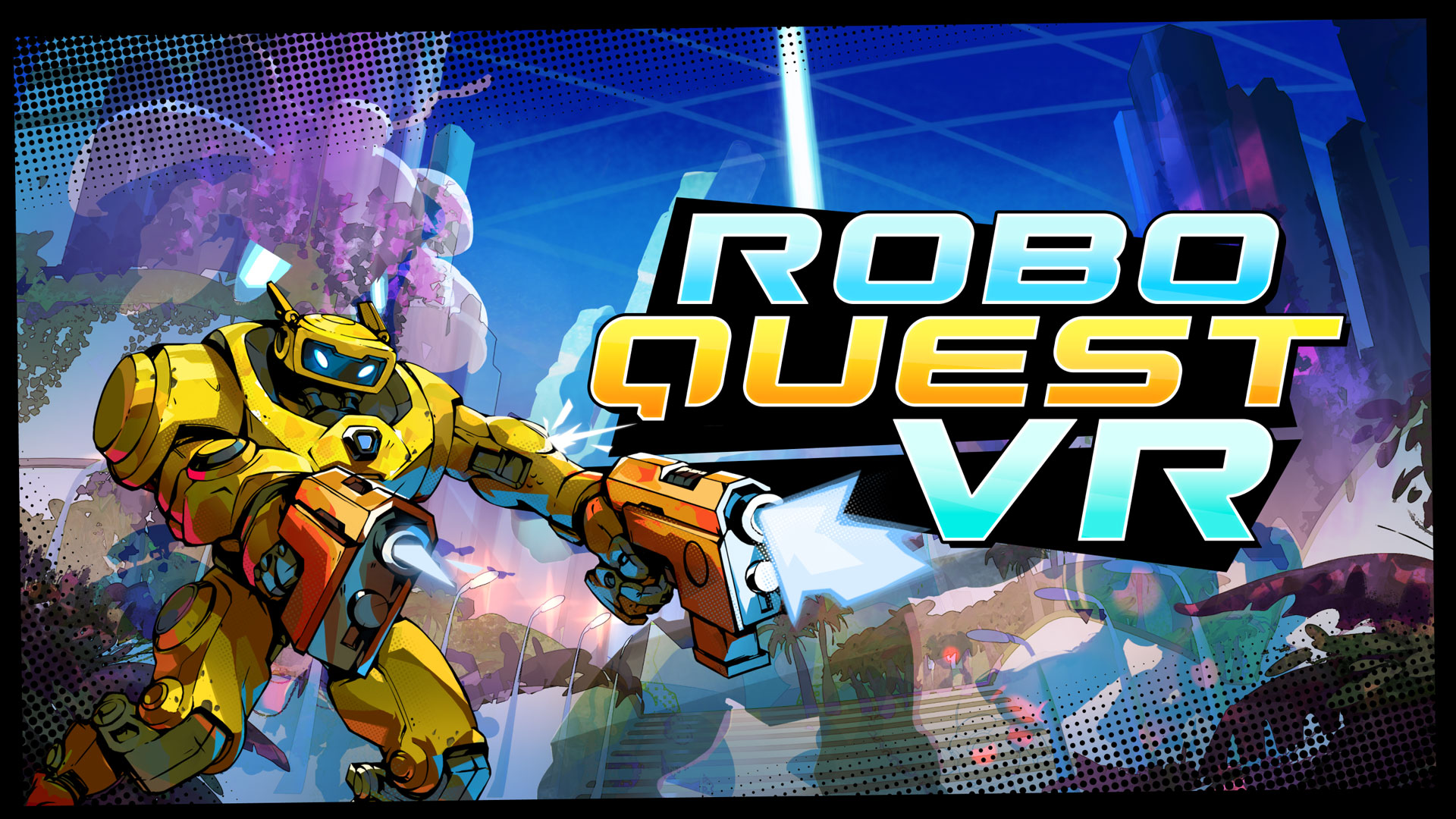
Roboquest VR is a fast-paced, first-person roguelite shooter set in a vibrant, cel-shaded post-apocalyptic world. Players take on the role of a "Guardian," a high-powered combat robot tasked with fighting through procedurally generated environments to save humanity from a mechanical menace. While the original 2023 "flat" version was lauded for its tight gunplay and rhythmic movement, the VR adaptation seeks to translate that visceral energy into a 360-degree immersive experience.
The Meta Quest 3 and 3S Debut
The arrival on Meta’s standalone ecosystem is the final piece of the puzzle for Flat2VR Studios. Given the Quest 3’s market dominance, this release provides the game with its largest potential player base. Priced at $30, the Quest version aims to maintain the high frame rates and responsiveness required for a game that emphasizes sliding, jumping, and dodging at breakneck speeds.
Cross-Platform Co-op Functionality
Perhaps the most significant technical achievement of this launch is the implementation of two-player co-op with universal cross-play. Players on a Quest 3 in their living room can seamlessly team up with friends using a Valve Index on PC or a PSVR 2 on a PlayStation 5. To facilitate this across disparate ecosystems, the developers have implemented a "Room Code" system for private matches, bypassing the limitations of platform-specific friend lists. A "Quickplay" option is also available for those looking to jump into the fray with strangers.
II. Chronology: From Community Modding to Professional Adaptation
The journey of Roboquest VR is a testament to the evolving nature of the VR industry. To understand its significance, one must look at the timeline of both the game and its developer.
2023: The Original Launch
RyseUp Studios released Roboquest on PC and consoles to critical acclaim. It was praised for its "Doom-meets-Borderlands" aesthetic and its polished roguelite loop. Almost immediately, the VR community—led by the Flat2VR modding collective—identified it as a prime candidate for virtual reality due to its focus on movement and projectile-based combat.
Late 2023 – Early 2024: The Birth of Flat2VR Studios
What began as a group of talented modders creating unofficial VR patches for games like Resident Evil and Cyberpunk 2077 transitioned into a professional entity. Flat2VR Studios was formed to work directly with original developers to create official, licensed VR adaptations. Roboquest was selected as one of their flagship projects.
Late 2024: PCVR and PSVR 2 Release
The VR version initially debuted on high-end platforms. This allowed the team to refine the "VR-first" mechanics, such as manual reloading, physical weapon handling, and a redesigned UI that exists within the game world rather than as a 2D overlay.
Early 2025: The Quest Launch and Co-op Update
The final phase of the rollout involved optimizing the game for the mobile chipset of the Quest 3 and 3S. This culminated in the current release, which simultaneously brought the long-awaited co-op feature to all existing platforms, ensuring the community was not fragmented by hardware choice.
III. Supporting Data: Technical Overhaul vs. Simple Porting
Flat2VR Studios has been vocal about the distinction between a "port" and an "adaptation." The technical data regarding Roboquest VR supports the claim that this is a ground-up rework of the user experience.
The Interaction Layer
In the original flat version, interactions like picking up health or switching weapons were handled via keyboard or controller inputs. In the VR version:
- Manual Reloading: Each of the game’s dozens of weapons features custom VR reload mechanics, requiring players to physically manipulate the guns.
- Movement Mechanics: The game’s signature "slide" and "double jump" have been re-engineered to maintain the sense of speed without inducing motion sickness—a common hurdle in high-mobility VR titles.
- Spatial Audio: The soundscape was re-rendered to provide 3D spatial cues, essential for a game where enemies can attack from any direction.
Performance Optimization on Quest
Bringing a high-fidelity, cel-shaded game to a mobile processor required significant optimization. The Quest 3 version utilizes the headset’s increased GPU clock speeds to maintain a stable 72Hz or 90Hz refresh rate, which is critical for the "pulse-pounding" nature of the combat. While some graphical flourishes (like complex particle effects) are scaled back compared to the PCVR version, the core gameplay loop remains identical.
IV. Official Responses: The Philosophy of Flat2VR
In statements surrounding the launch, representatives from both RyseUp Studios and Flat2VR Studios have emphasized the importance of maintaining the "soul" of the original game while respecting the unique requirements of the VR medium.
Scott Hayden, reporting for Road to VR, noted that Flat2VR described the project as a "complete VR adaptation." The developers have expressed that their goal is to prove that high-quality "flat" games can become "native" VR experiences if the transition is handled by experts who understand the nuances of the hardware.
RyseUp Studios has also expressed enthusiasm for the partnership, noting that the VR version brings a "new dimension" to the Guardian’s journey. By allowing Flat2VR to handle the technical heavy lifting of the VR implementation, RyseUp could ensure that the game’s balance and roguelite progression remained intact, while the VR specialists focused on the haptics and visual immersion.

V. Implications: The Future of the VR Ecosystem
The successful launch of Roboquest VR on Quest 3 carries several broader implications for the VR industry and its consumers.
1. The Viability of the "Adaptation" Model
For years, the VR market has struggled with a "chicken and egg" problem: high-quality games require high development costs, but the relatively small user base makes those costs difficult to recoup. The Roboquest VR model offers a solution. By adapting an existing, successful IP, developers can save on pre-production and asset creation, focusing their budget on making the VR interactions feel premium. This could lead to a wave of high-quality "official" VR versions of popular indie titles.
2. Strengthening the Quest 3 Library
The Quest 3 and 3S are currently in a critical growth phase. While Meta has invested heavily in first-party titles like Batman: Arkham Shadow, the platform needs a steady stream of "hardcore" gaming experiences to retain its more dedicated users. Roboquest VR fills a specific niche: a high-skill-ceiling, infinitely replayable shooter that offers a different pace than the more methodical Arizona Sunshine or The Walking Dead: Saints & Sinners.
3. The Standardization of Cross-Play
The inclusion of cross-play between Quest, PC, and PlayStation is a major win for the community. VR remains a niche market compared to traditional consoles; by allowing all VR players to congregate in the same matchmaking pools, Flat2VR is ensuring that the game’s multiplayer longevity is not tied to the success of a single piece of hardware.
4. Setting a New Standard for Movement in VR
Roboquest VR is unashamedly fast. By successfully bringing this level of mobility to the Quest without compromising the experience, the developers are setting a benchmark. It challenges the notion that VR shooters must be slow or stationary to be accessible, potentially paving the way for more "arena-style" shooters in the mobile VR space.
Conclusion: A New Chapter for the Guardian
Roboquest VR on the Meta Quest 3 is more than just another game on the storefront; it is a bridge between the worlds of traditional gaming and virtual reality. It represents the successful professionalization of a community movement and provides a blueprint for how to bring complex, fast-paced action to standalone hardware.
As players strap on their headsets to slide, shoot, and loot alongside their friends—regardless of whether those friends are on a PC or a PS5—the message is clear: the future of VR gaming lies in breaking down barriers, both in terms of hardware and the way we think about "flat" versus "VR" content. For $30, the wasteland has never looked more inviting—or more dangerous.