Fungalpunk Thriller "A Murder Most Fungal" Delves into Culinary Crime and Creative Rebirth
Neo Kinoko’s underbelly simmers with intrigue as author Adrian M. Gibson navigates the challenging landscape of a second novel, finding inspiration in the most unexpected places.
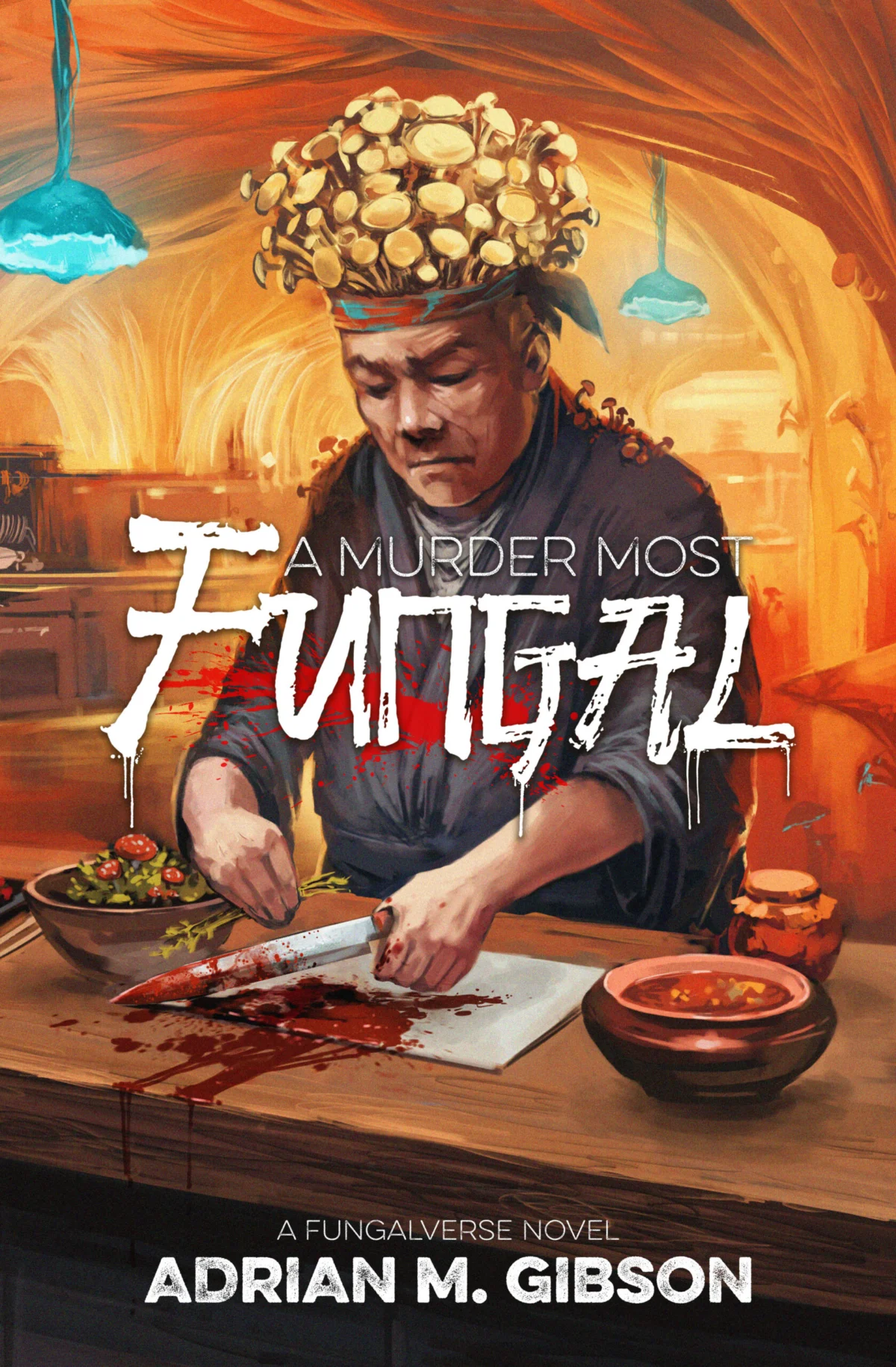
In the bustling, rain-slicked metropolis of Neo Kinoko, a city steeped in the peculiar allure of fungal culture and shadowed by foreign occupation, a new culinary thriller is set to captivate readers. "A Murder Most Fungal," the latest offering from award-winning SFF author Adrian M. Gibson, plunges readers into a high-stakes world where gastronomy meets gangsterism, and a chef’s culinary prowess becomes a weapon in a deadly game of survival. This standalone novel, set in the Fungalverse established by Gibson’s critically acclaimed debut, "Mushroom Blues," promises a potent blend of "Jiro Dreams of Sushi’s" meticulous artistry, "The Bear’s" chaotic kitchen intensity, and the pulse-pounding tension of classic crime thrillers.
The narrative unfolds in the aftermath of the devastating "Fuyu Massacre," a period of unrest that has tightened the grip of an occupying military force on the Hǎpponese capital. Amidst this oppressive atmosphere, Pocho Jiro, a once-celebrated makizushi chef, finds himself indentured as the personal chef to Duncan MacArthur, the Coprinian Military Governor. His existence takes a perilous turn when a brush with a notorious fungal gangster syndicate presents him with an impossible ultimatum: assassinate MacArthur or witness the brutal murder of his sister. The question hangs heavy: will Pocho’s culinary skills be wielded for his sister’s salvation, or will he prepare MacArthur’s final, fatal meal?
However, "A Murder Most Fungal" is more than just a gripping fictional account. It represents a significant creative milestone for Adrian M. Gibson, marking his successful navigation of the infamous "sophomore slump." In a candid exploration of his writing process, Gibson sheds light on the profound challenges of following up a successful debut, the crucial role of creative rejuvenation, and the unexpected narrative power of food and kitchens.
The Steep Climb of the Second Novel: Overcoming the Sophomore Slump
The journey from a celebrated debut to a compelling second act is often fraught with peril for authors. Gibson readily admits that his initial ambitious publishing timeline, conceived before the release of "Mushroom Blues," quickly dissolved. "Writing a second book can actually be as challenging as people say," Gibson reflects, underscoring the reality of the "sophomore slump," "sequelitis," or whatever moniker one assigns to this daunting creative hurdle.
The emotional and mental energy poured into his debut, "Mushroom Blues," left Gibson feeling depleted. Despite mental preparation and discussions with fellow authors, he was unprepared for the profound emotional impact of seeing his first book published and the subsequent successes. "I put so much of my mental and emotional energy into that book that I didn’t leave room to enjoy the achievement of debuting, or the successes that followed," he explains.
"Mushroom Blues" had achieved significant recognition, including thousands of copies sold, numerous award nominations and wins, and a second-place finish in Mark Lawrence’s tenth Self-Published Fantasy Blog-Off (SPFBO). This impressive track record, born from an experimental project that far exceeded expectations, created a formidable benchmark for future endeavors. The aftermath was a period of "starts and stops," with ideas flickering and dying under the weight of self-doubt. Questions like, "Was ‘Mushroom Blues’ a fluke? Would I be able to write a good book again? What the hell am I even doing?" plagued his creative process, making a second book feel "distant, even unattainable."
Gibson’s breakthrough came not from forcing a direct sequel, but from embracing the freedom of a standalone story. "A Murder Most Fungal" stands as testament to his ability to write, finish, edit, and publish a second novel. He realized he had become too fixated on the perceived requirements of being a debut self-published author, allowing entrepreneurial pursuits to overshadow his identity as a creator. "I took the fun away from myself by prioritizing the business side of things far more than the act of writing the stories that would fuel that business in the long term."
The Sacred Flame of Creativity: Rekindling the Passion
A significant factor contributing to Gibson’s creative slump was the relentless marketing of "Mushroom Blues." He admits to being so engrossed in ensuring the success of his debut that he fell into a "tunnel vision scenario," where "nothing felt as important as the thing that already existed." This extended period of marketing, lasting over eighteen months, left his creative spirit fractured.
The turning point arrived when his marketing efforts began to plateau, and the book’s organic momentum took hold. Simultaneously, his creative faculties began to clamor for attention. "The creative parts of my brain were screaming at me to ‘WAKE THE FUCK UP AND WRITE!’" Gibson recalls. He recognized that sustained marketing was unsustainable and that the most potent form of promotion for his work was the creation of new material. "The best marketing I could and should do was write and publish the next book."
This realization prompted a period of deep self-reflection. Gibson actively sought ways to foster a creatively sustainable career. He rediscovered joy in the writing process through drafting "A Murder Most Fungal" and contributing to projects like the folktale novelette "The Stem-Cutter’s Daughter" for "The Book of Spores" anthology. Collaborative endeavors, including a graphic novel and an audio drama, further aided his creative rejuvenation. He emphasizes that this wasn’t about appeasing a muse, but about a gradual rediscovery of his creative path. This renewed respect for his process has recalibrated his priorities, with marketing now occupying a supportive role rather than dominating his creative endeavors.
Culinary Chronicles: Food as a Worldbuilding Engine
Initially, Gibson harbored reservations about centering an entire narrative around food, particularly within the context of a chef who is also a "mushroom person." However, his exploration into the role of food within the fungal culture of his fictional world opened a profound avenue for worldbuilding. He posits that food, beyond basic sustenance, becomes a powerful lens through which to understand a culture.

"Food is a fundamental pillar of most any culture (real, fantasy or otherwise), and it can reveal so much about a people once it becomes cuisine," Gibson explains. The culinary landscape of a society can offer insights into its geography, available resources, societal structures, and the development of systems like agriculture, manufacturing, and commerce. Furthermore, it can illuminate how governmental institutions influence food distribution and control. The language, storytelling, and communication patterns that revolve around eating practices, and the generational transmission of recipes, all contribute to an "adaptive, edible history." Celebrations, festivals, and religious practices often find their focal point in shared meals and banquets.
Gibson leverages this potential in "A Murder Most Fungal," subtly weaving worldbuilding details through character and setting. The introduction of elements like "fungalfin tuna" prompts readers to ponder the broader implications for other species in this world, fostering a deeper immersion. This layered approach, where both author and reader contribute to the world’s conceptualization, imbues the narrative with a profound sense of believability.
The Kitchen Crucible: A Stage for High-Stakes Drama
Gibson’s initial hesitations about using a restaurant setting for his narrative were quickly dispelled by the inherent dramatic potential of such an environment. He likens kitchens to modern-day pirate ships, where a diverse group of individuals with unique backgrounds and skillsets are thrown together in a high-stress, high-stakes environment. The presence of potential hazards, such as fire and sharp implements, only amplifies the inherent tension.
This dynamic fosters intense camaraderie, often forged in a "trauma-bonded kind of way," but can also give rise to complex interpersonal relationships, including sexual tensions and internal conflicts among staff. Gibson drew inspiration from a variety of sources to explore this dynamic, including the comedic brilliance of Pixar’s "Ratatouille," the fiery intensity of Gordon Ramsay’s reality shows, the quiet perfectionism depicted in "Jiro Dreams of Sushi," and the anxiety-inducing family struggles and business pressures showcased in "The Bear."
"Suffice to say, my early doubts were absurd, because restaurants are a perfect scenario for high-stakes drama," Gibson concludes. The inherent messiness of a kitchen, both literal and metaphorical, provides fertile ground for compelling storytelling.
The Unsettling Allure of Fungal Body Horror
A recurring fascination for Gibson is the visceral and unsettling nature of body horror, particularly when it involves fungi. He is captivated by how these organisms can infiltrate the body, initiating changes from within that manifest as grotesque eruptions of mold and mushrooms, manipulating flesh and bone.
His fascination was significantly shaped by two seminal works: the "The Last of Us" video game and television series, which masterfully depicted fungal spores and mycelia transforming hosts into terrifying fungal zombies; and Jeff VanderMeer’s Southern Reach Trilogy, which explored the psychological and philosophical ramifications of mind control by an alien fungal entity. Both presented distinct yet equally unsettling visions of fungal transformation, cementing Gibson’s interest in how fungi can alter both the physical form and the psyche of a host.
While "Mushroom Blues" offered glimpses of fungal horror, "A Murder Most Fungal" delves into this obsession with greater intensity, particularly through its focus on food. Gibson deliberately sought to create a "truly fucked up body horror extravaganza" by intertwining the culinary and the fungal. The culmination of this exploration, he suggests, is a uniquely disturbing experience for the reader, inviting them to discover the terrifying synergy between food and fungal transformation.
Authorial Profile: Adrian M. Gibson
Adrian M. Gibson is an accomplished Canadian author, podcaster, book designer, illustrator, and tattoo artist. He is the creative force behind the SFF Addicts podcast, where he co-hosts in-depth interviews with prominent science fiction and fantasy authors and conducts writing masterclasses alongside M. J. Kuhn and Greta Kelly. Gibson also serves as the Publishing Project Manager at Grimdark Magazine, overseeing their line of fantasy and science fiction novellas. He currently resides in Quito, Ecuador, with his family.
A Murder Most Fungal is available on Amazon and through The Broken Binding.
Connect with Adrian M. Gibson:
- Website: https://adrianmgibson.com/
- Instagram: https://www.instagram.com/adrianmgibson/
- SFF Addicts Podcast: https://linktr.ee/SFFAddicts
- YouTube: https://www.youtube.com/@fanfiaddict