The Silicon Sentries: Inside the US Government’s Expanding Crackdown on Foreign Robotic Vacuums
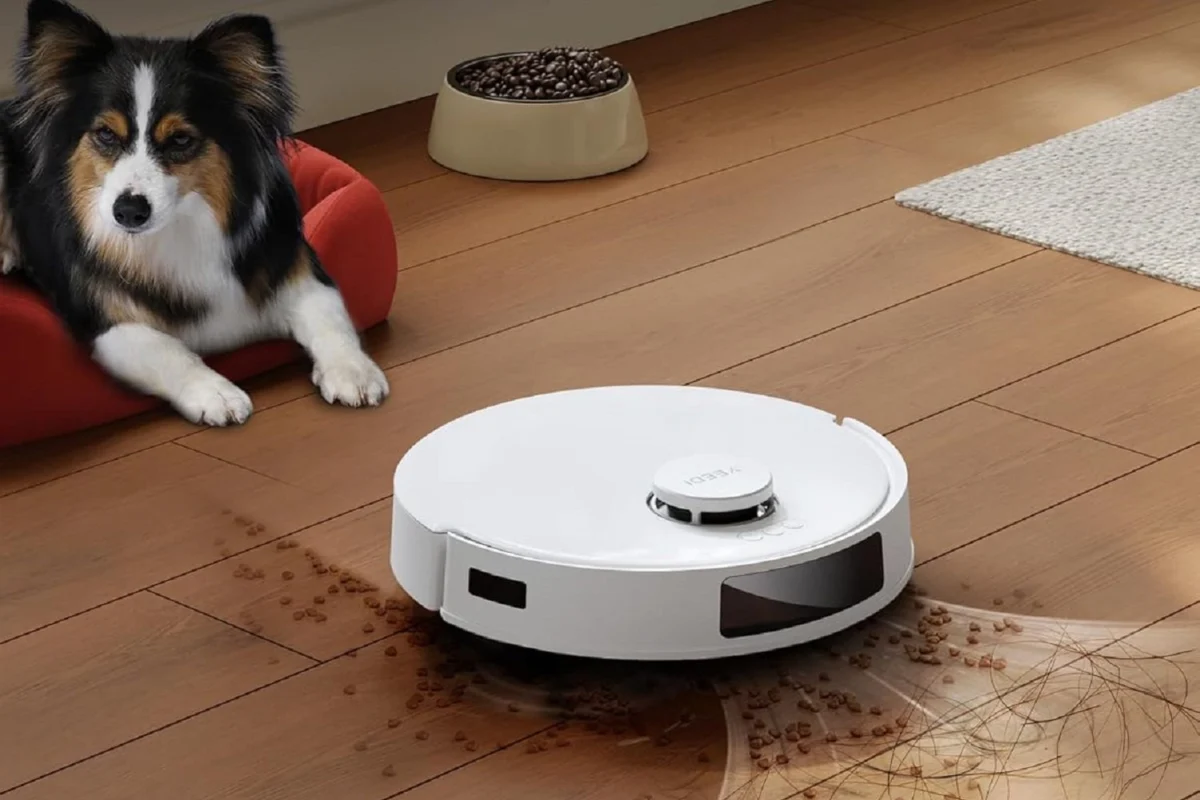
In the quiet corners of millions of American homes, a silent revolution has been unfolding for over a decade. The robot vacuum, once a novelty for early adopters, has become a staple of modern domestic life. However, these autonomous cleaners are now finding themselves at the center of a geopolitical and regulatory firestorm. The Federal Communications Commission (FCC) has recently expanded its "Covered List"—a registry of equipment deemed a threat to national security—to include foreign-made advanced robotic devices. While initial reports focused on industrial humanoids and "robot dogs," an FCC spokesperson has confirmed that the humble robot vacuum is now firmly in the crosshairs of US regulators.
This move signals a significant escalation in the US government’s efforts to decouple critical infrastructure and personal data from foreign-owned technology, particularly that which originates from "adversarial" nations, though the current ruling applies broadly to all foreign-made units. For the average consumer, this means the next Roomba or Roborock they purchase may face significantly higher hurdles to enter the market, or may never arrive at all.
Main Facts: The Scope of the New FCC Restrictions
The heart of the new regulation lies in the expansion of the FCC’s "Covered List." Historically, this list was used to ban telecommunications equipment from companies like Huawei and ZTE. More recently, it was used to ground drones produced by DJI. The latest update, however, targets "advanced robotic devices" that meet a specific set of criteria.
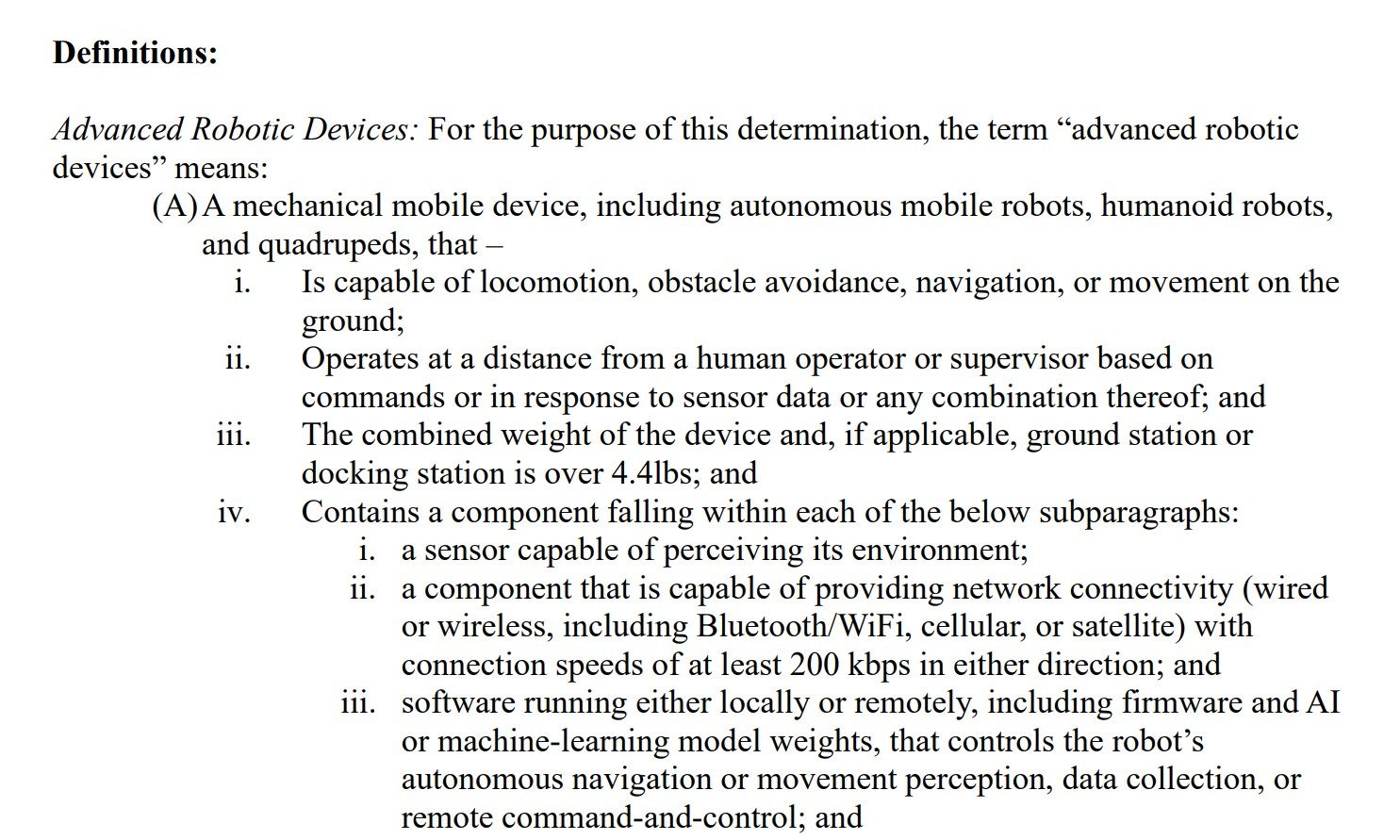
According to the FCC’s technical definition, a device is subject to these new restrictions if it meets the following benchmarks:

- Autonomy: It must be a software-controlled machine capable of traveling across the ground without constant, direct human input.
- Weight: The combined weight of the device and its docking station must exceed 4.4 pounds (roughly 2 kilograms).
- Sensory Array: It must utilize sensors (such as LiDAR, cameras, or ultrasonic sensors) to understand and map its surroundings.
- Connectivity: It must connect to a network (Wi-Fi or Cellular) to transmit data or receive updates.
- Purpose: It relies on software for its primary movement and data collection functions.
Virtually every modern robot vacuum currently on the market—from the high-end iRobot Roomba J-series to the budget-friendly models from Eufy or Shark—falls within these parameters. The immediate impact is that any new foreign-made model seeking to enter the US market will be denied the FCC authorization required for sale unless the manufacturer can secure "Conditional Approval." This approval is expected to be a rigorous process involving deep-dive audits of software code, data handling practices, and supply chain transparency.
Crucially, the FCC has clarified that these rules do not apply retroactively to devices already in consumers’ homes or models currently sitting on retail shelves. However, the clock is ticking for these "legacy" devices. The government has mandated that security, firmware, and software updates for existing foreign-made robots can only continue until January 1, 2029.
Chronology: From Telecommunications to the Living Room
The path to the "robot vacuum ban" did not happen in a vacuum. It is the result of a multi-year tightening of US trade and security policy regarding foreign technology.
- 2019: The Foundation: The US Congress passed the Secure and Trusted Communications Networks Act of 2019. This established the framework for the FCC to identify and prohibit equipment that poses an "unacceptable risk" to national security.
- 2020-2022: The Drone Precedent: The government turned its attention to DJI, the world’s leading drone manufacturer. Citing concerns that flight logs and high-resolution video could be accessed by foreign intelligence agencies, the US began blacklisting DJI products from federal use and eventually restricted their broader commercial pathway.
- 2023: The Industrial Expansion: Security agencies began raising alarms about heavy machinery and industrial robots used in US ports and warehouses. This led to a broader discussion about "advanced robotics" and the potential for these machines to serve as mobile surveillance platforms.
- Late 2024: The Covered List Update: The FCC officially added "foreign-made advanced robotic devices" to the Covered List. While the public announcement highlighted humanoid robots and industrial automation, the broad wording of the technical requirements quietly pulled consumer appliances into the fray.
- Present Day: The FCC confirms to major news outlets that the definition explicitly includes robot vacuums, setting the stage for a dramatic shift in the smart home market.
Supporting Data: Why Your Vacuum is a Security Risk
To the casual observer, the idea of a vacuum cleaner being a "national security threat" may seem like the plot of a low-budget sci-fi film. However, cybersecurity experts and government analysts point to the sheer volume of sensitive data these devices collect.
Modern robot vacuums do not just "bump" into walls; they create high-fidelity digital maps of a home’s interior. Using LiDAR (Light Detection and Ranging) and RGB cameras, these devices know the exact layout of a residence, the location of furniture, and the habits of the occupants.
The 7,000-Robot Breach:
A pivotal piece of data cited in the government’s assessment involves a recent cybersecurity flaw that exposed approximately 7,000 foreign-made robots. In this incident, a hobbyist coder discovered that he could gain unauthorized access to the devices’ live camera feeds, microphone audio, and saved floor plans. The vulnerability demonstrated that these devices are effectively mobile, internet-connected microphones and cameras that can be remotely hijacked.
The "Roomba-fication" of Data:
Data privacy advocates have long expressed concern over how this information is used. Floor plans can reveal a person’s wealth, the presence of security systems, and even the layout of government officials’ private residences. When this data is stored on foreign servers, US regulators argue it becomes subject to the laws of that foreign nation, which may compel the manufacturer to hand over data to intelligence services without a warrant or public oversight.
Furthermore, the market landscape underscores the scale of the issue. The majority of the world’s robot vacuum production is concentrated in China. Brands like Roborock, Ecovacs, and Dreame have seen explosive growth in the US. Even iRobot, the quintessential American robot company, was recently acquired by Picea Robotics, a firm with deep Chinese manufacturing ties. This shift has effectively moved the entire category into the "foreign-made" classification.
Official Responses: Navigating the New Regulatory Landscape
The reaction from the FCC and the industry has been one of cautious pragmatism. An FCC spokesperson emphasized that the goal is not to "punish" consumers who already own these devices, but to "secure the future of the American domestic environment."
"The Commission is committed to ensuring that the devices we bring into our most private spaces—our homes—are not Trojan horses for data exfiltration or unauthorized surveillance," the spokesperson stated. "By requiring Conditional Approval for future foreign-made robotics, we are setting a baseline for security that has been missing in the ‘move fast and break things’ era of smart home tech."
Manufacturers, meanwhile, are scrambling to adapt. Many are looking into "data localization" strategies, where US consumer data is stored exclusively on US-based servers managed by American third parties (similar to the "Project Texas" initiative attempted by TikTok).
Picea Robotics, the new owners of the Roomba brand, has signaled that it may seek to move more of its high-end assembly to US soil or to "friendly" nations like Mexico to bypass the "foreign-made" designation. However, industry analysts note that the supply chain for the sensors and semiconductors required for these robots remains heavily reliant on East Asian manufacturing, making a complete decoupling difficult and expensive.

Implications: The Future of the Smart Home
The implications of this crackdown extend far beyond clean floors. It marks a turning point in the "Internet of Things" (IoT) era, where the convenience of automation is being weighed against the realities of global cyber-warfare.
1. Price Increases and Innovation Stalls:
As manufacturers face higher compliance costs and the potential need to relocate factories, these costs will inevitably be passed down to the consumer. We may see a "bifurcation" of the market: high-priced, US-approved "secure" robots for the American market, and cheaper, more advanced models that are only available in Europe and Asia.
2. The Expansion to Other Appliances:
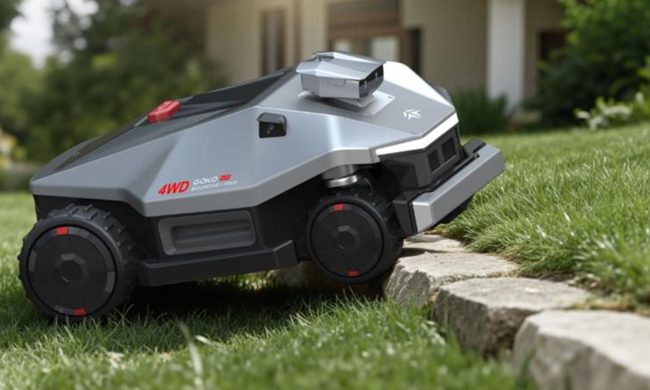
The FCC’s definition of "advanced robotic devices" is broad enough to cover more than just vacuums. Connected lawnmowers (like the Husqvarna Automower or the GOKO M6), sidewalk delivery robots, and even some advanced pool cleaners could be next. If a device moves autonomously and collects data, it is now under scrutiny.
3. The "Update Cliff" of 2029:
For millions of current robot vacuum owners, January 1, 2029, represents a significant deadline. After this date, if the manufacturer has not secured the necessary approvals, they will be legally barred from pushing software updates to existing units. This could leave millions of devices vulnerable to new hacking techniques or render them incompatible with future versions of iOS and Android smart home apps, effectively turning expensive hardware into "bricks."
4. A Resurgence in Domestic Manufacturing:
Perhaps the most significant implication is the potential for a "Made in the USA" robotics revival. By creating a regulatory barrier for foreign competitors, the US government is indirectly incentivizing domestic startups to fill the void. Companies that can prove "end-to-end" US-based security may find themselves with a massive competitive advantage in a market that was previously dominated by low-cost foreign imports.
In conclusion, the FCC’s crackdown on foreign-made robot vacuums is a clear signal that the "Wild West" era of the smart home is coming to an end. As our devices become more capable and more integrated into our lives, they also become more significant liabilities. For the consumer, the choice is no longer just about suction power and battery life; it is increasingly about where that data goes once the cleaning is done. The future of the Roomba is no longer just a matter of domestic utility—it is a matter of national security.