Battle of the Coral Sea: The Dawn of Carrier Warfare and a Pivotal Halt to Japanese Expansion
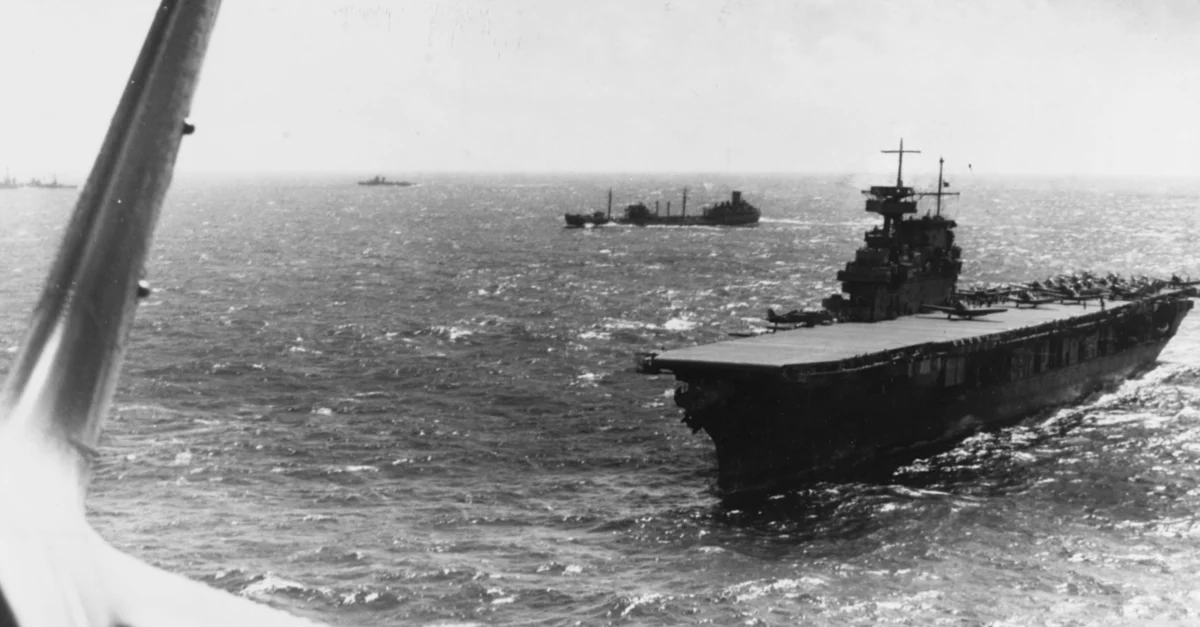
Sydney, Australia – In the vast, cerulean expanse of the Coral Sea, a revolutionary naval engagement unfolded between May 4 and 8, 1942, marking a watershed moment in military history. The Battle of the Coral Sea was the first naval battle ever fought exclusively between aircraft carriers, with opposing surface fleets never exchanging a single shot. This intense aerial combat, occurring just five months after the attack on Pearl Harbor, represented a desperate struggle for control of the South Pacific and ultimately, a critical strategic victory for the Allied forces, albeit at a significant cost.
The stakes were immense. The Imperial Japanese Navy sought to seize key territories in eastern Papua and the Solomon Islands, aiming to establish a formidable defensive perimeter and sever crucial supply lines between the United States and Australia. Standing in their path was the United States Navy, determined to prevent further Japanese expansion in the region that had, until then, seemed inexorable. The battle saw the loss of the Japanese light carrier Shoho and the American carrier Lexington, one of only four fleet carriers the U.S. possessed in the Pacific at the time. While Japan could claim a tactical victory based on the tonnage sunk, the Allied forces achieved a crucial strategic triumph: Japanese expansion was halted, and, critically, two major Japanese carriers were so severely damaged or depleted of aircraft that they were rendered unavailable for the upcoming, decisive Battle of Midway, irrevocably altering the course of the Pacific War.
The Unstoppable Tide: Japan’s Pacific Domination
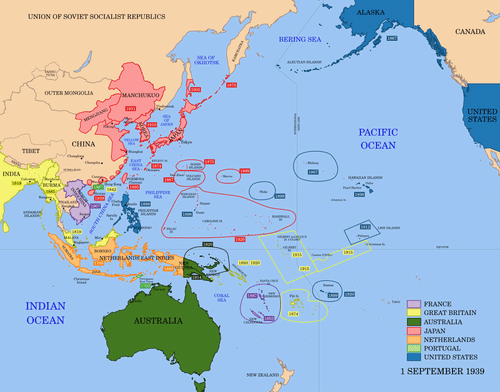
By the early 1940s, the Empire of Japan was on a relentless quest for regional hegemony, driven by a need for resources – particularly oil – and a desire to establish a "Greater East Asia Co-Prosperity Sphere." This expansionist policy had seen Japan steadily extend its influence and control across Asia since the 1930s, encompassing Manchuria, Formosa (Taiwan), Korea, vast stretches of coastal China, and French Indo-China (modern-day Laos, Cambodia, and parts of Thailand).
The conflict dramatically escalated in December 1941. The infamous surprise attack on Pearl Harbor crippled the U.S. Pacific Fleet, while simultaneous assaults were launched against the U.S.-controlled Philippines and British territories including Malaya, Burma (Myanmar), and Hong Kong. With the Western powers reeling, Japan’s military machine roared through the region. Singapore, a symbol of British imperial power, fell in February 1942. Throughout March and April, Japanese forces swept across the main islands of the Dutch East Indies, including Sumatra, Java, Borneo, Celebes, and New Guinea. It appeared as though Japan was on the verge of controlling the entire western Pacific, from the northern reaches of China all the way to Australia.
The next logical step in this ambitious campaign was the capture of Papua and the Solomon Islands. Control of these islands would expose northern Australia to direct Japanese air attacks and, if followed by the seizure of Fiji, Samoa, and New Caledonia further east, would effectively sever the vital Allied supply chain stretching from the U.S. West Coast to Australia via Brisbane and Sydney. Such a move would isolate Australia and gravely impede any future Allied counteroffensive.
Operation MO: The Japanese Plan for Dominance
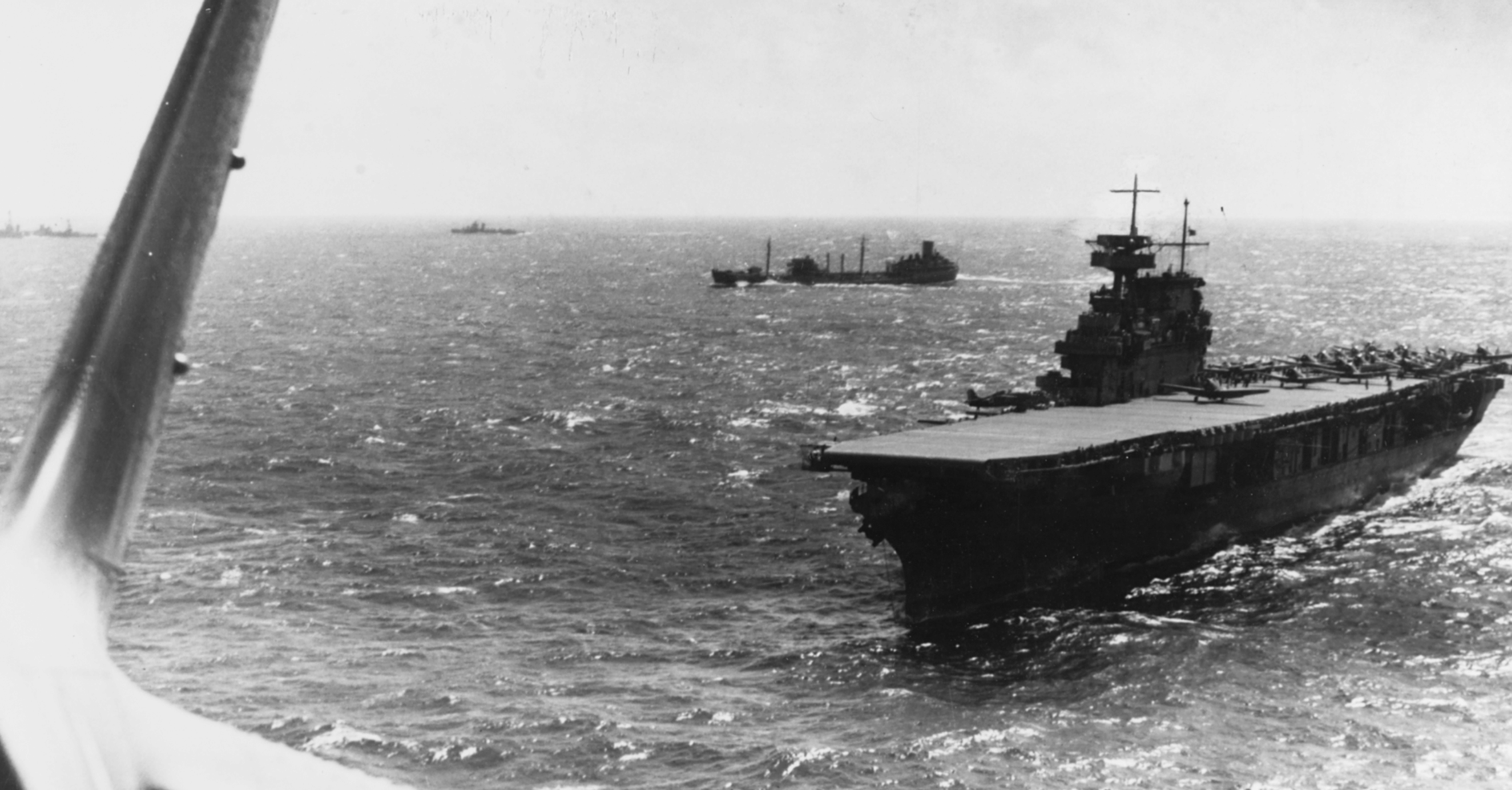
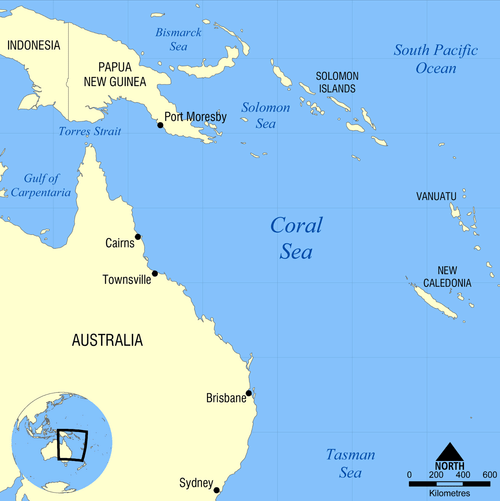
To achieve these critical objectives, Japanese Vice-Admiral Inoue Shigeyoshi (1889-1975), commander of the Japanese 4th Fleet, meticulously planned "Operation MO." This comprehensive strategy involved three distinct attack groups, converging from the Japanese main naval base at Truk Atoll (now Chuuk Lagoon) in Micronesia and Rabaul on Papua. The operation aimed for a triple-headed expansion into the last unconquered pocket of the southwest Pacific.
The primary objective was Port Moresby, the vital port on Papua and home to a crucial airstrip. The other two forces were tasked with establishing forward operating bases on Tulagi Island in the Solomons and the Louisiades Islands at the eastern end of Papua, primarily for seaplane operations. All three target destinations were strategically located within the Coral Sea, giving the impending confrontation its name.
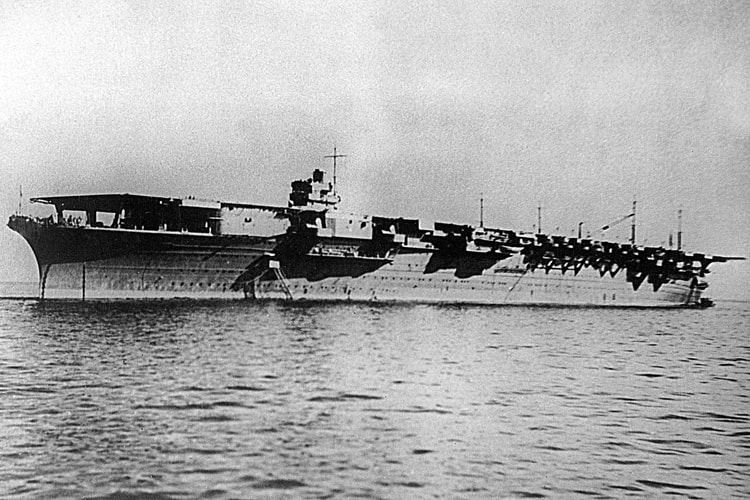
The invasion convoys were robustly protected. Rear-Admiral Goto Aritomo (1888-1942) commanded a force comprising the light carrier Shoho, four heavy cruisers, and one destroyer. Spearheading the entire invasion was an even larger and more formidable naval strike force under Vice-Admiral Takeo Takagi, which included the two powerful fleet carriers Shokaku and Zuikaku, two heavy cruisers, and six destroyers. In total, Operation MO committed an impressive 60 Japanese ships, a testament to the high priority Japan placed on these conquests.
The Allied Countermove: "Magic" and Nimitz’s Bold Gamble
Japanese naval strategists had anticipated an Allied response to their latest expansionist moves. Their plan to split the attack force into two arms was designed to draw U.S. ships into battle, hoping to engage and destroy them while the main invasion force proceeded unmolested to Port Moresby. However, their intelligence assumptions were critically flawed.
The U.S. Navy responded far more rapidly than the Japanese had foreseen, a direct result of invaluable intelligence gleaned from intercepted and decoded Japanese messages. As early as April 9, 1942, Allied codebreakers, operating under the highly classified "Magic" program, had cracked key Japanese naval codes, revealing the details of Operation MO. This allowed Admiral Chester W. Nimitz (1885-1966), commander of the U.S. Pacific Fleet, to gain a clear understanding of the Japanese two-pronged strategy.
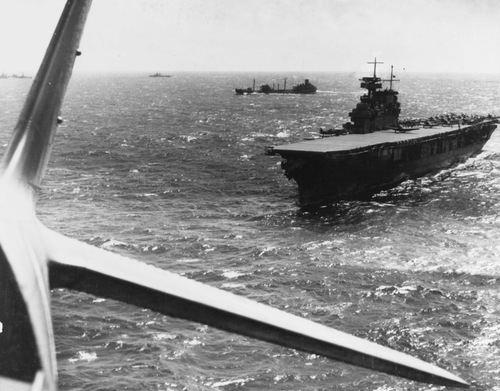
Nimitz responded by forming two carrier groups of his own, each centered around one of his precious aircraft carriers: the USS Lexington and the USS Yorktown. This commitment was a high-stakes gamble; Nimitz possessed only four fleet carriers in the entire Pacific. The other two, USS Hornet and USS Enterprise, were unavailable, having just participated in the daring Doolittle Raid on Tokyo in April, requiring them to return for replenishment and repairs. The Lexington was escorted by two cruisers and five destroyers, while the Yorktown sailed with three cruisers and four destroyers.
A third, multinational force was also deployed under Rear-Admiral John G. Crace of the Royal Navy. This force consisted of the U.S. cruiser Chicago, two Australian cruisers, HMAS Australia and HMAS Hobart, and the U.S. destroyer Perkins. Their primary mission was to defend Port Moresby directly. Additionally, four U.S. submarines and twelve Catalina flying boats were dispatched to the South Seas for crucial reconnaissance duties. Recognizing the potential for a protracted engagement, Nimitz also ordered the Hornet and Enterprise to sail for the Coral Sea as soon as possible, though their arrival would ultimately be too late to participate in the main battle.
The Clash in the Coral Sea: A Battle of Ghosts and Aircraft
May 3-6, 1942: Initial Engagements and the Fog of War
The battle began with the Japanese force targeting Tulagi and neighboring Gavutu in the Solomons, successfully landing on May 3. However, just 24 hours later, Rear-Admiral Frank Jack Fletcher (1885-1973), commanding the Yorktown group, launched a swift counterattack. Fighters, torpedo-bombers, and dive-bombers from the Yorktown descended upon the invaders. A critical oversight on the Japanese side proved costly: poor weather had prevented the planned complement of Mitsubishi A6M Zero fighters from reaching the land force, leaving them without adequate air protection. The lack of air cover proved decisive. The Japanese destroyer Kikuzuki, with minimal anti-aircraft defenses, was so severely damaged that its captain was forced to beach the ship. Several other smaller support vessels, including three minesweepers and four landing barges, were sunk, and five Japanese flying boats were destroyed.
For the next two days, May 5 and 6, the vast expanse of the Coral Sea and persistently poor weather conditions hampered both sides’ efforts to locate each other. The battle was a stark departure from traditional naval engagements; it would be fought by aircraft striking targets hundreds of miles away, with the opposing fleets never seeing each other.
On May 6, the three separate Allied groups converged, and Admiral Fletcher assumed overall command. His orders from Admiral Nimitz were clear and direct: "Your task assist in checking further advance by the enemy in the above areas [New Guinea-Solomons] by seizing favourable opportunities to destroy ships and aircraft."
May 7, 1942: Misdirection and the Sinking of the Shoho
The morning of May 7 saw the U.S. fleet heading towards the Japanese force targeting Port Moresby and the carrier group commanded by Takeo Takagi. In a tactical maneuver, Rear-Admiral Crace detached his group to intercept and attack the invasion transports, while Fletcher maneuvered his carriers north to confront the Japanese carriers. This was the moment: the first time in naval history that aircraft carriers would engage each other in direct combat, entirely through their air wings.
However, the "fog of war" and flawed intelligence immediately introduced confusion. Incorrect reconnaissance reports led Fletcher to initially mistake a Japanese invasion escort group for the main carrier force. Consequently, aircraft from the Yorktown were initially dispatched against a secondary target, sinking the destroyer Kikuzuki (already beached) and several small craft. With its escort under attack, the main Japanese invasion convoy prudently held its position and then turned back, temporarily abandoning its Port Moresby objective.
Meanwhile, the Lexington group’s reconnaissance aircraft achieved a crucial breakthrough: they located the Japanese light carrier Shoho. Word was immediately relayed to Fletcher, who redirected his available aircraft to join the attack. The combined air assault was devastating. The Shoho, a relatively lightly armored carrier, was struck by at least 13 bombs, including two direct hits with 1,000-lb (453-kg) bombs, and seven torpedoes. The carrier sank within minutes, taking 631 of its 834 crew members with it. This marked a significant milestone: it was the first time in the war that Japan had lost an aircraft carrier. Remarkably, this decisive strike cost the U.S. only three aircraft.
In a parallel and equally confused engagement, the two missing Japanese fleet carriers, Shokaku and Zuikaku, launched their own strike from the south. Mistakenly believing they had located a U.S. carrier, they instead attacked and sank only the U.S. destroyer Sims and the tanker Neosho, both of which had been positioned far to the rear of the main Allied group by Fletcher. A subsequent Japanese night attack on the Yorktown proved a dismal failure, with only six of 27 aircraft returning to their ships, many lost to darkness, fuel exhaustion, or Allied anti-aircraft fire.
May 8, 1942: The Carriers Strike and the Loss of the Lexington
The morning of May 8 brought the main carrier-vs-carrier engagement. Both sides launched a flurry of reconnaissance aircraft, and finally, after days of searching, the primary battle groups located each other. All available bombers and fighters were then launched for a full-scale attack. The Allies fielded 122 aircraft, while the Japanese launched 121.
Aircraft from the Yorktown and Lexington concentrated their attack on the Shokaku. Despite the Japanese carrier’s evasive maneuvers, successfully dodging at least 11 torpedoes, it was hit by three direct 1,000-lb bombs. The damage to its flight deck was severe, rendering it unable to launch or recover aircraft. The Shokaku was forced to withdraw from the battle, escorted by two destroyers. In increasingly cloudy weather, the U.S. aircraft were unable to locate the Zuikaku, which had cleverly concealed itself within a local rainstorm.
Simultaneously, Japanese planes located and attacked the U.S. carriers. The USS Lexington, a formidable but older carrier, bore the brunt of the assault. It was hit by two armor-piercing bombs. While these hits did not immediately compromise the ship’s operational capabilities, they caused significant personnel casualties. Initial torpedo attacks missed, but two subsequent torpedoes struck the Lexington‘s port side. The carrier quickly fell into dire straits as multiple internal fires raged out of control, exacerbated by sporadic explosions caused by gasoline fuel vapors leaking from a cracked port aviation fuel tank. With the Lexington noticeably down at the bow and the situation deteriorating rapidly, the agonizing decision was made to abandon ship. A U.S. destroyer then fired five torpedoes into the hull to scuttle the carrier, ensuring it would not fall into enemy hands. The loss of the Lexington claimed the lives of 216 crew members.
The Yorktown was also attacked, but the Japanese bombers were considerably less accurate in this engagement. One 550-lb (250-kg) bomb smashed through four decks before detonating in a storeroom, while another hit amidships. The combined damage forced the Yorktown to reduce speed and withdraw from the battle, seeking urgent repairs at Pearl Harbor.
Believing they had inflicted irreparable damage on both U.S. carriers, the Japanese fighters returned to their ships, which then withdrew to the north. Despite dealing a heavier blow to the enemy’s shipping in terms of tonnage, Vice-Admiral Inoue made the strategic decision to abandon the planned invasion of Papua. This decision drew criticism from his superiors back home for not pressing his tactical advantage. However, the Battle of the Coral Sea had been tremendously costly for Japan in terms of aircraft losses and damaged carriers, making it practically impossible for Inoue to provide the necessary air support for the proposed amphibious landing or to launch another sustained attack against the sole remaining operational U.S. carrier. Admiral Fletcher, having consolidated the Lexington‘s now-homeless fighters onto the Yorktown, also decided to withdraw his force, recognizing that further action would endanger the precious remaining air cover for the Allied fleet.
Assessment and Implications: The Turning Point of a War
The Battle of the Coral Sea was a costly affair for both sides. The Japanese lost 77 aircraft and suffered 1,074 casualties. The U.S. lost 66 aircraft and suffered 543 casualties. In terms of capital ships, Japan lost the light carrier Shoho, while the U.S. lost the fleet carrier Lexington. On a purely numerical and tonnage basis, the Japanese could claim a tactical victory, having sunk a larger and more valuable vessel.
However, the Battle of the Coral Sea was unequivocally an Allied strategic victory. The primary Japanese objective – the invasion of Port Moresby – was decisively driven back, preventing Japan from establishing a crucial forward base and severing the Australia-U.S. supply line. This marked Japan’s first major operational failure in the Pacific War, shattering the illusion of their invincibility.
More significantly, the damage sustained by the Shokaku and the heavy aircraft losses suffered by the Zuikaku meant that neither of these powerful fleet carriers, nor their highly trained aircrews, were able to participate in the Battle of Midway just one month later in June 1942. The absence of these two carriers – and their hundreds of aircraft and experienced pilots – proved to be a critical factor in the incredibly tight and ultimately decisive U.S. victory at Midway. Without the two carriers and their air wings, the Japanese Navy’s striking power was severely diminished, contributing directly to the catastrophic loss of four fleet carriers at Midway.
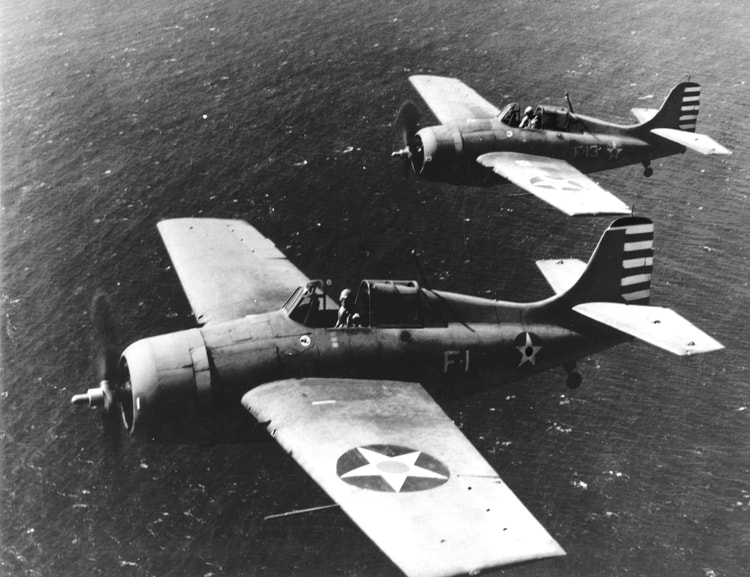
The Battle of Midway is widely regarded as the turning point of the Pacific War, and the Battle of the Coral Sea laid the essential groundwork for that victory. By halting Japanese expansion and effectively "handicapping" a significant portion of their carrier fleet, Coral Sea fundamentally shifted the momentum of the war. From that point forward, the Imperial Japanese Navy was largely on the defensive, beginning a long and brutal retreat all the way back to the home islands. The Battle of the Coral Sea, though often overshadowed by Midway, stands as a testament to the revolutionary nature of carrier warfare and a pivotal moment that reshaped the destiny of the Pacific theater in World War II.