The Roaring Road to Imagination: Unpacking Transportation in 1923 America
A Century Ago, the World Was Reshaped by the Engine’s Roar, Forging New Realities and Fantasies Alike
February 1923 marked a pivotal moment in American history, not just for the launch of a new pulp fiction magazine like Weird Tales, but for the profound transformation occurring in how people moved, connected, and perceived their world. As an American citizen might have stepped onto the street to purchase that inaugural issue, they would have been immersed in a landscape undergoing an unprecedented transportation revolution, one that dramatically shrunk distances while simultaneously expanding the horizons of human imagination. This era, nestled between the Great War and the Great Depression, saw the internal combustion engine challenge the horse, the train reach its zenith, and the airplane begin its ascent, collectively redefining daily life and fueling the speculative narratives of the burgeoning pulp genre.
Main Facts: A Nation on the Move
The year 1923 stood at the precipice of modern mobility. The Ford Model T, a symbol of industrial efficiency and democratic access, had already put millions of Americans behind the wheel, making personal transportation a burgeoning reality rather than a luxury. This automotive surge, however, unfolded on infrastructure ill-equipped for its demands, creating a unique blend of freedom and peril. Concurrently, commercial vehicles like trucks and tractors were reshaping commerce and agriculture, while public transit systems in urban centers, particularly electric streetcars, experienced their peak ridership.
Beyond local commutes, cross-country travel was still largely dominated by the romanticism and efficiency of the railroad, a vast network that knitted the nation together. International journeys were the domain of magnificent ocean liners, traversing the Atlantic with increasing speed and luxury. Above it all, aviation, though nascent and often perilous, captured the public’s imagination, promising a future where distance held little sway. This mosaic of evolving transport methods profoundly impacted everything from urban planning to individual identity, laying fertile ground for the fantastic tales appearing in magazines like Weird Tales.
Chronology of Transformation: The Shifting Gears of Progress
The developments in transportation were not isolated events but rather a cascade of innovations and adoptions that, by 1923, had reached a critical mass.
The Automobile Revolution: A Shifting Landscape
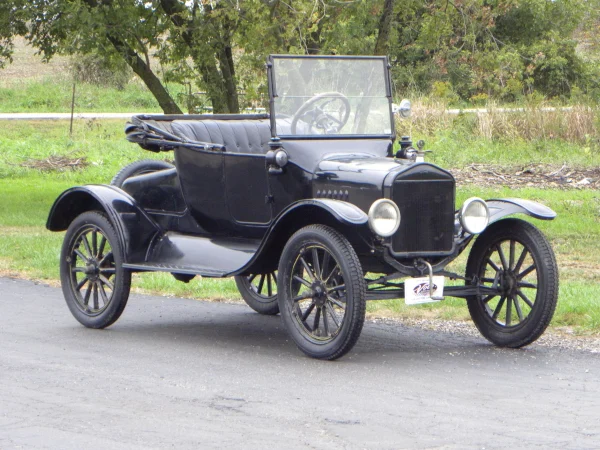
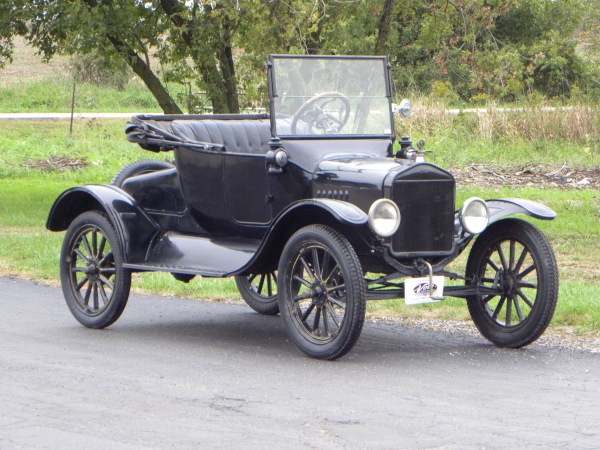
Fifteen years after its introduction, the Ford Model T remained the quintessential American car in 1923. Its steadily dropping price had made it accessible to the masses, profoundly altering urban and rural life alike. By the close of 1922, nearly 11 million passenger automobiles were registered in the United States, a figure projected to climb to almost 13.5 million by the end of 1923. This rapid proliferation, however, occurred in a largely unregulated environment. While license plates had been mandatory since 1918, driver’s licenses were far from universal; only half of U.S. states would require them by 1930, and even by 1935, merely 39 states mandated them, many without a compulsory driving test.
The Model T of 1923, while ubiquitous, was a starkly different machine from modern vehicles. Famously available "in any color, so long as it’s black" – a consequence of Ford’s 1914 production streamlining for a cheap, fast-drying black paint – it lacked fundamental features considered standard today. Shock absorbers, windshield wipers, rearview mirrors, bumpers, and even basic instrument panels with speedometers or gas gauges were largely absent. This rudimentary design, combined with the sheer volume of new drivers and vehicles, underscored the raw, untamed nature of early motoring.
Commercial Fleets and Agricultural Shifts
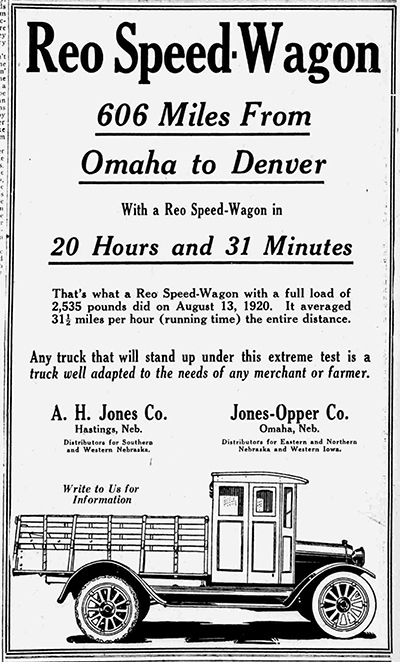
Beyond personal cars, the internal combustion engine was transforming commercial and agricultural sectors. Light trucks, epitomized by the REO Speed Wagon (introduced in 1915), were gaining traction, eventually seen as precursors to the modern pickup truck. The year 1923 itself would witness the debut of diesel trucks, hinting at future efficiencies in heavy transport. Four-wheel-drive technology, proven indispensable by vehicles like the Jeffery Quad (later the Nash Quad) during the Great War, continued to evolve, laying the groundwork for future off-road and utility vehicles like the Jeep.
In agriculture, gasoline-powered tractors were slowly but steadily replacing draft animals. In 1920, only 3.6 percent of American farms boasted a tractor; by 1930, this figure would rise to 13.5 percent. This shift promised greater productivity and less reliance on manual labor. Ingenious adaptations, such as modified tractors used as snowplows, also began to significantly improve winter travel and connectivity, particularly in the rural, heavily-populated Northeast.
The Roar of Two Wheels: Motorcycles
Motorcycles, which originated in the 19th century as bicycles fitted with engines, had matured into powerful and agile machines. Their utility was dramatically demonstrated during World War I, with a 1919 government report noting the "tremendous" demand from the Army, which absorbed "practically the entire output" of suitable vehicles. American manufacturer Harley-Davidson emerged as a global leader, its dominance cemented not only by wartime production but also by its highly successful racing team, the "Wrecking Crew," formed in 1914. This team’s incredible string of victories, famously celebrated with a pig mascot on victory laps, eventually led to the enduring nickname "hogs" for Harley-Davidson motorcycles.
Navigating Urban Jungles: City Transit and Infrastructure
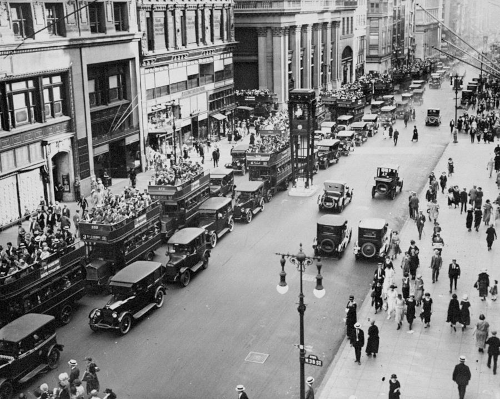
Despite the rise of automobiles, horses still shared the road in 1923. New York City, for instance, would still count 50,000 horses in 1927, necessitating vigilance for droppings when crossing streets. However, the internal combustion engine’s ascendancy was undeniable. A 1912 New York Times traffic count in Times Square found only five out of 48 vehicles were horse-drawn, with 12 being taxis. These early taxis, or "jitneys" (unlicensed cabs skirting regulations), were a colorful lot, not yet confined to the iconic yellow, and came in red, green, black, checkered, and even expensive lavender.
The nascent automotive age brought new challenges and solutions. Traffic lights, first introduced in 1920, were still rare; New York City, for example, had none in 1923. Stop signs and gas stations were recent innovations, and the first motel would appear in 1925. The dream that faster automobiles would alleviate traffic congestion, replacing slow horse-drawn vehicles, proved illusory; car-induced traffic jams became a new reality. More alarmingly, road deaths were skyrocketing, with 20,000 fatalities projected for 1925 – a staggering toll given the number of vehicles and miles driven.
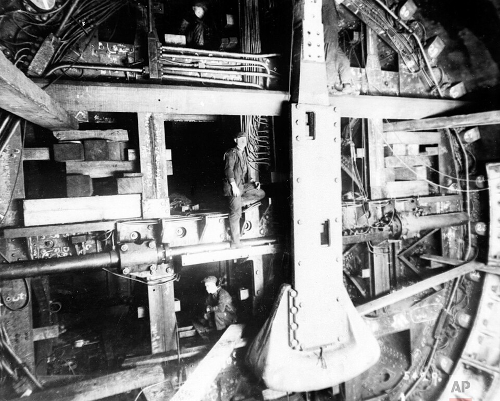
Public transit, however, was at its zenith. The decade from 1913 to 1923 marked the peak of public transit in the United States (excluding wartime rationing periods), with 85 percent of transit rides taken on electric streetcars. A few major metropolitan areas boasted subways, while elevated train tracks, though common, were often unpopular due to noise and the shadows they cast. The first bus resembling modern designs debuted in Oakland in 1920, and rapid adoption followed, leading to intercity routes and eventually the first coast-to-coast service in 1928, connecting Los Angeles to New York in five days with 132 stops.
Accompanying the automotive boom was a push for better infrastructure. Macadamized roads were becoming more common, yet an estimated 90 percent of the nation’s roads remained unpaved. Tennessee, for instance, had fewer than 250 miles of paved road in 1922, a figure that would surge to over 4,000 by 1927. Major arteries like the Lincoln Highway, stretching from New York to San Francisco, were only partially paved, described as "largely hypothetical" in states like Nevada. Even in cities, dirt streets often outnumbered paved ones, and much of the existing pavement was "water-bound macadam." Significant infrastructure projects, such as New York’s Holland Tunnel (begun in 1920, opening in 1927), aimed to bridge geographical divides, eliminating the need for ferries across waterways like the Hudson River.
The Backbone of a Nation: Rail Travel
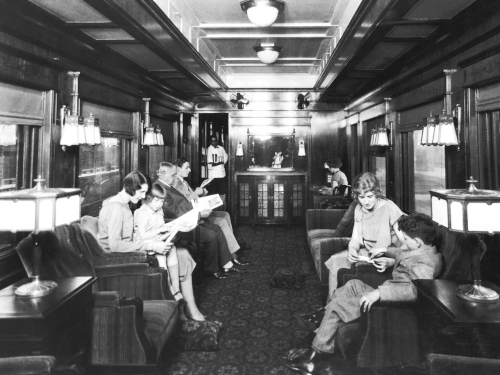
For cross-country travel in 1923, the train remained king. The period from 1880 to 1920 was the "heyday of American railroads," with 95 percent of all intercity traffic traveling by rail in 1910, and Americans taking 1.2 billion passenger trips annually by 1920. The nation’s rail network comprised over 250,000 miles by the end of 1920—a figure significantly greater than today. More than a thousand train companies collectively employed 1.5 million people. The Pullman Company, operating sleeping cars for dozens of railways, functioned as the world’s largest hotel chain, lodging 40,000 people each night. The busiest decade for rail, 1910-1920, saw an average of 38.1 billion passenger miles annually.
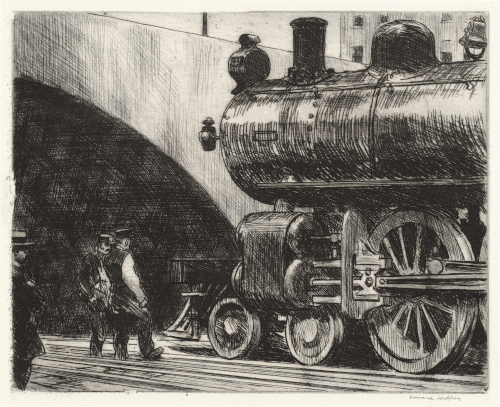
While a cross-continental journey still took around three days, often without air conditioning, rail travel possessed an undeniable glamour. The wealthy could enjoy luxurious private cars, a symbol of status and comfort. However, a subtle shift was beginning; though not yet apparent, rail traffic was starting its gradual decline as the automobile’s influence grew. Despite this nascent trend, the train’s pervasive presence in American life was captured by artists like Edward Hopper, whose 1923 print The Locomotive embodied the powerful, solitary majesty of the railway.
Voyages Across Oceans: Sea Travel and Global Connections
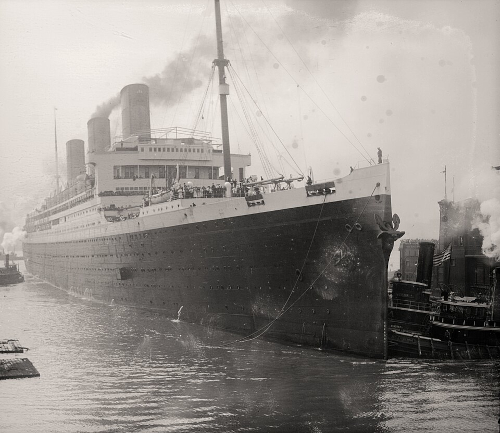
Intercontinental travel from the United States in 1923 was almost exclusively by sea, an era often dubbed the "golden age of the ocean liner." Majestic ships, capable of carrying 1,500 passengers, regularly crossed the Atlantic in five to six days. The Mauretania, for instance, had set a record in 1907 with a four-and-a-half-day crossing carrying 2,300 passengers. The RMS Majestic, launched in 1922 by Britain, held the title of the world’s largest ship to date, stretching 291 meters (956 feet) and accommodating 2,145 passengers.
The decline in "steerage" passengers, due to new U.S. immigration laws, prompted steamship companies to innovate. New cruise formats emerged, appealing to both middle and upper classes, though strict class distinctions with separate entrances and living spaces remained on board. Cargo shipping was extensive but inefficient by modern standards; without containerization, ships could spend weeks in port unloading and loading. Post-World War I, the United States, whose merchant shipping had suffered from German U-boats, had completed a major shipbuilding program, establishing one of the world’s largest merchant fleets. Converted battleships and captured German vessels further bolstered Allied shipping companies.
The system of international passports was also still evolving, having been significantly boosted by the Great War. The League of Nations recommended an international standard resembling modern booklets in 1920. Interestingly, the United States, not a League member, temporarily ceased requiring passports for international travel in 1921. However, as other nations mandated them, and a newfound affluence spurred leisure travel, Americans frequently requested them. Notably, 1923 saw a significant increase in female passport applicants, rising to over 40 percent from a mere 5 percent in the mid-19th century, reflecting changing societal roles, even if the State Department still insisted on identifying married women under their husbands’ names.
Conquering the Skies: The Dawn of Aviation
The Great War had spurred immense advancements in aviation, though helicopters remained in the experimental stage. In 1923, airplanes were predominantly wood-framed, with multi-engine crafts beginning to carry a few passengers alongside mail sacks. Air mail, though significantly more expensive, was gaining popularity. Airfields were often rudimentary "country fields," and airline companies were typically small, ephemeral businesses. The first American cargo airline would not emerge until 1925.
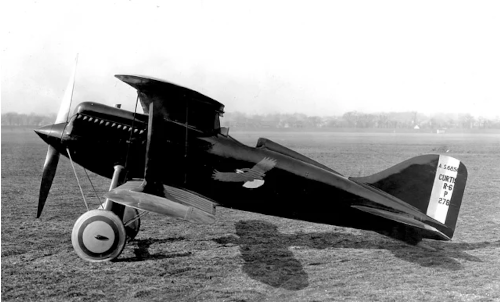
The U.S. lagged behind Europe in commercial aviation, with no federal regulation of pilots or airlines, and no systematic tracking of crashes or fatalities. In contrast, a thousand people weekly flew between Paris and London. As late as 1927, the entire United States would possess only about 30 commercial passenger planes. Lacking weather services or radio beacons, pilots relied on visual navigation, often flying dangerously low to identify landmarks. Despite these limitations, planes found roles in crop dusting, aerial photography, advertising, and providing public entertainment through "barnstorming" shows and thrill rides at country fairs. Speed records, such as Russell L. Maughan’s 1922 achievement of over 330 km/h (205 MPH) in a Curtiss R-6 Racer, showcased the technology’s thrilling potential.
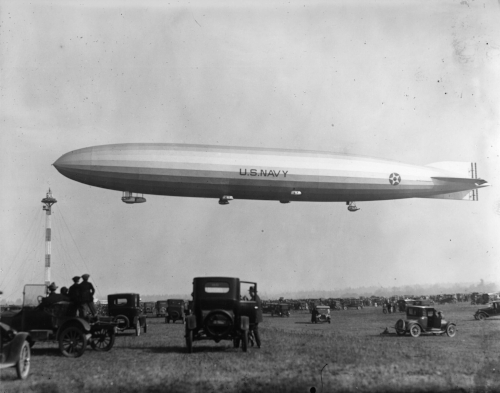
Above the airplanes, a different kind of flying craft occasionally graced the skies: enormous, cigar-shaped airships, or Zeppelins. These promised a future of luxurious transcontinental travel, exemplified by a 1917 German airship’s 4,200-mile round trip from Bulgaria to Sudan in 95 hours, and the British R.34’s round-trip Atlantic crossing in 1919. They were not without peril, as demonstrated by the February 1922 crash of the American airship Roma, which killed 34. However, later in 1923, the U.S. Navy would launch the Shenandoah, one of several new airships utilizing safer helium gas instead of flammable hydrogen. While limited to military use and a select few wealthy passengers, the German Graf Zeppelin would begin transatlantic passenger flights in 1928, signaling a brief, opulent era for airship travel.
The very concept of air travel was capturing public imagination. Pilots were emerging as new heroes, a trend that would explode after Lindbergh’s solo Atlantic flight in 1927, leading to a surge in "air pulps." This fascination was already evident in popular culture, such as the 1915 Italian film Filibus, featuring a cross-dressing lesbian airship pirate captain.
Supporting Data: The Metrics of Modernity
- Automobiles: Nearly 11 million registered passenger cars by end of 1922; projected 13.5 million by end of 1923.
- Driver’s Licenses: Required in half of states by 1930; 39 states by 1935, many without tests.
- Farm Tractors: 3.6% of farms in 1920; 13.5% in 1930.
- Urban Horses: 50,000 still in NYC in 1927; last horse-drawn fire engines retired in Chicago in Feb 1923.
- Traffic Congestion: Pittsburgh survey 1917: twice as many gas cars as horse-drawn; 1927: 50 times as many.
- Road Fatalities: 20,000 deaths in car accidents by 1925.
- Paved Roads: Less than 250 miles in Tennessee in 1922; over 4,000 in 1927.
- Public Transit: Peak decade 1913-1923; 85% of rides on streetcars.
- Railroads: 95% of intercity traffic by rail in 1910; 1.2 billion passenger trips/year by 1920; over 250,000 miles of rail in 1920; Pullman lodging 40,000 people/night; 38.1 billion passenger miles average annually (1910-1920).
- Ocean Liners: Atlantic crossings in 5-6 days; Mauretania record 4.5 days (1907); RMS Majestic (1922) 291 meters, 2145 passengers.
- Passports: Over 40% of applicants were women in 1923, up from 5% mid-19th century.
- Air Travel: US has ~30 commercial passenger planes by 1927; Europe: 1000 people/week Paris-London flights.
- Airships: German airship flew 4200 miles in 95 hours (1917); R.34 Atlantic round trip (1919); Roma crash killed 34 (1922).
Official Responses: Navigating a New Era
The rapid evolution of transportation necessitated societal and governmental responses, often playing catch-up to technological advances. The lack of standardized driver’s licenses and vehicle safety features in 1923 highlighted a regulatory vacuum that would gradually be filled as accident rates soared. The introduction of traffic lights and stop signs marked the nascent stages of traffic management, a direct response to the increasing congestion and chaos on urban streets.
Infrastructure projects like the Holland Tunnel and the push for paved roads were critical governmental and public works initiatives, designed to accommodate the burgeoning automobile traffic and connect previously isolated regions. Internationally, the League of Nations’ recommendation for standardized passports in 1920, even if the U.S. initially demurred, reflected a growing global recognition of the need for regulated international travel in a post-war world. The military’s extensive use of vehicles and aircraft during World War I also underscored their strategic importance, influencing national defense policies and industrial development. The shift in U.S. immigration laws, leading to a decline in steerage passengers, indirectly prompted the ocean liner industry to innovate with new cruise formats, demonstrating how legislative actions could ripple through the transportation sector.
Implications: A Shrinking World, an Expanding Imagination
The changes in transportation in 1923 profoundly altered human perception of distance and the world itself. The physical act of travel, once a lengthy and arduous undertaking, was becoming progressively faster and more accessible. This acceleration had a significant psychological impact: the world, in a practical sense, was shrinking.
However, this shrinking was paradoxical. While movement became easier, places far removed from America remained largely exotic and less known. This dynamic is vividly illustrated in the pulp fiction of the era. For example, in Fred L. Packard’s "The Red Lure" (1919), a character traveling from New York to Singapore arrives in five weeks – a timeframe suggesting urgency in that context. Similarly, in Hubert La Due’s "The Soul of Peter Andrus" (1923), a character returning from "the Bhutan district of India" in less than a month in response to a letter is treated as an astonishing feat of speed. These narratives reflect a world where journeys of weeks or months were still commonplace, yet the allure of distant, mysterious lands remained potent precisely because they were still so far away.
The new technologies of travel – the speeding automobile, the luxurious ocean liner, the soaring airplane, the majestic airship – became powerful symbols, not just of physical movement but of human progress, adventure, and the unknown. They fueled the public’s imagination, inspiring countless tales of daring pilots, intrepid explorers, and mysterious voyages to exotic locales. The dangers inherent in these new modes of transport – the rising accident rates, the perils of early aviation, the occasional airship disaster – also provided fertile ground for thrilling, suspenseful narratives.
In 1923, as in any period of rapid technological flux, the innovations in transportation were more than mere conveniences; they were agents of cultural transformation. They reshaped urban landscapes, drove economic expansion, challenged social norms, and fundamentally altered how individuals experienced and imagined their place in the world. For the readers of Weird Tales, these evolving realities provided a vibrant, often unsettling, backdrop against which fantastical horrors and thrilling adventures could unfold, demonstrating how deeply intertwined the tangible world of locomotion was with the boundless realm of human fantasy.