Unveiling the Spectral Cavalry: A Deep Dive into Europe’s Enduring Wild Hunt Phenomenon
FOR IMMEDIATE RELEASE
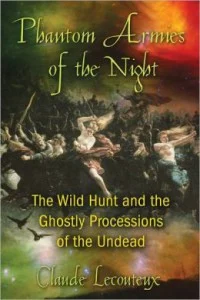
[City, State] – [Date] – The spectral echoes of ancient Europe continue to captivate scholars and enthusiasts alike, particularly the enduring mystery of the Wild Hunt. A significant contribution to this field, Claude Lecouteux’s "Phantom Armies of the Night: The Wild Hunt and the Ghostly Processions of the Undead," has garnered considerable attention, offering an unparalleled repository of information while simultaneously sparking robust academic debate. This comprehensive study delves into the pan-European phenomenon of nocturnal phantom cavalcades, providing crucial insights into pre-Christian beliefs, the cult of the dead, and the remarkable persistence of animistic traditions long after the official Christianization of the continent.
Unveiling the Phantom Armies: A Landmark Study
Lecouteux’s "Phantom Armies of the Night" stands as one of the most pivotal scholarly works on the Wild Hunt published in recent decades. The book meticulously compiles and analyzes a vast array of historical and folkloric accounts, positioning itself as an indispensable resource for anyone seeking to understand this pervasive European myth.
The Enigmatic Wild Hunt: A European Phenomenon
At its core, the Wild Hunt is a cornerstone of European folklore, particularly prominent in the northern regions. Across ancient, medieval, and early modern periods, countless individuals reported experiencing or witnessing a terrifying nocturnal cavalcade. This spectral procession typically involved ghostly hunters or warriors, mounted on sinister horses and accompanied by baying hounds, thundering through the howling winds, often during the bleak midwinter months. The passage of this ethereal horde was frequently associated with ill omens, misfortune, or outright destruction for anyone unfortunate enough to cross its path. While its leadership varied across different regions and traditions, the Germanic god Odin was most commonly, though not exclusively, identified as its fearsome chieftain.
The Wild Hunt embodies a complex tapestry of cultural anxieties and beliefs. It is a manifestation of the unknown, a personification of harsh natural forces, and a vivid reflection of societal perceptions of death, the afterlife, and the spirits that linger between worlds. Its widespread presence across diverse linguistic and cultural groups underscores a shared substratum of ancient European spiritual understanding that predates and often intertwined with later religious doctrines.
Lecouteux’s Contribution: A Repository of Lore
Lecouteux’s primary strength lies in his exhaustive collation of data. "Phantom Armies of the Night" provides an extraordinary "treasure trove" of information, drawing from a vast geographical and temporal scope. His research meticulously demonstrates the difficulty, if not impossibility, of entirely separating the archetypal Wild Hunt from a multitude of other related nocturnal processions recorded throughout the same historical periods. Many of these related phenomena, surprisingly, exhibited a benign character, markedly different from the malevolent reputation of the typical northern Wild Hunt. Nevertheless, they shared several crucial commonalities, suggesting a broader cultural complex of spectral nocturnal movements.
Beyond the sheer volume of collected lore, Lecouteux offers several significant analytical insights. He posits that the Wild Hunt appears to have been originally led by a psychopomp deity – a divine guide or mediator responsible for escorting souls between the realms of the living and the dead. This profound connection to the transition between life and death is a recurring theme. Furthermore, he insightfully notes that the Wild Hunt "fell into the vast complex of ancestor worship, the cult of the dead, who are the go-betweens between men and the gods." This perspective recontextualizes the spectral riders not merely as malevolent entities but potentially as revered (or feared) ancestral spirits, embodying the enduring presence of the departed in the mortal world.
A Journey Through Time: The Wild Hunt’s Historical Trajectory
Understanding the Wild Hunt requires tracing its conceptual roots through millennia, observing its evolution, and recognizing how it adapted to changing religious and social landscapes.
Ancient Roots and Pre-Christian Beliefs
The conceptual bedrock of the Wild Hunt extends deep into Europe’s pre-Christian past, likely emerging from ancient Germanic and Indo-European mythologies. In these early belief systems, the natural world was imbued with spiritual significance, and the boundaries between the living and the dead were often perceived as porous. Deities like Odin (Woden in Anglo-Saxon traditions, Wotan in continental Germanic lore) were complex figures associated not only with war, wisdom, and poetry but also with death, the dead, and shamanistic practices. His role as a psychopomp, guiding fallen warriors to Valhalla, aligns perfectly with the idea of a spectral leader of the dead.
The midwinter period, marked by the longest nights and harshest weather, was a time when the veil between worlds was believed to be thinnest. This liminal season, often associated with rituals for fertility, protection, and honoring ancestors, naturally became the stage for such powerful supernatural manifestations. The howling winds and barren landscapes of winter would have provided a visceral backdrop for tales of ghostly cavalcades, embodying both the destructive power of nature and the restless spirits of the departed. These ancient beliefs fostered a worldview where the dead were not entirely separate but could interact with, and sometimes influence, the living.
Medieval Transformation and Christianization
With the advent and eventual dominance of Christianity across Europe, many pre-Christian deities and spiritual practices underwent a significant transformation. The Church, in its efforts to consolidate its authority and suppress paganism, often demonized the old gods, casting them as malevolent spirits or agents of the devil. Odin, once a powerful and revered deity, was frequently reinterpreted as a demonic figure, and his associated phenomena, like the Wild Hunt, became vehicles for Christian moralizing and fear.
Despite these efforts, the belief in the Wild Hunt proved remarkably resilient. Rather than disappearing, it adapted, absorbing Christian elements while retaining its core characteristics. The leader of the Hunt might sometimes be identified as the Devil, Cain, King Herla, or other figures associated with damnation or perpetual wandering. The spectral riders were often seen as unbaptized infants, unrepentant sinners, or those who died violent deaths – souls condemned to an eternal, restless procession. This syncretism demonstrates the powerful hold these indigenous beliefs had on the populace, often persisting in parallel with official Christian dogma, sometimes even finding ways to be incorporated into local Christian folklore. The narratives surrounding the Wild Hunt during this period thus offer a unique window into the cultural negotiation between an emerging dominant religion and deeply entrenched ancestral traditions.
Modern Scholarly Engagement
The study of the Wild Hunt in modern academia has evolved considerably, moving from mere collection of tales to systematic analysis. Scholars like Georges Dumézil, the eminent Indo-European scholar, laid crucial groundwork by proposing the tripartite ideology of Indo-European societies (priestly, warrior, and producer functions), which influenced how subsequent generations approached the categorization and interpretation of mythological figures and social structures. Lecouteux, in his analysis, builds upon and, at times, rigidly applies Dumézil’s frameworks, a point that has drawn both praise and critique.
Contemporary scholarship continues to grapple with the multifaceted nature of the Wild Hunt. Researchers employ interdisciplinary approaches, drawing from folklore studies, religious studies, anthropology, and history to understand its origins, its variations, and its socio-cultural functions. Debates persist regarding the identity of its original leader, its precise relationship to ancestor worship, and the mechanisms of its cultural transmission and transformation. Lecouteux’s work, by providing such a wealth of primary material, inherently fuels these ongoing scholarly discussions, serving as both a benchmark and a point of departure for future research.
Deeper Dive into the Lore: Supporting Data and Analytical Debates
Lecouteux’s greatest strength is undoubtedly the breadth of his collected material, offering a panoramic view of spectral processions across Europe. However, his analytical framework, particularly concerning the leadership of the Hunt, has invited significant scholarly contention.
The Breadth of European Nocturnal Processions
Lecouteux meticulously details how the Wild Hunt is not a monolithic entity but rather a complex of related nocturnal processions. His research highlights regional variations, showing how the "Wild Hunt" of northern Europe, typically malevolent and led by a formidable figure like Odin, contrasts with other processions found further south or west. These could be led by figures like Perchta, Holda, or Diana, and might sometimes be associated with fertility, benevolent spirits, or the souls of the unbaptized, exhibiting a surprisingly benign or even protective character.
Despite these differences, common motifs recur: the nocturnal setting, the spectral nature of the participants (often associated with the dead), the use of horses and hounds, and a leader figure who bridges the human and spirit worlds. By presenting these diverse accounts, Lecouteux forces readers to confront the rich tapestry of European folk belief, moving beyond a narrow definition of the Wild Hunt to encompass a broader spectrum of interactions between the living and the spectral dead. This comparative approach is invaluable for understanding the underlying psychological and cultural drivers behind such widespread beliefs.
Psychopomps, Ancestors, and the Liminal Veil
A central and compelling aspect of Lecouteux’s analysis is the connection of the Wild Hunt to psychopomp deities and ancestor worship. Psychopomps, from the Greek "soul guides," are figures in mythology and religion whose role is to escort newly deceased souls from Earth to the afterlife. This function is critical because it signifies a deity’s connection to death, transition, and the liminal spaces between worlds. By identifying the original leader of the Wild Hunt as a psychopomp, Lecouteux underscores the procession’s fundamental link to death and the journey of souls. This perspective makes the Wild Hunt not just a scary tale, but a profound cultural narrative about mortality and the afterlife, reflecting ancient societies’ understanding of the cosmic order.
Furthermore, Lecouteux’s assertion that the Wild Hunt "fell into the vast complex of ancestor worship" offers a powerful interpretative lens. In many pre-Christian cultures, ancestors were not simply remembered but actively revered, believed to retain influence over the living, and capable of both blessing and cursing. The Wild Hunt, in this context, can be seen as a manifestation of these ancestral spirits – perhaps a restless, unappeased, or even benevolent assembly of the dead who return to interact with the living world. This interpretation highlights the continuity of life and death, and the persistent presence of the past in the present, a core tenet of animistic worldviews. The communal aspect of the Wild Hunt, often depicted as a collective, reinforces this link to a broader community of the dead, rather than isolated individual ghosts.
The Contentious Leadership of the Hunt: Odin’s Role Under Scrutiny
While Lecouteux’s data compilation is widely lauded, his analytical conclusions, particularly regarding the leadership of the Wild Hunt, have proven more contentious. A significant portion of his argument asserts that Odin was not the original leader of the Wild Hunt but a later addition, a position that many scholars find challenging to defend on both mythological and etymological grounds.
Lecouteux’s reasoning on this point often stems from what critics perceive as an overly rigid application of Georges Dumézil’s studies on Indo-European social structures. Dumézil proposed a tripartite division of society into priestly, warrior, and producer classes, each associated with specific deities. Lecouteux, oversimplifying for brevity, argues that because the Wild Hunt exhibits many traits connecting it with the concerns of the common people (e.g., agricultural fertility, protection from malevolent spirits, interactions with everyday life), and because Odin was a god more closely associated with the ruling classes (warriors, kings, poets), he could not have possibly been the original leader of a phenomenon primarily rooted in popular folk belief.
However, this interpretation overlooks the multifaceted nature of deities like Odin. While certainly a god of kings and warriors, Odin also had strong associations with the dead (Valhalla, his role as a psychopomp), magic, and the common folk’s concerns through his widespread worship and numerous local cults. Etymological links, such as the German "Wilde Jagd" (Wild Hunt) and its clear resonance with "Woden" (Odin), further suggest an ancient and deep connection. Many scholars argue that reducing Odin solely to a "ruling class" deity oversimplifies complex mythological roles and ignores the fluid nature of religious belief across social strata. The idea that a powerful deity could not also be a figure of popular folklore seems to impose a modern, rigid class structure onto ancient belief systems that were likely far more integrated.
The Challenge of Conclusive Analysis
Another point of critique leveled against Lecouteux’s analysis is its perceived sparseness relative to the sheer amount of information he provides. Despite his masterly knowledge of extensive data, the book disappointingly often defaults to what some might call scholarly "cop-outs." Lecouteux frequently states, in his own words, "we cannot reach a conclusion," "many points remain to be explored more deeply," and acknowledges that the subject’s complexity "makes us conscious of the limits of our knowledge."
While these statements are certainly valid as qualifications to a conclusion, they come across as hollow platitudes when offered instead of more definitive analytical synthesis. Given the extraordinary scope and depth of his research, readers and fellow scholars might reasonably expect a more robust attempt at drawing conclusions, even if provisional, or at least a clearer articulation of the most probable interpretations. The wealth of data presented begs for a more decisive framework to help navigate its complexities, and the absence of such a framework can leave the reader feeling that the potential of the monumental data collection has not been fully realized in the analytical phase.
Scholarly Reception and Broader Implications
Despite the analytical critiques, "Phantom Armies of the Night" has been widely recognized for its immense contribution to folklore studies, cementing Lecouteux’s reputation as a meticulous collector of lore.
Navigating the Academic Landscape
Lecouteux’s work firmly establishes itself within the academic landscape of folklore and religious studies. It provides an essential foundation for researchers by consolidating previously disparate accounts of the Wild Hunt and related phenomena. While his interpretations, particularly concerning Odin, invite debate, such scholarly discourse is vital for the advancement of the field. The book challenges existing paradigms and forces scholars to re-evaluate long-held assumptions, prompting deeper methodological reflection. The value of its robust data collection far outweighs its analytical shortcomings in the eyes of many, making it a critical reference point for anyone studying European nocturnal processions, ancestor cults, or the interplay of pagan and Christian beliefs. It serves as a testament to the fact that even within established academic fields, new compilations of primary sources can reinvigorate entire areas of study.
The Enduring Echoes of Animism
Perhaps one of the most significant implications of Lecouteux’s work is its vivid demonstration of the longevity and tenacity of pre-Christian animism in Europe. Animism, the belief that objects, places, and creatures all possess a distinct spiritual essence, was a foundational aspect of early European spiritualities. "Phantom Armies of the Night" illustrates how elements of this animistic worldview, particularly the belief in active spirits of the dead and a permeable boundary between worlds, remained deeply embedded in everyday life and popular belief systems for centuries after the official adoption of Christianity. This persistence highlights the complex process of religious conversion and syncretism, showing that official doctrine often coexisted with, and was shaped by, resilient folk traditions. The Wild Hunt, in this sense, is not just a relic of the past but a living testament to the deep-seated human need to understand and interact with the unseen forces of the world.
Future Directions and the Power of Myth
"Phantom Armies of the Night" does more than just document; it opens doors for future research. The "many points [that] remain to be explored more deeply" now have a rich empirical base from which to launch new inquiries. Scholars can leverage Lecouteux’s data to apply new theoretical frameworks, conduct more focused regional studies, or explore the psychological and sociological functions of such myths in greater detail.
Moreover, the enduring power of the Wild Hunt myth speaks volumes about humanity’s perennial fascination with death, the unknown, and the forces of nature. These stories reflect universal anxieties about mortality, the restless dead, and the inherent wildness of the world beyond human control. In an increasingly secularized world, the Wild Hunt continues to resonate, appearing in contemporary literature, film, and games, demonstrating the timeless appeal and adaptive capacity of ancient myths to capture the imagination and speak to fundamental human experiences.
Conclusion
Claude Lecouteux’s "Phantom Armies of the Night: The Wild Hunt and the Ghostly Processions of the Undead" is an indispensable scholarly achievement. While its analytical framework, particularly concerning Odin’s leadership and the conciseness of its conclusions, has generated academic debate, the sheer volume and meticulous compilation of data it offers are unparalleled. For anyone with a serious interest in the Wild Hunt, European folklore, or the fascinating persistence of pre-Christian animism in a Christianized continent, this book is essential reading. It stands as a vital resource, illuminating the spectral processions that once haunted the European night and continue to echo in our collective consciousness. It is, without reservation, highly recommended as a cornerstone text in the study of one of Europe’s most enduring and captivating myths.
[Contact Information for Media Inquiries]