The Ghost in the Machine: Why Microsoft’s 1.4 Billion Users Aren’t Buying Games on the Windows Store
Introduction: The Zero-Sale Paradox
In the modern digital economy, visibility is often equated with viability. For software developers, the promise of a platform with over a billion active users is typically the ultimate "Holy Grail" of distribution. Yet, a startling revelation from independent game developer Martin Nerurkar has cast a harsh spotlight on the profound disconnect between Microsoft’s massive Windows install base and its actual efficacy as a retail marketplace.
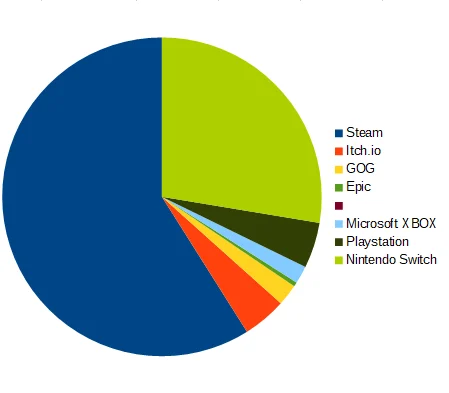
In August 2022, Nerurkar, the creator behind the critically acclaimed digital deck-builder Nowhere Prophet, shared a revenue breakdown that sent shockwaves through the indie development community. Despite the game achieving a respectable lifecycle and moving an estimated 20,000 copies across various platforms, the sales figure for the Microsoft Store remained a haunting, absolute zero.
This statistic is more than just a personal anecdote; it is a damning indictment of Microsoft’s long-standing struggle to convert Windows users into Windows Store customers. While the tech giant boasts 1.4 billion Monthly Active Users (MAUs) on Windows 10 and 11, the "footfall" in its proprietary storefront appears to be a phantom metric. This report explores the structural, psychological, and technical failures that have turned the Microsoft Store into a "ghost town" for independent creators.
Main Facts: The Stagnation of a Digital Giant
The core of the issue lies in a simple but devastating chart shared by Nerurkar via social media. The data illustrated a healthy distribution of revenue across platforms like Steam, the Nintendo Switch, and GOG. However, the Microsoft Store—a platform pre-installed on every modern PC globally—failed to move a single unit of Nowhere Prophet.
Key Observations:
- Platform Ubiquity vs. Sales: Windows is the dominant operating system for PC gaming, yet its native store is frequently bypassed in favor of third-party launchers.
- Product Quality: Nowhere Prophet is not an "asset flip" or a low-quality title; it holds a "Very Positive" rating on Steam, suggesting that the lack of sales is a platform-specific failure rather than a lack of consumer interest in the game itself.
- The Identity Crisis: Industry analysts point to the Microsoft Store’s inability to decide whether it is a repository for productivity apps (like calculators and PDF readers) or a premium gaming destination (competing with Steam and the Epic Games Store).
Nicholas Lovell, founder of Gamesbrief and a veteran of game business strategy, noted that this "poor showing" is a result of a store that fails to provide a cohesive user experience. The Microsoft Store exists in a liminal space—trying to be a safe, curated "App Store" while simultaneously attempting to host $60 AAA blockbusters. In trying to do both, it has arguably succeeded at neither.
Chronology: A Decade of Missed Opportunities
To understand how Microsoft reached this point, one must look at the evolution of its digital distribution strategy over the last decade.
2012: The Windows 8 Era
Microsoft launched the "Windows Store" alongside Windows 8. It was a cornerstone of the "Metro" UI, designed to unify the experience between tablets and PCs. However, it forced developers to use the Universal Windows Platform (UWP) architecture, which was restrictive, prevented modding, and was widely loathed by the PC gaming community.
2015: Windows 10 and the Rebrand
With the launch of Windows 10, the store was rebranded as the "Microsoft Store." While it loosened some restrictions, the damage to its reputation among "hardcore" gamers was already done. The store became associated with technical glitches, difficult-to-navigate interfaces, and a lack of community features like forums or user reviews that Steam had mastered.
2019–2021: The Game Pass Pivot
Recognizing that individual game sales were lagging, Microsoft pivoted toward the Xbox Game Pass for PC. This subscription model fundamentally changed the store’s purpose. Instead of being a place to buy games, it became a portal to access them. While this was a win for consumers and Microsoft’s recurring revenue, it further marginalized "buy-to-play" indie titles that were not part of the Game Pass library.
2022: The "Nowhere Prophet" Revelation
By the time Nerurkar posted his data in August 2022, the Microsoft Store had been integrated into the Windows ecosystem for ten years. Yet, for an indie developer, it remained a non-entity in their revenue stream, highlighting that a decade of iterations had failed to solve the fundamental "discovery" problem.
Supporting Data: The Scale of the Disconnect
The disparity between Microsoft’s potential reach and its actual performance is staggering when compared to its competitors.
The 1.4 Billion MAU Fallacy
Microsoft frequently cites its 1.4 billion Windows devices as a metric of success. However, data suggests that the vast majority of these users utilize Windows as a "utility layer." They open the OS to access Chrome, Slack, or Steam. The Microsoft Store is rarely a destination; it is an obstacle or a background service.
Steam’s Dominance
In contrast to the Microsoft Store’s "zero sales" for Nowhere Prophet, Steam continues to grow. In 2022, Steam saw peak concurrent user counts exceeding 30 million. Steam’s success is built on "social stickiness"—features like Steam Workshop, community guides, and a robust friend system—which the Microsoft Store lacks entirely.

The Indie "Switch" Effect
While Nowhere Prophet struggled on the Microsoft Store, many indie titles see their highest sales on the Nintendo Switch. This is attributed to the Switch eShop being a dedicated gaming environment. When a user opens the eShop, they are there with the intent to purchase a game. When a user opens Windows, their intent is varied, and the Microsoft Store’s cluttered interface—mixing games with "TikTok" and "Office 365"—creates high cognitive friction.
Official Responses and Strategic Shifts
While Microsoft did not comment specifically on the Nowhere Prophet case, the company’s actions in late 2021 and 2022 suggested an internal acknowledgement of the store’s failures.
The "Open Store" Policy
In an attempt to revitalize the platform, Microsoft announced a major overhaul for Windows 11. They began allowing third-party storefronts, such as the Epic Games Store and the Amazon Appstore, to be integrated into the Microsoft Store. This was a tactical retreat; Microsoft essentially admitted that they could not curate a dominant store on their own and instead chose to become a "store of stores."
Phil Spencer’s Vision
Phil Spencer, CEO of Microsoft Gaming, has been vocal about the "PC gaming experience" needing improvement. In various interviews, he has admitted that the Xbox app and the Microsoft Store had been "clunky" and that the company was focused on making the store faster and more reliable. However, the focus remains heavily skewed toward the Game Pass subscription rather than the individual sale of indie titles.
Implications: What This Means for the Future of Indie Development
The "zero sale" phenomenon has significant implications for the broader gaming ecosystem and the developers who navigate it.
1. The Danger of the Subscription Monopoly
If the Microsoft Store is only viable through Game Pass, indie developers may find themselves in a "subscription or bust" scenario. If a developer cannot secure a deal to be on Game Pass, the data suggests there is almost no point in listing on the Microsoft Store at all. This gives Microsoft immense power as a gatekeeper, as they decide which games get "discovered" via the subscription service.
2. The "Discovery" Crisis
For a game like Nowhere Prophet, discovery is everything. On Steam, algorithms suggest the game to fans of similar genres (deck-builders, roguelikes). The Microsoft Store’s algorithm has historically been criticized for being opaque and favoring big-budget "top-grossing" apps. Without a robust discovery engine, indie games are effectively invisible, buried under layers of enterprise software and viral social media apps.
3. Developer Fatigue
The effort required to port a game to the Microsoft Store—dealing with specific certification requirements and backend integration—must be justified by the Return on Investment (ROI). If the expected sales are zero, developers will eventually stop supporting the platform altogether. This creates a "death spiral": fewer games lead to fewer shoppers, which leads to even fewer games.
4. The Need for a "Gaming-First" Desktop Experience
Microsoft’s insistence on a "one size fits all" store is its greatest weakness. Analysts suggest that Microsoft should decouple the "Xbox" gaming experience entirely from the "Microsoft Store" utility experience. While the Xbox App on PC has made strides in this direction, the underlying commerce engine still relies on the flawed Microsoft Store architecture.
Conclusion: A Giant Still Searching for its Soul
The case of Nowhere Prophet serves as a sobering reminder that market share does not equal market power. Microsoft owns the "soil" (the Operating System) but has failed to grow the "garden" (the Store).
For Nicholas Lovell and other industry observers, the path forward for Microsoft requires a radical simplification. The company must decide if the Microsoft Store is a serious competitor to Steam or merely a convenient way to update the Windows Calculator. As long as it remains an awkward hybrid, indie developers will continue to see their titles languish in a digital void, while 1.4 billion users look elsewhere to spend their money.
The "Zero Sale" isn’t just a statistical anomaly; it is a loud, clear signal that in the world of digital retail, being everywhere is worth nothing if you aren’t where the customers actually want to be.