Arkham Horror: The Card Game Unleashes "Chapter Two": A Perilous Re-launch for a Terrifying Mystery
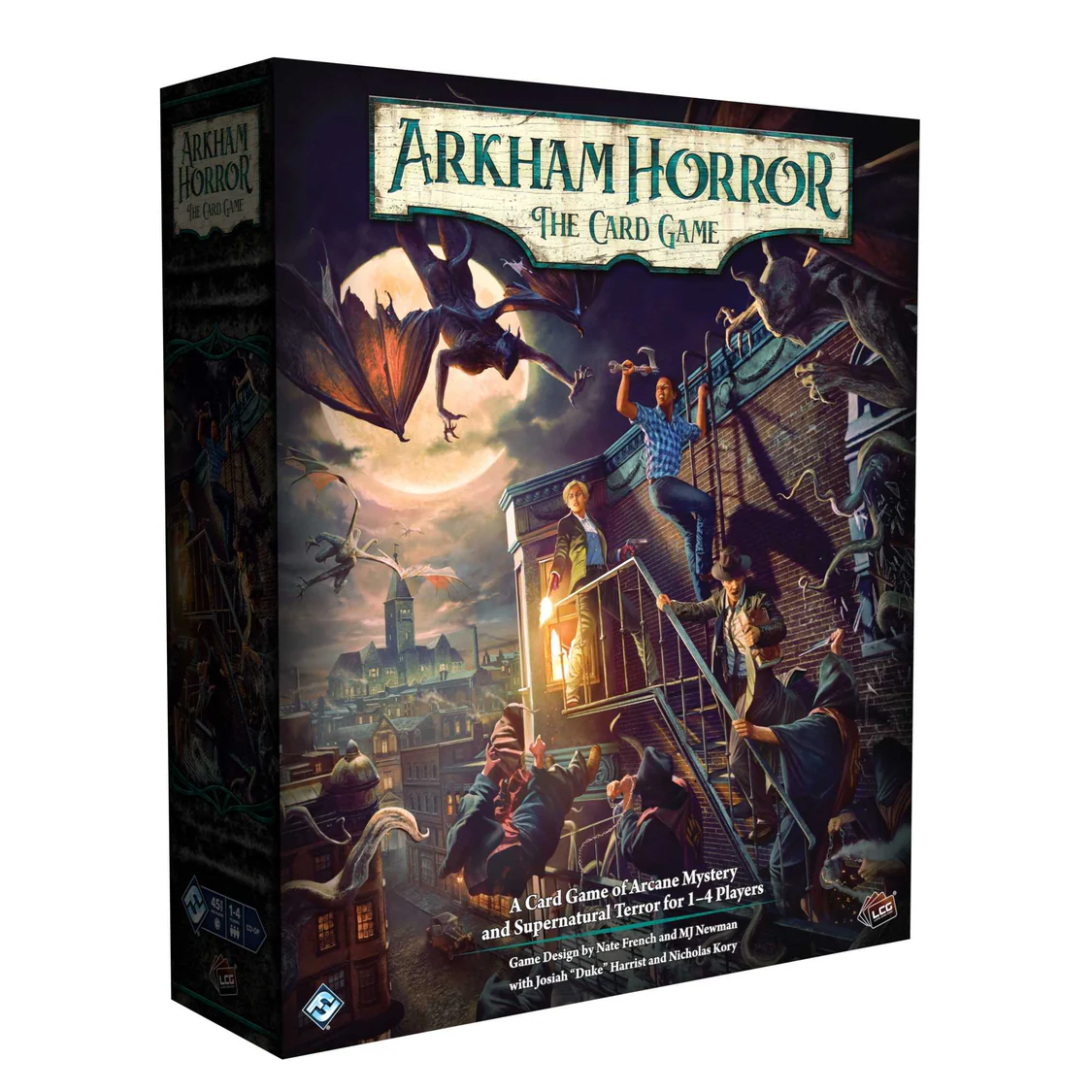
Arkham, MA – The ancient evils lurking in the shadows of Arkham have stirred once more, but this time, the true terror might be navigating the labyrinthine product lines of a beloved Living Card Game. Fantasy Flight Games (FFG) has initiated a bold, and some might say desperate, gambit with the release of "Chapter Two," a re-launched core set for its critically acclaimed cooperative horror game, Arkham Horror: The Card Game. This move aims to offer a "fresh start" for newcomers eager to delve into the Cthulhu Mythos, while simultaneously presenting a significant challenge and potential frustration for the dedicated legions of investigators who have sustained the game for years.
The decision to re-package and re-introduce Arkham Horror: The Card Game comes at a pivotal moment for FFG’s distinctive Living Card Game (LCG) model. Once lauded for its non-randomized expansion packs and predictable pricing, the LCG format, first pioneered in 2008 with Game of Thrones: The Card Game, has, in the eyes of many, grown "long in the tooth." The continuous churn of new products, coupled with the increasing difficulty of acquiring older, out-of-print content, has exposed significant cracks in its methodology, culminating in a barrier to entry that threatened to suffocate even FFG’s most popular titles.
"Chapter Two" is more than just a new box; it represents a strategic pivot designed to clear the path for a new generation of players. However, this fresh beginning for some arrives with an unsettling sense of uncertainty for others, forcing veterans to confront questions of integration, content longevity, and the publisher’s commitment to its long-standing community. The stakes are high: will this re-launch revitalize the game, or will it inadvertently alienate the very players who have kept its Eldritch flame burning?
The Evolution of Dread: A Chronology of the LCG Model and Arkham Horror’s Journey
To fully grasp the implications of "Chapter Two," it’s essential to understand the trajectory of Fantasy Flight Games’ Living Card Game model and Arkham Horror: The Card Game‘s place within it.
2008: The Birth of the LCG
The LCG model was conceived as a revolutionary alternative to the traditional Collectible Card Game (CCG) format, which often relied on blind booster packs and the elusive chase for rare cards. FFG’s Game of Thrones: The Card Game was the inaugural title, promising players a complete set of new cards with each expansion, eliminating randomness and offering a more predictable investment. This approach resonated deeply with players tired of the "pay-to-win" perception associated with CCGs.
2008-2016: The LCG Golden Age
Following the success of Game of Thrones, FFG rapidly expanded its LCG portfolio. Iconic titles such as The Lord of the Rings: The Card Game, Android: Netrunner, and Star Wars: The Card Game emerged, showcasing the versatility of the model across competitive and cooperative designs, diverse properties, and rich thematic settings. Players appreciated the certainty of knowing exactly what they were buying, fostering a sense of community around expanding card pools rather than card rarity.
2016: Arkham Horror: The Card Game Arrives
Amidst this successful era, Arkham Horror: The Card Game launched, quickly establishing itself as a standout cooperative experience. Blending deck construction, role-playing elements, and narrative-driven scenarios within H.P. Lovecraft’s terrifying Cthulhu Mythos, it garnered critical acclaim and a devoted following. Its innovative campaign structure, where player choices and outcomes carried over between linked scenarios, deepened the immersion and replayability, making it a true "lifestyle game" for many.
2017-2023: The LCG’s Growing Pains and Arkham’s Bloat
As years passed, the LCG model’s inherent challenges began to surface. While expansions were non-random, their sheer volume became overwhelming. For games like Arkham Horror: The Card Game, the product line grew exponentially, encompassing dozens of small scenario packs (blisters), larger deluxe expansions introducing new investigators and campaign chapters, and return-to-cycle boxes. This created a dense "maze of entry" for prospective new players. The initial core set, designed to be a starting point, quickly became insufficient, requiring multiple purchases to unlock the full deckbuilding potential and campaign arcs.
Compounding this issue was the inevitable cycle of products going out of print. Unlike CCGs with frequent reprints, the LCG model often saw expansions become unavailable, leading to astronomical prices on the secondary market. Newcomers faced the daunting task of not only understanding what to buy but also finding it at a reasonable price, if at all. Arkham Horror: The Card Game, with its literally "hundreds of releases," became a prime example of this problem, effectively closing its doors to many curious potential investigators. The core box itself saw multiple minor revisions over the years, often to accommodate new campaign structures or re-balance starter content, further complicating the landscape. This "Chapter Two" is, in essence, the third iteration of a Core Box, indicating FFG’s prior attempts to refine the entry point.
Unveiling the Horrors: Supporting Data on Gameplay and Design
Despite its logistical challenges, the enduring popularity of Arkham Horror: The Card Game is a testament to its exceptional design. "Chapter Two" aims to leverage this inherent quality by making it accessible once more.

The Core Experience: Cooperative Cthulhu Investigation
At its heart, Arkham Horror: The Card Game is a cooperative experience for one to four players, tasking them with assuming the roles of unique investigators. These characters are not merely pawns; they are fully fleshed out personalities, each defined by a bespoke deck of cards. These decks contain a mix of abilities, loyal allies, useful equipment, and potent spells or rituals, allowing for deep customization and strategic deckbuilding. As the game progresses, players draw from their decks, deploying cards to gain momentary benefits or establish lasting boons on their player tableau. This "tableau-building" aspect is crucial, as cards that remain in play build a stronger, more versatile "engine" that investigators can wield to greater effect against the encroaching Mythos. A well-constructed tableau might provide consistent resource generation, enhance combat prowess, or boost investigative skills, becoming vital as the challenges escalate.
Intricate Scenarios and Emergent Narrative
The game’s true brilliance lies in its scenario design. Each scenario is an intricate, self-contained mystery, brought to life by its own unique deck of cards. These cards represent locations, each a separate scene that can be explored; terrifying foes, from cultists to Eldritch abominations; and various challenges or treachery cards that test investigators’ resolve. Special rules often accompany scenarios, dictating unique objectives – perhaps uncovering the perpetrator of a gruesome murder, deciphering ancient runes, or unearthing a lost artifact from a forgotten tomb. The flexibility of the card-based locations allows for immense thematic variety, from exploring a haunted house room by room to embarking on a globe-spanning expedition across multiple burial sites. Investigators, represented by small character cards, physically move between these location cards, performing actions such as investigating, fighting, or playing cards.
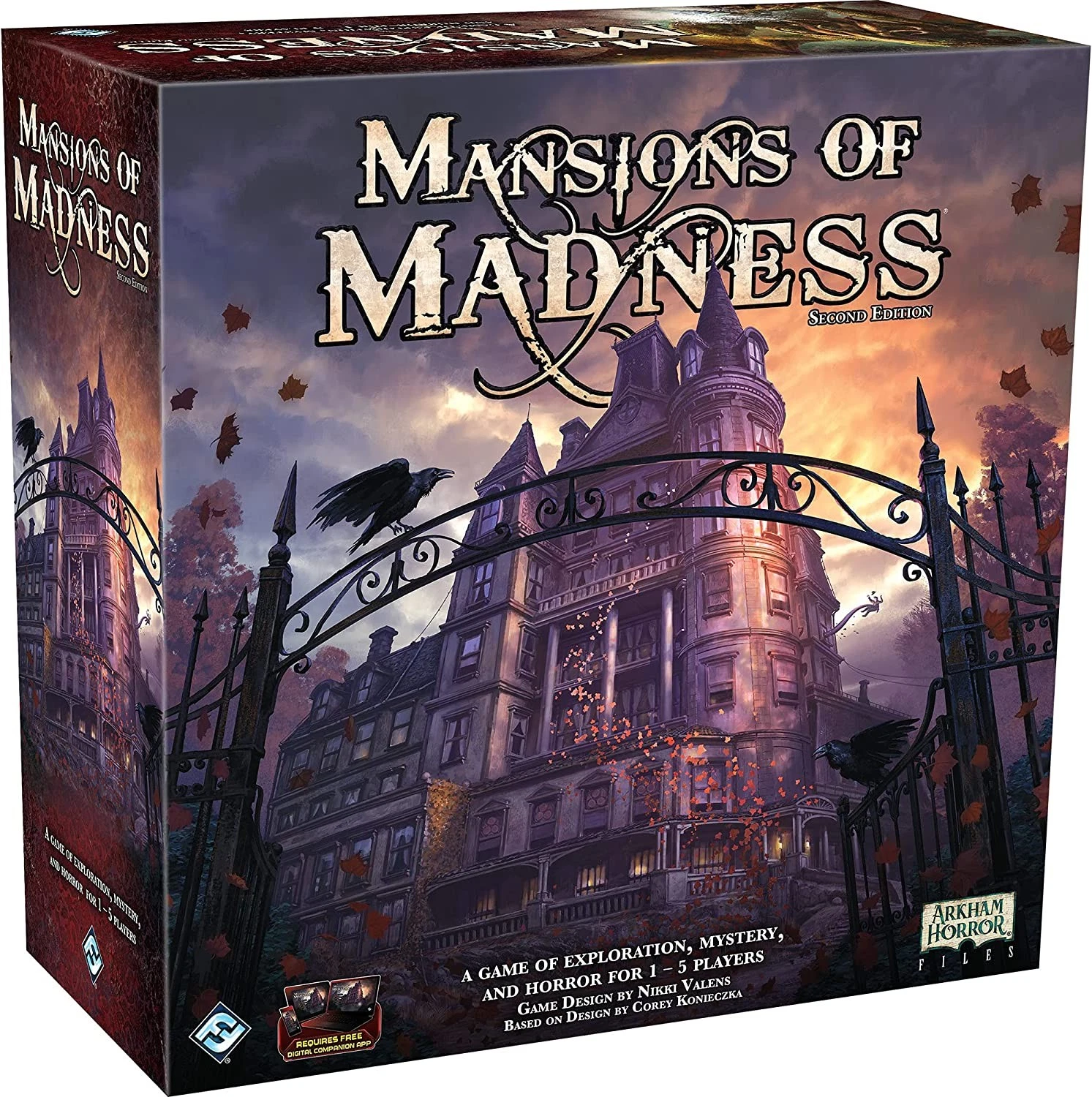
The narrative depth is another cornerstone of the experience. While the game features a campaign book that sets the stage and provides overarching plot points, much of the story emerges organically from the gameplay itself. Player choices, successful investigations, desperate struggles, and unexpected twists combine to produce a "cinematic tale of adventure." This emergent storytelling sets Arkham Horror: The Card Game apart, allowing players to reflect on their session and recount truly unique, personalized horror narratives. This narrative focus draws parallels with other prominent Cthulhu Mythos board games, such as the app-driven Mansions of Madness (2nd Edition) and the more traditional Arkham Horror 3rd Edition, but The Card Game offers a distinct blend of deep customization and unfolding story.
The "Chapter Two" Core Box: A Closer Look
The new core set includes:
- 5 Investigator character cards and 5 mini cards
- 224 Player cards (for investigator decks)
- 133 Scenario cards (for the campaign)
- 224 tokens (resources, clues, damage, horror)
- A Chaos bag (for skill tests)
- Campaign book
- Rulebook
This package offers a short, three-scenario campaign. Critically, one of these scenarios is noted as being "very similar to a previous campaign in the original boxed set." While providing a complete, albeit brief, narrative arc, the immediate lack of additional new scenarios is a significant concern, particularly for a game known for its extensive content. The absence of a clear roadmap for subsequent scenario releases in the near future poses a challenge to retaining the "new blood" it seeks to attract.

Fantasy Flight Games’ Rationale: Official Responses and Inferred Strategy
While Fantasy Flight Games has not issued a detailed "official response" explaining every facet of the "Chapter Two" re-launch, their actions and statements about previous product reorganizations allow for strong inferences regarding their strategic objectives.
The Publisher’s Dilemma and Solution:
FFG’s primary motivation is undoubtedly to address the significant barrier to entry that Arkham Horror: The Card Game‘s sprawling product line had become. The explicit mention of the existing line being "so bloated and unwieldy that newcomers would balk at navigating the maze of entry" directly points to this. Their solution is a "fresh start" – a streamlined, self-contained core box that makes the game immediately approachable. This is a clear attempt to:
- Lower the Entry Barrier: By offering a single, comprehensive starting point, FFG eliminates the confusion of multiple core sets, expansion cycles, and out-of-print content for new players.
- Streamline Distribution: A simpler product offering is easier for retailers to stock and for FFG to manage in terms of production and reprints.
- Boost Sales: A re-launch often generates renewed interest and can capture a market segment previously unwilling or unable to jump in.
- Future-Proofing: It’s possible FFG sees this as an opportunity to implement a more sustainable release model moving forward, perhaps with fewer, larger expansions or more structured content drops.
Addressing Veteran Concerns (or Lack Thereof):
The article highlights a significant flaw in the "Chapter Two" approach: its "rough integration of older content." FFG has made "some effort" to allow existing players to carry their collections forward, but it’s clearly not sufficient. The need to "adjudicate awkward decisions such as which versions of a card you will be using" and "do some fiddling to play older scenarios" indicates a less-than-seamless transition. This suggests FFG prioritized the new player experience over a perfectly smooth migration for veterans.
While FFG hasn’t explicitly stated "veterans are on their own," their approach implies a calculated risk. They are banking on the allure of new players outweighing the potential disgruntlement of existing ones. This strategy is common in long-running games but rarely comes without friction. The publisher’s focus seems to be on re-establishing a clear, viable pathway for the brand’s future growth, even if it means asking its most loyal customers to adapt or make difficult choices about their collections.
The Peripherals Strategy:
Interestingly, while new scenarios are absent, FFG, via its sister company Gamegenic, has released a "whole slew of player mats, card sleeves and deluxe tokens." This focus on high-quality, premium peripherals, while impressive in quality, also comes with a "seriously impressive" price tag. This move could be interpreted in several ways:

- Monetization: Capitalizing on the existing market for custom upgrades, often found on platforms like Etsy, by offering official, premium alternatives.
- Enhancing the Experience: Providing a more deluxe feel for players who enjoy high-quality components.
- Bridging the Content Gap: Perhaps these accessories are meant to tide players over during the initial content drought, offering something tangible to purchase and enhance their core experience.
It implicitly suggests a business decision to generate revenue through high-margin accessories while the game’s content pipeline is (presumably) being re-established.
Implications: A Glimmer of Hope Amidst the Shadows
The re-launch of Arkham Horror: The Card Game with "Chapter Two" carries significant implications for its community, Fantasy Flight Games, and the broader tabletop gaming industry.
For New Investigators: A Welcoming Beacon
For those who have long eyed Arkham Horror: The Card Game but were deterred by its complexity and availability, "Chapter Two" is an unmitigated boon. It offers an unprecedented opportunity to dive into one of the most acclaimed cooperative card games ever designed. The clear entry point, consolidated components, and updated rulebooks remove years of accumulated cruft, presenting a clean slate for exploration. The game’s inherent strengths—its deep narrative, customizable investigators, and engaging mechanics—are now more accessible than ever. However, this initial welcome could quickly turn to frustration if FFG does not follow up with a robust and timely release schedule for new scenarios. The current limited content means new players will rapidly exhaust the included campaign and find themselves in a similar content drought as veterans.
For Veteran Investigators: A Crossroads
For the dedicated community that has supported Arkham Horror: The Card Game for years, "Chapter Two" presents a difficult, often vexing, crossroads. Many veterans possess vast collections, painstakingly assembled over numerous cycles and campaigns. The "rough integration" of old content, forcing players to "adjudicate awkward decisions" or "do some fiddling," feels like a devaluation of their past investment and loyalty. The options are stark:
- Stay the Course: Continue playing with their existing, "closed off" collections, potentially viewing "Chapter Two" as a separate, parallel game.
- Attempt Integration: Endeavor to blend new and old, accepting the inevitable inconsistencies and manual adjustments.
- Abandon Ship: Express dissatisfaction by stepping away from the line entirely, feeling alienated by the publisher’s approach.
The risk of pushing away this core community, which has "kept the game humming for years" through word-of-mouth, fan content, and consistent purchases, is substantial. Their reaction will heavily influence the long-term perception and success of this re-launch.
For Fantasy Flight Games: A Calculated Risk
This move is a calculated risk for FFG. Its success hinges entirely on whether the influx of new players attracted by the simplified entry point can offset any potential losses from disgruntled veterans. The immediate lack of new scenario content is a critical misstep that could jeopardize this balance. While the core game design remains "impressive, evocative and thrilling," the "Chapter Two" set "doesn’t yet offer the content to back that up" as a "lifestyle game." FFG must rapidly demonstrate a commitment to new, compelling content that justifies the "fresh start" and provides a clear future path for both new and existing players. Without it, the re-launch could flounder, leaving the game in an even more precarious position.
Wider Industry Trends: A Precedent for Legacy Games?
The Arkham Horror: The Card Game re-launch also carries implications for the broader tabletop gaming industry. It highlights the inherent challenges faced by long-running LCGs and other expandable games that accumulate massive product lines. Publishers must continually grapple with how to attract new players without alienating their loyal base. This re-packaging strategy could serve as a model for other LCGs facing similar bloat, or it could stand as a cautionary tale if mishandled. The question of how to sustainably manage and introduce new content while maintaining accessibility remains a pervasive puzzle for the industry.

Conclusion: A Tantalizing but Imperfect Rebirth
In summary, Arkham Horror: The Card Game – Chapter Two is a mixed bag. The underlying game design remains a modern classic, offering an unparalleled cooperative narrative experience within the Cthulhu Mythos. For brand new players, this core set is an enticing, long-awaited invitation to a truly fantastic game. Now is arguably the perfect time to hop aboard.
However, the execution of this re-launch leaves much to be desired for its existing fanbase and raises questions about its long-term viability. The alienation of many of the design’s biggest fans, coupled with the noticeable dearth of immediate new scenario content, creates a precarious situation. Hopefully, this ambitious risk pays off for Fantasy Flight Games. The game deserves to find its footing again, and if the material arrives to support its exceptional design, Arkham Horror: The Card Game will continue to be a truly fantastic and worthy experience for investigators old and new. The terror may be fresh, but the path forward remains shrouded in cosmic uncertainty.
Review by Charlie Theel
Play it?
Maybe.
If you are new to this game and curious about what it has to offer, now is the perfect time to hop aboard. However, existing players have much less incentive, and may find the integration of new and old content cumbersome.
Try This if you Liked
- MANSIONS OF MADNESS (2nd Edition)
- Mansions of Madness sees you exploring the dark corners of Arkham and unearthing terrors that will crush a person’s mind. You can carry on that chilling investigative vibe in a more flexible, customizable, and campaign-driven format with Arkham Horror: The Card Game.
About Arkham Horror: The Card Game – Chapter Two
- Category: Card Games, Cooperative, Horror, Narrative
- Designers: Nate French, Josiah Harrist, Nicholas Kory, MJ Newman
- Publisher: Fantasy Flight Games
- Time to Play: 1-2 hours per scenario
- Players: 1-4 Players
- Age: 14+
- RRP: £70
What’s in the Chapter Two Core Box?
- 5 Investigator character cards
- 5 Investigator mini cards
- 224 Player cards
- 133 Scenario cards
- 224 tokens (clue/doom, resource, damage, horror)
- Chaos bag
- Campaign book
- Rulebook