Declining Trust in Science: From Enlightenment Ideal to Post-COVID Skepticism
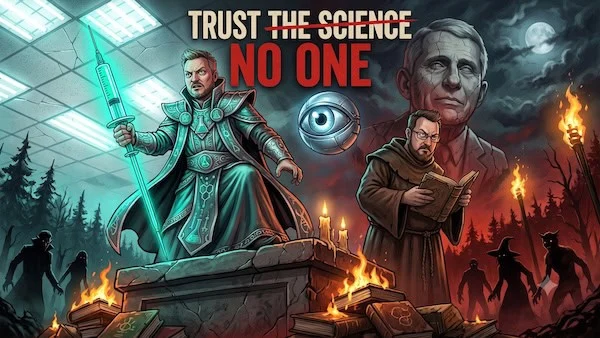
Washington D.C. – The recent subpoena of Dr. Anthony Fauci before Congress has ignited a firestorm of public discourse, forcing a reckoning with the public’s diminishing trust in scientific institutions. The revelations surrounding a personal diary, emailed to himself on a government computer, have amplified existing concerns about the handling of the COVID-19 pandemic and the perceived corporatization of scientific pursuits. This scrutiny, coupled with a growing cultural shift, suggests a fundamental reevaluation of science’s role as the ultimate arbiter of truth, echoing historical precedents of declining faith in established authorities.
The emergence of this diary, containing early contemplations on the origins of the virus and extensive personal reflections on media attention and public perception, has sent shockwaves through the scientific and political spheres. Even former supporters have voiced disillusionment, casting doubt on the unblemished integrity previously ascribed to leading scientific figures. This erosion of trust is not an isolated incident but rather a symptom of a broader trend, where science, once hailed as the successor to religious dogma as the primary source of truth, now faces its own crisis of credibility.
The Shifting Landscape of Truth: A Historical Perspective
The historical trajectory of truth-seeking reveals a cyclical pattern of societal reliance on authority. For centuries, religious institutions served as the bedrock of knowledge and moral guidance. However, as the clergy became perceived as decadent and self-serving, the Enlightenment heralded a paradigm shift. Science, with its emphasis on empirical observation and rational inquiry, rose to prominence, becoming the new beacon of objective truth. This era celebrated scientists as intrepid explorers of reality, unburdened by dogma and dedicated to uncovering the universe’s fundamental laws.
However, the COVID-19 pandemic appears to have triggered a significant recalibration of this trust. The widespread dissemination of information, coupled with evolving scientific guidance and instances of perceived scientific overreach, has led many to question the infallibility of scientific pronouncements. This skepticism is particularly pronounced among younger generations, who are increasingly turning to personal experience and anecdotal evidence as their primary sources of understanding the world.
This sentiment is reflected in the proliferation of online discourse, including memes and popular media narratives, that critique the perceived failures and commercialization of the scientific community. Works ranging from video games like Doom and Resident Evil to films such as Oppenheimer and The Torment Nexus often explore storylines where scientific endeavors are driven by profit, leading to catastrophic consequences. This cultural mirroring suggests a public unease with the direction and motivations of scientific progress.
The Fauci Testimony: A Catalyst for Scrutiny
Dr. Anthony Fauci’s appearance before Congress, following the release of over 1,100 pages of his private diary entries by Senator Rand Paul, served as a focal point for this burgeoning distrust. The diary entries revealed private discussions that appeared to diverge from his public statements regarding the origins of COVID-19, particularly concerning gain-of-function research. Furthermore, the personal notes highlighted an apparent preoccupation with media attention and celebrity interactions, a detail that many found disconcerting.
The public’s reaction, particularly on social media platforms like X (formerly Twitter), was swift and largely critical. Fauci’s repeated invocation of the Fifth Amendment, citing advice from counsel, was widely interpreted as an admission of guilt or an attempt to conceal information. Senators themselves voiced their concerns, framing his refusal to answer as self-incriminating. This performance underscored a palpable disconnect between the public’s expectation of transparency and the perceived evasiveness of a prominent scientific figure.
While Dr. Fauci has been the most visible face of the pandemic response, it is crucial to recognize that he is not the sole architect of this erosion of trust. Data from the Pew Research Center indicates a significant decline in the percentage of Americans who believe scientists act in the public interest. While confidence remains high at 77 percent, this figure represents a notable drop from the 87 percent recorded in April 2020, a decline that has stabilized but not reversed. This data point suggests a more systemic issue than the actions of a single individual.
The Historical Roots of Scientific Authority: From Clergy to Consensus
The shift in societal trust from religious authorities to scientists was not merely a replacement but a profound redefinition of how truth was understood and disseminated. In the Middle Ages, truth was largely mediated through the clergy, filtered by religious doctrine. This system, however, became susceptible to corruption, leading to a popular disillusionment that paved the way for a new intellectual order.
The Enlightenment’s embrace of science represented a move from an "ethos" (authority-based) to a "logos" (reason-based) approach to truth. The Protestant Reformation, with figures like Martin Luther, challenged the absolute authority of the Church, asserting that truth could exist independently of institutional dogma. This intellectual revolution gradually extended to the scientific realm, where independent investigators began to challenge established paradigms, such as the geocentric model of the universe, in favor of empirically verifiable facts. For centuries, this model of science as a self-correcting, truth-seeking endeavor held sway, earning it significant public trust.
The Rise of Pathos and the Corporatization of Science
However, a subsequent shift, beginning around the late 19th century, has been observed from "logos" to "pathos," where emotional appeals increasingly dominate public discourse. This manifests in debates where arguments are framed not by logical fallacies but by expressions of hurt feelings, indicating a move away from rational debate towards subjective emotional responses.
In the context of science, this transition has been exacerbated by what many perceive as an "ethos" argument from the scientific establishment. Rather than presenting objective data, there is a sense that scientists often present themselves as an unassailable authority, where "consensus" dictates truth, even when that consensus is manufactured or misrepresented. This perceived arrogance and defensiveness, particularly when confronted with dissenting views, mirrors the historical failings of the clergy that initially propelled science to its elevated status.
The financial incentives within modern scientific research, particularly in pharmaceuticals and consumer products, have also contributed to this skepticism. The development of vaccines, for instance, which can be made mandatory, represents a guaranteed revenue stream. This raises legitimate questions about whether the primary motivation is public health or consistent profit, especially when annual vaccination campaigns become the norm. The history of science itself is replete with examples of self-correction, such as the discovery of the detrimental effects of leaded gasoline and the ozone-depleting properties of certain aerosols. In these instances, science acknowledged its errors and adjusted its course. The concern today is that pronouncements like "the science is settled" or claims of unquestionable safety and efficacy are presented as immutable truths, stifling the very inquiry that defines the scientific process.
The COVID-19 Vaccine and the Broken Promise
The COVID-19 pandemic and the subsequent development and rollout of vaccines provided a critical juncture for public trust. The initial promises that vaccination would prevent infection and transmission of the virus, coupled with the significant financial gains for pharmaceutical companies, have led to a reassir.ance among a segment of the population. When these promises proved to be inaccurate, and individuals who were vaccinated still contracted and spread the virus, a significant number felt betrayed. This experience has fostered a deep skepticism, particularly among younger demographics, leading to terms like "you sound vaccinated" becoming an insult, akin to being labeled an "NPC" (non-player character) who mindlessly follows a prescribed narrative.
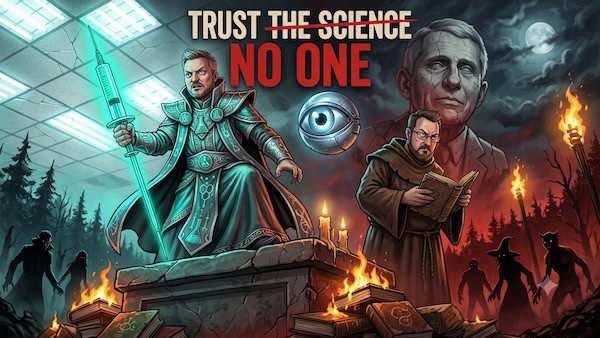
For military personnel, who may have been ordered to receive the vaccine, this skepticism is compounded by personal experiences of adverse reactions. The perception that mandates are being enforced without sufficient consideration for individual well-being has further fueled distrust. The narrative has shifted, and for those who refused vaccination and faced discharge, a sense of defiant heroism has emerged, adding another layer to the complex social dynamics surrounding scientific authority.
The Cultural Shift: From Materialism to the Supernatural
This erosion of faith in established scientific authorities has created a void, which is increasingly being filled by a renewed interest in the supernatural and the unexplained. The once-dominant materialist worldview, which posits that only the physical world is real, is facing a challenge from a generation that is more open to spiritual beliefs, paranormal phenomena, and a broader understanding of reality.
This shift is evident in popular culture. The influence of podcasters like Joe Rogan, who provides a platform for discussions on topics like Bigfoot, aliens, and interdimensional beings without the dismissive attitude of traditional scientific discourse, has been significant. His willingness to treat these subjects as worthy of serious conversation normalizes curiosity about the unexplained and provides a counterweight to the perceived arrogance of the scientific elite.
The book market further illustrates this trend. Data from Circana BookScan indicates sustained strength in genres like romantasy, dark fantasy, and horror, particularly within the Young Adult fiction category. This suggests a growing appetite for narratives that explore themes beyond the purely physical, where magic, ancient powers, and unexplained forces are central to the plot. This commercially viable demand for meaning beyond the material world signifies a cultural permission structure that has fundamentally shifted.
The New Priesthood: Engineering and the "Magic" of Narrative
In this evolving landscape, the distinction between science and engineering has become blurred. While historically science sought to understand the fundamental laws of nature, engineering focuses on applying those principles to solve practical problems. Some prominent figures, like Elon Musk, openly express a preference for engineering over pure science, emphasizing practical application and innovation. This shift may represent a more "humbler, less corrupted denomination" of the materialist worldview, focusing on tangible outcomes.
However, the public’s desire seems to have moved beyond mere practical application. The demand for "magic" in storytelling has surged. Genres that incorporate fantastical elements, such as wizard detectives (The Dresden Files), magical schools (Harry Potter, Percy Jackson), or epic fantasy with intricate magic systems (Brandon Sanderson, George R. R. Martin), have achieved widespread popularity. Conversely, traditional science fiction, which emphasizes scientific accuracy, is often perceived as less engaging, with many contemporary works in the genre relying on a veneer of science to explain inherently magical or unexplained phenomena.
Even in ostensibly scientific narratives, the underlying appeal often lies in the fantastical. Andy Weir’s The Martian and Project Hail Mary, while celebrated for their scientific accuracy, are fundamentally stories of ingenious engineering and problem-solving, rather than explorations of fundamental scientific principles. Brandon Sanderson’s meticulously crafted magic systems, which often mirror the scientific method in their exploration and application, offer a bridge between the two. His work suggests that rigorous, rule-based magic can satisfy the modern reader’s desire for wonder while retaining a sense of intellectual engagement.
The Resurgence of the Supernatural: A Cultural Reversal
This trend is further evidenced by the declining influence of "New Atheism" and the increasing openness to spirituality among younger generations. Surveys indicate a rise in belief in paranormal phenomena, a greater acceptance of spirituality, and a questioning of the purely materialist worldview that dominated the late 20th century. The once-edgy pronouncements that science had rendered the supernatural obsolete now feel dated.
The historical narrative of witchcraft provides a poignant example. While early societies believed in the tangible power of witches, leading to persecution, the scientific revolution declared them non-existent. Now, there is a resurgence of interest in these beliefs, with people questioning whether there might be more to these ancient narratives than previously acknowledged. This fascination with ancient knowledge and the unseen is a testament to a cultural yearning for something beyond the purely empirical.
The appeal of stories where characters navigate fantastical worlds governed by strict rules, such as the "magical DMV" scenario, reflects a desire for order within the extraordinary. This resonates with the appeal of authors like Larry Correia, whose works feature the hunt of monsters as a dangerous but lucrative profession, blending action with a belief in the tangible reality of the supernatural.
The Role of AI and the Limits of Pure Materialism
The development of Artificial Intelligence also offers insights into the limitations of a purely materialist perspective. When AI systems are allowed to operate without the constraints of a physical body and its inherent limitations, they can "hallucinate," generating nonsensical outputs and making outlandish claims. This is because the AI lacks the grounding of embodied experience, which provides humans with a crucial framework for understanding reality. The inability of AI to truly "use science" highlights the importance of embodied perception and lived experience in grounding knowledge.
The historical context of the Bible, with its accounts of book burnings and interactions with what could be interpreted as supernatural forces, offers another lens through which to view this shift. While 20th-century materialism often interpreted these events through a purely rationalistic lens, dismissing them as superstition, a contemporary reading may acknowledge the potential reality and danger of the forces described. The Old Testament, for instance, can be reinterpreted not as a prohibition against fake gods, but as a warning against dangerous, rival powers.
Conclusion: A Search for Truth and Wonder in a Fractured World
The current climate of declining trust in science is a complex phenomenon with deep historical roots and far-reaching cultural implications. The revelations surrounding Dr. Fauci and the COVID-19 pandemic have served as a catalyst, exposing vulnerabilities in the scientific establishment’s credibility. This, coupled with a growing cultural shift away from strict materialism and towards a renewed interest in the supernatural, suggests a fundamental reevaluation of how society seeks and understands truth.
The challenge for science moving forward is to rebuild trust not by asserting authority, but by demonstrating transparency, intellectual humility, and a genuine commitment to the pursuit of truth. The historical arc of human understanding reveals that when established authorities fail to meet the needs of the populace, new avenues of inquiry and belief emerge. The current cultural moment, with its embrace of wonder and its skepticism of unchallenged pronouncements, may well represent the dawn of a new era in humanity’s ongoing quest for meaning. The future of science hinges on its ability to adapt to this evolving landscape, to embrace the complexity of human experience, and to reaffirm its role as a rigorous, yet open-minded, seeker of truth.