The Architect of Baroque Surrealism: Exploring the Transcendent Worlds of Jesús Aguado
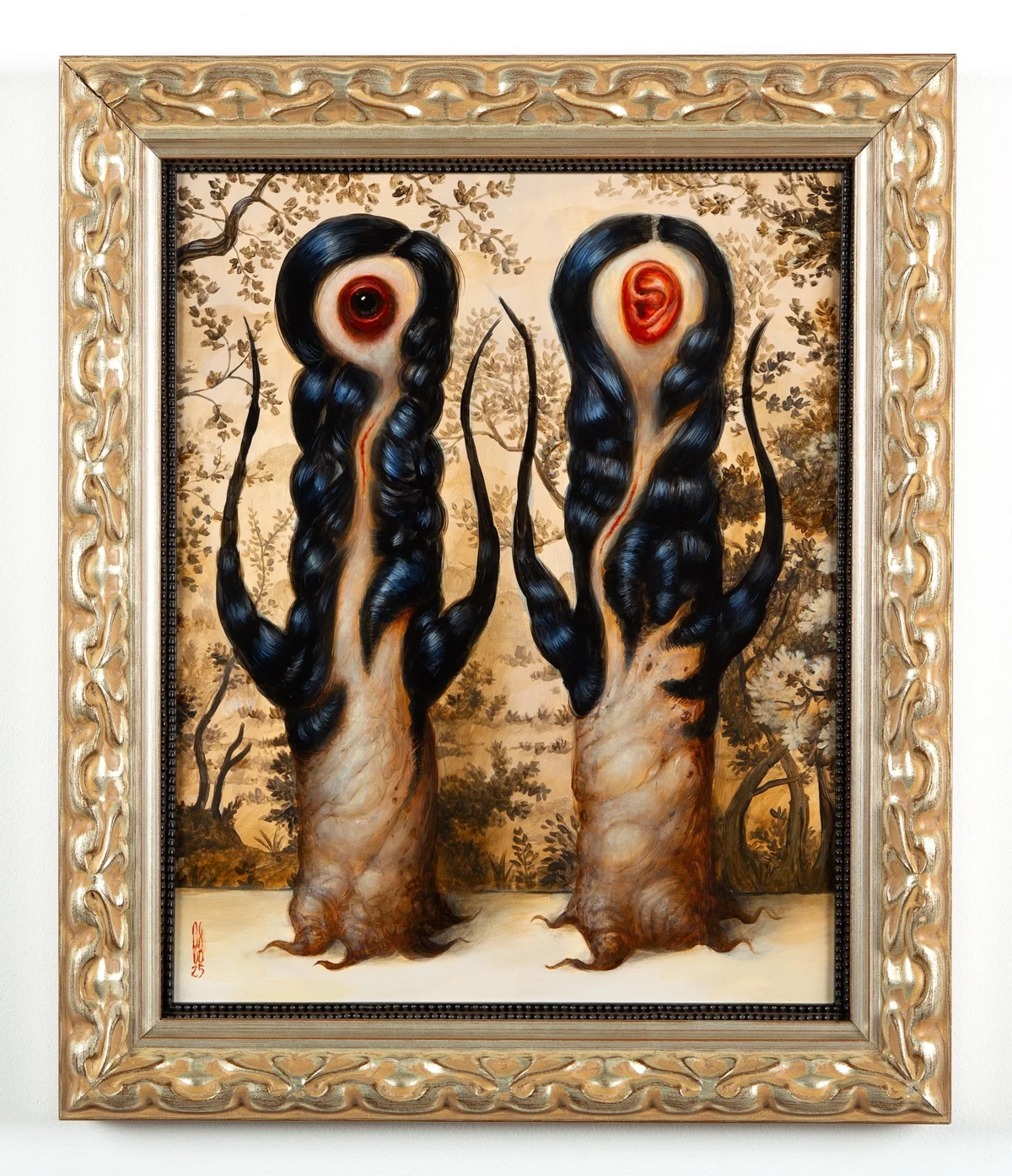
The contemporary art world often grapples with an inherent tension between accessibility and profundity. For decades, the prevailing sentiment in high-art circles suggested that for a work to be intellectually significant, it must be aesthetically challenging or intentionally obtuse. Conversely, "accessible" art was frequently dismissed as merely decorative or commercial. However, Spanish artist Jesús Aguado (b. 1976) has spent the better part of the last decade dismantling this dichotomy. Through a masterful fusion of classical Renaissance techniques and a modern, comic-book-inspired imagination, Aguado has pioneered a genre often described as "Baroque Surrealism."
His latest exhibition, Life Milestones, currently on display at Arch Enemy Arts in Philadelphia, serves as a testament to his unique trajectory—from a high-stakes commercial illustrator to one of the most compelling voices in modern surrealism. This article explores the evolution of Aguado’s career, the technical alchemy of his process, and the profound psychological implications of his work in an era of digital overstimulation.
Main Facts: The Emergence of a New Bestiary
Jesús Aguado’s rise in the fine art world is not the result of a sudden, meteoric flash of inspiration, but rather the culmination of twenty years of rigorous discipline. Born in Valladolid, Spain, Aguado represents a bridge between the historical weight of European art and the fast-paced demands of global publishing.

The central fact of Aguado’s work is its refusal to be categorized by a single era. His canvases are populated by "chimerical, often anthropomorphic figures" that inhabit dreamscapes that are simultaneously fantastical and emotionally urgent. Unlike many of his contemporaries in the Pop Surrealism or Lowbrow movements, Aguado brings a level of technical sophistication—specifically in his use of chiaroscuro and acrylic glazing—that rivals the Old Masters.
His current exhibition, Life Milestones, marks a pivotal shift in his thematic focus. Inspired by the birth of his son in 2023, the collection moves beyond mere fantasy into the realm of existential metaphor. The works utilize a recurring cast of creatures—dragons, rabbits, worms, and hybrid insects—to represent the transformative moments that define a human life. By banishing human figures from his compositions, Aguado creates a universal visual language that transcends demographic and cultural barriers, allowing viewers to project their own experiences onto his "dual animated beings."
Chronology: From the Editorial Trenches to the Gallery Walls
1976–2000: The Foundations in Valladolid and Salamanca
Jesús Aguado’s artistic DNA was forged in the academic traditions of Spain. He earned his Fine Arts credentials at the University of Salamanca, an institution steeped in history and classical methodology. However, rather than immediately seeking the gallery circuit, Aguado entered the world of professional illustration.

2000–2017: Two Decades of Universal Communication
For twenty years, Aguado worked in the "trenches" of commercial publishing. His client roster was diverse and prestigious, including the Spanish textbook giant Santillana, National Geographic, and various children’s publishers across the globe, reaching as far as Taiwan.
This period was critical for his development. Editorial work requires an artist to distill complex ideas into immediate, understandable visuals while adhering to strict deadlines and cultural sensitivities. Aguado learned how to make art that could resonate with a Spanish schoolchild just as effectively as a reader in East Asia. This mastery of "universal visual communication" would later become his greatest asset in the fine art world.
2017–2018: The Artistic Pivot
Around 2017, the creative pressure of two decades of editorial constraints reached a breaking point. Aguado transitioned from digital and commercial media to oil and acrylic painting on traditional supports. This wasn’t a rebellion against his past, but a maturation of it. He began engineering a new kind of surrealism—one that invited the viewer in with vibrant, accessible imagery before revealing layers of dark, Baroque complexity.

2020–Present: The Arch Enemy Arts Era
Aguado’s transition was met with immediate critical and commercial success. Since 2020, he has maintained a fruitful relationship with Arch Enemy Arts in Philadelphia, a premier venue for Pop Surrealism. His third solo exhibition, Life Milestones (2025), represents the pinnacle of this journey, showcasing an artist who has fully integrated his commercial precision with his fine art depth.
Supporting Data: The Technical Alchemy of Light and Density
Aguado’s work is defined by two core technical principles: the "Density Principle" and his unique application of light.
The Density Principle (Horror Vacui)
Aguado’s canvases are characterized by horror vacui—the fear of empty space. This is a direct nod to Baroque masters like Peter Paul Rubens. His compositions are "a feast for the eyes," packed with a myriad of animals, plants, and narrative threads. In the context of the 21st century, this density serves as a strategic mirror of our digital age. However, unlike the chaotic noise of social media, Aguado’s density is organized and rhythmic, offering a "strategic overwhelm" that rewards sustained looking rather than the instant consumption typical of the internet.

Light as Philosophy
Technically, Aguado achieves his signature "shimmer" through the meticulous use of acrylic glazing. By applying multiple translucent layers, he allows light to pass through the paint and bounce off the underlying surface. This creates a luminosity that makes his impossible creatures feel tangibly present.
Furthermore, Aguado chooses to paint on traditional wood panels and birch supports. This is a deliberate choice intended to lend "gravitas" to his whimsical subjects. The rigidity and weight of wood contrast with the fluid, dreamlike nature of his themes, creating a dialogue between the permanence of the medium and the fleeting nature of the dream.
The Symbolic Bestiary
Data from his recent series reveals a consistent symbolic language:

- Dragons: Representing ferocity, raw power, and the untamed aspects of the psyche.
- Rabbits: Embodying cuteness, vulnerability, and the innocence of early development.
- Worms/Insects: Suggesting the grotesque, the transformative, and the cycle of decay and rebirth.
Official Responses and Critical Reception
Critics have hailed Aguado’s work as "Renaissance beauty impregnated with the darkest baroque." The consensus among art historians and gallery owners is that Aguado is doing more than just painting "monsters"; he is creating "academic poetry."
Noah Antieau, director of Arch Enemy Arts, has noted that Aguado’s work possesses a rare "institutional confidence." This is evidenced by the artist’s ability to bridge the gap between Lowbrow/Pop Surrealism and high-concept fine art. Critics point out that while his work is "metaphorical and funny," it carries an underlying "Baroque emotionality" that prevents it from becoming trivial.
Aguado himself provides the most insightful "official response" to his own work. Regarding his shift toward existential themes, he states: "Since my son was born, I’ve been thinking a lot about life, about the crucial moments in a person’s development… Experiencing life through your child again makes you think and reconsider everything you’ve been through." This biographical honesty has resonated deeply with collectors, who see his latest series as a visual prescription for the "exhausting" amount of information and opinions that saturate modern life.

Implications: Building Sanctuaries for the Overstimulated Mind
The implications of Jesús Aguado’s work extend far beyond the aesthetic. His career trajectory suggests a shifting paradigm in the art world where the "commercial" background is no longer a stain on an artist’s reputation but a "superpower" that ensures their work remains grounded in communication.
Psychological Architecture
Aguado’s mission is to create "psychological architecture"—spaces where "joy and darkness coexist." In a world that feels increasingly fragmented by digital noise, Aguado’s art functions as a pressure valve. By creating a space for the "free play of our imaginations," he offers a rare form of psychological refuge.
The Future of Surrealism
Aguado’s success suggests that the future of surrealism lies in "accessible profundity." His work proves that surrealism does not need to choose between emotional accessibility and art-historical significance. As we move deeper into the 21st century, the demand for art that can navigate the contradictions of the human experience with grace—offering "vivacious ecstasy of tranquil joy" alongside "dark baroque" imagery—will only increase.

Conclusion: The Visual Vocabulary We Need
Jesús Aguado has achieved something remarkable: a new visual language that feels both ancient and urgently modern. His legacy is the proof that an artist can master the techniques of the past to address the anxieties of the future. In an era demanding the navigation of contradiction, Aguado has provided the visual vocabulary necessary to understand our own "Life Milestones."
Exhibition Details:
- Show: LIFE MILESTONES by Jesús Aguado
- Venue: Arch Enemy Arts, Philadelphia
- Dates: May 24 – June 15, 2025
- Opening Reception: First Friday, June 6, 2025
- More Information: archenemyarts.com