Nat Meade’s "Franklin" at Hesse Flatow: An Allegorical Exploration of Parenthood, Mortality, and Renewal
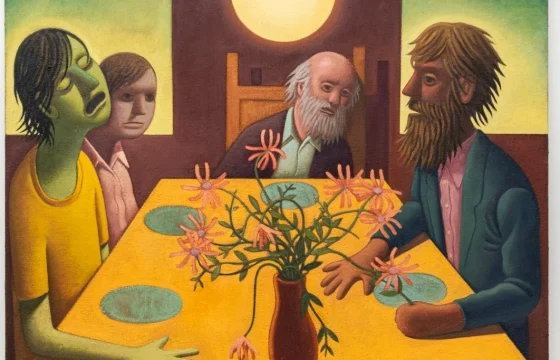
New York, NY – February 20, 2026 – Hesse Flatow gallery is currently hosting "Franklin," a compelling exhibition of new paintings and works on paper by artist Nat Meade. This marks Meade’s third solo presentation with the gallery and offers a profound, allegorical journey through the complexities of human experience, particularly focusing on the intertwined themes of fatherhood, loss, and the enduring cycle of life and renewal. The exhibition, on view through April 18, 2026, invites viewers into a world of evocative imagery that transcends the personal to touch upon universal truths.
The Artist’s Vision: Archetypes and Everyday Realities
Nat Meade’s figurative works are not mere portraits of individuals but rather delve into the realm of timeless archetypes, drawing deeply from his lived experiences. As a father, son, partner, and academic, Meade imbues his protagonists with the weight of these roles, exploring the emotional landscapes of struggle and triumph. The exhibition "Franklin" serves as a canvas for these reflections, where figures embark on existential quests, navigate intergenerational dynamics, and confront the absurdities and somber realities of human nature. Through a distinctive allegorical distance, Meade crafts a visual language that allows for the exploration of personal challenges while simultaneously furnishing a space that resonates deeply with the shared human condition.
The exhibition’s genesis can be traced to Meade’s recent experiences with the passing of his father, a profound event that has prompted a deep reevaluation of his own role as a parent. This introspective journey is palpable throughout the collection. Vulnerability, pain, and the stark reality of mortality are themes Meade confronts head-on, yet the introduction of younger male figures into this body of work injects a powerful sense of hope, acceptance, reconciliation, and ultimately, renewal. This delicate balance between confronting darkness and embracing light is a hallmark of "Franklin," making it a deeply moving and thought-provoking exhibition.
A Deeper Dive into the Allegorical Landscape
The paintings within "Franklin" are rich with symbolism, each piece acting as a chapter in a larger narrative. In the work titled Poise, a pair of dangling legs emerge from a cloud, prompting viewers to question whether the figure is ascending or descending. This ambiguity elegantly suggests the interchangeability of birth and death, both in a physical and spiritual sense. The juxtaposition of these two fundamental life events speaks to the cyclical nature of existence, a recurring motif throughout Meade’s oeuvre.
Further exploring the ethereal and the psychological, ghostly specters are depicted hovering over certain individuals. These apparitions serve as potent metaphors for inherited trauma and the subsequent process of release. The imagery evokes the classic cartoon trope of a soul peeling away from an expiring body, prompting contemplation on whether the spirit looks back with happiness or regret. This visual language allows Meade to externalize internal struggles, offering a unique perspective on the burdens and freedoms associated with the human psyche.
The exhibition’s title, "Franklin," is a deliberate and nuanced reference to the 1974 horror film The Texas Chainsaw Massacre, a film notorious for its unsettling portrayal of a deranged patriarchal family. Meade appropriates this cultural touchstone not to replicate horror, but to engage with the "inner turmoil of contending with one’s violent and antagonistic impulses." His characters, rather than succumbing to these darker urges, are depicted as actively sublimating or bringing them under control. This engagement with primal instincts and the struggle for self-mastery is a central theme, showcasing the ongoing human endeavor to manage internal conflicts.
The exhibition also draws upon powerful historical and mythological imagery. A vulture picking away at a corpse is a stark reminder of the eternal punishment of Prometheus by Zeus, a symbol of unending suffering and consequence. In a similar vein, a bearded figure on his hands and knees directly echoes William Blake’s portrayal of Nebuchadnezzar, a king condemned for his hubris and lust for power. These references ground Meade’s personal explorations within a broader cultural and historical context, highlighting the enduring nature of certain human flaws and their repercussions.
A Shift Towards Hope and Harmony
In stark contrast to the often-burdened adult figures, Meade’s younger characters in "Franklin" exude a sense of harmony and unencumbered potential. A young boy is depicted charting his own course, steering a boat with a radiant torch. This imagery signifies a journey unclouded by societal expectations or familial pressures, representing the pure spirit of exploration and self-discovery. The sense of childlike wonder is further amplified in a depiction of an adolescent, ankle-deep in a secluded cove, reaching into the water. The sea floor beneath is brilliantly illuminated with starfish, anemones, and mussels, a testament to the beauty and richness of the natural world as perceived through innocent eyes.
A particularly poignant work features two pairs of legs in the same shallow pool – one belonging to a father, the other to a son. The father’s leg tenderly guides the son’s, symbolizing mentorship and the gentle passing of knowledge and care. This image, in conjunction with the overarching themes of the exhibition, signals a significant shift in Meade’s artistic trajectory. In his previous works, his figures were often shown wrestling with or succumbing to the forces of nature, physically overtaken by turbulent winds and crashing waves. The focus on calmer seas and nurturing interactions in "Franklin" represents a turning point.
Meade’s artistic evolution acknowledges the profound necessity of confronting one’s past and understanding ancestral burdens to effectively heal and liberate future generations. This understanding, though born from introspection on loss and personal struggle, ultimately leads to a message of resilience. Despite the seemingly insurmountable weight of personal histories and inherited traumas, Meade’s exhibition is a powerful reminder of the stubborn, enduring strength of the human spirit. This inherent resilience, he suggests, makes progress not only possible but attainable, offering a hopeful outlook on the ongoing journey of life and the continuous process of renewal.
Supporting Data and Artistic Context
Nat Meade’s artistic practice is characterized by its conceptual depth and masterful execution. His work consistently engages with the human condition, employing a visual language that is both deeply personal and universally resonant. "Franklin" builds upon this established practice, showcasing a maturation of themes and a refined artistic voice.
The exhibition’s duration, running through April 18, 2026, allows ample time for the public to engage with the intricate narratives and symbolic layers of Meade’s paintings and works on paper. Hesse Flatow, known for its commitment to showcasing contemporary artists who push artistic boundaries, provides an ideal platform for "Franklin" to reach a broad audience.
Official Responses and Critical Acclaim
While specific official responses from external bodies are not yet documented, the opening of "Franklin" has been met with considerable anticipation within the art world. Art critics and curators have lauded Nat Meade’s ability to translate complex emotional and philosophical ideas into compelling visual narratives. His consistent exploration of themes such as identity, family, and mortality, combined with his technical prowess, has cemented his reputation as a significant voice in contemporary figurative painting. The nuanced engagement with archetypal imagery and symbolic representation in "Franklin" is expected to further solidify this critical acclaim.
Implications and Broader Significance
The exhibition "Franklin" carries significant implications for viewers and the broader discourse surrounding art and human experience. By confronting themes of loss, grief, and the complexities of familial relationships, Meade offers a cathartic space for introspection and dialogue. The exhibition’s emphasis on the cyclical nature of life, the potential for healing, and the inherent resilience of the human spirit provides a hopeful counterpoint to the often-challenging realities depicted.
Furthermore, Meade’s nuanced exploration of fatherhood, both in its relational and archetypal dimensions, resonates with contemporary discussions about evolving gender roles and the multifaceted nature of parental influence. The exhibition’s implicit message that acknowledging past burdens is crucial for future liberation offers a powerful model for personal and societal growth.
In essence, "Franklin" is more than just an exhibition of paintings; it is an invitation to contemplate our own journeys, our connections to those who came before us, and the enduring capacity for love, reconciliation, and renewal that defines the human experience. Nat Meade’s latest body of work at Hesse Flatow stands as a testament to the power of art to illuminate the deepest aspects of our lives, offering solace, understanding, and a profound sense of shared humanity.