The Scaling Supremacy: Sam Altman Rejects ‘LLM Dead End’ Theories as OpenAI Prepares GPT-5.6
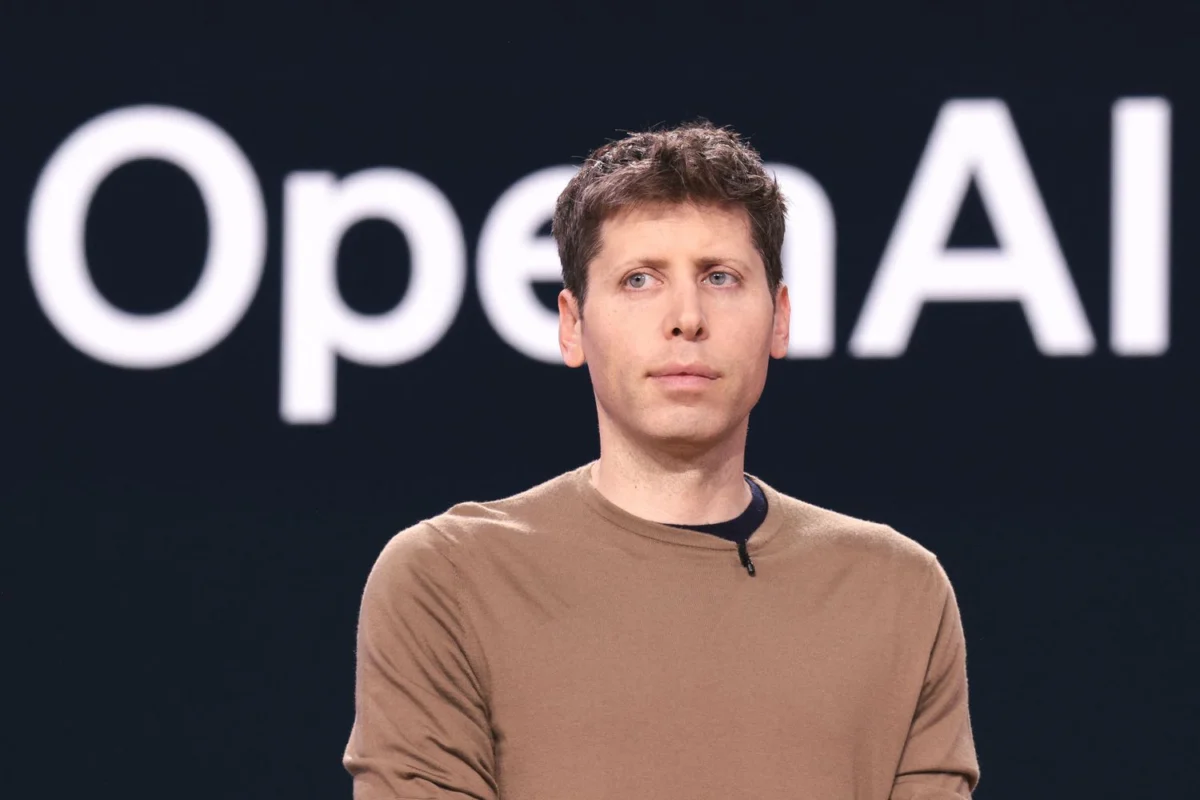
STANFORD, CA — In a definitive defense of the technological trajectory that birthed the modern AI era, OpenAI CEO Sam Altman has issued a sharp rebuttal to skeptics who claim that Large Language Models (LLMs) are approaching a plateau. Speaking at a recent engagement at Stanford University, Altman characterized the "scaling laws"—the principle that more data and more compute lead to exponentially more capable models—as the most resilient bet in technology today.
As OpenAI prepares for the anticipated launch of GPT-5.6, a model family reportedly designed to bridge the gap between simple text generation and complex scientific reasoning, the debate over the future of artificial intelligence has reached a fever pitch. Altman’s comments underscore a widening schism in Silicon Valley: between those who believe the current architecture can reach Artificial General Intelligence (AGI) through sheer scale, and those who argue that a fundamental "renaissance" in AI architecture is required to move beyond the limitations of current systems.
Main Facts: The Scaling Hypothesis and the Stanford Address
The core of Sam Altman’s argument rests on the "Scaling Hypothesis." This theory suggests that the capabilities of LLMs—such as reasoning, coding, and creative synthesis—are emergent properties that manifest as models are fed more computational power (compute) and higher volumes of data.
During his Stanford appearance, Altman was blunt about the skepticism that has trailed OpenAI since the release of GPT-2. "Betting against LLMs scaling at this point feels quite misguided to me," Altman stated, noting that many researchers have historically been "too confident" about the limitations of the technology. He suggested that an entire generation of AI scientists may have hindered progress by dismissing scaling as a "brute force" method lacking "true" intelligence.
The timing of these remarks is not coincidental. OpenAI is currently navigating the transition from GPT-4o to the next generation of frontier models. GPT-5.6, the latest iteration being discussed in industry circles, is expected to focus on "agentic" behavior—the ability for an AI to perform multi-step tasks over long durations without human intervention. By doubling down on scaling, Altman is signaling to investors and the public that the "wall" some experts predicted is nowhere in sight.
Chronology: From Transformers to the Scaling Wars
The journey to Altman’s current stance began in 2017 with the publication of the seminal paper "Attention Is All You Need" by Google researchers, which introduced the Transformer architecture. However, it was OpenAI that took this architecture and applied the principle of massive scale.
- 2019–2020: The Emergence of Scaling Laws. Researchers at OpenAI published papers suggesting that model performance follows a power law relative to compute, data size, and parameter count. This led to the creation of GPT-3, which shocked the world with its few-shot learning capabilities.
- 2022–2023: The GPT-4 Breakthrough. While critics argued that GPT-3 was a "stochastic parrot" (merely repeating patterns without understanding), GPT-4 demonstrated advanced reasoning and passed the Bar Exam in the 90th percentile. This era cemented the belief within OpenAI that scaling was the primary driver of intelligence.
- Late 2023 – Early 2024: The Rise of the Skeptics. As the rate of visible improvement between GPT-4 and its incremental updates (like GPT-4 Turbo) appeared to slow to some observers, high-profile figures like Meta’s Chief AI Scientist Yann LeCun began to vocalize the "dead end" theory.
- Mid-2024: The Shift to Reasoning. OpenAI released the "o1" series (internally known as Strawberry), which used "Chain of Thought" processing to solve complex math and coding problems. This served as a precursor to Altman’s recent claims that LLMs are not just remixing data but creating new knowledge.
Supporting Data: Disproving Conjectures and the Science of Scale
To support his claim that LLMs are evolving beyond mere pattern recognition, Altman revealed a significant milestone: an OpenAI model recently disproved a long-standing mathematical conjecture. While the specific conjecture was not named, the implication is profound. In mathematics, disproving a conjecture requires a level of logical rigor and "novelty" that critics previously argued LLMs were incapable of achieving.

"If a model can help produce a new mathematical result, it is no longer accurate to say LLMs only remix existing text," Altman argued.
This is supported by internal data regarding "post-training" and "inference-time compute." The industry is moving from simply training larger models to allowing models to "think" longer before they respond. This shift—seen in the upcoming GPT-5.6—suggests that scaling is no longer just about the size of the brain (parameters) but the duration and depth of the thought process (inference scaling).
Furthermore, the "Chinchilla Scaling Laws," established by DeepMind researchers, have been refined to show that many models are actually "compute-optimal" only when trained on much more data than previously thought. This suggests that as long as high-quality data (including synthetic and reasoning-heavy data) is available, the ceiling for LLM intelligence continues to rise.
Official Responses: The Battle of the AI Titans
Altman’s comments at Stanford act as a direct counter-narrative to Yann LeCun, the Turing Award winner and Meta’s AI lead. LeCun has consistently argued that LLMs, as they currently exist, lack a "world model." He contends that because they are trained primarily on text, they lack the spatial and physical reasoning required for true intelligence or advanced robotics. LeCun’s vision involves "Objective-Driven AI" and architectures like JEPA (Joint-Embedding Predictive Architecture), which aim to learn more like a human child—through observation of the physical world rather than reading the internet.
Altman, while acknowledging that "world models" are essential for fields like robotics, maintains that the linguistic representation of the world contained within LLMs is far more powerful than skeptics admit.
He is not alone in this belief. Dario Amodei, CEO of Anthropic (and a former OpenAI executive), has also championed the scaling cause. Anthropic’s Claude 3.5 Sonnet has recently challenged GPT-4o’s dominance, reinforcing the idea that continued investment in massive clusters and refined datasets yields consistent, state-of-the-art results.
The divide is now structural: Meta is pivoting toward open-source and alternative architectures, while OpenAI and Anthropic are doubling down on the massive compute-intensive path of the Transformer.

Implications: The High Cost of Proving a Point
The implications of Altman’s "scaling at all costs" philosophy are as much economic as they are technological. If scaling is indeed the path to AGI, the requirements for the next five years are staggering:
1. The Compute Arms Race and "Stargate"
The belief in scaling has triggered an unprecedented capital expenditure boom. Microsoft and OpenAI are reportedly planning a $100 billion supercomputer project dubbed "Stargate." This reflects the reality that each new generation of models requires a 10x to 100x increase in computational power. The "dead end" argument is not just a theoretical debate; it is a question of whether $100 billion investments will yield a proportional return in intelligence.
2. The Energy Crisis
Scaling requires power—gigawatts of it. Altman has recently become a vocal advocate for nuclear energy, specifically fusion and small modular reactors (SMRs), to feed the data centers of the future. The implication is clear: the limit to AI progress may not be the architecture of the software, but the physics of the power grid.
3. The Transition to Agentic AI
With the looming launch of GPT-5.6, the focus is shifting from "chatting" to "doing." Altman admitted at Stanford that LLMs still struggle with "long-horizon tasks"—actions that require planning and judgment over days or weeks. GPT-5.6 is expected to be the first major step toward "AI Agents" that can manage a user’s entire workflow, from coding a software application to managing a supply chain. If scaling solves the "long-horizon" problem, the economic value of AI will shift from billions to trillions of dollars.
4. Reliability and the "Hallucination" Tax
The final hurdle for the scaling hypothesis is reliability. Critics argue that scaling only makes hallucinations more convincing. Altman’s push for scientific and mathematical focus in GPT-5.6 suggests that OpenAI is attempting to solve reliability through "verifiable" scaling—training models on domains where there is a clear "right" or "wrong" answer, such as code execution or mathematical proofs.
Conclusion
Sam Altman’s defense of LLM scaling is a high-stakes gamble on the future of human intelligence. By dismissing the "dead end" narrative, he is asserting that we have found the fundamental algorithm for intelligence and merely need to build a big enough engine to run it. As GPT-5.6 prepares for its public debut, the world will soon see if the next leap in scale delivers the "reasoning" revolution Altman promises, or if the skeptics are finally right about the approaching plateau.
For now, OpenAI’s message to the research community is clear: The era of scaling is not over; it is only just beginning.