Navigating the Haze: Finding Hope in a World That Expects the Worst
Midland, Michigan – In an era defined by a pervasive sense of apprehension, where the adage "hope for the best, expect the worst" has evolved from a cautious proverb to a seemingly prophetic mantra, many find themselves grappling with an entrenched cynicism. Six years removed from the tumultuous events of 2020, the negativity fostered during that period appears stubbornly persistent, shaping daily outlooks and long-term plans. Optimism, once seen as a benign personality trait, now often feels like willful ignorance, while cynicism is frequently embraced as the only reliable defense against the relentless pressures of modern life. This shift in collective consciousness forms the backdrop against which personal experiences, even seemingly mundane ones, take on deeper significance.
This sentiment was acutely felt during a recent visit to the American Midwest, the author’s first return to their Michigan hometown in three years. What began as a routine family reunion quickly underscored the omnipresent unease, presenting a stark tableau of contemporary environmental and psychological challenges. Yet, amidst the palpable gloom, an unexpected beacon of simple, profound hope emerged from an unlikely source: a beloved animated classic.
The New Normal: Main Facts from a Midwest Homecoming
The pervasive atmosphere of anticipatory dread that defines our current societal mood finds concrete manifestation in unfolding environmental crises. My recent trip to my hometown in the American Midwest, a region not typically associated with the kind of pervasive air quality issues seen on the coasts, provided a disquieting illustration.
Upon arrival at my nephew’s birthday party, held at a local state park, the air itself seemed to reflect the national mood. A thick, eerie toxic haze hung over the lake, obscuring the horizon and casting a pall over what should have been a festive gathering. The sky, a sickly yellow, and the sun, a dystopian orange orb struggling to penetrate the murk, created an unsettling backdrop for conversations around the grills and picnic tables. This was not the familiar Pacific Northwest wildfire smoke that has become an unfortunate annual ritual for many; this was something distinct, a visible testament to far-reaching environmental disruption.
"It’s the fires in Canada," my uncle explained, his voice tinged with resignation, "Supposed to be even worse tomorrow." This casual remark highlighted a disturbing reality: environmental catastrophes, once perceived as localized or distant events, are now global phenomena, their consequences drifting hundreds, even thousands, of miles to impact daily life in unexpected locales.
My brother and sister-in-law, the party’s hosts, admitted to debating whether to cancel the picnic entirely or move it indoors. The coolers were already packed, however, and the momentum of the day had taken hold, reflecting a common human tendency to push through adversity, even when caution might dictate otherwise. This small decision, made against a backdrop of environmental unease, became a microcosm of our collective struggle to maintain normalcy amidst an increasingly unpredictable world.
A Chronology of Disquiet and Revelation
The journey through this landscape of subtle dread began with the drive back to my father’s residence in Midland, a city inextricably linked to Dow headquarters. The lackluster, alien sun still strained to pierce the persistent haze. A dark humor permeated the air as we joked about the circumstances: "At least the locals are closing their windows because of a fire rather than a chemical disaster. How novel!" This sardonic observation, born from Midland’s industrial history and past environmental concerns, spoke volumes about the region’s enduring relationship with environmental hazards, where one form of peril simply replaces another.
Michigan, like many industrial heartlands in America, has long been a battleground for environmental stewardship versus economic imperatives, often succumbing to the whims of powerful corporate interests and the ravages of unchecked destruction. The state’s natural beauty – its lakeshores, forests, and wildlife – has coexisted with, and at times been threatened by, its industrial legacy.
Further deepening this sense of environmental vulnerability, my brother, a police chief, recounted a grim statistic: two individuals had died that summer from falling trees, an occurrence he described as highly unusual. When even the venerable trees, symbols of stability and nature’s enduring presence, turn into agents of harm, it becomes increasingly difficult to cling to a sanguine outlook. The natural world, traditionally a source of solace, now seems fraught with unpredictable dangers, further cementing the notion that optimism is a fool’s errand.
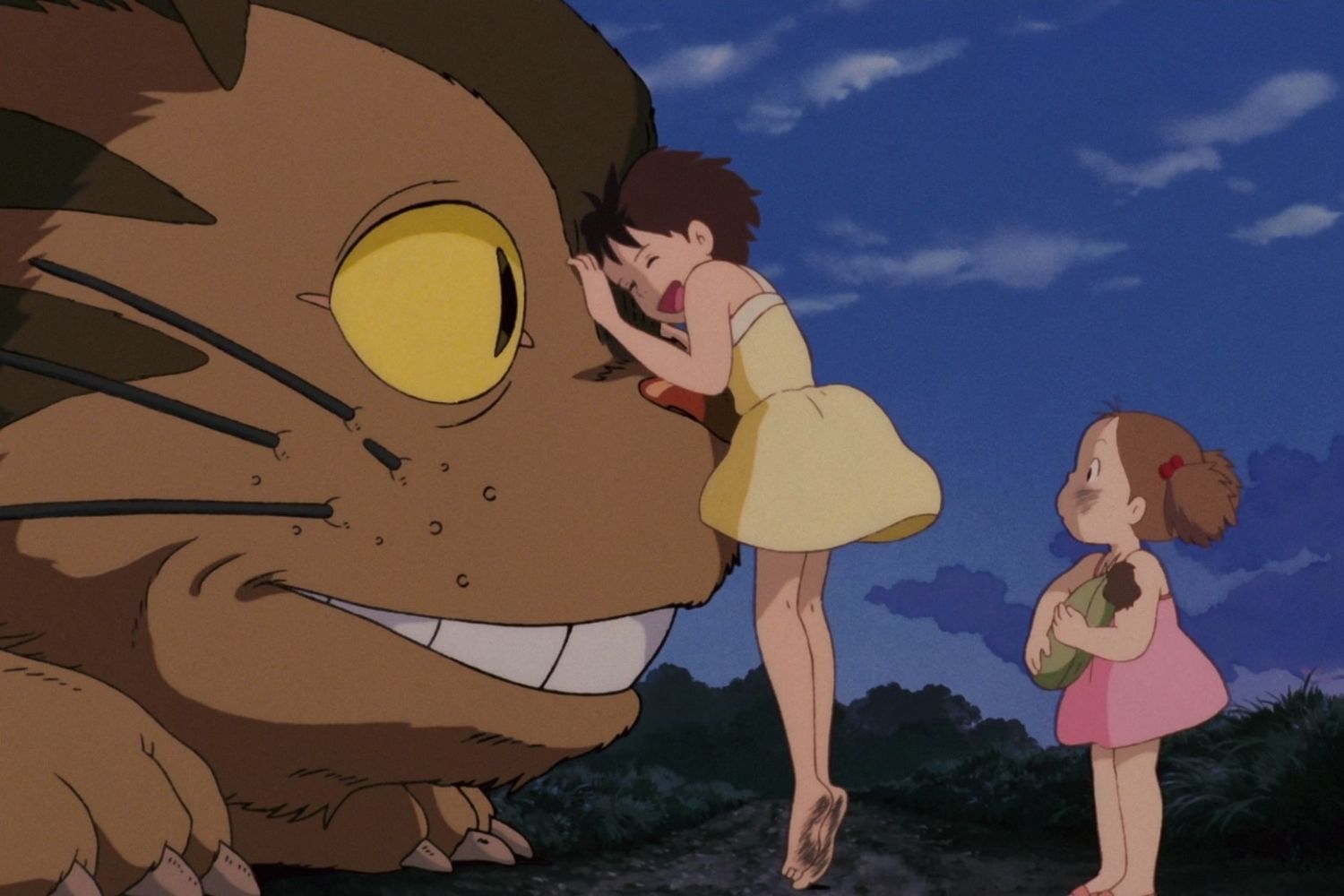
It was against this backdrop of pervasive anxiety and environmental unease that a seemingly simple act — watching an animated film — offered an unexpected shift in perspective. A few days later, while viewing a movie, I was struck by a profound contrast to the contemporary narrative of nature’s betrayal. The film depicted two young girls from the city befriending woodland creatures, nurturing a burgeoning forest, and riding a fantastical "Catbus" to visit their ailing mother in the hospital. The imagery was a potent reminder of a time, real or imagined, when humans and trees were allies, not adversaries. In that moment, a quiet thought surfaced: "Maybe the worst won’t always happen."
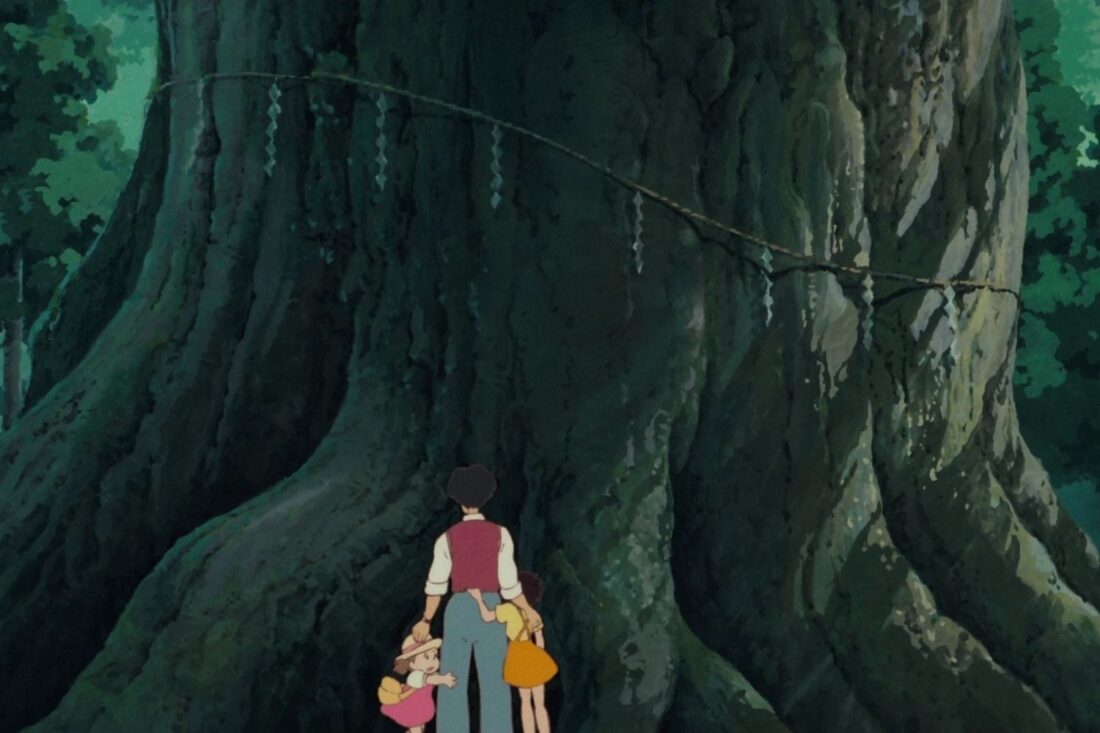
This cinematic experience was not merely a nostalgic revisiting of a classic 80s animated movie about relocating to the Japanese countryside. Despite my presumed familiarity with Studio Ghibli films, watching it with my father during a special Fathom event transcended mere nostalgia. As is often the case when re-engaging with a masterpiece, I left the theater with an unexpected sense of renewed hope, a feeling that countered the cynical resignation that had become so familiar. For those feeling overwhelmed by the world’s relentless anxieties, a rewatch of Hayao Miyazaki’s My Neighbor Totoro offers a surprisingly potent antidote.
Supporting Data: The Art of Magical Mundanity
My Neighbor Totoro operates on multiple levels, offering profound lessons that resonate differently with children and adults. Its genius lies in its ability to teach hope simultaneously to both demographics.
A poignant example of this duality surfaces in a small but significant detail. When the youngest sister, Mei, observes a leaky umbrella, she states in Japanese, "The umbrella is crying." The English subtitle, however, renders this as the more pragmatic, "There are holes in it." This linguistic distinction highlights a crucial theme: the adult world, in its pursuit of simplicity and practicality, often strips away the inherent wonder and imaginative depth of a child’s perception. While simplicity may serve adulthood, imagination is portrayed as essential for growth and for truly engaging with the world. This translation perfectly mirrors what most impressed me during this Ghibli rewatch: the film’s subtle critique of adult literalism and its powerful endorsement of childlike wonder.
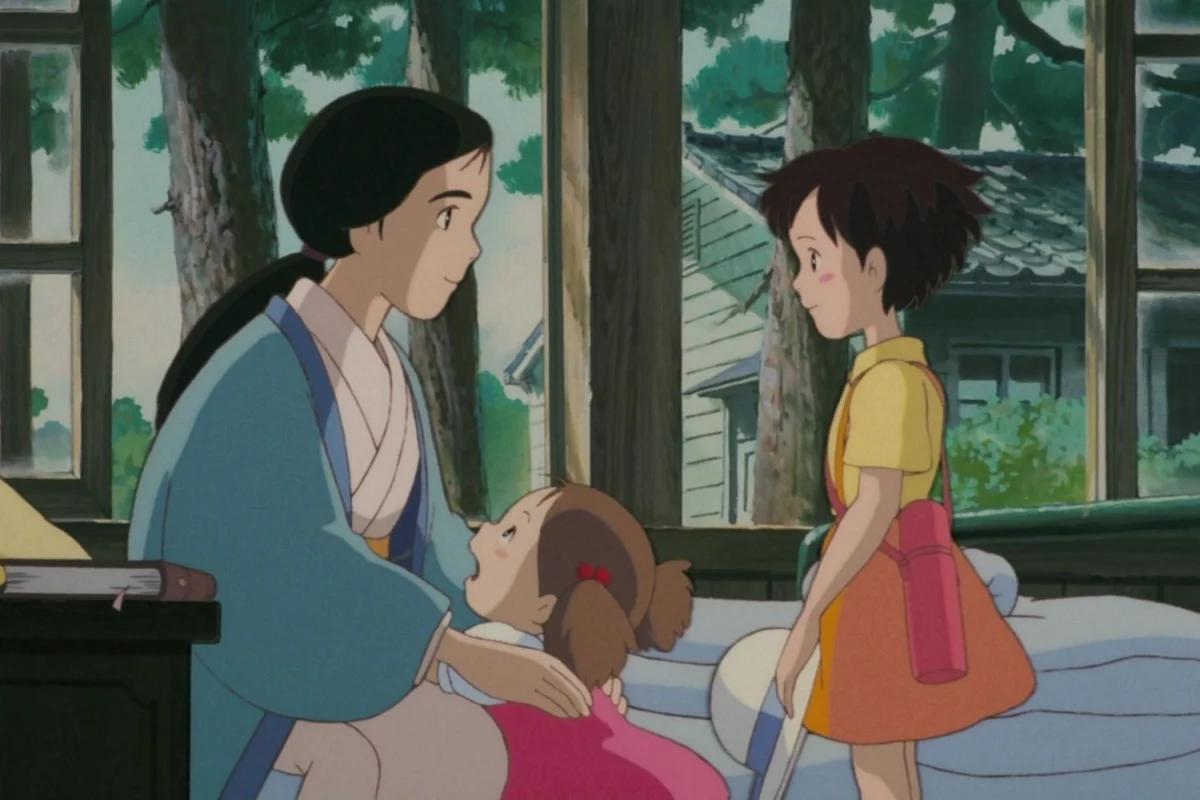
For children, the film presents a direct, enchanting narrative. Sisters Satsuki and Mei, along with their father, move from Tokyo to the rural Saitama Prefecture in the 1950s to be closer to their mother, who is hospitalized in a countryside sanatorium. Far from lamenting their new, somewhat dilapidated home, the girls are captivated by its rustic charms: decaying pillars, dust-filled rooms, and overgrown gardens. The house, an akiya (a vacant Japanese house, often dilapidated but full of character), becomes a source of adventure. They believe it to be haunted by "soot sprites," tiny, scuttling black creatures in the cobwebbed corners. Their father, rather than dismissing their observations as childish fantasies, suggests they might have encountered a yokai, a Japanese spirit. This parental validation is critical, fostering an environment where imagination is not only accepted but encouraged.
The film meticulously avoids relying on specific Japanese folklore. Miyazaki deliberately crafted new, distinct spirits, ensuring that the story would not be burdened by existing connotations or fears. Instead, he suggests that nature itself holds countless untold stories, narratives that adults, in their rush and cynicism, often forget to seek. The children, however, are not deterred by the unknown; they are captivated by the enormous, benevolent forest god, Totoro, whom Mei discovers while following smaller, spectral creatures through the grass. To them, every aspect of country life – a secret staircase, fish in a river, a giant sleeping creature – is worthy of excitement. Their fears are easily dispersed by exuberant shouts and laughter, an approach that feels not like foolish naiveté, but a powerful reminder to cherish the world’s mundane and magical facets.
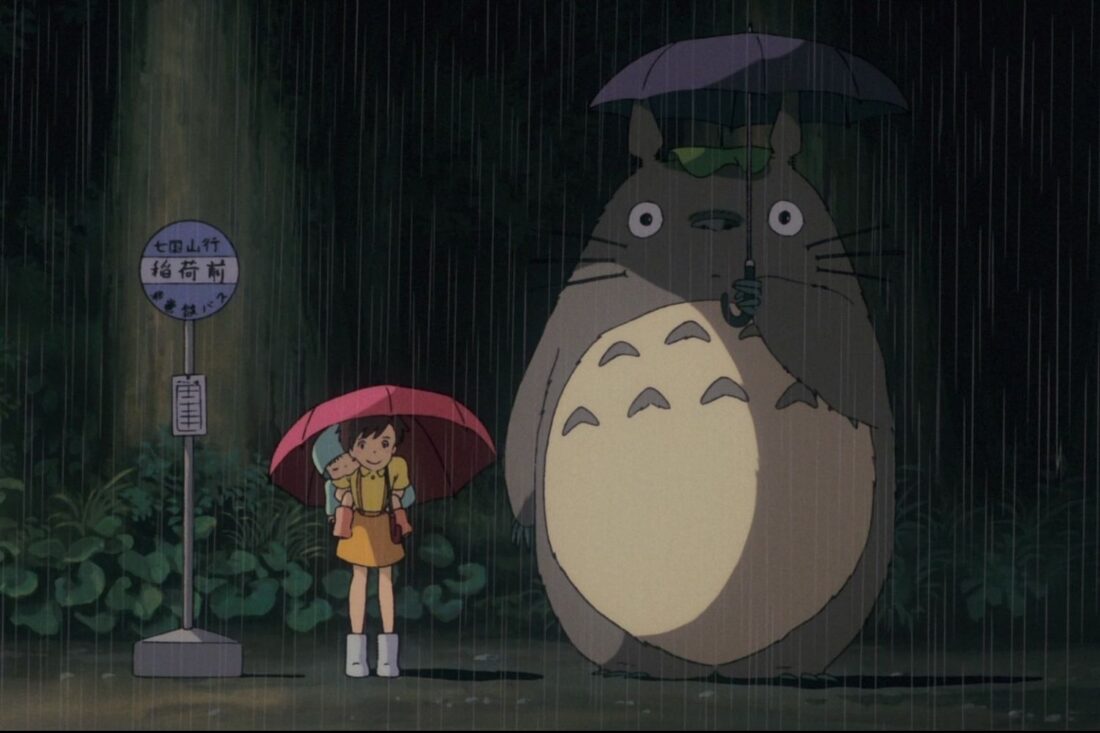
The film’s most iconic scene encapsulates this philosophy. Mei and Satsuki wait for their father at a bus stop during a typical Japanese rainy season downpour. Their father is delayed, but their patience is rewarded by the appearance of Totoro, a creature that defies easy categorization – not quite a cat, tanuki, or bear. The scene is observed through Satsuki’s perspective, from beneath the brim of her umbrella, emphasizing the personal, intimate nature of their encounter. Forest gods, it turns out, are not exempt from daily mundanities like bus stops and rain. The sheer joy Totoro expresses when Satsuki lends him an umbrella mirrors the relief the girls felt earlier when a shy neighborhood boy, Kanta, offered them the same kindness. When their father finally arrives, his bemused acceptance of their excited claims of meeting Totoro underscores the film’s message: the children’s world, rich with wonder, is never dismissed or belittled. They are permitted to find beauty in situations others might deem miserable; they are allowed to be children. The umbrella "cries," the forest monster is a friend, and hope, however small, sustains them.
Through the Eyes of an Adult: Official & Cultural Responses to Despair
The beauty of My Neighbor Totoro is its enduring power, which evolves with the viewer. My first viewing, as a child, mirrored the sisters’ experience of raw, unadulterated wonder. Now, as an adult watching with my father, the film’s magic has subtly transformed. It resonates not just as a tale of enchantment but as a profound narrative of confronting and circumventing the worst possible outcomes. It offers a re-education for the cynical mind, a gentle reminder that it is permissible, even necessary, to embrace a daydream.
As adults, our default setting is often to foresee catastrophe. The pervasive anxiety discussed earlier leads us to expect tragedy, even in fictional narratives designed for innocence. My Neighbor Totoro masterfully plays with these adult expectations, consistently subverting them. Let us enumerate the ways:
-
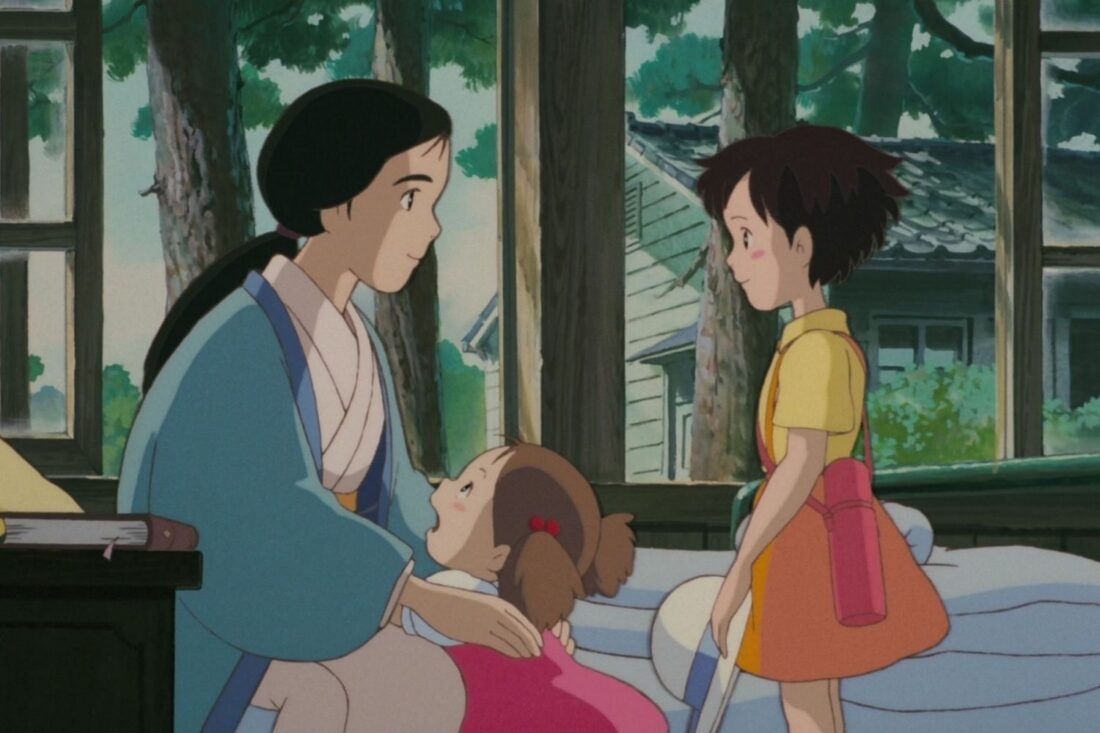
The Mother’s Illness: Early in the film, the girls’ mother suffers from a severe lung disease, strongly implied to be consumption (tuberculosis), a serious and often fatal illness in the 1950s. Her prolonged hospitalization, with calendar pages visibly turning from June to July to August, and repeated delays in her return home, lead an adult viewer to brace for the tragic inevitability of her death. Yet, the film defies this expectation. The closing credits, a montage of future events, clearly show the mother returning home, reading to her daughters, and even welcoming a new baby. The adult viewer, conditioned to expect the worst, is proven wrong, a powerful demonstration of narrative optimism.
-
Kanta’s Absent Father: The neighborhood boy, Kanta, is almost always seen wearing a sailor’s cap, and his rundown home is occupied solely by his mother and grandmother. From an adult perspective, these context clues strongly suggest a tragic backstory, perhaps a father lost at sea or to war. However, during the film’s climax, when Mei goes missing, Kanta is simply told to "fetch his dad" to help with the search. Once again, adult assumptions of loss are happily overturned.
-
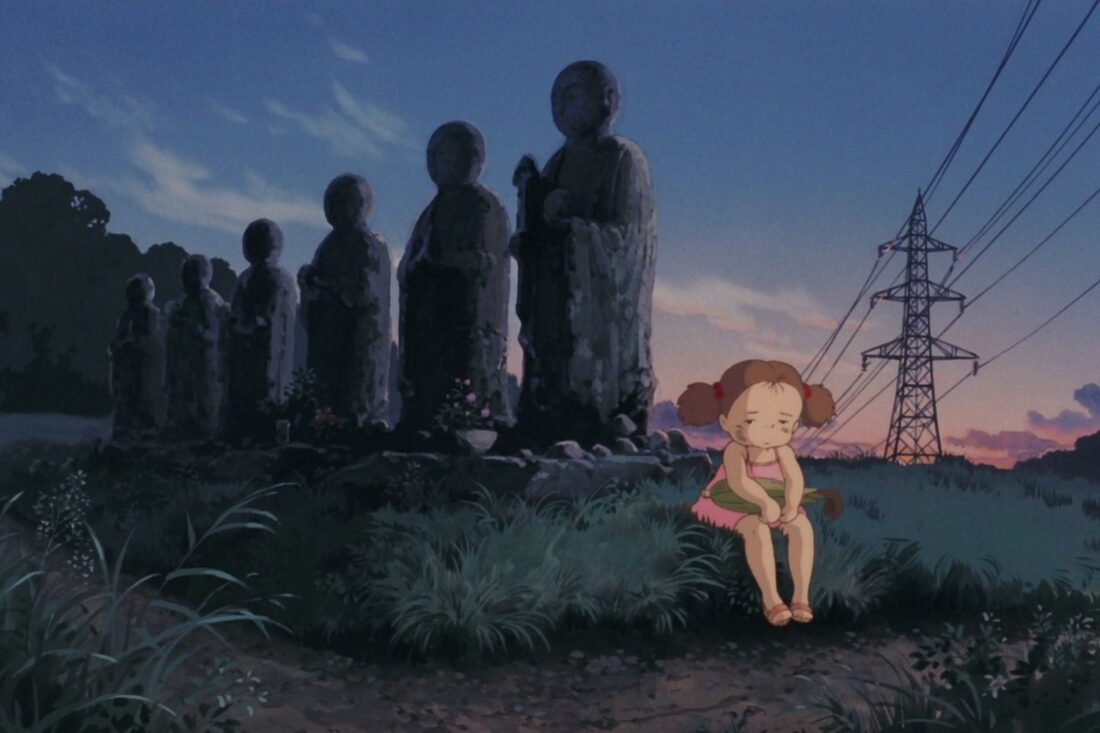
Mei’s Disappearance and the Sandal: Perhaps the film’s darkest moment involves the discovery of a small sandal floating in a rice paddy. The neighbors, with fearful expressions, trawl the water, expecting to find a child’s body. The pervasive dread in this scene is palpable. It is only when Satsuki confirms that the sandal does not belong to Mei that a collective sigh of relief is felt. Mei is subsequently found crying alone at the foot of a row of Jizo statues. In Japanese culture, Jizo is a benevolent deity, often associated with the protection of travelers and children, especially those who have passed away. His presence, far from being a bad omen, signifies protection and guidance, reinforcing Mei’s safety.
Numerous other potential threats are similarly diffused: the fantastical creatures are friendly, the eccentric old neighbor is kind, the city girls adapt joyfully to country life, the school teacher shows empathy when Mei visits Satsuki’s class, and the father, though often absorbed in his work, trusts his daughters’ experiences. The dust sprites flee rather than attack, a strong wind merely shakes the house, and the mother’s "cold" remains just that – a temporary setback, not a death knell. Every giant-toothed grin on a creature signals friendship, not menace.
These consistent subversions directly challenge the ingrained adult tendency to anticipate catastrophe. The film’s unwavering commitment to positive outcomes feels so rare in modern cinema that it has even spawned "official responses" in the form of dark urban legends. Internet forums have long propagated theories that Totoro is a "death god" or that Satsuki and Mei die halfway through the film, with Mei drowning and Satsuki’s Catbus ride being a journey to the afterlife. The Catbus’s destination marker briefly flashing "cemetery" is often cited as "proof." These dark interpretations, despite being repeatedly debunked by Studio Ghibli, highlight a societal discomfort with unadulterated purity and optimism. It’s as if the adult mind, conditioned to darkness, feels compelled to inject tragedy into something so impossibly hopeful. Yet, Totoro firmly roots its narrative in a realism that makes its optimism believable: characters who feel genuine, children shielded by a mosquito net and a loving father’s belief that things will, indeed, be alright. And for once, in this narrative, they truly are.
Planting Seeds: Implications for a Rapidly Changing World
Returning to the reality of northern Michigan, where white-tailed deer are a common sight, their presence evokes another compelling metaphor for our current predicament. Deer, often caught in headlights, struggle to adapt to the sudden, overwhelming changes of a human-dominated landscape. Their brains lack the biological context to respond effectively to rapidly approaching vehicles. Similarly, humanity finds itself in the beam of a rapidly changing world, facing an onslaught of "inventive disasters" – from widespread wildfires and environmental degradation to economic instability and social upheaval – for which we have little inherent biological or societal context to respond to in time.
We understand the imperative for action – to halt deforestation, mitigate climate change, address systemic injustices. Yet, like the deer, or like the family at the birthday party eating Walmart cookies and cream cake on haze-obscured grass, we often stand frozen, caught between the recognition of crisis and the pull of immediate, small comforts. Does this make us foolish, or is clinging to these moments of familiar comfort essential for our psychological survival?
In My Neighbor Totoro, the father figure offers a subtle, profound answer. While he never actively engages in the overt magic his daughters experience, he never discounts it. He smiles at his desk, the sliding door open, as he hears their laughter or the ethereal flute music of the forest creatures. He closes his eyes, listens, and then returns to his work. His belief in magic, perhaps, is indirect, sustained by his daughters’ unwavering faith. Their belief, in turn, sustains him, allowing him to maintain a crucial, quiet hope for the best.
In the countryside of Totoro, things grow green and tall, a forest can sprout overnight, and the magical bus doesn’t lead to a cemetery. Instead, it carries you and your loved ones safely home. The film doesn’t offer a simplistic solution to the world’s woes, nor does it advocate for blind optimism. Rather, its implication is that in a world that constantly demands we expect the worst, the courage to believe in the best, to find magic in the mundane, and to validate the wonder of those around us, is not ignorance. It is, instead, a profound act of resilience, a planting of seeds for a future where things, for once, truly might be alright.