The High Cost of Instant Gratification: How Modern Convenience Erodes Psychological Resilience
By [Your Name/Journalist Name]
Main Facts: The 2-Second Crisis and the Erosion of Patience
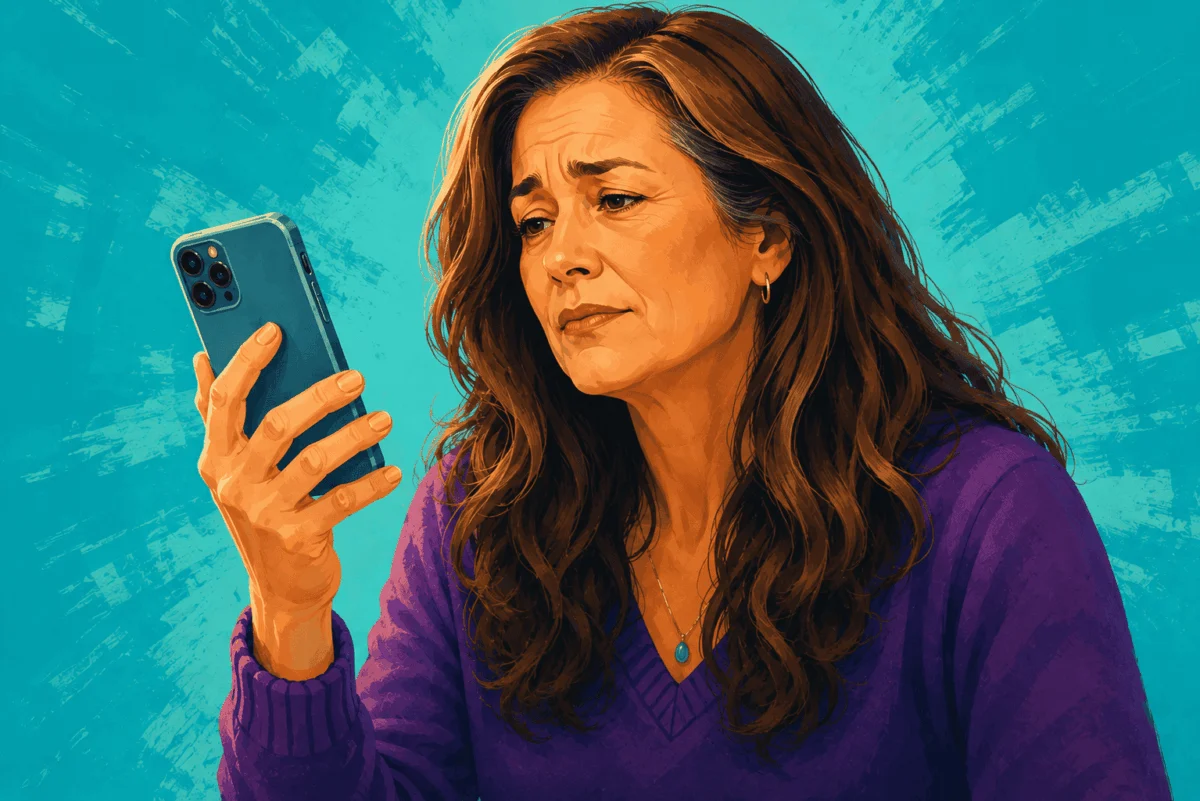
In an era defined by fiber-optic speeds and instantaneous global connectivity, the human threshold for delay has reached a historic low. What was once considered a technological miracle is now a baseline expectation, and even the slightest deviation from seamless functionality can trigger a disproportionate stress response. This phenomenon was recently brought into sharp focus by Myra Goodman, an author and organic industry pioneer, whose experience with a malfunctioning smartphone biometric sensor served as a microcosm for a broader societal shift: the atrophy of "distress tolerance."
When Goodman’s "Face ID" feature failed, requiring her to manually enter a four-digit passcode, she noticed an immediate surge of exasperation. The delay lasted approximately two seconds. This reaction, she posits, is symptomatic of a "speed-seductive" culture where every technological shortcut—from one-click shopping to AI-generated search results—quietly trains the human nervous system to demand immediacy.
Psychologists and sociologists are increasingly concerned that as we eliminate "friction" from our daily lives, we are inadvertently weakening the emotional muscles required to handle significant life challenges. The transition from yesterday’s miracles to today’s frustrations highlights a growing disconnect between our rapidly advancing technology and our ancient, slower-moving biological systems.
Chronology: From Manual Labor to Algorithmic Immediacy
To understand the current state of technological impatience, one must look at the trajectory of convenience over the last century. The evolution of daily life has accelerated at a rate that outpaces human evolutionary adaptation.
The Era of Manual Sustenance (1920s–1940s)
Goodman notes the experience of her mother, born in Hungary in 1928. In this era, basic survival required significant temporal investment. Water was not a utility accessed via a faucet but a physical commodity carried in buckets from a central village well, often over a mile away. It then had to be heated on coal-fired stoves. Communication was equally deliberate; phone calls required live operators, and the concept of "FaceTime" was relegated to the realm of preposterous science fiction. In this environment, patience was not a virtue but a structural necessity of existence.
The Era of Scheduled Media and Public Infrastructure (1960s–1980s)
By the time Goodman was growing up in Brooklyn in the 1960s, the world had modernized, yet "waiting" remained a core component of the human experience. Media consumption was dictated by broadcasters rather than algorithms; families waited an entire year for the annual television broadcast of classics like The Wizard of Oz. Communication away from home meant searching for public telephone booths and waiting in physical lines with coins in hand. Photography required a multi-day cycle of dropping off film and waiting for development. These "forced pauses" provided the mind with regular opportunities for reflection and boredom.
The Digital Revolution and the Death of the Pause (2000s–Present)
The introduction of the smartphone and high-speed mobile internet collapsed these waiting periods. The transition happened within a single generation. Banking, film development, and map-reading—once externalized, social, and time-consuming activities—were internalized into a single handheld device. As these delays vanished, the "sacred pause"—the moments of downtime between tasks—was replaced by a constant stream of information and entertainment.
Supporting Data: The Science of Distress Tolerance
The psychological impact of this shift is measurable. Researchers point to a concept known as Distress Tolerance (DT)—an individual’s capacity to experience and withstand negative emotional states.

- Correlation with Mental Health: Low distress tolerance is strongly linked to a variety of psychological disorders. A study published in the journal Cognitive Therapy and Research indicates that individuals with low DT are more susceptible to anxiety, depression, substance abuse, and eating disorders. When a person cannot tolerate the discomfort of a two-second delay or a red light, they are less equipped to handle the "big" frustrations of life, such as grief, professional failure, or interpersonal conflict.
- The Dopamine Loop: Modern technology utilizes "variable reward" schedules, similar to slot machines. Every "like," "text," or "instant result" releases dopamine. When this loop is interrupted by a technical glitch (like a broken Face ID), the brain experiences a "reward prediction error," leading to a spike in cortisol and a feeling of agitation.
- Neuroplasticity and Habituation: The brain adapts to its environment. If the environment provides instant gratification, the prefrontal cortex—the area responsible for impulse control and patience—receives less "exercise." Conversely, the amygdala, which governs the "fight or flight" response, can become hyper-reactive to minor inconveniences.
Official Responses: Expert Perspectives on Digital Wellness
Mental health professionals and digital ethicists are beginning to advocate for a "friction-positive" approach to technology.
Dr. Jonathan Haidt, a social psychologist, has frequently commented on how the "frictionless" nature of modern life can lead to "fragility." In his research on the "coddling" of the modern mind, he suggests that humans need a certain amount of challenge and delay to develop resilience.
Mindfulness Experts echo this sentiment. The quote by Michael A. Singer—"Every moment, every challenge, every inner reaction is here to show you exactly what you need to let go of in order to be free"—serves as a cornerstone for modern mindfulness-based stress reduction (MBSR). Practitioners argue that the "agitation" felt during a slow internet connection is not caused by the technology, but by our internal resistance to the present moment.
In response to these growing concerns, some tech companies have introduced "Digital Wellbeing" tools. Apple and Google now include features that track screen time and allow users to set limits. However, critics argue these are "band-aid" solutions that do not address the fundamental design of apps intended to maximize engagement and minimize wait times.
Implications: Reclaiming Agency through the "Sacred Pause"
The implications of Goodman’s experience suggest that the path to better mental health may lie in the intentional reintroduction of friction into our lives. By choosing not to "fix" her Face ID immediately, Goodman engaged in an informal version of Exposure Therapy.
The Power of the Voluntary Delay
Choosing to endure a minor inconvenience can serve as a training ground for larger emotional challenges. When Goodman had to enter her code manually, it created a "sacred pause." This two-second window allowed her to:
- Check in with her body: Noticing the physical tension in her shoulders or the sharpness of her breath.
- Practice Presence: Acknowledging the urge to "race ahead" to the next screen and intentionally choosing to remain in the physical world.
- Build Resilience: Strengthening the ability to remain equanimous even when things do not go as planned.
Societal Shift Toward Slow Living
There is a growing "Slow Living" movement that mirrors Goodman’s experiment. This involves choosing analog methods over digital ones—such as using paper maps, writing letters, or cooking meals from scratch—not because they are more efficient, but because they are less efficient. The inefficiency is the point; it provides the mind with the space it needs to process experiences.
Conclusion: The Gift of the Glitch
When Goodman’s Face ID eventually repaired itself after a system restart, she felt a surprising sense of disappointment. The "annoying glitch" had become a "sacred teacher."
The broader implication for society is clear: we cannot wait for technology to become "slower" or for the world to become less demanding. Instead, the responsibility lies with the individual to recognize that every red light, every long grocery line, and every "broken" piece of technology is an invitation. These moments are opportunities to resist the habitual reach for a distraction and to instead strengthen the capacity for presence.
In a world that prizes speed above all else, the most radical and healthy act may be the willingness to wait—and to find peace within that waiting. As we move further into the age of AI and hyper-automation, our ability to maintain our "distress tolerance" may be the very thing that preserves our humanity.