Meta’s Strategic Pivot: Horizon+ Subscription Evolves with Xbox Game Pass Integration
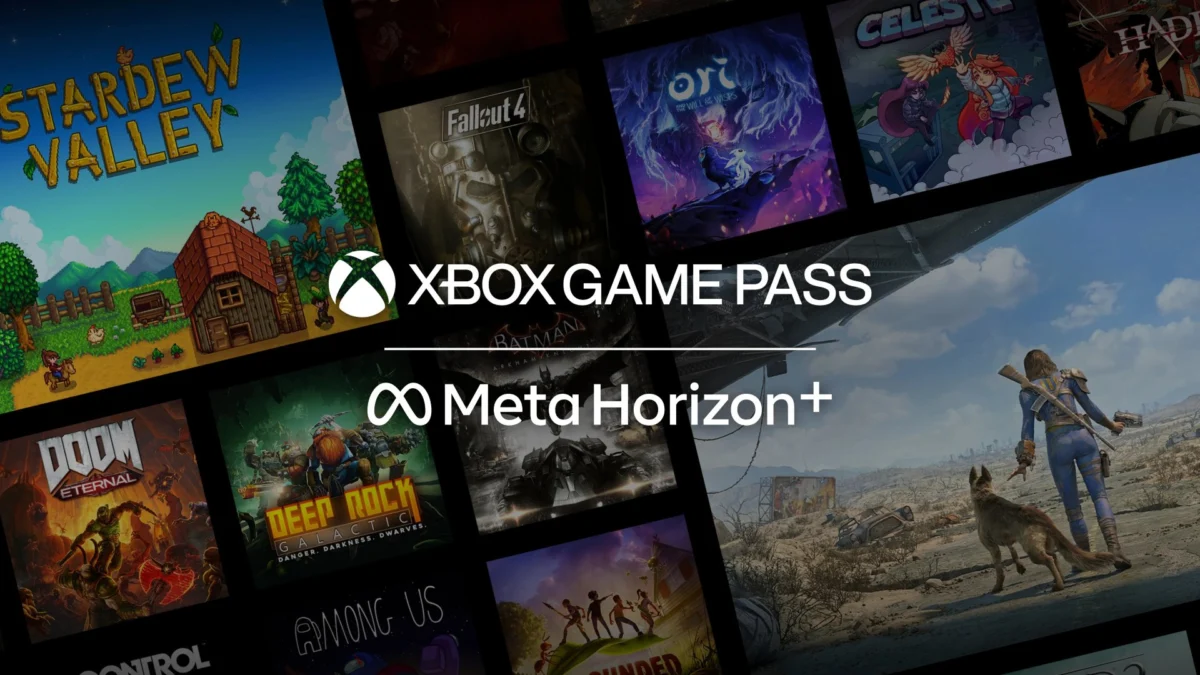
In a move that signals a deepening alliance between two of the world’s largest technology conglomerates, Meta has announced a significant expansion of its Horizon+ subscription service. By integrating a "Starter Edition" of Microsoft’s Xbox Game Pass, Meta is not only increasing the value proposition of its virtual reality (VR) ecosystem but also challenging the traditional boundaries between console, PC, and spatial computing. This partnership marks a pivotal moment in the "platform wars," as Meta transitions from being a hardware-centric VR company to a comprehensive digital entertainment hub.
Main Facts: A New Value Proposition for VR Enthusiasts
The core of the announcement lies in the enrichment of the Meta Horizon+ service, which was formerly known as Meta Quest+. At no additional cost to existing or new subscribers, the service now includes a curated selection of over 50 high-profile Xbox titles. This "Starter Edition" of Xbox Game Pass allows users to access a library that features critically acclaimed franchises such as Fallout 4, Fallout 76, Grounded, and Overcooked 2.
Pricing and Accessibility
Meta Horizon+ maintains its competitive pricing at $7.99 per month or $59.99 for an annual commitment. When compared to the standard Xbox Game Pass Essential, which retails at approximately $9.99 per month in the United States, the Meta bundle emerges as a highly aggressive market offering. For a lower price point, users gain access to:
- Over 100 native Meta Quest VR titles.
- More than 50 Xbox titles via the Game Pass Starter Edition.
- Two "monthly picks" that users can claim and keep as long as they remain subscribed.
The Cloud Gaming Caveat
While the inclusion of Xbox titles is a major win for consumers, it comes with a specific technical limitation designed to balance server costs and licensing agreements. The Starter Edition provides 10 hours of Xbox Cloud Gaming per month. This allows users to stream games directly to a massive virtual cinema screen inside their Quest headsets without needing a PC or console. However, for those who own a gaming PC or an Xbox console, the 50+ supported titles can be downloaded for unlimited local play, bypassing the 10-hour cloud restriction entirely.
Controller Innovation
In a significant quality-of-life update, Meta is introducing a gamepad emulator. Previously, playing Xbox games on a Quest headset required a separate Bluetooth-enabled controller. The new emulator allows the Quest Touch controllers to mimic the input of a traditional Xbox controller. This removes a significant hardware barrier to entry, making the transition from VR gaming to "flatscreen" gaming seamless for the average user.
Chronology: The Road to Horizon+
To understand the significance of this update, one must look at the evolution of Meta’s subscription strategy and its relationship with Microsoft over the last several years.
2023: The Birth of Meta Quest+
In mid-2023, Meta launched Meta Quest+, a subscription service modeled after PlayStation Plus. Initially, it was a modest offering, providing two hand-picked VR games each month. The goal was to give new Quest owners an immediate library of content to justify the hardware purchase.
Late 2023: The Xbox Cloud Gaming Beta
In December 2023, the first major collaboration between Meta and Microsoft bore fruit with the launch of the Xbox Cloud Gaming (Beta) app on the Quest store. This required a Game Pass Ultimate subscription, but it proved the concept: VR headsets could serve as the ultimate portable "big screen" for traditional console games.
2025: The Rebranding to Horizon
In a strategic shift to unify its software ecosystem, Meta rebranded Quest+ to Horizon+ in 2025. This move coincided with the opening of "Horizon OS" to third-party hardware manufacturers like ASUS and Lenovo. By moving away from the "Quest" branding for its software, Meta signaled that its ecosystem was bigger than just its own hardware.
2026: The Current Integration
The current integration of Xbox Game Pass into Horizon+ represents the final stage of this evolution. It transforms Horizon+ from a niche VR subscription into a general gaming powerhouse, bridging the gap between immersive 3D environments and traditional 2D gaming.
Supporting Data: Market Context and Technical Specs
The decision to bundle these services is backed by a clear understanding of market trends and hardware capabilities.
Competitive Landscape
The VR market has become increasingly crowded with the entry of the Apple Vision Pro and the continued presence of Sony’s PSVR2. However, Meta’s advantage lies in its price-to-performance ratio.

- Meta Quest 3S/3: Retailing between $299 and $499.
- PSVR2: Requires a $499 console plus a $549 headset.
- Apple Vision Pro: $3,499.
By adding Xbox Game Pass to a $7.99/month subscription, Meta is targeting the "value" segment of the market that Apple ignores and Sony has struggled to capture due to the high cost of entry.
Streaming Performance
Advancements in Wi-Fi 6 and 6E support in the Quest 3 and Quest 3S have made cloud gaming a viable reality. Latency, the perennial enemy of cloud gaming, has been reduced to levels where casual and semi-competitive play in games like Overcooked 2 or Fallout 4 feels native. Meta’s data suggests that a significant portion of Quest users already utilize the headset for media consumption (Netflix, YouTube); adding high-fidelity gaming is a natural extension of this behavior.
Official Responses and Strategic Vision
While official press releases often focus on the immediate benefits to consumers, the underlying corporate strategy reveals a deeper narrative of mutual survival and growth.
Meta’s Perspective
In recent internal communications and public earnings calls, Meta executives have emphasized the concept of the "Universal Screen." Mark Zuckerberg has frequently noted that for VR to become a mainstream computing platform, it must do everything a laptop or a TV can do—only better. By integrating Xbox, Meta is essentially telling consumers that they no longer need to buy a 75-inch television; they can simply subscribe to Horizon+ and have a 100-foot screen anywhere they go.
Microsoft’s Perspective
For Microsoft, this partnership aligns perfectly with its "Xbox Everywhere" strategy. Satya Nadella has been vocal about Microsoft’s transition from a hardware-first company to a service-first company. By putting Game Pass on Horizon OS, Microsoft gains access to millions of Meta Quest users who may not own an Xbox console. It is a low-risk, high-reward method of expanding their subscriber base.
Implications: The Future of Gaming and Spatial Computing
The inclusion of Xbox Game Pass in Horizon+ is more than just a freebie for subscribers; it is a harbinger of several long-term shifts in the technology landscape.
1. The Erosion of Hardware Exclusivity
We are entering an era where the hardware you own matters less than the subscription you pay for. If a Meta Quest headset can play Xbox games, and a PC can play Quest games (via Link), the traditional "console war" is effectively over, replaced by an "ecosystem war." Meta is positioning Horizon OS to be the "Android of VR," and having Microsoft as a day-one partner for its premium subscription is a massive endorsement of that vision.
2. The Rise of "Flatscreen" VR
There has been a growing trend of "flatscreen" gaming in VR—using the headset as a virtual monitor for non-VR games. This update legitimizes that use case. With the new gamepad emulator, Meta is acknowledging that not every experience in a headset needs to be a 360-degree immersive one. Sometimes, users just want to sit on a virtual couch and play Fallout on a massive screen. This could lead to a surge in "hybrid" gaming, where players switch between VR and 2D modes within the same session.
3. Pressure on Competitors
This move puts immense pressure on Sony. While Sony has a strong library of first-party titles, its VR ecosystem remains relatively closed. If Meta can offer a more diverse library (Quest games + Xbox games + PC streaming) at a lower price point, Sony may be forced to bring its own PlayStation Plus service to the PC or even to rival VR platforms to stay relevant.
4. The 10-Hour Limit as a Testing Ground
The 10-hour cloud gaming limit is a fascinating experiment in consumer behavior. It acts as a "freemium" gateway. Meta and Microsoft are likely betting that once users experience the convenience of cloud gaming on a virtual 100-inch screen, they will be more inclined to upgrade to a full Xbox Game Pass Ultimate subscription or spend more time in the Horizon ecosystem.
Conclusion
The evolution of Meta Horizon+ to include Xbox Game Pass is a masterstroke of ecosystem building. It addresses the "content gap" that often plagues VR platforms by instantly providing dozens of world-class, familiar titles. For the consumer, it is an undeniable bargain. For the industry, it is a sign that the future of digital entertainment is not found in a single device, but in the seamless movement of content across platforms, powered by robust subscriptions and cloud technology. As Meta continues to refine Horizon OS, the line between "VR gaming" and "gaming" will continue to blur until they are one and the same.