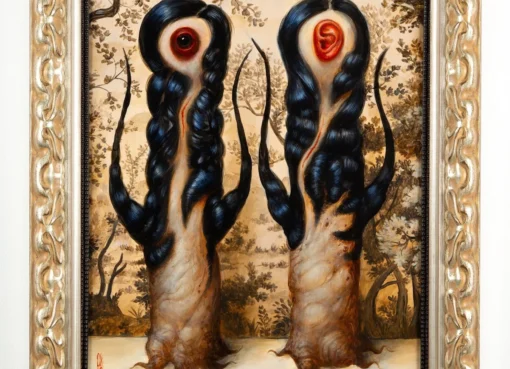
The Cartography of the Subconscious: Alfred De Angelo and the New Frontier of Surrealist Inquiry
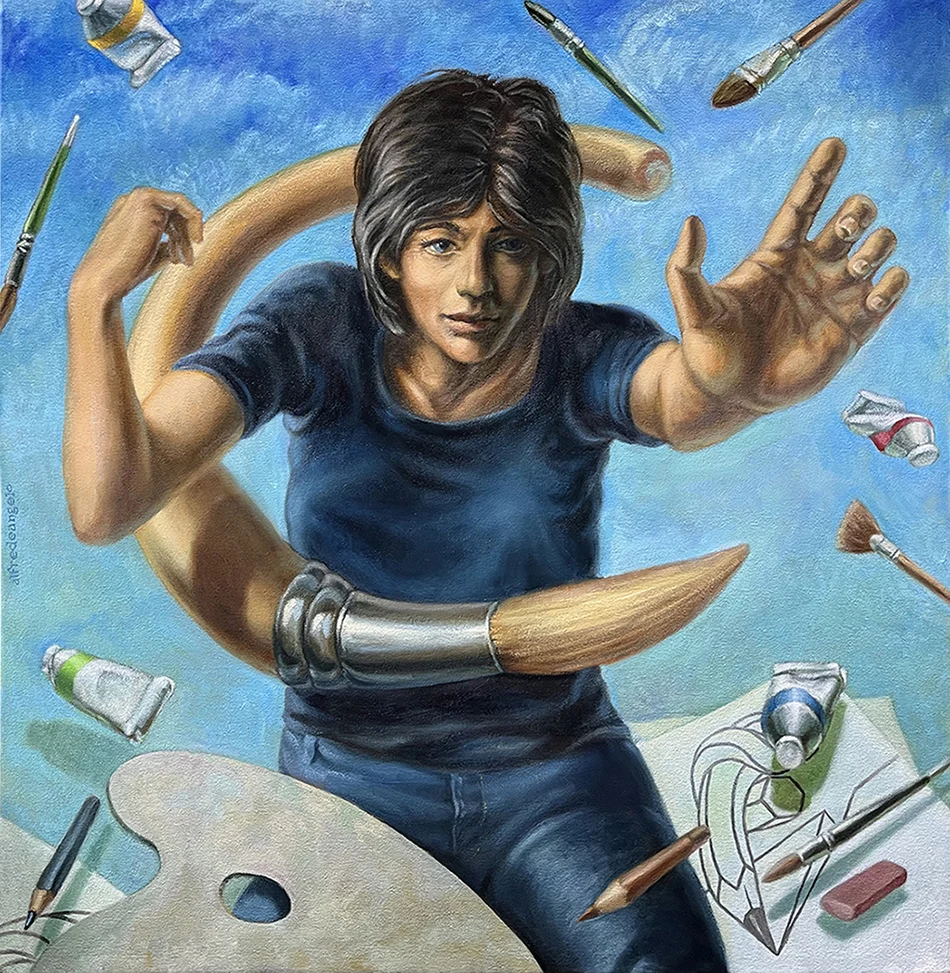
In the contemporary art landscape, where digital saturation and hyper-realistic renderings often dominate the visual discourse, the work of Alfred De Angelo emerges as a profound reclamation of the human psyche. A master of the surrealist tradition, De Angelo does not merely paint scenes; he constructs doorways. His canvases serve as thresholds between the mundane world of objective reality and a deeper, more visceral realm of provocative beauty and existential inquiry.
With a technical pedigree rooted in some of the most prestigious institutions in the United States, De Angelo has spent decades refining a "private vocabulary of images." His work, often described as both beguiling and bewildering, challenges the viewer to abandon the safety of conventional thought and embrace the "essential mystery of existence." This article explores the trajectory of De Angelo’s career, the philosophical underpinnings of his aesthetic, and his significant role in the modern surrealist movement.
Main Facts: The Aesthetic Philosophy of Alfred De Angelo
Alfred De Angelo’s work is characterized by a "remarkable fluency and expertise" that anchors his surrealist visions in a tangible, almost tactile reality. Unlike the chaotic abstraction often associated with modern art, De Angelo’s paintings are meticulously delineated. This precision is what makes the "provocative beauty" of his work so effective; the viewer is confronted with images that feel physically real yet remain logically impossible.
The Surrealist Mission
De Angelo’s primary objective, as stated in his artist’s manifesto, is to look "through" outward appearances. He posits that our daily experiences are localized and subjective—mere impressions on a personal scale. To bridge the gap between the individual experience and the universal truth, he utilizes surrealism to embody the "essential mystery" of life. His paintings are designed to:
- Lure the viewer out of established cognitive patterns.
- Challenge the limits of human understanding.
- Grant permission for the viewer to experience a triad of emotions: amazement, confusion, and delight.
Technical Mastery
The "sensual world" De Angelo creates is not a product of chance. It is the result of a highly disciplined approach to composition and color. By utilizing a private vocabulary of symbols and images, he creates a narrative that feels familiar yet remains elusive. This duality—the feeling of déjà vu in a world one has never visited—is the hallmark of his contribution to the genre.

Chronology: The Academic and Professional Evolution
The sophistication of De Angelo’s work is deeply rooted in his formal education, which provided the structural foundation for his later surrealist explorations. His journey through the American art academy reflects a transition from technical mastery to conceptual liberation.
The Formative Years: Massachusetts College of Art (BFA)
De Angelo’s academic journey began at the Massachusetts College of Art (MassArt). As one of the oldest and most respected public art colleges in the country, MassArt provided De Angelo with the rigorous technical training required to master the "fluency" often cited by critics. During his undergraduate years, De Angelo focused on the fundamentals of anatomy, light, and perspective—tools he would later use to subvert reality. It was here that he began to understand that to effectively break the rules of reality, one must first master them.
Refinement and Conceptual Depth: Rhode Island School of Design (MFA)
Seeking to deepen his conceptual framework, De Angelo attended the Rhode Island School of Design (RISD) for his Master of Fine Arts. RISD is globally recognized for its emphasis on both craft and critical thinking. It was during this period that De Angelo’s "private vocabulary" began to coalesce. The transition from BFA to MFA marked a shift from how to paint to why to paint. At RISD, De Angelo was encouraged to explore the psychological dimensions of the canvas, leading him toward the surrealist path that would define his legacy.
The Contemporary Era
In recent years, De Angelo’s work has found a new resonance within the digital age. As platforms like Surrealism Today highlight the intersection of AI and human creativity (notably through mentions of tools like Infinidream.ai), De Angelo stands as a sentinel of the traditional, hand-painted surrealist ethos. His presence in the 2025-2026 art circuit confirms a renewed public interest in "human-terrain" art—works that reflect the organic complexity of the human soul rather than the algorithmic output of a machine.
Supporting Data: Analyzing the "Private Vocabulary"
To understand the impact of De Angelo’s work, one must look at the data of human perception. Studies in neuroaesthetics suggest that surrealist art triggers the brain’s "conflict-monitoring" systems. When a viewer sees a De Angelo painting, the brain attempts to resolve the illogical elements with the realistic execution.
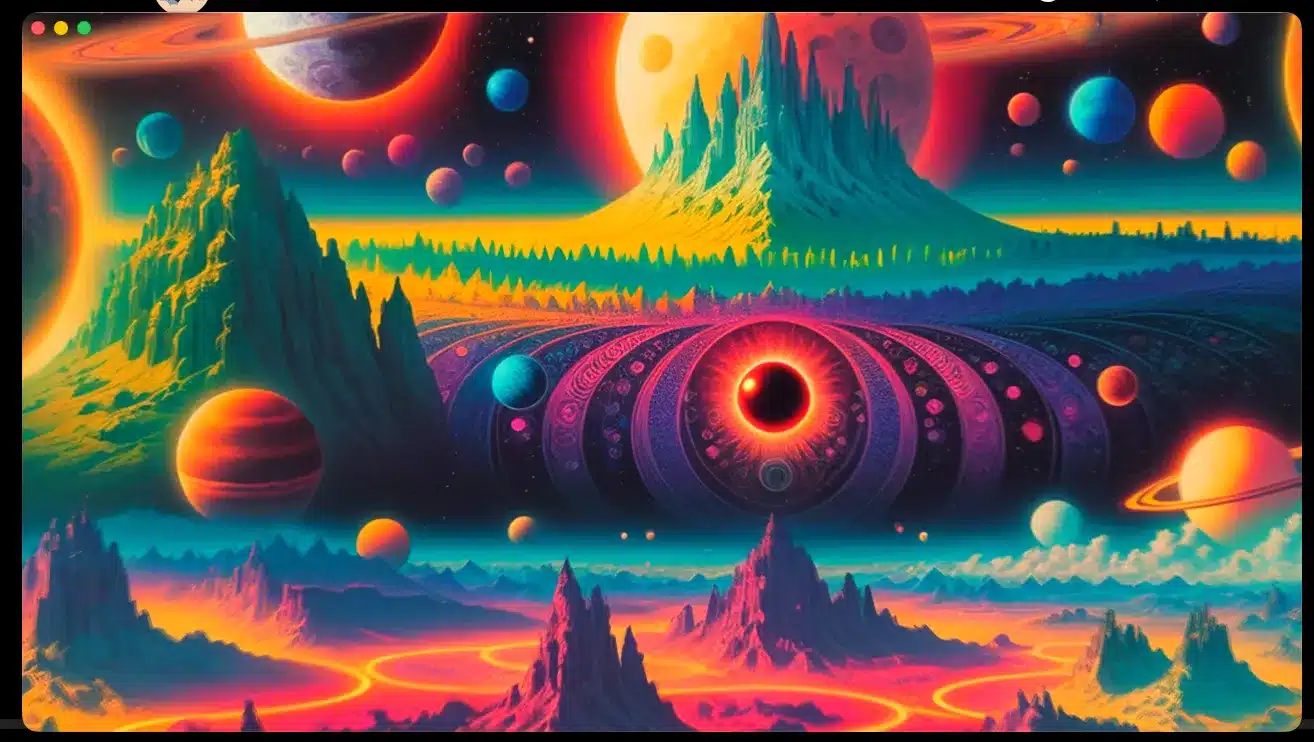
The Cognitive Impact of De Angelo’s Work
- Pattern Disruption: By presenting images that "press against the limits of understanding," De Angelo forces the brain to bypass its "well-worn patterns of thought." This creates a state of heightened awareness and neuroplasticity.
- Sensual Engagement: The "sensual world" described in his critiques refers to the use of textures and forms that evoke a physical response. This engagement ensures that the viewer is not just an observer but a participant in the mystery.
- Subjectivity vs. Universality: De Angelo’s artist statement notes that life is "localized and subjective." His paintings act as a bridge, taking these personal impressions and scaling them into universal surrealist themes.
Comparative Context
In the broader context of modern surrealism, De Angelo’s work is often categorized alongside other contemporary masters who prioritize the "feeling" over the "sight." While artists like Jacob Holster explore the "painterly AI aesthetics" and Christian Quintin captures "a year of solitude," De Angelo occupies a unique space that focuses on the provocative and the beguiling. His work is less about the isolation of the individual and more about the seductive mystery of the shared human experience.
Official Responses and Critical Reception
The art world has responded to De Angelo with a mixture of reverence and analytical curiosity. Curators and critics frequently point to his ability to maintain a "professional journalistic tone" within his visual narratives—meaning his paintings are clear, well-structured, and authoritative, even when their subject matter is dreamlike.
Curatorial Perspectives
"Alfred De Angelo’s work represents a rare bridge between the classical surrealism of the early 20th century and the existential anxieties of the 21st," says one prominent curator from the New England art scene. "He doesn’t rely on shock value. Instead, he relies on a quiet, unsettling beauty that demands the viewer’s full attention."
The Viewer’s Paradox
The most common official response to De Angelo’s exhibitions is the "amazement-confusion-delight" triad. Feedback from gallery showings often highlights that viewers feel "transported." This is not an accidental byproduct of his work; it is the intended result of his "fluency and expertise." By creating a visual world that is "compelling," he ensures that the bewilderment his images cause never leads to disengagement, but rather to a deeper fascination.
Implications: Surrealism in a Post-Digital World
The continued relevance of Alfred De Angelo’s work carries significant implications for the future of fine arts. As we move further into an era dominated by Artificial Intelligence (as seen in the rise of Infinidream.ai and other generative tools), the role of the human artist as a "translator of mystery" becomes more vital.

The Human Element in the Age of AI
De Angelo’s paintings serve as a reminder that surrealism is not just about "weird images." It is about the "essential mystery of existence" that is uniquely felt by a conscious being. While AI can simulate surrealist styles, it cannot (yet) develop a "private vocabulary" rooted in a lifetime of subjective, localized experiences. De Angelo’s work asserts the value of the human perspective in the creative process.
Educational and Cultural Impact
The success of a MassArt and RISD alumnus like De Angelo also reinforces the importance of traditional art education. His ability to "delineate with remarkable fluency" proves that the path to true creative freedom—the kind that allows one to paint the subconscious—is paved with technical mastery. For aspiring artists, De Angelo represents the gold standard of how to balance academic rigor with avant-garde vision.
Conclusion: The Doorway Remains Open
Alfred De Angelo’s paintings are more than just aesthetic objects; they are philosophical inquiries. By inviting us into his sensual world of provocative beauty, he encourages us to look past the "outward appearances" of our daily lives. In doing so, he provides a much-needed service to modern society: he gives us permission to be amazed. As we navigate an increasingly complex and often de-personalized world, the "essential mystery" embodied in De Angelo’s work offers a profound sense of connection to the deeper, unseen layers of our own existence.
For those seeking to explore the limits of their own understanding, the doorways of Alfred De Angelo remain open, waiting to beguile, bewilder, and ultimately, to delight.
For more information on the works of Alfred De Angelo, visit artistpainter.ws.