The Great Robotics Divide: How U.S. Restrictions and China’s Scale are Reshaping the Global Automation Landscape
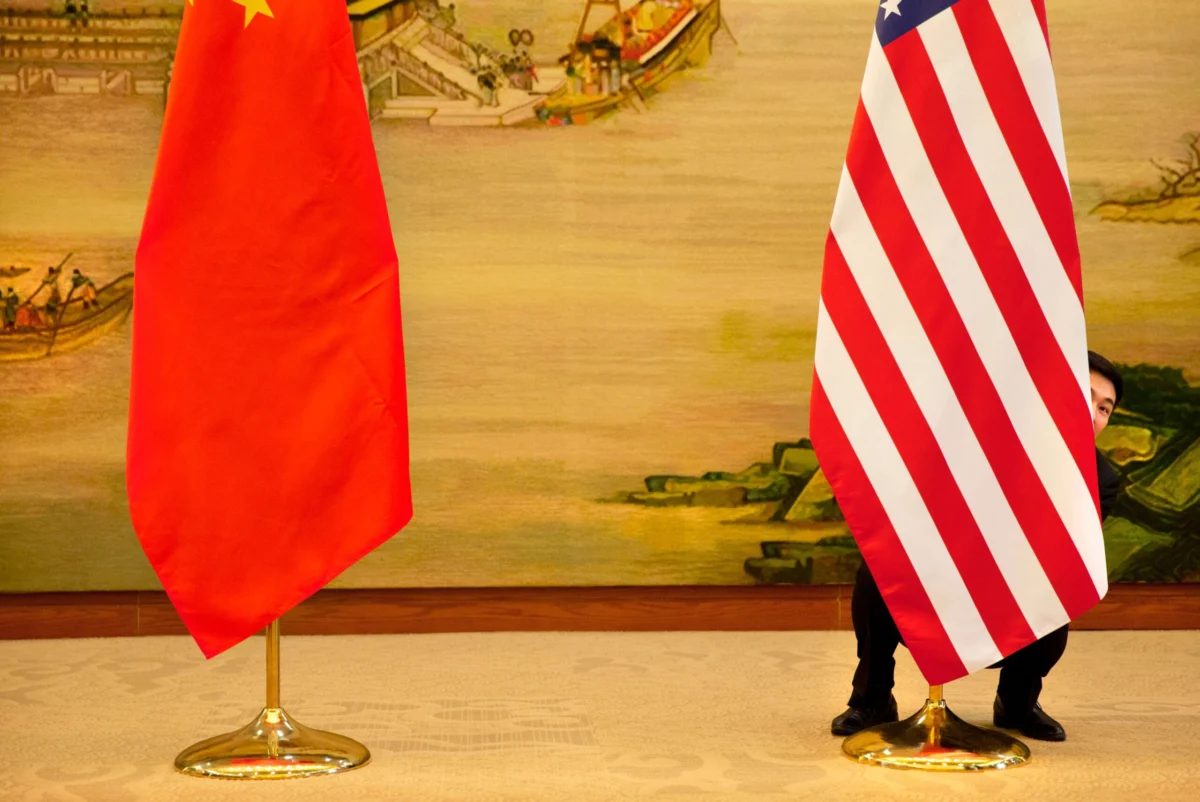
By [Your Name/Agency]
The global technology landscape is currently witnessing the emergence of a "Silicon Wall," not in the realm of social media or semiconductors, but in the physical world of autonomous machines. As the United States moves to aggressively insulate its domestic market from foreign-made robotics, a profound shift is occurring. What began as a trade dispute over telecommunications has evolved into a strategic decoupling of the world’s most advanced physical AI systems.
In July and August, Washington significantly tightened the screws on foreign-made advanced robotic systems and imposed a series of steep tariffs on imported drones and their essential components. Citing pervasive national security concerns, these moves represent a fundamental realization within the U.S. government: the next decade of economic and military superiority will be defined by who builds, controls, and programs the robots that will soon populate factories, warehouses, and battlefields.
Main Facts: A Dual-Pronged Strategy of Exclusion
The recent regulatory surge from Washington is characterized by two primary mechanisms: regulatory blacklisting and aggressive fiscal barriers.
First, the Federal Communications Commission (FCC) has expanded its "Covered List"—a registry of equipment deemed to pose an unacceptable risk to national security. Initially established in 2021 to target telecommunications giants like Huawei and ZTE, the list now encompasses advanced robotic devices. This inclusion effectively bars these systems from being integrated into critical U.S. infrastructure and limits their ability to operate within the American spectrum.
Second, the White House has moved to implement prohibitive tariffs on unmanned aircraft systems (UAS). Beginning in September 2026, imported drones will face steep levies, with a second wave of tariffs targeting specific components—such as flight controllers, sensors, and motors—scheduled to take effect in 2027.
The rationale is clear: Chinese manufacturers have achieved a commanding lead in both the consumer drone market and the nascent humanoid robot sector. Companies like DJI (in drones) and Unitree (in humanoids) offer capabilities at price points that American and European rivals find nearly impossible to match. By raising costs and restricting access, the U.S. aims to create a "protected space" for domestic innovation to mature without being smothered by China’s massive manufacturing scale.
Chronology: The Road to Decoupling
The trajectory of this technological divorce has been building for several years, moving from general electronics to specific autonomous platforms.
- March 2021: The FCC establishes the "Covered List" under the Secure and Trusted Communications Networks Act of 2019. The initial focus is on 5G infrastructure and surveillance cameras from companies like Hikvision and Dahua.
- 2022–2023: Concerns shift toward "data leakage" in the drone industry. Several U.S. states and federal agencies begin banning the use of DJI drones for official business, citing the potential for flight data to be accessed by foreign intelligence services.
- July 2024: The FCC officially expands its focus to include "advanced robotic systems." This move anticipates the arrival of general-purpose humanoid robots in the commercial market.
- August 2024: The U.S. executive branch announces a new tariff schedule. This marks a transition from "security-based" restrictions to "economically-protective" measures, specifically targeting the supply chains that allow Chinese drones to dominate the global market.
- September 2026: The first phase of drone tariffs takes effect, signaling the end of the era of low-cost, high-performance imported UAS in the United States.
- 2027: Component-level tariffs are scheduled to trigger, aimed at forcing the "re-shoring" of the robotics supply chain to the U.S. or allied nations.
Supporting Data: The Scale of Chinese Dominance
To understand why Washington is acting with such urgency, one must look at the "Scale Gap." According to a recent report by Counterpoint Research, the disparity between Chinese and Western humanoid production is staggering.
In the first half of 2026, global shipments of humanoid robots reached approximately 22,000 units. While the industry is still in its infancy, the distribution of these shipments is highly lopsided. The world’s five largest humanoid robot makers—AgiBot, Unitree, Galbot, UBTECH, and Leju Robotics—are all headquartered in China. Together, these five entities accounted for a massive 86% of global shipments in the first six months of the year.
The advantage held by Chinese firms is not merely one of labor costs, but of "supply chain depth." Analysts note that companies like Unitree are increasingly bringing the entire technology stack in-house. By developing their own actuators, sensors, and even specialized chips, they bypass the margins charged by third-party suppliers. Furthermore, Chinese robotics firms are leveraging the country’s massive electric vehicle (EV) infrastructure. Automakers like XPeng are applying their expertise in battery density, autonomous driving algorithms, and high-volume manufacturing to their robotics divisions.
"You cannot sanction your way around a cost curve," notes Ankur Saxena, an investment director at TDK Ventures. "You can only out-build it." Saxena points out that while the U.S. leads in "frontier AI" and semiconductor design, China leads in the ability to turn those designs into millions of physical units at a fraction of the cost.
Official Responses and Industry Perspectives
The reaction to these restrictions has been divided along predictable lines, highlighting a rift between those who prioritize market access and those who prioritize national resilience.
The Domestic Optimists:
Agility Robotics, the Oregon-based creator of the "Digit" humanoid, has publicly welcomed the FCC’s scrutiny. In a statement, the company suggested that early intervention could prevent the U.S. from becoming overly dependent on foreign-made robots, as it did with consumer drones. Agility argues that by designing and assembling robots like Digit within the U.S., they can guarantee a "secure-by-design" architecture that protects the privacy of the warehouses and factories where these machines will work.
The Strategic Realists:
Industry veterans like Bentzion Levinson, CEO of Virginia-based Heven AeroTech, view the situation through a more fragmented lens. Levinson argues that the market is splitting into two distinct ecosystems: a "U.S.-led market" built around National Defense Authorization Act (NDAA) compliant systems, and a "China-led market" focused on low-cost, high-volume production for the rest of the world. He suggests that U.S. firms should stop trying to compete on price in the "low-end" consumer market and instead focus on "long-range autonomous systems" for defense and critical infrastructure where security is the primary value proposition.
The Venture Community:
TDK Ventures’ Ankur Saxena warns that a "purely domestic U.S. supply chain" is an unrealistic goal. Instead, he advocates for a "diversified allied one," involving Japan’s precision manufacturing, South Korea’s battery expertise, and Taiwan’s semiconductor prowess. He emphasizes that because Chinese components are so deeply embedded in the global robotics ecosystem, a total decoupling would be a multi-decade endeavor.
Implications: The Rise of Regional Robotics
The long-term result of these restrictions is unlikely to be a total victory for the U.S. or China. Instead, experts predict the emergence of a "Regionalized Robotics" model.
1. Market Fragmentation
The global robotics industry is losing its "global" character. We are likely to see a world where Chinese humanoids dominate price-sensitive markets with severe labor shortages, such as Southeast Asia, Latin America, and parts of the Middle East. Meanwhile, North America and Europe may become "high-trust" zones where robots are more expensive but meet rigorous security and data-privacy standards.
2. The Battle for "Energy Architecture"
As drones and humanoids become more capable, the next competitive frontier will shift from the "brain" (AI) to the "body" (power and payload). Bentzion Levinson notes that "who owns the next-gen energy and payload architecture" will determine the winner of the next decade. If the U.S. can innovate in solid-state batteries or high-efficiency actuators, it may negate China’s current scale advantage.
3. Tailored Automation
Yang Fang of Beagle Technology suggests that robotics will become more specialized by region. Chinese companies may focus on high-density manufacturing and urban delivery robots suited for their domestic infrastructure. Conversely, U.S. firms are likely to lead in agricultural robotics and complex logistics software tailored for the vast, lower-density landscapes of North America.
4. The "Middle Ground" Players
Nations like Japan (Fanuc, Toyota) and South Korea (Hyundai/Boston Dynamics) are uniquely positioned. They offer a middle ground: high-tech, high-reliability systems that are not subject to the same security stigmas as Chinese hardware, yet benefit from a manufacturing culture that the U.S. currently lacks.
In conclusion, while the U.S. tariffs and FCC restrictions may successfully "protect" the American market in the short term, they do not solve the fundamental challenge of China’s manufacturing velocity. The robotics industry is no longer a monolith; it is a fractured field where the winners will be those who can most effectively bridge the gap between cutting-edge AI and the cold, hard reality of the global cost curve. As the drone tariffs take effect this September, the world will begin to see just how high—and how costly—the new Silicon Wall will be.