Bridging the Gap Between Reality and Tokyo-3: Pixelity Inc. Unveils "Evangelion: Δ Cross Reflections" Preview
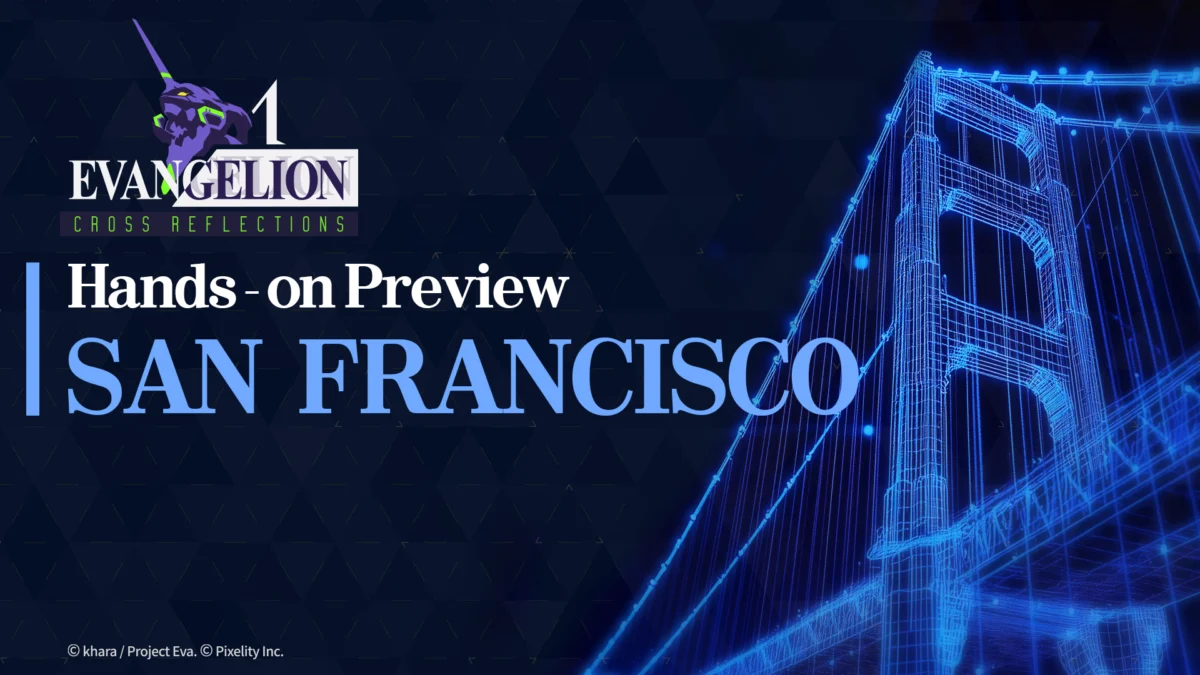
The intersection of legendary Japanese animation and cutting-edge spatial computing is reaching a new milestone. Pixelity Inc., a developer known for its ambitious forays into immersive media, has officially announced an exclusive hands-on preview event for its upcoming title, Evangelion: Δ Cross Reflections. Scheduled to take place in San Francisco on September 25, the event marks the first time the public—or at least a select few—will experience the visceral scale of an "Angel" attack through the lens of Virtual and Mixed Reality (VR/MR).
As the first installment in a planned trilogy, Evangelion: Δ Cross Reflections seeks to translate the complex psychological and mechanical world of Hideaki Anno’s Neon Genesis Evangelion into a medium that demands total presence. With a release window currently set for 2027, this preview offers a rare early look at a project that aims to redefine how fans interact with one of the most influential media franchises in history.
Main Facts: A Glimpse into the Human Instrumentality Project’s Digital Future
The core of Pixelity Inc.’s announcement centers on a highly curated, one-day event in the heart of Silicon Valley’s cultural neighbor, San Francisco. The preview is designed to showcase the dual nature of the project: its traditional VR immersion and its groundbreaking MR (Mixed Reality) integration.
The San Francisco Hands-On Event
On September 25, Pixelity will host approximately 80 participants who will be granted access to three distinct experiences:
- Direct Gameplay: A first-look at the mechanics of piloting or interacting with the world of Evangelion within the game’s current build.
- The AR Character Experience: A showcase featuring an as-yet-unannounced "major" character from the series. This segment utilizes Augmented Reality to "project" the character into the physical space of the room, allowing for a sense of scale and presence impossible in 2D media.
- The NERV VR Tour: A dedicated VR experience that allows players to walk through a meticulously recreated NERV Headquarters. From the sprawling command centers to the hauntingly quiet corridors, this segment focuses on environmental storytelling.
Game Structure and Scope
Evangelion: Δ Cross Reflections is not a standalone experience but the opening chapter of a trilogy. Pixelity has stated that the overarching goal of this three-part series is to cover the narrative arc of all 26 episodes of the original 1995 television series. However, rather than a shot-for-shot remake, the game introduces a "New Story" perspective. Players will step into the shoes of an original protagonist—a character who dreams of becoming a pilot—providing a fresh vantage point on the "key episodes" that defined the anime.
Chronology: The Road to 2027
The timeline for Evangelion: Δ Cross Reflections suggests a long-term commitment to quality and technical evolution. While the announcement of the San Francisco event is the immediate focus, the project’s history and future trajectory follow a deliberate path.
- September 2024 (The Application Window): Interested participants are required to apply via a formal online process. The selection is competitive, with the developer emphasizing a desire for a focused group of testers and enthusiasts.
- September 22, 2024: Pixelity will notify the 80 selected participants via email, providing location details and security protocols for the event.
- September 25, 2024: The hands-on preview event takes place in San Francisco. This date is strategically chosen to coincide with ongoing discussions in the tech industry regarding the future of spatial computing and the adoption of MR headsets like the Meta Quest 3 and the Apple Vision Pro.
- 2024–2026 (Development Phase): Pixelity will move into deep production. Given the "2027" release window, the studio is likely targeting next-generation VR/MR hardware that will be more prevalent by the late 2020s.
- 2027 (Initial Release): The first part of the trilogy is slated to launch on "various VR devices." This likely includes the Meta Quest ecosystem, PCVR (via SteamVR), and potentially high-end spatial computers.
Supporting Data: Pixelity’s Pedigree and the VR Market
To understand the weight of this announcement, one must look at the developer behind the curtain and the state of the VR industry.
About Pixelity Inc.
Pixelity Inc. is no stranger to the challenges of VR development. Based in Seoul, South Korea, the studio has built a reputation for high-action, multiplayer VR experiences. Their previous titles, such as The Chosen One and Rise of the Fallen, demonstrated a mastery of gesture-based combat and real-time networking. By securing the Evangelion license, Pixelity is moving from original IPs into the "prestige" tier of licensed content, which carries both high expectations and significant marketing gravity.
The Evangelion Gaming Legacy
The Evangelion franchise has a storied, if inconsistent, history in gaming. From the early Sega Saturn titles to the "Girlfriend of Steel" visual novels and the more recent mobile collaborations, the series has often struggled to capture the scale of the Evas. VR is uniquely positioned to solve this. In a VR environment, an Evangelion unit—which stands roughly 40 to 80 meters tall—can finally be experienced with a true sense of vertigo and awe.
Market Context: The Shift to Mixed Reality
The inclusion of MR (Mixed Reality) in Δ Cross Reflections is a calculated move. With the release of the Meta Quest 3 and the Apple Vision Pro, the industry is shifting away from "pure VR" (complete isolation) toward "Spatial Computing" (integrating digital objects into the real world). Pixelity’s plan to bring a "major character" into the user’s living room via AR aligns with current hardware trends where "presence" is the ultimate commodity.
Official Responses: Insights from the Press Release
In their official communications, Pixelity Inc. has emphasized that this project is as much about emotional connection as it is about giant robot combat.
A spokesperson for Pixelity noted in the press release:
"Players will enjoy the story set in the locations from the anime from their own perspective. Battles between Evangelions and Angels, various interactive elements, and engaging captivating storylines with original characters are also planned."
This statement highlights three pillars of the development philosophy:
- Perspective: By using an original protagonist, Pixelity avoids the "Shinji Ikari problem"—where the player’s agency might conflict with Shinji’s established, often paralyzed, psychological state. This allows the player to feel like a participant in the NERV program rather than a spectator to Shinji’s trauma.
- Interactivity: The mention of "various interactive elements" suggests that the game will go beyond a "walking simulator" or a simple rail shooter. The VR recreation of NERV HQ implies a level of exploration and environmental interaction that fans have craved for decades.
- Narrative Integration: By linking "key episodes" of the anime with new characters, Pixelity is attempting a "Side-S" (Side Story) approach that enriches the existing lore without overwriting the canon that fans hold dear.
Implications: What This Means for the Future of Anime and XR
The announcement of Evangelion: Δ Cross Reflections carries implications that ripple across the gaming, tech, and anime industries.
1. The "Prestige VR" Trend
For years, VR gaming was dominated by indie titles and "tech demos." We are now entering an era of "Prestige VR," where massive global IPs—like Evangelion, Batman: Arkham Shadow, and Horizon Call of the Mountain—are being used to move hardware. Pixelity’s 2027 release date suggests they are betting on VR becoming a mainstream medium by the end of the decade.
2. The Evolution of Fandom Participation
Traditional media is passive. You watch Shinji pilot the Eva. In Δ Cross Reflections, the boundary is removed. For the "Otaku" culture, this represents the ultimate form of "pilgrimage." Being able to physically walk through NERV HQ or stand in the presence of Rei Ayanami or Asuka Langley Soryu in one’s own living room via AR changes the relationship between the fan and the fiction.
3. The Technical Challenge of Scale
One of the greatest hurdles for Pixelity will be the sense of scale. In VR, if a 60-meter robot moves too fast, it can cause motion sickness; if it moves too slow, it feels like a toy. The San Francisco preview will be the first litmus test for whether Pixelity has solved the "weight" of the Evangelions. If they succeed, they will have set a new standard for mecha games in XR.
4. A New Model for Anime Adaptations
If the trilogy successfully covers all 26 episodes through a new protagonist’s eyes, it could provide a blueprint for other classic anime franchises (Gundam, Macross, Ghost in the Shell) to enter the VR space. Rather than trying to recreate the protagonist’s journey, developers may find more success in creating "companion stories" that allow the player to exist alongside the legends.
Conclusion: A High-Stakes Venture into the Entry Plug
Pixelity Inc. is taking a massive gamble. Neon Genesis Evangelion is a series defined by its deconstruction of the "giant robot" genre and its deep, often painful, exploration of the human psyche. Translating that into a "fun" or "engaging" VR/MR experience requires a delicate balance of reverence for the source material and innovation in game design.
The September 25 event in San Francisco is more than just a marketing stunt; it is a declaration of intent. By inviting the public to step into NERV HQ three years before the game’s official release, Pixelity is signaling confidence in their vision. For the 80 lucky participants, the "First Impact" of this new digital frontier is just weeks away. For the rest of the world, the wait until 2027 begins, with the hope that Evangelion: Δ Cross Reflections will finally allow us to truly "get in the robot."