The Rise of the Cyber-Physical Guardian: Exein Secures $270M to Protect the Era of Physical AI
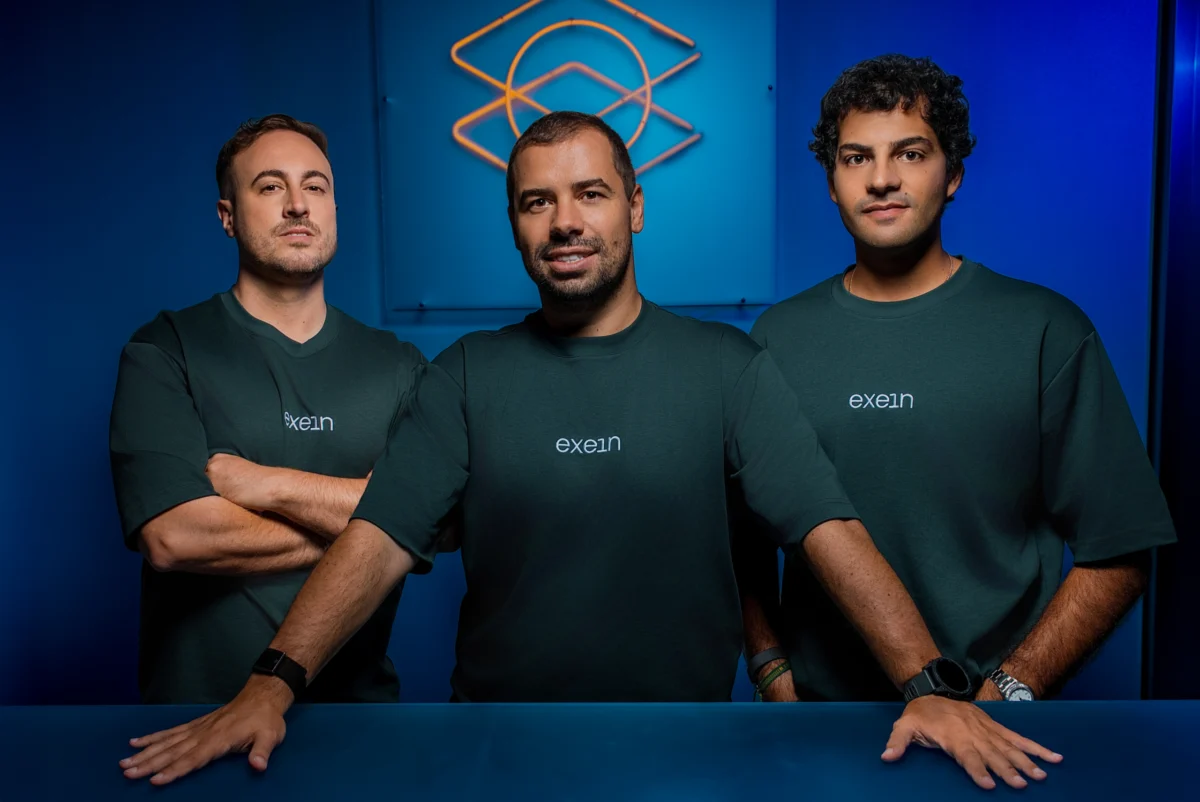
In a landmark moment for the European technology ecosystem and a significant boost for Italy’s burgeoning startup scene, Rome-based cybersecurity firm Exein has officially achieved "unicorn" status. The company announced today that it has successfully closed a $270 million funding round led by global venture capital firm Headline, propelling its valuation to $1.7 billion.
This capital injection marks a pivotal shift in the cybersecurity landscape, moving away from traditional network-centric defenses toward a decentralized, device-level approach. Exein’s core mission—to provide a robust security layer for "Physical AI"—addresses one of the most critical vulnerabilities in the modern industrial and consumer world: the susceptibility of connected hardware to sophisticated, machine-speed attacks.
Main Facts: A New Milestone for European Tech
The $270 million round, which was significantly oversubscribed, reflects the intense investor appetite for security solutions that bridge the gap between digital intelligence and physical machinery. While Exein initially gained traction in the Internet of Things (IoT) space, its strategic pivot toward Physical AI—systems where artificial intelligence interacts directly with the physical world through sensors and actuators—has positioned it at the forefront of the next industrial revolution.
Key Highlights of the Announcement:
- Funding and Valuation: $270 million raised at a $1.7 billion post-money valuation.
- Lead Investor: Headline, with participation from a consortium of existing and new institutional investors.
- Core Technology: The "Photon" platform, a runtime security solution that operates at the kernel level to prevent exploits in real-time.
- Market Reach: Over 2 billion devices currently secured across sectors including aerospace, automotive, healthcare, and energy.
- Growth Metrics: The company reports a staggering 400% year-on-year revenue growth, with approximately 50% of its business now originating from the Asia-Pacific (APAC) region.
CEO and founder Gianni Cuozzo emphasizes that the traditional "walled garden" approach to security is no longer sufficient. "The concept of Exein is that every device should be able to defend itself, regardless of whether they are connected to a secure network or not," Cuozzo stated. This "immune system" approach for hardware is what has attracted both Tier-1 manufacturers and high-profile investors.
Chronology: From Rome Startup to Global Powerhouse
Exein’s journey from its inception in 2018 to its 2025 unicorn valuation is a testament to the rapid acceleration of the edge computing market.
2018–2021: Foundations in IoT
Exein was founded in Rome with the conviction that the explosion of connected devices would outpace the ability of traditional firewalls to protect them. The early years were spent building relationships with Original Equipment Manufacturers (OEMs) and silicon vendors. By integrating security directly into the hardware design phase, Exein ensured its software could run with minimal latency and high efficiency.
2022–2024: Scaling and the Series B
The company’s growth began to hit an inflection point approximately two years ago during its Series B round. At that time, Exein raised $15 million to prevent industrial accidents—such as robotic arms "going haywire" due to malicious code. The valuation at this stage was a fraction of its current standing, but the technical proof of concept was solidified.
2025: The Year of Exponential Growth
In December 2025, following a successful Series C earlier in the year, Exein secured a mix of equity and debt that valued the company at approximately $700 million. However, the explosion of generative AI and its application in robotics (Physical AI) caused the market demand for Exein’s products to skyrocket. Within less than a year, the company’s valuation more than doubled, culminating in the current $1.7 billion milestone.
Supporting Data: The Technology Behind the Shield
At the heart of Exein’s value proposition is Photon, its flagship runtime security solution. To understand why Photon is revolutionary, one must look at where it sits within a device’s architecture.
Kernel-Level Defense
Most security software operates at the application layer, which can be bypassed if an attacker gains deep-system access. Photon operates at the kernel level—the core of the operating system that controls the hardware. By monitoring system calls and memory execution in real-time, Photon can identify and neutralize anomalies before they manifest into physical actions.
The Scale of Protection
Exein’s impact is measured by its footprint. The company claims to have secured more than 2 billion devices. This scale is achieved through deep integration with the semiconductor supply chain. By partnering with silicon vendors, Exein’s security features are often "baked in" before a device even reaches the assembly line.
Industry Penetration
Exein’s growth is diversified across several high-stakes verticals:
- Aerospace: Securing flight control systems and satellite communications.
- Automotive: Protecting self-driving algorithms and vehicle-to-everything (V2X) communications.
- Industrial Automation: Ensuring that "lights-out" factories remain resilient against ransomware that targets PLCs (Programmable Logic Controllers).
- Healthcare: Safeguarding connected medical imaging devices and robotic surgery tools.
Official Responses: Navigating a "Machine-Speed" Threat Landscape
The motivation behind this massive funding round is not just commercial opportunity, but a response to a deteriorating global security environment. Gianni Cuozzo has been vocal about the rise of "machine-speed attacks"—threats generated and executed by AI models that can probe and exploit vulnerabilities faster than any human operator can respond.
"AI has boosted attackers’ capabilities significantly," Cuozzo noted. "We are seeing open-source models being used without guardrails to target physical devices in novel ways. It makes the cost of an attack much cheaper while increasing the potential for catastrophic failure."
The Foundational Model for Security
To counter AI-driven threats, Exein is fighting fire with fire. The company has announced that a portion of the $270 million will be dedicated to training a foundational model for Physical AI security. This model is being trained on vast amounts of machine data and telemetry to predict and preempt attacks. Exein expects this AI-driven defense layer to be commercially available by the first quarter of 2027.
Investor Perspective
Investors from Headline have pointed to Exein’s unique position at the intersection of hardware and software. The lead investors noted that as the world moves toward autonomous systems, the "trust gap" in hardware becomes the primary bottleneck for adoption. Exein, by providing a verifiable security layer, essentially acts as an enabler for the entire Physical AI industry.
Implications: Regulation, M&A, and the Future of the Edge
The influx of capital and the rise of Exein have several long-term implications for the global tech industry and the regulatory environment.
1. Regulatory Tailwinds: The EU Cyber Resilience Act
Exein’s timing could not be more fortuitous. The European Union’s Cyber Resilience Act (CRA) recently began its initial reporting phase. By December 2027, the Act will be in full force, legally requiring manufacturers of digital products to ensure they meet strict cybersecurity standards throughout their lifecycle.
For many OEMs, building these security features from scratch is cost-prohibitive. Exein’s "off-the-shelf" kernel security allows manufacturers to achieve CRA compliance almost instantly, transforming a regulatory burden into a streamlined integration process. This makes Exein a structural necessity for any hardware company wishing to sell in the European market.
2. Global Expansion and M&A Strategy
With $270 million in the bank, Exein is shifting from a startup to a consolidator. Cuozzo has indicated that the company is actively looking for Mergers and Acquisitions (M&A) to fill gaps in its product portfolio, particularly in specialized niches like satellite communications and quantum-resistant encryption.
Furthermore, the company is aggressively expanding its footprint in the United States and the Asia-Pacific region. With 50% of its revenue already coming from APAC—a region that dominates global semiconductor and electronics manufacturing—Exein is positioned as a rare European company that has successfully exported its technology to the "factory of the world."
3. The Future of Physical AI
The rise of Physical AI—embodied in humanoid robots, delivery drones, and smart infrastructure—represents a paradigm shift. Unlike a data breach at a social media company, a breach in Physical AI can lead to physical harm or infrastructure collapse.
Exein’s $1.7 billion valuation is a signal from the market that the "security-by-design" philosophy is no longer optional. As AI models move from the cloud to the "edge" (running locally on devices), the need for local, autonomous defense mechanisms will only intensify.
Conclusion
Exein’s ascent to unicorn status is more than just a financial success story; it is a strategic win for European sovereign technology. By securing the "nervous system" of modern machinery, the Rome-based startup is ensuring that the transition to an AI-driven physical world is both safe and resilient.
With plans for a foundational security model by 2027 and a massive expansion into the U.S. and Asia, Exein is no longer just an Italian success story—it is a global standard-setter for the age of Physical AI. As the EU Cyber Resilience Act looms on the horizon, Exein stands ready to protect the 2 billion (and counting) devices that keep the modern world moving.