Unlocking the Everyday Magic: Why Folklore is More Relevant Than Ever
LONDON, UK – Often relegated to the dusty shelves of history or dismissed as quaint curiosities, folklore is undergoing a significant re-evaluation, emerging as a vital, accessible practice for modern life. Far from being merely "antler-wearing men" or "wart charming," contemporary folklorists and practitioners are championing its integration into daily routines, arguing that these ancient customs offer profound benefits for mental well-being, community connection, and a deeper appreciation for the rhythm of life.
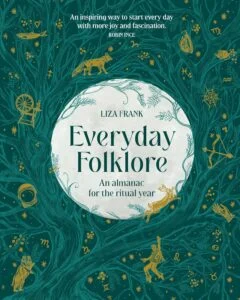
At the forefront of this movement is Liza Frank, whose recent book, Everyday Folklore: An Almanac for the Ritual Year, distills a year of personal immersion into a practical guide for engaging with the traditions that shape our world. Frank’s work challenges the perception of folklore as an academic niche or a commercial gimmick, asserting that it is, in fact, an ever-present framework of rituals, traditions, and customs that subtly, yet powerfully, influence our lives – from the profound to the seemingly mundane act of brewing a cup of tea.
This initiative is a clarion call to move beyond passive observation and actively weave folklore into the fabric of our existence. It posits that by consciously embracing these practices, individuals can unlock a richer, more engaged, and more celebratory way of living. For those who have only ever admired folklore from a distance, Frank’s insights offer compelling reasons to step into the fray and experience its transformative power firsthand.
Main Facts: Reclaiming the Narrative of Folklore
Folklore, broadly defined, encompasses the traditional beliefs, customs, and stories of a community, passed down through generations. It is an intricate tapestry woven from oral traditions, material culture, and social practices. Historically, it has been a bedrock of human society, providing frameworks for understanding the world, marking significant life events, and fostering social cohesion. However, in an increasingly globalized and digital age, the perception of folklore has often narrowed, viewed either as exotic relics from distant cultures or as mere "flim flam" – simple narratives for children, plot devices for entertainment, or exploitable elements for commercial fandoms.
Liza Frank’s Everyday Folklore directly confronts this modern disconnect, presenting a compelling argument for its contemporary relevance. The core premise is that folklore is not a static artifact of the past, but a living, breathing, evolving aspect of human experience, continually shaping our interactions and perceptions. Frank’s book, born from her intensive "Everyday Lore Project," serves as a practical blueprint for individuals to engage with the ritual year, offering a tangible pathway to integrate these practices into their daily lives.
The central arguments articulated by Frank highlight five key benefits of this conscious engagement:
- Slowing Down and Cultivating Presence: Folklore encourages mindfulness and a deeper appreciation for the cyclical nature of time and seasons.
- Amplifying Celebration: It provides a vast array of additional opportunities for joy, commemoration, and community gathering beyond conventional holidays.
- Combating Boredom and Ennui: Active participation in folkloric practices offers creative outlets, physical challenges, and intellectual stimulation.
- Enriching General Knowledge: Delving into folklore uncovers fascinating, often bizarre, facts that enhance cultural literacy and provide unique conversational fodder.
- Generating Personal Stories and Memories: Engaging with traditions creates unique, memorable experiences that become personal narratives, fostering connection and shared heritage.
These points collectively underscore a shift in perspective: from viewing folklore as an external academic subject to recognizing it as an internal, empowering tool for personal and communal enrichment. The work advocates for a deliberate re-engagement with the subtle, pervasive influences of tradition that guide our lives, even in seemingly insignificant acts like preparing a hot beverage.
Chronology: A Year of Living Folklorishly
The impetus for Frank’s immersive study and subsequent publication emerged from a dedicated period of personal engagement: the "Everyday Lore Project." This ambitious endeavor saw Frank consciously practice ritual year folklore every day between St Distaff’s Day 2020 (January 7th) and Twelfth Night 2021 (January 5th). This intensive, year-long commitment served as both a personal journey of discovery and a rigorous empirical study, forming the experiential bedrock of Everyday Folklore: An Almanac for the Ritual Year.
The "ritual year" itself is a concept deeply embedded in human history, tracing its origins back to agrarian societies whose lives were intrinsically linked to the cycles of nature. It delineates a calendar of festivals, observances, and customs tied to the changing seasons, astronomical events (solstices, equinoxes), and agricultural milestones (planting, harvest). While specific dates and practices vary across cultures and regions, the underlying principle remains universal: to mark the passage of time, anticipate environmental shifts, and foster communal solidarity through shared rituals.
During her project, Frank immersed herself in a wide array of practices. This included observing traditional dates like Wassail in January to bless fruit trees and ensure a good harvest, a practice that connects individuals directly to the agricultural cycle and the local ecosystem. She also engaged with more whimsical traditions, such as counting fogs in August to predict winter snowfalls, demonstrating how simple, observational folklore can inject an element of playful prediction into daily life. The project wasn’t confined to grand, public spectacles; it also encompassed personal, domestic rituals, such as experimenting with lunar plantings – aligning gardening activities with the phases of the moon – or simply observing the subtle transformations of hedgerows from barrenness to budding life, through fecundity, and back to dormancy.
This chronological exploration allowed Frank to experience firsthand how these seemingly disparate traditions interweave to create a rich tapestry of meaning throughout the year. It provided empirical evidence for her central thesis: that by intentionally participating in these practices, one gains a profound sense of connection to the natural world, to cultural heritage, and to the very flow of time itself. The project thus became a living laboratory, transforming theoretical understanding into practical, lived experience, which is now distilled into a guide for others to embark on their own folkloric journeys.
Supporting Data: The Five Pillars of Folkloric Engagement
Frank’s argument for integrating folklore into daily life is underpinned by five compelling benefits, each offering a unique pathway to personal and communal enrichment.
1. Cultivating Presence and Slowing Down the Pace of Life
In an era defined by relentless speed and digital distraction, folklore offers a powerful antidote. While it cannot literally halt time, engaging with the ritual year provides a structured framework for mindfulness and presence. Modern life often sees days blur into weeks, and weeks into months, leading to a pervasive sense of time slipping away. By actively participating in practices tied to specific dates, months, or seasons, individuals are compelled to pause, observe, and engage with their immediate environment.
For instance, the ancient practice of wassailing in January, which involves singing to apple trees to promote a good harvest, creates a direct, tangible stake in the natural world. It shifts focus from abstract time to the tangible promise of spring and the bounty of the earth. Similarly, the simple act of counting fogs in August to predict winter snowfalls transforms a meteorological observation into a playful, seasonal ritual. Beyond formal ceremonies, the continuous observation of natural cycles – from lunar plantings to noting the progression of hedgerows through their barren, budding, and fecund stages – fosters a profound connection to the rhythm of the planet. This deliberate slowing down allows for greater openness to possibility, wonder, and a deeper appreciation for the intricate dance of life unfolding around us. It’s a gentle rebellion against the tyranny of speed, replacing hurried existence with conscious observation and engagement.
2. Expanding Opportunities for Celebration and Joy
Life is punctuated by milestones: birthdays, anniversaries, religious festivals, and secular holidays. However, the ritual year reveals an almost endless capacity for marking time with additional excuses for joy and communal gathering. Folklore broadens the spectrum of celebration beyond conventional events, inviting participants to find delight in the whimsical, the specific, and the utterly unexpected.
Want to honor nature? There are numerous days dedicated to trees, flowers, or specific animals. Fancy a toast? Days are dedicated to wine (August 19th), gin (second Saturday of June), and rum (July 31st). Pop culture enthusiasts can revel in Back to the Future Day, Star Trek Day, or Star Wars Day (May the Fourth be with you). Even the absence of an event can be a cause for celebration, such as the jubilation if it doesn’t rain on St. Swithin’s Day, averting a long period of precipitation. Furthermore, completing a folkloric task, like the traditional practice of counting seven stars on seven consecutive nights to have a wish granted, transforms personal effort into a moment of triumph and hopeful anticipation. This boundless capacity for celebration combats monotony, fosters a sense of anticipation, and enriches the social calendar with a vibrant array of shared experiences, reinforcing community bonds and individual well-being through shared merriment.
3. Combating Boredom and Ennui through Active Engagement
Folklore offers a dynamic antidote to the pervasive modern malaise of boredom and ennui. It provides a rich repertoire of activities that encourage creativity, physical exertion, and intellectual curiosity, transforming passive existence into active participation. Rather than merely consuming entertainment, individuals can become creators and participants in living traditions.
Consider the humble leftover Christmas cake: in Manitou Springs, Colorado, it becomes the centerpiece of the Great Fruitcake Toss in January, an eccentric and humorous community event. The culinary aspect of folklore is particularly rich, inviting individuals to recreate historical recipes like Heg Peg Dumps or knotting-sowins, or simply to bake a generous batch of scones for National Cream Tea Day. (Though Frank humorously advises caution with "plum duffs," especially if experimenting with vegetarian suet and a favorite tea towel). For those with a flair for the dramatic, costumed events abound, from becoming King for a weekend at the Porthcawl Elvis Festival to embodying a badger for St. Piran’s Day in March. Daredevils might find their thrill in the Cooper’s Hill cheese roll in May or the Dorking Wife Carrying Race in March. Even solitary activities can be imbued with folkloric significance, such as conducting a midnight exorcism by spitting black beans and walking backward during Lemuralia in May. These varied activities provide purpose, foster skill development, and offer novel experiences that actively engage the mind and body, preventing the stagnation of routine.
4. Enhancing Knowledge and Winning Pub Quizzes
Folklore is a treasure trove of peculiar and fascinating facts, making it an unexpected asset for general knowledge and, indeed, for triumphing in pub quizzes. Delving into the world of traditional beliefs reveals astonishing insights into human-animal interactions, cultural practices, and historical superstitions.
For example, who would guess that spiders reportedly prefer classical music to techno? This intriguing tidbit, supported by scientific observation, not only provides an unexpected fact but also ties into traditional beliefs about spiders as omens – an uptick in indoor spiders in March is said to augur rain, prompting a playful connection between music preferences and weather prediction. Another captivating example is the pre-launch ritual of Baikonur cosmonauts, who, since the early 1970s, have traditionally watched The White Sun of the Desert, a 1970 Russian Civil War comedy, for luck before space missions. This highlights the enduring power of ritual in high-stakes environments. Furthermore, exploring the folklore surrounding animals like bats reveals their dual reputation as both the Devil’s messenger and, crucially, as primary pollinators of agave plants. This latter fact carries significant implications: without these "winged wonders," tequila, and consequently Margaritas, would be replaced by alternatives like Manhattans. Such nuggets of information not only entertain but also deepen cultural literacy, offering a richer understanding of the interconnectedness of human beliefs, natural phenomena, and everyday life.
5. Generating Unique Tales and Personal Narratives
Perhaps one of the most enduring rewards of engaging with folklore is the acquisition of unique, often eccentric, personal stories. Folklore is, by its very nature, a narrative tradition, and by participating in it, individuals become active contributors to their own personal mythology. While some folkloric beliefs might seem "bonkers," Frank emphasizes that this does not invalidate the deeply held beliefs of others, and indeed, those who embrace the peculiar are often the most engaging.
Imagine recounting the time you believed you caught a whiff of "demonic sulphur" while nutting in the woods in September, or the subjective experience of a boil on your neck supposedly decreasing after the application of a cabbage leaf. These are not just events; they are experiences imbued with a sense of the extraordinary, transformed into memorable anecdotes. The traditional practice of slipping a sprig of rosemary and a crooked sixpence under a pillow on St. Luke’s Eve, hoping for a vision of one’s true love, offers a poignant example. Frank recounts her own vision of Mark Hamill – a humorous, relatable story that underscores the human desire for connection and belief. While some anecdotes, such as failing to detect vampire activity in gardening implements, might be best saved for later dates, the sheer act of engaging with these traditions ensures a continuous stream of unusual, fascinating, and often humorous experiences. These personal tales enrich conversations, strengthen bonds, and create a legacy of unique memories that are far more compelling than mere recounting of daily routines.
Official Responses: The Academic Endorsement and Cultural Imperative
While Liza Frank’s work is deeply personal and practical, its message resonates with broader academic and cultural perspectives on the enduring importance of folklore. Folklorists and cultural institutions increasingly emphasize the vital role of traditional practices in understanding human societies and fostering well-being.
Dr. Gregory E. Warshaver, in his work "On Postmodern Folklore," highlights how folklore is not a static relic but a dynamic, evolving force, perpetually adapting to contemporary contexts. This academic perspective lends weight to Frank’s assertion that folklore is "all around us," underscoring its relevance in a postmodern world where traditional forms often blend with new expressions. Organizations dedicated to cultural heritage, such as national folklore societies and museums, actively champion the preservation and understanding of these traditions. They curate exhibitions, host workshops, and publish research that validates the intrinsic value of customs, rituals, and stories, not just as historical artifacts but as living components of cultural identity.
Moreover, psychologists and anthropologists often point to the mental health benefits derived from engaging in rituals. Rituals provide structure, reduce anxiety, and foster a sense of belonging. By actively participating in community-based folkloric events or personal daily rituals, individuals tap into these inherent psychological benefits. The academic and institutional ‘official response’ to works like Frank’s is one of affirmation: recognizing that such accessible guides are crucial for bridging the gap between scholarly understanding and public engagement, ensuring that the rich tapestry of folklore continues to be woven by contemporary hands. Frank herself, through her extensive research and personal immersion, acts as a leading voice, translating complex folkloric concepts into actionable advice for the everyday person.
Implications: Sustaining Culture, Enhancing Well-being, and Building Community
The conscious integration of folklore into daily life carries profound implications, extending far beyond individual enrichment to impact cultural preservation, mental well-being, and community cohesion.
Firstly, active engagement with folklore is a powerful act of cultural preservation. In an age of rapid homogenization, the deliberate practice of local or traditional customs ensures their continuity. Each act of wassailing, each fruitcake toss, each specific celebratory day, reinforces a unique thread in the cultural fabric, preventing the erosion of heritage. It transforms folklore from an object of study into a living, evolving tradition passed down not just through books, but through lived experience.
Secondly, the emphasis on mindfulness and connection to natural cycles inherent in many folkloric practices has significant implications for mental well-being. By encouraging individuals to slow down, observe, and participate, folklore acts as a counter-narrative to the relentless pace of modern life. It fosters a sense of groundedness, reduces stress, and cultivates a deeper appreciation for the present moment and the beauty of the natural world. The act of celebration, in all its myriad forms, releases endorphins, builds optimism, and provides necessary breaks from routine, combating the pervasive feelings of ennui.
Thirdly, shared folkloric rituals are potent tools for community building. Whether it’s a village festival, a local craft tradition, or a shared culinary experience, these activities create opportunities for collective participation, strengthening social bonds and fostering a sense of belonging. In an increasingly fragmented world, folklore provides common ground and shared purpose, reminding individuals of their place within a larger collective.
Finally, the call to "be more curious, try new things, make new traditions, challenge yourself" has far-reaching implications for personal growth. It encourages an adventurous spirit, a willingness to explore, and a creative approach to life. Folklore is not about rigid adherence to ancient rules, but about adaptation, interpretation, and the creation of new meaning. This dynamic engagement empowers individuals to not only connect with the past but also to actively shape the future of their own traditions.
In essence, Liza Frank’s Everyday Folklore is more than just a guide; it’s a manifesto for a more engaged, joyful, and culturally connected existence. It’s a reminder that the magic of tradition isn’t confined to history books or distant lands, but lies dormant, waiting to be awakened, in the rhythms and rituals of our everyday lives. As the year unfolds, and despite the proverbial hurdle of January 19th where resolutions often falter, the ritual year’s multitude of "New Year’s Days" offers endless opportunities for a fresh start, ensuring that the journey into folklore is always available for a do-over. The time to "feel the folklore fear and do it anyway" is now.