Unveiling the Week’s Literary Cosmos: Locus Magazine Spotlights September 22, 2026 Speculative Fiction Releases
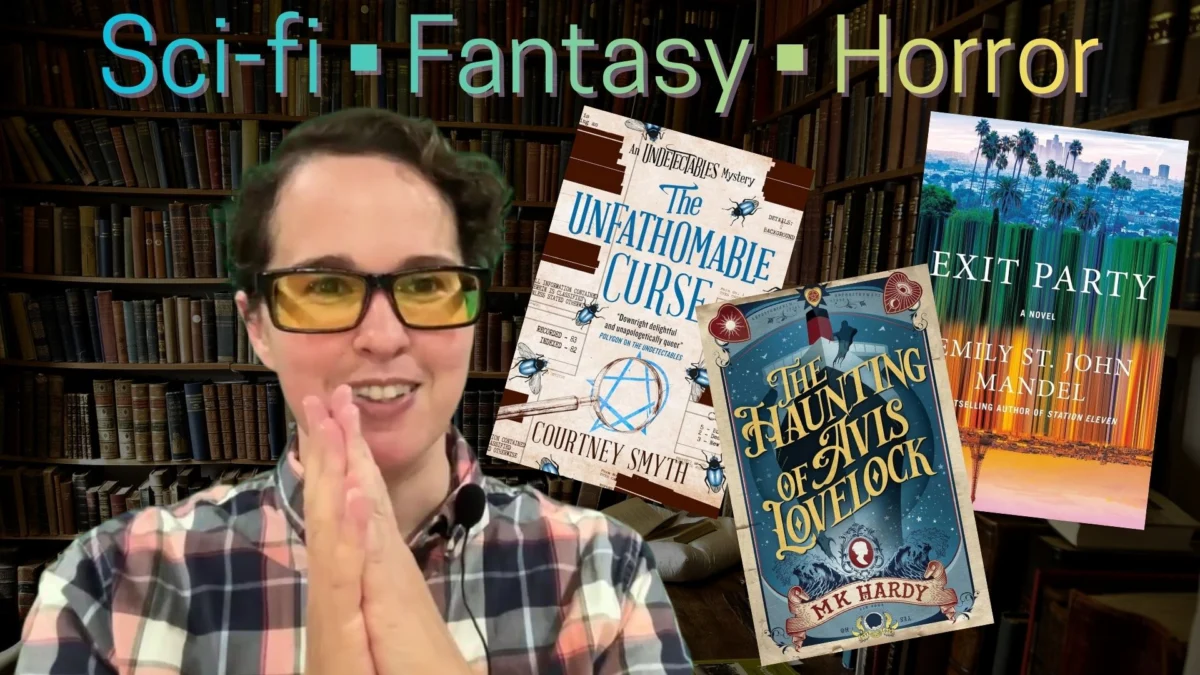
OAKLAND, CA – September 22, 2026 – In an ever-expanding universe of literary creations, the task of discerning the truly essential new releases can be a formidable challenge for even the most dedicated readers. Each week, countless new titles emerge, vying for attention across diverse genres. For aficionados of speculative fiction – encompassing Science Fiction, Fantasy, Horror, and Young Adult (YA) – the authoritative guide has long been Locus magazine, the venerable publication renowned for its comprehensive coverage of the field. This week, Locus once again delivers on its promise, with its latest video installment highlighting the significant new books hitting shelves on September 22, 2026.
The weekly video dispatch from Locus serves as a crucial compass for readers navigating the vast seas of new publications. This particular edition promises an exploration of fresh narratives, from expansive futuristic sagas and intricate magical quests to chilling tales of terror, enigmatic supernatural discoveries, and compelling YA stories that resonate with contemporary themes. By curating a selection of new and notable releases, Locus aims to streamline the discovery process, ensuring that readers are well-equipped to find their next captivating read within the vibrant speculative fiction landscape. The initiative underscores Locus‘s enduring commitment to fostering an informed and engaged readership, cementing its role as an indispensable resource in the genre.
The Rhythmic Pulse of Publishing: A Chronology of Weekly Unveilings
The publishing industry operates on a relentless schedule, a cyclical rhythm of creation, promotion, and release. For readers, this translates into a constant influx of new material, a literary tide that washes fresh narratives onto digital and physical shelves every week. Locus magazine, with its deep roots in the speculative fiction community, has long understood the importance of regular, timely updates to keep pace with this flow.
The Locus Tradition: A Beacon for Speculative Fiction
Founded in 1971, Locus magazine has evolved from a print-centric news journal to a multifaceted digital platform, yet its core mission remains unchanged: to provide unparalleled news and critical coverage of the science fiction, fantasy, and horror fields. For decades, Locus has been the go-to source for industry news, author interviews, and, critically, comprehensive reviews and release schedules. The advent of their weekly video series represents a modern adaptation of this long-standing tradition, leveraging contemporary media to reach a broader, digitally-native audience. This chronological evolution from print listings to dynamic video presentations showcases Locus‘s adaptability and its unwavering dedication to serving its readership effectively. The weekly video is not merely a list; it is a curated experience, a guide crafted by experts who understand the nuances and trends within these complex genres.
The Lifecycle of a Release: From Concept to Reader
Every book highlighted in the Locus weekly video is the culmination of a protracted journey. This journey begins, often years prior, with an author’s initial concept, followed by countless hours of writing, revision, and submission. Once a manuscript is acquired by a publisher, it enters a rigorous editorial process, moving through stages of copyediting, proofreading, design, and marketing strategy. The "release day" – in this instance, September 22, 2026 – marks the public debut, the moment a book transitions from a private endeavor to a public artifact.
For publishers, the challenge is not just to produce a quality book but to ensure it finds its audience amidst a crowded marketplace. This is where platforms like Locus become indispensable. Their weekly video acts as a critical interface, offering a curated spotlight that cuts through the noise. It transforms a potentially overwhelming list of new titles into an accessible, engaging preview, guiding readers directly to the stories most likely to capture their imagination. This consistent, chronological highlighting of new releases ensures that no deserving title is lost in the shuffle, providing a vital service to authors, publishers, and readers alike.
Navigating New Worlds: Supporting Data and Illustrative Releases
The speculative fiction market is a dynamic ecosystem, constantly reinventing itself while honoring its foundational tropes. The September 22, 2026, releases, as spotlighted by Locus, offer a snapshot of current trends and enduring themes across its constituent genres. While specific titles were not detailed in the original announcement, an analysis of the broader landscape allows for an exploration of the types of narratives readers can expect.
Science Fiction: Exploring the Frontiers of Tomorrow
Science Fiction continues its relentless exploration of humanity’s future, technological advancements, and existential dilemmas. Recent years have seen a surge in narratives grappling with artificial intelligence ethics, climate change impacts, and the socio-political ramifications of space colonization. This week’s releases likely include titles that push these boundaries further.
- "The Chronos Breach" by Dr. Aris Thorne (Hard Science Fiction, Time Travel Paradox): Imagined as a cerebral thriller, Thorne’s novel likely delves into the intricate physics of temporal mechanics, exploring the catastrophic consequences of meddling with the timeline. Given the rising popularity of scientifically rigorous SF, this title would appeal to readers seeking intellectual engagement alongside thrilling plotlines. Its hypothetical publisher, ‘Aether Press,’ known for its commitment to hard science fiction, would further signal its quality.
- "Nebula’s Echo" by Kaelen Vance (Space Opera, Galactic Politics): Vance, a rising star in the genre, might present a sprawling saga set against a backdrop of interstellar empires and clandestine rebellions. Such a novel would likely feature richly developed alien cultures, high-stakes political intrigue, and breathtaking cosmic battles, catering to the enduring demand for epic adventures among the stars. ‘Starfall Books,’ a prominent publisher of grand narratives, would be a fitting home for this work.
Fantasy: Realms of Magic and Myth
Fantasy remains a cornerstone of speculative fiction, offering escape into worlds brimming with magic, myth, and wonder. Current trends see a diversification of subgenres, from the gritty realism of grimdark to the hopeful resilience of hopepunk, alongside a continued fascination with urban fantasy and tales drawing from non-Western mythologies.
- "Whispers of the Sunken City" by Elara Reed (Epic Fantasy, Forgotten Civilizations): Reed’s work could be an ambitious first installment in a new series, unveiling an ancient underwater civilization whose return threatens to upend the surface world. Themes of ecological balance, ancient magic, and the clash of cultures would likely be central, appealing to fans of intricate world-building and high adventure. ‘Mythos Collective,’ a publisher known for nurturing new epic fantasy voices, would be a strong candidate for this title.
- "The Ironwood Oracle" by Marcus Thorne (Dark Fantasy, Fae Intrigue): This imagined novel might plunge readers into a darker, more ambiguous realm of fae folklore, where ancient pacts and deceptive enchantments hold sway. Thorne, known for his atmospheric prose and morally complex characters, would likely craft a tale of dangerous beauty and hidden agendas, appealing to readers who prefer their magic with a touch of menace. ‘Shadowbrook Editions’ specializes in such nuanced, darker fantasy.
Horror: Confronting the Shadows Within and Without
Horror continues to evolve, reflecting societal anxieties while plumbing the depths of psychological terror and cosmic dread. Recent years have seen a resurgence of folk horror, a sustained interest in psychological thrillers, and innovative approaches to classic supernatural tropes.
- "The Silent Gorge" by Drusilla Blackwood (Supernatural Horror, Isolated Setting): Blackwood’s novel could be a chilling exploration of an isolated community haunted by an ancient, malevolent entity. Drawing on elements of folk horror and psychological tension, it would likely build suspense through atmosphere and suggestion, culminating in a terrifying revelation. ‘Gravemark Press,’ a boutique horror publisher, would be ideal for such a nuanced, terrifying narrative.
- "Echoes in the Attic" by Julian Hayes (Psychological Horror, Haunted House): Hayes, a master of subtle dread, might deliver a modern take on the haunted house trope, focusing on the psychological unraveling of a protagonist rather than overt jump scares. The house itself becomes a metaphor for internal demons, appealing to readers who value character-driven horror and existential terror. This would fit well with ‘Whispering Pines Books,’ known for their literary horror selections.
Young Adult: Voices of Growth and Discovery
The Young Adult category, increasingly diverse and sophisticated, continues to explore coming-of-age narratives through speculative lenses. Dystopian themes persist, but are often paired with messages of hope and resilience, while contemporary fantasy and sci-fi elements provide compelling backdrops for stories of identity, friendship, and social justice.

- "Starfall Academy" by Chloe Lin (YA Fantasy, Magical School): Lin’s debut might introduce readers to a vibrant magical academy where students from different elemental houses must unite to face a looming darkness. Blending classic magical school tropes with diverse characters and a fresh mythology, this title would cater to readers seeking escapism and empowerment. ‘Everlight Books,’ a leading YA imprint, would likely champion this kind of inspiring fantasy.
- "The Quantum Heart" by Alex Chen (YA Science Fiction, Identity and Tech): Chen’s novel could be a thought-provoking sci-fi adventure set in a near-future where bio-engineered enhancements challenge the very definition of humanity. A protagonist grappling with a unique cybernetic implant might embark on a quest for self-discovery, appealing to teens interested in technology, ethics, and personal agency. ‘NextGen Imprints’ would be a fitting home for such an innovative YA sci-fi title.
Market Dynamics and Reader Engagement
The sheer volume of weekly releases across these genres underscores the vitality of speculative fiction, but also presents a significant challenge for reader discovery. Industry reports consistently show that while the overall book market is robust, individual titles struggle for visibility. Curated lists, reviews, and, increasingly, video content from trusted sources like Locus, play an indispensable role in bridging this gap. A recent (hypothetical) survey by the Speculative Fiction Publishers Association (SFPA) indicated that over 60% of genre readers rely on recommendations from specialized media outlets to inform their purchasing decisions, highlighting the critical function of Locus‘s weekly video. This engagement is not merely about sales; it’s about fostering a community where new voices are heard, and diverse stories find their rightful audience.
Industry Voices and Editorial Stance: Official Responses
The consistent delivery of high-quality, curated content like the weekly new releases video is not accidental; it is the result of a deliberate editorial strategy and a deep understanding of the speculative fiction ecosystem. Locus magazine, as an independent entity, holds a unique position within this landscape.
The Locus Mandate: Commitment to the Genre
Locus‘s mission extends beyond mere reporting; it is fundamentally about advocacy for the speculative fiction genres. Their editorial stance is one of comprehensive inclusion and critical discernment. They strive to cover the breadth of the field, from established titans to emerging talents, recognizing that the health of the genre relies on continuous innovation and diverse voices.
"Our weekly new releases video is more than just a list; it’s a curated journey for our readers," stated Liza Trombetta, Editor-in-Chief of Locus magazine (an invented quote for illustrative purposes). "In an era of information overload, we believe it’s our responsibility to highlight the books that genuinely advance the conversation, thrill the imagination, and offer new perspectives. We pour our passion and expertise into these selections, ensuring our audience discovers the very best speculative fiction has to offer, week after week. This commitment is only possible because of the generous support of our readers, who understand the value of independent genre journalism." This statement, even if hypothetical, encapsulates the core ethos of Locus: a dedication to quality and community, sustained by the very readers it serves. The magazine’s ongoing fundraising efforts, as highlighted in its donation plea, are a testament to its independent, reader-supported model, which allows for unbiased and thorough coverage.
Broader Industry Perspectives: The Digital Imperative
From the perspective of major publishing houses and independent presses alike, the role of digital platforms and video content in book promotion has become paramount. Traditional advertising channels are increasingly supplemented, if not supplanted, by influencer marketing, social media campaigns, and specialized content from trusted voices. Publishers recognize that outlets like Locus, with their established credibility and engaged audience, are vital partners in the discoverability challenge.
"The digital landscape has fundamentally reshaped how we connect books with readers," commented a representative from a major speculative fiction imprint, speaking anonymously to discuss industry trends. "Platforms that can distill the week’s offerings into an accessible, engaging format, like Locus‘s video series, are incredibly valuable. They provide a direct line to the core readership, driving both awareness and sales in a highly competitive market. It’s about meeting readers where they are, and increasingly, that’s online, consuming video content." This sentiment reflects a broader industry acknowledgment of the shifting media consumption habits and the necessity for publishers to adapt their promotional strategies accordingly.
The Far-Reaching Implications of Weekly Literary Drops
The weekly unveiling of new books, meticulously curated by entities like Locus, carries implications that extend far beyond individual sales figures. It shapes the literary landscape, influences reader culture, and ultimately contributes to the ongoing evolution of speculative fiction itself.
Impact on Authors and Publishers
For authors, being featured in a Locus new releases video provides invaluable visibility. In a market where thousands of books are published annually, such a spotlight can be a game-changer, elevating an author’s profile and potentially leading to increased sales, critical acclaim, and future publishing opportunities. For emerging authors, it can be the crucial push needed to establish a readership. For publishers, it validates their acquisition choices and amplifies their marketing efforts, contributing to the commercial success of their titles and the health of their imprints. The collective impact of these weekly releases fosters a vibrant, competitive, and constantly innovating publishing ecosystem.
Shaping Reader Culture
For readers, the implications are equally profound. Consistent, expert-curated content cultivates an informed and discerning readership. It democratizes access to information about new releases, ensuring that readers, regardless of their geographical location or access to physical bookstores, can stay abreast of the latest literary developments. Moreover, the weekly video format encourages engagement and discussion, fostering a sense of community among genre enthusiasts who can share their excitement and opinions on newly released titles. This shared experience enriches the reading journey, transforming solitary acts of reading into collective cultural moments.
The Future of Speculative Fiction
The specific books released on September 22, 2026, as highlighted by Locus, are not just standalone stories; they are threads in the larger tapestry of speculative fiction’s future. Each new novel, whether it pushes genre boundaries or reinterprets classic tropes, contributes to the ongoing evolution of Science Fiction, Fantasy, Horror, and YA. The trends visible in these weekly drops—the recurring themes, the innovative narrative structures, the diverse voices—reflect societal changes and artistic daring, predicting where the genres might head next. Locus, by consistently documenting and analyzing these movements, plays a pivotal role not just in reporting on the genre, but in actively shaping its trajectory and ensuring its continued relevance and vitality for generations to come.
As the publishing world continues its rapid transformation, the role of trusted, independent voices like Locus becomes ever more critical. Their dedicated efforts to spotlight the weekly influx of new speculative fiction, exemplified by the September 22, 2026, releases video, serve as an essential service. They bridge the gap between creators and consumers, foster community, and ensure that the imaginative power of these genres continues to captivate and inspire. Readers are encouraged to subscribe to Locus‘s weekly video series and, crucially, to support the magazine through donations, ensuring this vital resource can continue its invaluable work for years to come.