Unlocking Inner Harmony: The Rising Tide of Frequency-Based Wellness and Personal Empowerment

In an increasingly complex and demanding world, individuals are actively seeking new pathways to inner peace, resilience, and holistic well-being. A burgeoning movement, centered on the profound concept of "Inner Resources" and the subtle yet powerful influence of "frequencies and vibrations," is gaining traction, promising a transformative journey of self-discovery and collective upliftment. At its heart, this approach posits that by consciously tuning into one’s internal energetic landscape, individuals can recalibrate their state of being, fostering a profound sense of relaxation, empowerment, and connection.
This burgeoning philosophy, often explored through guided meditations and mindful practices, encourages a deep engagement with one’s internal state. It suggests that every thought, word, and feeling carries a unique energetic signature, or "frequency and vibration," which profoundly impacts personal well-being and, by extension, the broader collective consciousness. Far from being a fleeting trend, this movement reflects a deeper societal yearning for self-mastery and a more harmonious existence.
Main Facts: The Core of Inner Resources and Vibrational Well-being
The fundamental premise of this wellness paradigm is elegantly simple yet profoundly impactful: our inner state is a dynamic interplay of energies, which can be consciously influenced and optimized. Proponents argue that by focusing on specific words, intentions, and breath patterns, individuals can actively "reset their frequency," shifting from states of stress and dis-ease to those of calm, clarity, and positive resonance.
A prime example of this methodology is a widely circulated guided meditation, which serves as a practical blueprint for activating these inner resources. The practice begins with a deliberate cultivation of comfort and deep, conscious breathing, emphasizing a slow inhalation, a brief pause of stillness, and an elongated exhalation accompanied by the mental affirmation of "Relax." This initial phase is designed to anchor the individual in the present moment, facilitating a gradual release of tension and an opening to internal sensations.
The meditation then introduces the concept that every word possesses its own frequency and vibration – a "tone or musical note" and its corresponding "energy." By repeating the word "Relax," practitioners are encouraged to not only intellectually acknowledge it but to feel its energetic imprint throughout their entire being. This sensory engagement is crucial, moving beyond mere intellectual understanding to a deeply embodied experience of tranquility.
Subsequently, participants are invited to introduce another "comforting, empowering word" into their consciousness, allowing it to emerge intuitively. This personalized word, whether "Peace," "Strength," "Joy," or "Love," becomes a focal point for amplifying desired frequencies and vibrations. The practice culminates in a powerful affirmation: these chosen words, and the feelings they evoke, are not external aids but potent "Inner Resources" – powerful gifts one bestows upon oneself. The meditation concludes with a call to amplify these positive energies, noticing any associated colors, images, or sensations, and allowing them to resonate both internally and radiate outwards, contributing to a "collective consciousness" of positive, uplifting energy.
A Chronology of Consciousness: Tracing the Roots of Vibrational Practice
While the language of "frequency and vibration" may sound contemporary, the underlying principles of conscious self-regulation and energetic harmony are deeply embedded in ancient wisdom traditions across the globe.
The earliest philosophical and spiritual frameworks, dating back millennia, recognized the intricate connection between mind, body, and spirit. In ancient India, practices like Yoga and Ayurveda emphasized prana (life force energy) and the subtle energetic channels (nadis) and centers (chakras) within the body. Breathwork (pranayama) was understood as a primary means to regulate and purify this energy, directly influencing one’s physical and mental state. Similarly, Buddhist meditation traditions, particularly Vipassana and Samatha, have long focused on cultivating mindfulness of bodily sensations, breath, and mental states to achieve deeper states of insight and tranquility.
In indigenous cultures, from Native American traditions to aboriginal Australian practices, the concept of a vibrant, interconnected web of life permeated their understanding of the world. Rituals, chants, and communal ceremonies were often designed to harmonize individuals with the rhythms of nature and the unseen spiritual forces, embodying a collective resonance that fostered well-being and social cohesion.
The late 19th and early 20th centuries saw the emergence of the "New Thought" movement in the Western world, spearheaded by figures like Ernest Holmes and Charles and Myrtle Fillmore. This movement championed the power of positive thinking, affirmation, and visualization as tools for manifesting desired realities and improving health. While not explicitly using "frequency" terminology, the emphasis on mental states influencing physical outcomes laid significant groundwork.
The mid-to-late 20th century witnessed the rise of the New Age movement, which further popularized concepts of energy healing, aura reading, crystal healing, and the idea of vibrational medicine. Books like "The Secret" and the widespread adoption of Eastern spiritual practices in the West brought these ideas into a more mainstream discourse, albeit often accompanied by a mix of scientific inquiry and pseudoscientific claims.
In the 21st century, as scientific understanding of the brain and body has advanced, there’s been a renewed effort to bridge ancient wisdom with modern science. Mindfulness, once an esoteric practice, is now a subject of rigorous scientific study, integrated into psychotherapy, corporate wellness programs, and educational curricula. The language of "frequency" and "vibration," while still largely metaphorical in mainstream science regarding human emotions, serves as an accessible framework for individuals to understand and engage with their internal energetic states, drawing from a rich tapestry of historical spiritual and philosophical thought.
Supporting Data: Bridging the Experiential with Empirical Insights
While the precise scientific measurement of "emotional frequencies" remains a subject of debate, a wealth of empirical data supports the mechanisms through which practices like guided meditation and positive affirmations yield tangible benefits for mental and physical health.
Psychological Benefits: Extensive research in positive psychology and cognitive behavioral therapy (CBT) underscores the power of intentional thought and language. Studies on mindfulness-based stress reduction (MBSR) and mindfulness-based cognitive therapy (MBCT) have consistently demonstrated their effectiveness in reducing symptoms of anxiety, depression, and chronic pain. The act of consciously choosing empowering words and focusing on relaxation directly engages cognitive restructuring, where negative thought patterns are challenged and replaced with more adaptive ones. Affirmations, when practiced consistently, can re-pattern neural pathways, fostering greater self-esteem and a more positive outlook.
Neuroscience and Physiology: The core practice of deep, conscious breathing, as emphasized in the meditation, has well-documented physiological effects. Slow, diaphragmatic breathing activates the parasympathetic nervous system, shifting the body from a "fight or flight" (sympathetic) response to a state of "rest and digest." This leads to a decrease in heart rate, blood pressure, and cortisol levels (the stress hormone). Functional MRI scans have shown that meditation can increase grey matter in brain regions associated with self-awareness, compassion, and emotional regulation, while decreasing activity in the amygdala, the brain’s fear center. While "frequency" might be a metaphor for emotional states, the brain does operate on electrical frequencies (brainwaves), and meditation has been shown to induce specific brainwave states (e.g., alpha and theta waves associated with relaxation and deep meditation).
The "Frequency" Metaphor vs. Science: It’s important to distinguish between the metaphorical use of "frequency and vibration" in spiritual contexts and its scientific definition. In physics, frequency refers to the number of occurrences of a repeating event per unit of time (e.g., sound waves, light waves, electromagnetic waves). While the human body is an intricate biological system with its own electrical and chemical signals (e.g., nerve impulses, cellular oscillations), the direct correlation between a specific "emotional frequency" and a measurable physical frequency remains largely unproven in conventional scientific terms. However, the analogy serves as a powerful conceptual tool for practitioners to understand and engage with their subtle internal states, much like a musician tunes an instrument. The focus is often on the felt experience and its psychological impact, rather than a quantifiable physical measurement.

Market Trends: The global wellness industry is a testament to the increasing demand for practices that promote holistic health. Valued at over $4.5 trillion, it encompasses everything from fitness and nutrition to mental wellness and spiritual growth. Meditation apps, self-help books, wellness retreats, and products like "UPLIFT Journals" and "LOVE Mugs" represent a significant market segment catering to individuals seeking tools and guidance for their personal well-being journeys. This economic indicator underscores the widespread appeal and perceived value of approaches that empower individuals to take charge of their inner state.
Official Responses and Expert Perspectives: Navigating the Wellness Landscape
The rising popularity of frequency-based wellness practices elicits a spectrum of responses from various professional and academic communities.
Proponents and Spiritual Leaders: Advocates, including spiritual teachers, mindfulness coaches, and alternative health practitioners, enthusiastically endorse these practices. They emphasize that cultivating "Inner Resources" is not merely a coping mechanism but a pathway to genuine self-mastery and spiritual evolution. They highlight the principles of personal agency, self-love, and interconnectedness, asserting that individual well-being inherently contributes to a more harmonious global consciousness. For them, the language of frequency and vibration provides an intuitive framework for understanding the energetic nature of existence and the power of focused intention.
Scientific and Medical Community: Within the mainstream scientific and medical communities, the reception is more nuanced. Evidence-based medicine largely supports the psychological and physiological benefits of mindfulness, meditation, and relaxation techniques for stress reduction, anxiety management, and improving overall mental health. Reputable institutions like Harvard Medical School and the National Institutes of Health (NIH) acknowledge the therapeutic potential of these practices when integrated into conventional care. However, claims of "frequency healing" or the direct manipulation of physical health through "vibrational energy" often face skepticism due to a lack of rigorous, peer-reviewed scientific evidence. Scientists typically call for more robust research to differentiate between placebo effects, psychological benefits, and direct biophysical interventions. The distinction between the metaphorical use of "frequency" and a scientifically measurable phenomenon is often stressed.
Psychological Institutions: Professional psychological organizations recognize the therapeutic value of guided imagery, positive affirmations, and self-compassion exercises, which are integral components of frequency-based wellness. These techniques align with principles of cognitive restructuring, emotional regulation, and stress inoculation training. Psychologists often view the "Inner Resources" concept as a powerful metaphor for developing psychological strengths and coping mechanisms, empowering individuals to navigate life’s challenges with greater resilience.
Ethical Considerations and Consumer Protection: As the wellness industry expands, so too do concerns about ethical practices and consumer protection. While many practitioners offer genuine support, the lack of standardized regulation for certain spiritual or energetic healing modalities can sometimes lead to unsubstantiated claims or exploitative practices. Experts caution consumers to seek out qualified professionals, rely on evidence-informed approaches where possible, and exercise discernment when encountering claims that promise miraculous cures or instant transformations. The focus should remain on sustainable self-care and personal growth rather than passive reliance on external "healers" or unverified technologies.
Implications: The Ripple Effect of Personal Resonance on Collective Consciousness
The implications of widespread adoption of frequency-based wellness practices extend far beyond individual well-being, potentially fostering a ripple effect that touches families, communities, and even the broader collective consciousness.
Individual Empowerment and Resilience: At the personal level, these practices cultivate a profound sense of self-empowerment. By recognizing their ability to consciously choose and amplify their "Inner Resources," individuals develop greater agency over their emotional states, fostering resilience in the face of adversity. This leads to improved self-awareness, emotional intelligence, and a stronger sense of personal control, reducing susceptibility to external stressors.
Positive Mental Health Outcomes: Regular engagement with guided meditations and intentional frequency resets can significantly contribute to better mental health. By providing tools for stress reduction, anxiety management, and mood regulation, these practices offer a proactive approach to mental wellness, potentially reducing the incidence and severity of common mental health challenges. The emphasis on self-care as a "vital" act, rather than a selfish one, encourages healthy boundaries and sustainable personal energy management.
Societal Contribution and Collective Harmony: The concept that activating one’s "Inner Resources" automatically "resonates the collective field" is a powerful one. It suggests that individual transformation is not an isolated event but a contribution to a larger energetic tapestry. When more individuals operate from states of peace, love, and empowerment, the aggregate effect can lead to more compassionate interactions, reduced societal friction, and an amplification of positive social values. This idea underpins many movements focused on global peace, environmental stewardship, and community building, suggesting that inner work is a prerequisite for effective outer change.
The Future of Holistic Wellness: These practices represent a significant facet of the evolving landscape of holistic wellness. As traditional healthcare systems increasingly acknowledge the mind-body connection, there is a growing integration of complementary therapies. Frequency-based wellness, with its emphasis on personal agency and subtle energy, is likely to continue evolving, perhaps finding more evidence-based grounding through interdisciplinary research that explores the subtle biophysical interactions within the human system. The ultimate implication is a future where personal well-being is viewed not as a fragmented pursuit, but as an integrated journey of mind, body, and spirit, contributing to a more vibrant and harmonious world.
The Practical Application: A Step-by-Step Journey to Reset Your Frequency
The guided meditation outlined provides a clear, actionable path to engage with these principles:
- Cultivate Comfort: Begin by finding a comfortable posture. This physical ease signals safety to the nervous system, preparing the body for relaxation.
- Deep, Conscious Breathing: Focus on slow, deep breaths. Inhale fully, pause briefly, and exhale slowly, mentally repeating "Relax." This breathwork directly calms the nervous system, while the mantra provides a cognitive anchor for relaxation. The pause after inhalation can deepen oxygen exchange and promote a sense of stillness.
- Engage with "Relax": Pay attention to the felt experience of the word "Relax." Notice its frequency and vibration as it permeates your body. This moves beyond intellectual understanding to an embodied sensation, allowing the concept of relaxation to truly integrate.
- Invite Empowering Words: Allow another comforting or empowering word to spontaneously arise. This intuitive choice ensures the word resonates personally. Focus on its frequency and vibration, noticing how it feels within you.
- Amplify Inner Resources: Take additional deep breaths to amplify the frequencies and vibrations of all chosen Inner Resources. Visualize or sense any associated colors, images, or sensations. This amplification strengthens the internal state, making it more vivid and accessible.
- Radiate Positive Energy: Feel these beautiful frequencies and powerful vibrations resonating within you and radiating outwards. This step connects personal well-being to a collective impact, fostering a sense of interconnectedness and contribution.
Beyond Meditation: Integrating Inner Resources into Daily Life
The power of these practices lies not just in formal meditation sessions, but in their applicability to daily life. The article emphasizes that one can "adjust your frequency and vibration… by choosing to activate your Inner Resources anytime." This means:
- Instant Recalibration: When faced with stress or negativity, simply dropping chosen "Inner Resource" words (e.g., "Peace," "Strength," "Love") into one’s "field of being" and taking a few conscious breaths can quickly shift one’s internal state.
- Self-Care as Vital: The assertion that "It’s not selfish to pay attention to yourself… It’s vital" redefines self-care as a fundamental necessity for personal and collective well-being.
- The Power of Love and Light: Explicitly inviting "Love and Light" into one’s being reinforces the highest vibrational states, recognizing the individual as a "powerful Being of Love and Light."
The UPLIFT Marketplace: Supporting the Mission
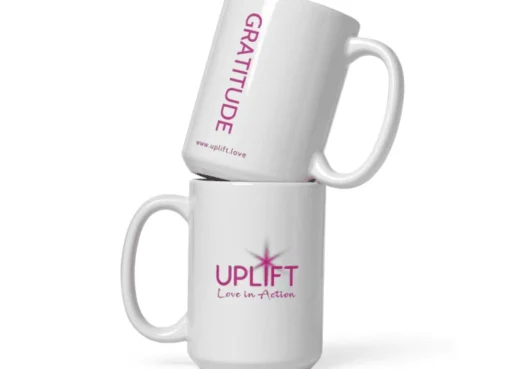
Organizations that promote these wellness philosophies often provide resources and products to support individuals on their journey. The "UPLIFT Marketplace," for instance, offers "The Love & Reflection Collection," including "UPLIFT LOVE Mugs" and an "UPLIFT Journal." These products serve as tangible reminders of the principles being cultivated, encouraging daily reflection and consistent practice. Such offerings are a common feature in the wellness industry, providing tools that help integrate abstract concepts into everyday routines, while also funding the broader mission of the organization.
Collective Impact and Sustained Engagement
Beyond personal practice, the movement encourages broader engagement:
- "Take 5 Deep Breaths": A simple, actionable call to conscious pausing, reinforcing the power of breath.
- "Financial Contribution": A mechanism to support "Love in Action projects," indicating a commitment to societal upliftment.
- "Send a Blessing": A portal for sharing positive intentions, further emphasizing the collective impact of individual goodwill.
In conclusion, the focus on "Inner Resources," "frequencies," and "vibrations" represents a dynamic and evolving approach to personal and collective well-being. While rooted in ancient wisdom and supported by modern psychological understanding, it offers a deeply personal and empowering pathway for individuals to navigate the complexities of life, cultivate inner harmony, and contribute to a more resonant and compassionate world. It underscores the profound truth that the power to transform one’s reality ultimately resides within.