California’s New Robotaxi Law: Balancing Silicon Valley Innovation with Public Safety
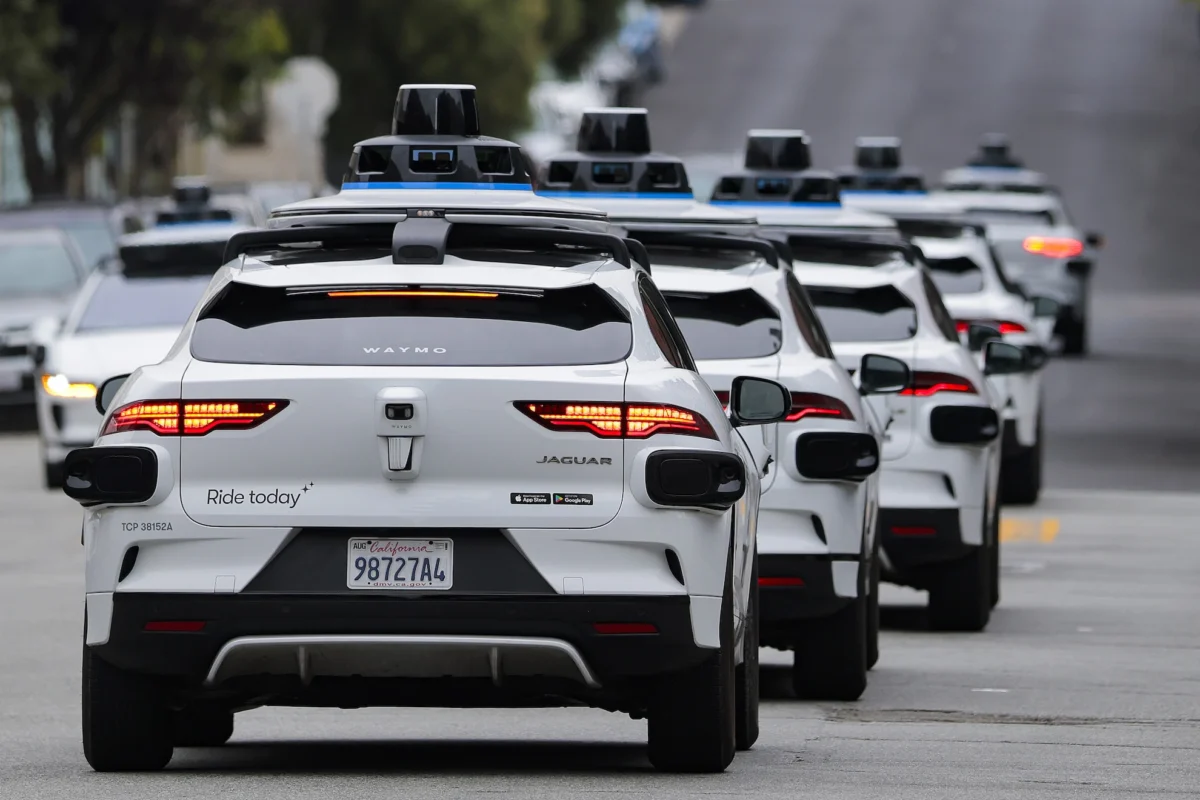
The intersection of cutting-edge autonomous vehicle (AV) technology and the immediate, life-saving needs of first responders has reached a legislative turning point in California. Governor Gavin Newsom recently signed Senate Bill 1246 into law, a landmark piece of legislation that imposes strict new operational requirements on autonomous vehicle giants like Tesla, Waymo, and Zoox.
The law marks a significant shift in how the state regulates the burgeoning robotaxi industry. For years, companies have enjoyed a relatively permissive environment to test and scale their fleets. However, following a series of high-profile incidents where driverless cars obstructed emergency vehicles, the California legislature has signaled that the era of "move fast and break things" must come to an end when it interferes with the "golden hour" of emergency response.
Main Facts: The Provisions of Senate Bill 1246
Senate Bill 1246, introduced by State Senator Dave Cortese (D-San Jose), establishes a comprehensive framework designed to ensure that autonomous vehicles do not become liabilities during emergencies. The law focuses on three core pillars: accountability, physical presence, and domestic oversight.
The 30-Minute Rule and Financial Penalties
One of the most consequential aspects of the law is the introduction of strict timelines for resolving obstructions. If an autonomous vehicle becomes disabled or otherwise blocks police, firefighters, or ambulances for more than 30 minutes during an emergency, the operating company will face significant financial penalties. While the specific dollar amounts of these fines will be finalized by the California Department of Motor Vehicles (DMV), the mandate creates a clear legal incentive for companies to prioritize "un-bricking" their vehicles quickly.
Requirement for Local Incident Technicians
The law mandates that AV developers provide "local, on-the-ground support" to assist first responders. This means that companies can no longer rely solely on remote software fixes when a car malfunctions in a complex environment. They must have "local incident technicians" available to physically reach a vehicle and move it if it becomes a hazard. This requirement aims to solve the problem of "ghosting," where a vehicle stops dead in its tracks and cannot be restarted or moved via remote commands.
Domestic Remote Operations
In a move that touches on both safety and national security concerns, SB 1246 stipulates that any "remote drivers" employed by AV companies must be based within the United States and hold a valid U.S. driver’s license. This provision targets the practice of offshoring remote assistance to countries with lower labor costs. By requiring U.S.-based operators, the law ensures that those assisting the vehicles are familiar with American traffic laws, signage, and emergency protocols.
Transparency in System Failures
The legislation also requires AV companies to establish direct lines of communication with local jurisdictions. In the event of a system-wide failure—such as a cloud outage that might disable an entire fleet—companies must immediately notify cities and towns regarding the status and location of their vehicles.
Chronology: From Innovation to Friction
The path to SB 1246 was paved by several years of escalating tension between autonomous vehicle operators and the municipalities in which they operate, particularly San Francisco.
2022–2023: Rapid Expansion
During this period, Waymo and the now-defunct Cruise (owned by GM) received permission to operate 24/7 commercial robotaxi services in San Francisco. As fleet sizes grew, so did the frequency of "anomalies." Vehicles began frequently "coning out"—stopping and putting on hazard lights when they encountered a situation they couldn’t navigate, such as heavy fog or construction zones.
Late 2023: The Breaking Point
A string of incidents drew national headlines and the ire of local officials. In one instance, nearly a dozen Waymo vehicles stalled in San Francisco’s North Beach neighborhood, causing a massive traffic jam after a music festival. More critically, reports began to surface of robotaxis driving into active fire scenes, running over fire hoses, and blocking ambulances transporting critical patients. A TechCrunch investigation highlighted that Waymo often had to rely on the very first responders they were obstructing to manually drive the vehicles out of the way.
Early 2024: Legislative Action
Citing these safety concerns, Senator Dave Cortese introduced SB 1246. The bill was framed not as an anti-tech measure, but as a necessary safety guardrail. Simultaneously, federal regulators at the National Highway Traffic Safety Administration (NHTSA) began their own inquiries, sending letters to AV developers demanding solutions for interference with emergency services.
September 2024: The Governor’s Signature
After moving through the State Senate and Assembly with various amendments—many of which were negotiated with the tech companies themselves to ensure "feasibility"—Governor Newsom signed the bill into law, setting an implementation date of July 2028.
Supporting Data: The Scale of the Industry
To understand the necessity of this law, one must look at the sheer volume of autonomous miles being driven on California roads.
- Waymo’s Dominance: Waymo currently operates the largest commercial robotaxi fleet in the U.S., with approximately 4,000 vehicles nationwide. Of those, roughly 1,200 are concentrated in the San Francisco Bay Area.
- The Remote Assistance Gap: There is a critical distinction in the industry between "remote driving" and "remote assistance."
- Tesla: Claims to have remote operators capable of taking direct steering and braking control.
- Waymo: Uses a "remote assistance" model where the AI remains in control, but a human provides high-level guidance (e.g., "it is safe to nudge around this double-parked truck"). Waymo’s support network is global, with staff in Arizona, Michigan, and the Philippines.
- Zoox: Owned by Amazon, Zoox keeps its remote operations teams primarily within the United States.
- Incident Frequency: While AV companies argue their safety records are statistically superior to human drivers in terms of crashes, the "nuisance" factor—stalls and obstructions—remains significantly higher. In San Francisco alone, hundreds of incidents of AVs interfering with first responders were logged by the fire department over an 18-month period.
Official Responses: Industry and Government Perspectives
The passage of SB 1246 elicited a range of responses from the stakeholders involved, reflecting a hard-won compromise.
Senator Dave Cortese:
"California has embraced autonomous vehicles, but we cannot embrace innovation at the expense of public safety," Cortese stated. "When an autonomous vehicle crashes, breaks down, blocks a roadway in an emergency, or gets in the way of law enforcement or first responders, there must be clear accountability."
Waymo:
Despite initial concerns that the bill might stifle growth, Waymo expressed a cooperative stance following the adoption of several amendments. "We are grateful for the amendments made to the bill, which ensure autonomous vehicle operators can still feasibly serve Californians," a Waymo spokesperson said. "Waymo is committed to making roads safer in California and continually improving our service."
Zoox:
Zoox, which has focused on a purpose-built "carriage-style" vehicle without a steering wheel, noted that its remote operations were already U.S.-based, putting them in a strong position to comply with the new driver’s license requirements.
NHTSA and Federal Oversight:
While SB 1246 is a state law, it aligns with federal pressure. The NHTSA’s recent demands for "solutions" to first-responder interference suggest that California’s law may serve as a blueprint for federal standards or for other states like Arizona and Texas, where robotaxis are also proliferating.
Implications: The Future of Autonomous Mobility
The implementation of SB 1246 in July 2028 will have far-reaching consequences for the business models and technological roadmaps of AV companies.
1. The Cost of Physical Infrastructure
The requirement for "local incident technicians" changes the economics of robotaxis. Previously, the goal was to achieve "level 4" autonomy where a vehicle could handle almost everything without human intervention, allowing companies to scale without hiring a massive workforce. Now, scaling in a new city will require a physical footprint of technicians ready to deploy at a moment’s notice. This adds significant overhead costs.
2. The End of Offshored Support
The mandate for U.S.-based remote drivers with domestic licenses will likely force companies like Waymo to restructure their global support networks. While they may still use overseas staff for non-critical "assistance" tasks, any action that constitutes "remote driving" must now be brought back to U.S. soil. This could lead to a localized job boom in the tech-ops sector.
3. A New Regulatory Standard
By giving the California DMV the power to set specific response times and fine structures, the state has moved from a "wait and see" approach to active management. This sets a precedent: the privilege of using public roads for testing and profit comes with the responsibility of ensuring those roads remain clear for life-saving services.
4. Technological Evolution
The 30-minute penalty will likely accelerate the development of "emergency override" features. We may see the introduction of external physical controls that allow a police officer to "unlock" and manually steer a robotaxi out of the way without waiting for a technician to arrive.
In conclusion, SB 1246 represents a maturing of the autonomous vehicle industry. It acknowledges that while the future of transportation may be driverless, the responsibility for that technology remains firmly in human hands. As July 2028 approaches, the eyes of the global tech community will be on California to see if this balance of innovation and accountability can truly make the roads safer for everyone.