Eridu, Mesopotamia – One of humanity’s oldest surviving epic poems, The Descent of Inanna, dating from approximately 1900-1600 BCE, continues to captivate scholars and readers millennia after its creation. This foundational Sumerian narrative chronicles the perilous journey of Inanna, the revered Queen of Heaven and goddess of love, war, and fertility, from her celestial domain to the earthly realm, and ultimately into the shadowy depths of the Underworld. Her stated purpose: to attend the funeral rites of Gugalanna, the Bull of Heaven, husband to her formidable sister, Ereshkigal, Queen of the Dead. However, a closer examination, particularly through the lens of contemporaneous Sumerian literature like The Epic of Gilgamesh, reveals a far more intricate tale of divine hubris, ancient justice, and the profound consequences of unchecked power.
The poem famously opens with lines that immediately set a tone of momentous transformation:
From the Great Above she opened her ear to the Great Below
From the Great Above the goddess opened her ear to the Great Below
From the Great Above Inanna opened her ear to the Great Below.
(Wolkstein and Kramer, 52)
This triplicate invocation underscores the gravity of Inanna’s decision, hinting at a journey of profound significance, not merely a social call. Far from a simple visit, Inanna’s descent into the "land from which no traveler returns" unravels a complex narrative that reflects the Mesopotamian worldview, where divine actions had tangible, often severe, repercussions.
The Divine Descent: Inanna’s Arrogance and Adornments
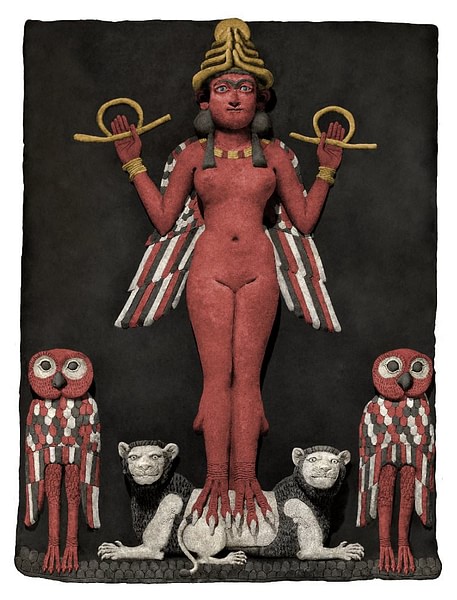
Inanna, a deity known for her vibrant and often volatile nature, prepares for her journey with an elaborate ritual of adornment. She dons her finest garments and symbols of power: the crown of heaven, a necklace of lapis beads, a breastplate, a golden ring, and her scepter, the very rod of power. Each item signifies her immense authority and divine status, reinforcing her identity as a goddess of unparalleled prestige in the "Great Above." Before embarking, she instructs her loyal servant and advisor, Ninshubur, on how to seek aid should she fail to return, a prescient act that foreshadows the trials to come. This instruction highlights Inanna’s awareness of the dangers, yet her self-assurance remains unshakeable.
Upon reaching the formidable outer gates of the Underworld, Inanna’s usual imperiousness is evident. She knocks loudly and demands entry, proclaiming, "I am Inanna, Queen of Heaven." Neti, the chief gatekeeper, questions her audacity, probing the true motive for her visit to a realm synonymous with irreversible fate. Inanna’s response, though seemingly innocuous, carries a veiled tension:
Because of my older sister, Ereshkigal
Her husband, Gugalanna, the Bull of Heaven, has died
I have come to witness the funeral rites.
(Wolkstein and Kramer, 55)
Neti, dutifully, conveys the message to Ereshkigal. The reaction of the Queen of the Dead, however, is anything but welcoming.
The Underworld’s Embrace: Stripping of Power and Judgment
Ereshkigal’s immediate response to news of her sister’s arrival is striking and deeply revealing: "She slapped her thigh and bit her lip. She took the matter into her heart and dwelt on it" (Wolkstein and Kramer, 56). This visceral display of displeasure, far from the expected mourning, signals a profound personal grievance. Her subsequent command to Neti — to bolt the seven gates of the Underworld and admit Inanna one by one, demanding the removal of a royal garment at each threshold — strips Inanna not just of her attire but of her very symbols of authority and divine protection.
At each of the seven gates, Inanna is forced to relinquish a piece of her regalia: her crown, her beads, her ring, her scepter, and finally, even her clothing. When she protests this indignity, Neti’s curt response encapsulates the immutable laws of the Underworld:
Quiet, Inanna, the ways of the underworld are perfect
They may not be questioned.
(Wolkstein and Kramer 58-60)
This systematic disempowerment culminates in Inanna entering Ereshkigal’s throne room "naked and bowed low." Here, she faces the annuna, the fearsome judges of the Underworld, who pass a dire judgment against her. Ereshkigal herself then delivers the final, devastating blow:
Then Ereshkigal fastened on Inanna the eye of death
She spoke against her the word of wrath
She uttered against her the cry of guilt
She struck her.
Inanna was turned into a corpse
A piece of rotting meat
And was hung from a hook on the wall.
(Wolkstein and Kramer, 60)
Inanna, the glorious Queen of Heaven, is reduced to a grotesque, lifeless trophy, a stark testament to the absolute power of the Underworld and the deep-seated animosity of its queen.
Resurrection and Retribution: A Heavy Price for Life
True to Inanna’s earlier instructions, Ninshubur, after three days and three nights, seeks the aid of Inanna’s father-god, Enki, the god of wisdom and water. Enki, displaying his characteristic ingenuity, creates two gender-fluid beings, the galla, described as "neither male nor female." These beings are dispatched to the Underworld with specific instructions to empathize with Ereshkigal.
The galla enter the Underworld "like flies" and find Ereshkigal in a state of profound anguish:
No linen was spread over her body
Her breasts were uncovered
Her hair swirled around her head like leeks.
(Wolkstein and Kramer, 63-66)
The poem further describes Ereshkigal experiencing the agonizing pains of labor. This detail is crucial, though often overlooked in modern interpretations. The galla offer her solace, and in gratitude, Ereshkigal offers them any gift they desire. Following Enki’s orders, they request "the corpse that hangs from the hook on the wall" (Wolkstein and Kramer, 67). Inanna is revived with the food and water of life, rising from the dead.
However, leaving the Underworld is never simple. Like the Greek myth of Demeter and Persephone, a substitute must be found to take Inanna’s place. The galla demons accompany Inanna to the surface, seeking her replacement. Inanna, demonstrating a self-serving shrewdness, protects her faithful servant Ninshubur, her sons Shara and Lulal, and her beautician Cara, all of whom are found in sackcloth, genuinely mourning her.
The turning point comes when Inanna discovers her lover, Dumuzi, "dressed in his shining… garments… on his magnificent throne." Enraged by his apparent lack of mourning and evident comfort, she orders the galla to seize him. Dumuzi appeals to the sun god Utu-Shamash, his brother-in-law, and is briefly transformed into a snake to escape, but he is eventually captured and dragged to the Underworld. Ultimately, his sister, Geshtinanna, volunteers to share his fate, leading to the decree that Dumuzi will spend half the year in the Underworld and Geshtinanna the other half, a cyclical exchange often cited as an explanation for the changing seasons.
The Echoes of Gilgamesh: Contextualizing Inanna’s Actions
To truly grasp the profound implications and original meaning of The Descent of Inanna, one must acknowledge its likely relationship with The Epic of Gilgamesh, another monumental work of Sumerian literature. While the precise chronology of their written forms is debated, the oral traditions that informed both narratives were undoubtedly prevalent in ancient Mesopotamia. Understanding the backstory provided in Gilgamesh fundamentally alters the perception of Inanna’s character and Ereshkigal’s seemingly disproportionate wrath.
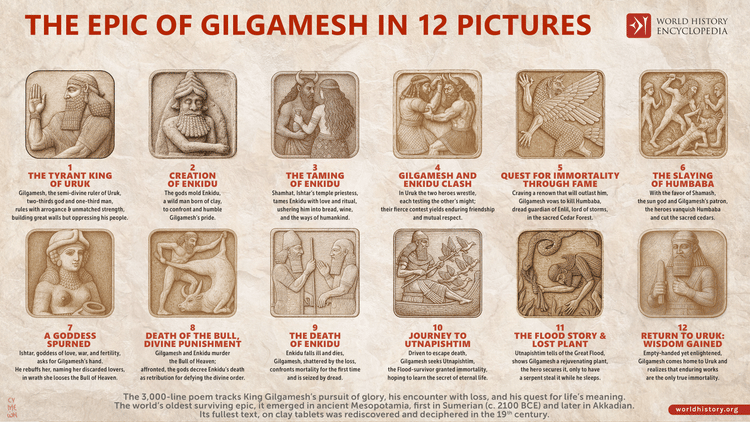
In The Epic of Gilgamesh, after the hero Gilgamesh and his companion Enkidu slay the formidable demon Humbaba, Gilgamesh’s fame reaches its zenith. Inanna (known by her Akkadian/Babylonian name, Ishtar, in Gilgamesh) attempts to seduce him, offering him lavish promises. However, Gilgamesh, wise to her capricious nature, spurns her advances with a scathing indictment of her past treatment of lovers:
Your lovers have found you like a brazier which smoulders in the cold, a backdoor which keeps out neither squall of wind nor storm, a castle which crushes the garrison, pitch that blackens the bearer, a water skin that chafes the carrier.
(Sandars 85-87)
He concludes by questioning, "And if you and I should be lovers, should not I be served in the same fashion as all these others whom you loved once?" (Sandars, 85-87).
This brutal rejection sends Inanna into a "bitter rage." She appeals to her father-god, Anu, weeping over Gilgamesh’s insults. Anu, however, dismisses her complaints, asserting that she has only reaped what she sowed through her "abominable behavior" (Sandars, 87). Unpacified, Inanna demands Gugalanna, the Bull of Heaven – crucially, Ereshkigal’s husband – to wreak vengeance upon Gilgamesh. She threatens to unleash the dead from the Underworld, declaring, "there will be confusion of people, those above with those from the lower depths. I shall bring up the dead to eat food like the living; and the hosts of the dead will outnumber the living" (Sandars, 87).
Anu, fearing her destructive potential, reluctantly concedes. Inanna brings Gugalanna to the city of Uruk, where he causes immense devastation, killing hundreds of young men. Gilgamesh and Enkidu confront and ultimately kill the Bull of Heaven. Inanna, further enraged, curses the heroes, prompting Enkidu to tear off the bull’s thigh and hurl it at her. This act of mortal defiance against a deity is deemed intolerable by the gods, leading to Enkidu’s decreed death, which he suffers after a prolonged illness (Sandars, 88-95).
Unveiling the Ancient Message: Justice in the Divine Realm
With the context of The Epic of Gilgamesh, The Descent of Inanna transforms from a mystical journey of self-discovery into a profound narrative of accountability and ancient Mesopotamian justice. Inanna’s stated reason for visiting the Underworld – to attend Gugalanna’s funeral – now appears as a thinly veiled act of profound insensitivity, if not outright provocation. She is attending the funeral of the very being whose death she directly orchestrated, showing little regard for her sister Ereshkigal’s immense grief.
Ereshkigal’s "slapped thigh and bit lip" and her subsequent "word of wrath" and "cry of guilt" are no longer simply expressions of a temperamental goddess. They are the raw, understandable reactions of a grieving widow confronting the architect of her suffering. The detail of Ereshkigal’s labor pains, often downplayed or omitted in some analyses, takes on heightened significance here. It strongly implies that Ereshkigal was pregnant with Gugalanna’s child, meaning Inanna’s actions not only took her sister’s husband but also condemned her child to be fatherless. The "eye of death" and the "blow" delivered by Ereshkigal become acts of justifiable retribution, administered by the sovereign ruler of the realm of the dead. Inanna’s death and degradation into "rotting meat" is not a symbolic shedding of ego but a direct consequence of her past actions.
Therefore, popular modern Jungian interpretations, which view Inanna’s descent as an archetypal journey to psychological wholeness or a confrontation with her "shadow" leading to rebirth, miss a crucial textual and contextual element. While such interpretations offer valuable insights into universal human experiences, they often disregard the specific moral and cultural framework of ancient Mesopotamia. The poem’s concluding lines, far from being a mere formality, serve as a powerful counter-narrative to the idea of Inanna’s triumph:
Holy Ereshkigal! Great is your renown!
Holy Ereshkigal! I sing your praises!
(Wolkstein and Kramer, 89)
This final, explicit praise for Ereshkigal underscores that, within the narrative’s own terms, justice, however temporarily circumvented, was rightfully sought and administered by the Queen of the Dead. The "official response" of the poem, as articulated by its closing lines, celebrates the upholder of cosmic order, not the transgressor.
Implications: Beyond the Seasons – The Mesopotamian Worldview
The narrative of The Descent of Inanna functions on multiple levels, far exceeding a simple explanation for the seasons. In ancient Mesopotamia, gods were not distant, abstract entities; they were intimately woven into the fabric of daily life, inhabiting specific cities and directly influencing human fortunes. The actions of Inanna in Uruk, Enki in Eridu, or Ereshkigal in the Underworld had tangible effects on the lives of the people.
This myth served as a powerful cultural lesson. It taught that even powerful deities were subject to a cosmic order, and their transgressions had severe consequences, often borne by others. Inanna’s manipulation of Enki to secure her return, and the subsequent sacrifice of Dumuzi and Geshtinanna, illustrate a stark reality: the powerful could sometimes evade direct accountability, but someone would always pay the price. This resonated deeply with a society that grappled daily with unpredictable floods, famines, and conflicts.
The praise for Ereshkigal at the poem’s conclusion, despite Inanna’s ultimate return, provides a profound solace. It affirms that even when divine justice is denied or delayed, its pursuit is worthy of recognition. For an ancient listener, this would have ameliorated the sting of their own daily injustices and disappointments. If even a goddess as mighty as Ereshkigal could suffer grief and see her righteous judgment overturned by the machinations of another deity, then mortal suffering and unfairness became more comprehensible, less an indictment of their own piety and more a reflection of the inherent, sometimes chaotic, nature of the cosmos.
In essence, The Descent of Inanna offers a stark reflection on responsibility, consequence, and the often-unjust distribution of suffering. It portrays a divine realm not as a paragon of virtue, but as a mirror to humanity’s own complexities, where hubris leads to downfall, grief fuels retribution, and the powerful can exploit the vulnerable. Its enduring legacy lies not just in its dramatic narrative, but in its profound commentary on justice, power, and the immutable truths of existence within the ancient Mesopotamian worldview: sometimes, life is simply not fair, even for the gods themselves.
Main Facts The 19th century witnessed a geopolitical struggle of epic proportions, a rivalry that pitted two of the world’s most formidable empires – the British and the Russian – against each o
By [Your Name/Journalist’s Name] [City, State] – [Date] – In an age characterized by rapid change and a pervasive sense of modernity, the notion that our contemporary Western worldview is profou
London, UK – July 25, 2024 – A decade-long journey into the heart of human storytelling culminates this August with the release of The Treasury of Folklore: Waterlands, Wooded Worlds and Starry Skies.





Leave a Comment