The 007 Succession: Lessons from the Lazenby Legacy as Bond 26 Approaches
The search for the next James Bond has reached a fever pitch. As the dust settles on Daniel Craig’s fifteen-year tenure, the stewards of the world’s most famous spy franchise find themselves at a historic crossroads. With long-time producers Barbara Broccoli and Michael G. Wilson stepping back and a new creative triumvirate taking the reins, the industry is looking backward to the most controversial casting transition in the series’ history to predict the future of the double-0 agent.
Main Facts: A New Era for MI6
The transition into the "Bond 26" era represents a fundamental shift in the franchise’s DNA. For the first time in decades, the production is being spearheaded by new voices: producers Amy Pascal and David Heyman. Adding to the gravity of the reboot is the reported involvement of director Denis Villeneuve, whose work on Dune and Blade Runner 2049 suggests a more cerebral, visually grand approach to the Ian Fleming character.
Current reports suggest the search has narrowed to a trio of British talent:
- Jack Lowden: Known for his intensity in Slow Horses and Dunkirk.
- Callum Turner: Recently seen leading Masters of the Air.
- Josh O’Connor: The Emmy-winning star of The Crown and Challengers.
The challenge facing Pascal, Heyman, and Villeneuve is not merely finding a talented actor, but managing the inevitable media firestorm that accompanies a change in the 007 mantle. History suggests that the more iconic the predecessor, the more difficult the transition. This was never truer than in 1969, when the franchise attempted to survive its first-ever "regime change" following the departure of Sean Connery.
Chronology: The Rise and Fall of George Lazenby
The current search mirrors the high-stakes atmosphere of the late 1960s. To understand the risks of the current casting process, one must examine the timeline of George Lazenby’s brief, tumultuous reign.

1967: The Connery Vacuum
After five films, Sean Connery had become synonymous with James Bond. Following the release of You Only Live Twice, Connery announced he was finished with the role, citing exhaustion and a desire to avoid being typecast. Producers Albert "Cubby" Broccoli and Harry Saltzman were faced with a crisis: was the brand bigger than the man?
1968: The "Model" Search
The producers and director Peter Hunt spent over a year auditioning hundreds of actors. The shortlist included seasoned performers like John Richardson and Anthony Rogers. Even a young Timothy Dalton was considered, though he famously turned it down, believing himself too young at the time.
In a move that stunned the industry, the role went to George Lazenby, an Australian male model with zero acting experience outside of "Big Fry" chocolate commercials. Lazenby had secured the audition through sheer audacity, buying a Savile Row suit and a Rolex to mimic Connery’s aesthetic. He initially lied about his filmography, claiming to have worked in Germany and Hong Kong, before confessing the truth to director Peter Hunt.
1969: Production and Release
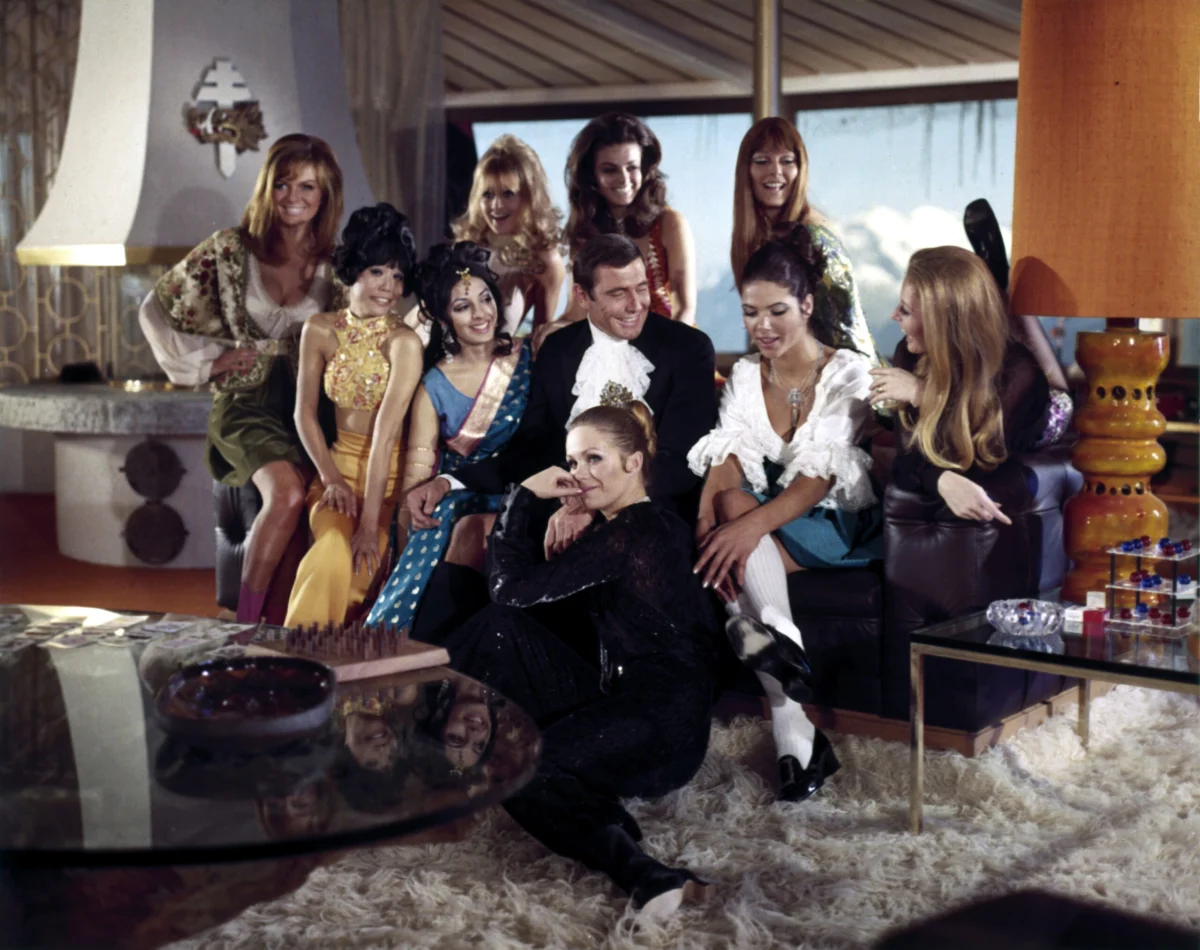
On Her Majesty’s Secret Service (OHMSS) began filming in the Swiss Alps. The production was plagued by rumors of friction between Lazenby and the established cast, particularly Diana Rigg. Upon the film’s release in December 1969, Lazenby’s performance was met with lukewarm-to-hostile reviews, despite the film’s technical brilliance.
1970: The Resignation
In an unprecedented move, Lazenby’s agent announced that the actor would not return for a second film, even before OHMSS had finished its initial theatrical run. Lazenby, influenced by the counter-culture movement and films like Easy Rider, mistakenly believed the Bond franchise was a relic of the past that would not survive the 1970s.

Supporting Data: The Technical Mastery of OHMSS
While Lazenby’s acting was criticized at the time, contemporary analysis and data-driven film criticism have rehabilitated the film’s reputation. On Her Majesty’s Secret Service is now frequently cited as the most "cinematic" Bond film of the original era.
Visual and Financial Performance
On a production budget of approximately $8 million, OHMSS grossed $82 million worldwide. While this was a significant profit, it was a decline from the $111 million earned by Connery’s You Only Live Twice. This "slump" contributed to the contemporary narrative that the film was a failure, despite it being one of the highest-grossing films of 1969.
Artistic Innovation
The film’s endurance is attributed to several key technical factors:
- Cinematography: Michael Reed moved away from the flat, high-key lighting of earlier entries, introducing atmospheric shadows and a more sophisticated, European aesthetic.
- The Score: John Barry’s work on OHMSS is often ranked as his best. He utilized synthesizers for the first time in the series and created a romantic, sweeping theme that provided the emotional backbone for Bond’s only marriage.
- Action Choreography: The ski chases, filmed by world-class skiers with handheld cameras, set a new standard for action cinema that would be directly referenced by Christopher Nolan in the "snow fortress" sequence of Inception (2010).
Official Responses: A Tale of Two Eras
The reception of a new Bond is often a battle between the "old guard" of the press and the "new guard" of filmmakers.
The 1969 Response
At the time of release, Cubby Broccoli expressed frustration with his new lead, eventually describing Lazenby as "spoiled" and "entitled." The press was equally unkind, focusing on Lazenby’s lack of gravitas compared to Connery. Lazenby himself would later admit to a lack of professional maturity, stating, "I had no idea how to handle the fame. I thought I was Bond, rather than just playing him."

The Modern Filmmaker’s Verdict
In stark contrast to the 1969 critics, modern auteurs have championed the Lazenby era. Steven Soderbergh has famously called OHMSS "the only Bond film worth watching repeatedly for reasons other than pure entertainment." Christopher Nolan has echoed these sentiments, noting that the film’s balance of action and genuine emotional stakes (the death of Tracy Bond) served as a blueprint for the modern blockbuster.
These endorsements have shifted the "consensus" of Bond rankings. In many modern polls, OHMSS has moved from the bottom tier to the top three, proving that the film’s visual elegance was decades ahead of its time.
Implications: What "Bond 26" Can Learn
As Amy Pascal and David Heyman prepare to announce their choice, the Lazenby saga offers three critical lessons for the future of the franchise.
1. The "Meta" Acknowledgement
The most famous line in OHMSS is Lazenby breaking the fourth wall to say, "This never happened to the other fellow." This moment of self-awareness allowed the audience to acknowledge the change in actor without breaking the narrative spell. For the next Bond, a similar "nod" to the Daniel Craig era may be necessary to ease the transition.
2. The Director-Driven Approach
The success of OHMSS is largely credited to Peter Hunt’s vision. By hiring a director like Denis Villeneuve, the producers are signaling that they want the film to be the star, not just the actor. A strong directorial hand can support a newcomer—just as Hunt’s technical mastery supported Lazenby.

3. The Danger of the "Short-Term" Mindset
Lazenby’s greatest error was his belief that the Bond brand was dying. In today’s landscape of cinematic universes and intellectual property, the franchise is more robust than ever. The next actor will likely be required to sign a decade-long commitment. The "Lazenby mistake" serves as a warning to any actor who views the role as a mere stepping stone rather than a career-defining legacy.
Conclusion
The casting of Jack Lowden, Callum Turner, or Josh O’Connor will undoubtedly set off a social media firestorm. However, as the 57-year history of On Her Majesty’s Secret Service proves, the immediate reaction of the public is rarely the final verdict of history.
George Lazenby was a man who walked away from a fortune because he misread the cultural room. Yet, in doing so, he left behind a singular, atmospheric masterpiece that continues to inspire the world’s greatest directors. As the Pascal-Heyman era begins, the goal is clear: find an actor who has the "icy charm" of Connery, the "humanity" of Lazenby, and the "longevity" of Craig. It is an unenviable task, but one that will define the next twenty years of global cinema. Regardless of who wins the role, they would do well to remember Lazenby’s story—a reminder that while the actor is temporary, the double-0 agent is forever.