
Into the Glades: The High-Stakes Surrealism of the Florida Python Challenge
The Florida Everglades, a vast and primordial expanse of sawgrass and cypress, has long been a symbol of untamed American wilderness. Yet, in recent decades, this delicate ecosystem has become the front line of a desperate biological war. At the heart of this conflict is the Burmese python, an apex predator that has decimated local wildlife populations. To combat this "invader," the state of Florida has sanctioned an annual event that is as controversial as it is cinematic: the Florida Python Challenge.
In his new documentary, The Python Hunt, director Xander Robin captures this phenomenon with a lens that balances the grit of a nature documentary with the neon-soaked surrealism of a Florida-noir thriller. As the film makes its way into U.S. theaters via Oscilloscope Laboratories, it offers a window into a subculture defined by what one participant describes as "hours of boredom interrupted by a few minutes of pretty intense adrenaline."
Main Facts: The Documentary and the Event
The Python Hunt is not merely a chronicle of snake catching; it is a sociological study of modern Americana. Premiering to critical acclaim at SXSW—where it secured a Special Jury Prize—the film explores the 10-day annual event where professional hunters and amateur enthusiasts converge on the Everglades to compete for cash prizes. The goal is simple: capture and kill as many Burmese pythons as possible.
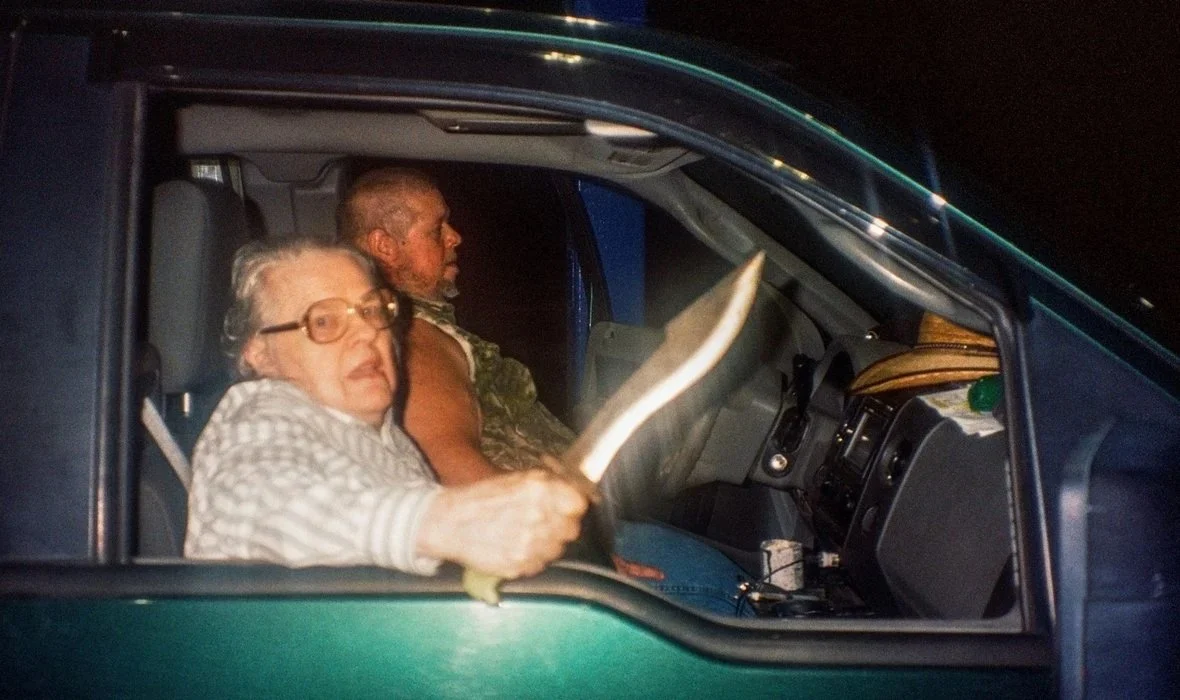
The film’s strength lies in its refusal to look away from the "violently lurid" execution of this mission. Robin eschews the polished, educational tone of traditional nature specials in favor of a "capital-C Character" driven narrative. From 82-year-old widows with a thirst for the hunt to ex-Marines who view the snakes with a paradoxical mix of contempt and care, the documentary presents a "rum bunch" of participants.
This ensemble cast serves as the audience’s guide through a landscape that looks increasingly like a fever dream. Shot largely at night by cinematographers David Bolen and Matt Clegg, the film utilizes the "oily Everglades darkness" and the "unforgiving manmade glare" of LED headlamps to create an atmosphere of fluorescent dread. It is a stylistic choice that mirrors the absurdity of the event itself—an event some have ruefully dubbed "the Burning Man of snake-hunting."
Chronology: From Exotic Pets to Ecological Crisis
The presence of the Burmese python in Florida is a man-made catastrophe decades in the making. The timeline of this infestation is a cautionary tale of the exotic pet trade and the unpredictable power of nature.
The Pet Trade Boom (1970s–1980s)
During the late 20th century, Burmese pythons became a popular choice for exotic pet owners in the United States. Thousands were imported from Southeast Asia, prized for their docile nature and striking patterns. However, many owners were unprepared for the reality of a snake that could grow to 20 feet in length and weigh over 200 pounds. Illegal releases by overwhelmed owners likely seeded the initial population in the wild.
The Catalyst: Hurricane Andrew (1992)
While illegal releases played a role, the definitive turning point in the python crisis is often traced back to August 1992. When Hurricane Andrew, a Category 5 storm, tore through Southern Florida, it decimated infrastructure, including a large reptile breeding facility. The destruction allowed a significant number of pythons to escape into the nearby Everglades. With no natural predators and an abundance of prey, the pythons began to breed at an exponential rate.
The Declaration of War (2013–Present)
By the early 2010s, the ecological damage was undeniable. In response, the Florida Fish and Wildlife Conservation Commission (FWC) launched the first "Python Challenge" in 2013 to raise awareness and enlist the public in culling the population. What began as a desperate environmental measure has since evolved into a high-profile annual event, drawing participants from across the country and, eventually, the attention of filmmakers like Xander Robin.
Supporting Data: The Scale of the Infestation
To understand the necessity of the Python Challenge, one must look at the staggering ecological data provided by the FWC and environmental researchers. The Burmese python is not just an inhabitant of the Everglades; it is a vacuum, consuming nearly everything in its path.
- Population Estimates: While the thick brush of the Everglades makes an exact census impossible, experts estimate the current python population in Florida ranges from 50,000 to as many as 500,000 individuals.
- Biodiversity Loss: Studies conducted by the U.S. Geological Survey (USGS) have found that in areas where pythons are most established, populations of small mammals have plummeted. Since 1997, sightings of raccoons have dropped by 99.3%, opossums by 98.9%, and bobcats by 87.5%. Marsh rabbits and foxes have effectively disappeared from many regions.
- The Hunt’s Impact: During the 2023 Florida Python Challenge, participants removed 209 invasive pythons. While this number is a fraction of the total population, the state argues that every female removed prevents the birth of up to 100 new hatchlings per year.
The documentary highlights these figures not just as statistics, but as the motivation for its diverse cast. For participants like Madison Oliveira, a fiercely organized ex-Marine, the hunt is a tactical operation. For others, like the 82-year-old Anne Stratton, it is a late-life adventure fueled by a "strangely vigorous desire" to protect the local environment by any means necessary.
Official Responses and Public Perception
The Florida Python Challenge is a state-sanctioned event, backed by the Governor’s office and the FWC. Officially, the government frames the challenge as a vital conservation effort. "The protection of our native wildlife is a top priority," Florida officials have stated in various press releases, emphasizing the importance of public engagement in environmental stewardship.
However, The Python Hunt captures a more complex reality. Robin’s film gives voice to local residents and environmentalists who remain skeptical of the hunt’s efficacy. Some argue that the intense media focus on the pythons serves as a convenient "distraction" for the state government. By focusing on a visible, "villainous" invasive species, critics argue, the state avoids addressing more systemic threats to the Everglades, such as the massive runoff of industrially endorsed pesticides and the disruption of natural water flow caused by over-development.
Furthermore, the film explores the "renegade" element of the hunt. James McCartney, a former professional hunter who fell out with state administrators, represents a faction of hunters who operate on the fringes. These individuals often view the official challenge as overly bureaucratic or commercialized, preferring to hunt on their own terms. This friction between the state’s sanitized version of the event and the raw, often bloody reality of the hunt creates a tension that permeates the documentary.
Implications: Conservation or Bloodsport?
The most haunting aspect of The Python Hunt is the question of intent. Robin’s camera observes the "professed bloodlust" of certain participants, leading the viewer to wonder: are these hunters here to save the ecosystem, or are they here for the thrill of the kill?
The language used by some participants is telling. By describing the python as a "foreign invader on American soil," the rhetoric of the hunt often shifts from ecological science to something resembling xenophobic nationalism. This "us versus them" mentality transforms the Everglades into a battlefield where the pythons are not just animals, but enemies.
Yet, the film also showcases moments of profound empathy. Madison Oliveira, despite her efficiency in the hunt, treats her captured quarry with "poignantly tender care," ensuring they are bagged and transported for painless euthanasia. This contrast highlights the moral ambiguity of the event. To save the Everglades, one must kill the creatures that have made it their home—creatures that, as the film notes, are "beautiful beasts" in their own right.
Ultimately, The Python Hunt suggests that there is no single purpose to an event that gathers "this many kinds of kinds in one untamed place." The Florida Python Challenge is a microcosm of modern America: a mixture of genuine concern for the planet, a love for high-stakes competition, and a touch of the "crazed portrait" of a society looking for a villain. As the pythons continue to thrive in the oily darkness of the Glades, the hunt remains a riveting, hazy, and perhaps necessary madness.



Leave a Comment