The Cinematic Reclamation of Kogonada: A Deep Dive into ‘Zi’ and the Search for the Present
The trajectory of a modern auteur is rarely a straight line, but for the filmmaker known as Kogonada, it has been a series of profound, meditative zig-zags. After rising to prominence with the architectural grace of Columbus and the soulful sci-fi of After Yang, the director faced a significant hurdle with his studio debut, A Big Bold Beautiful Journey. Critics and fans alike felt the "soul-crushing" weight of the studio system on a director whose origins lie in the delicate, analytical world of video essays.
Now, with the release of Zi, Kogonada has not just returned to his roots; he has stripped the medium down to its barest essentials. Premiering at the 2026 Sundance Film Festival and seeing a limited theatrical release via Grasshopper Film on November 6, Zi is a raw, improvisational experiment that functions as both a narrative film and a public act of artistic healing.
Main Facts: The Premise and Creative Pedigree
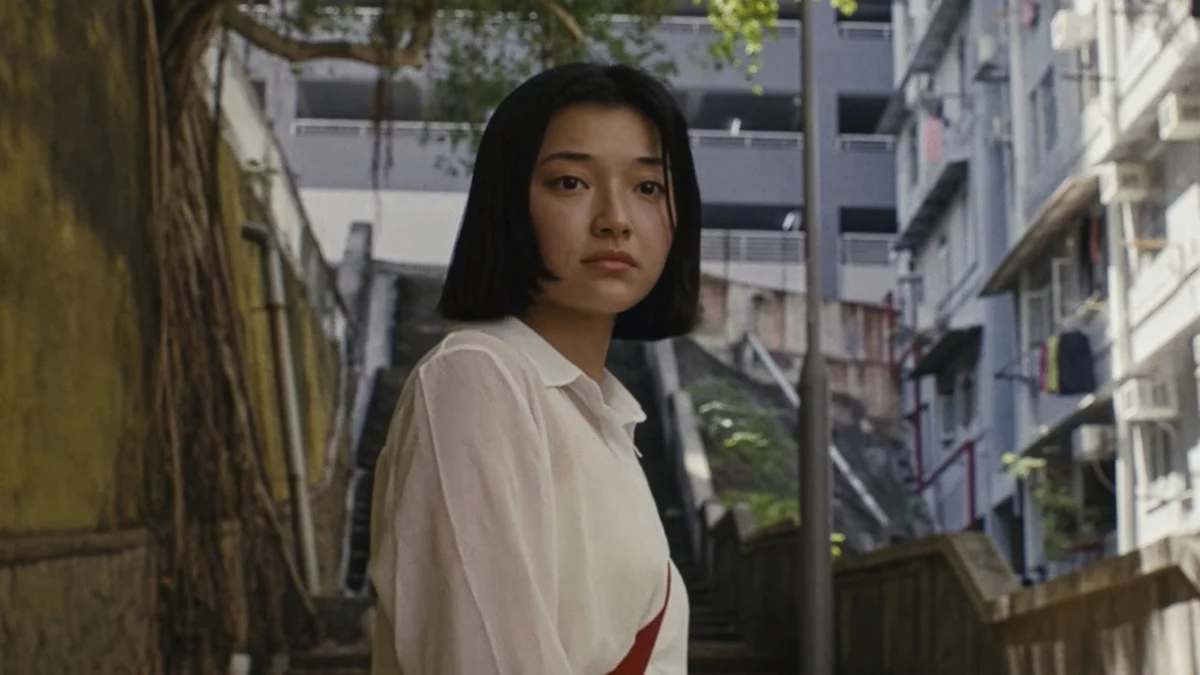
Zi centers on a young Hong Kong violinist, the titular Zi (played by Michelle Mao), who finds herself untethered from the linear progression of time. Haunted by visions of her future self and struggling with a perceived delay in her sensory reality, Zi visits a neurology center where doctors suspect the early onset of a brain tumor.
The film covers a singular, high-stakes 24-hour period as Zi awaits her test results. During this window of existential limbo, she encounters L (Haley Lu Richardson), a disillusioned American expat and former dancer. The two form an immediate, inexplicable bond, wandering through the vertical labyrinth of Hong Kong as they attempt to "resynchronize" with the world.
Key Production Details:
- Director: Kogonada
- Starring: Michelle Mao, Haley Lu Richardson, Jin Ha
- Cinematography: Benjamin Loeb
- Music: Ryuichi Sakamoto (Originals and Remixes)
- Distributor: Grasshopper Film
- Production Style: Low-budget, scriptless, handheld digital cinematography
Chronology: A 24-Hour Odyssey through Lantau and Beyond
The narrative structure of Zi is recursive and atmospheric, prioritizing the "feeling" of time over traditional plot beats.
The Diagnosis of Displacement
The film opens in the sterile, clinical environment of a Hong Kong neurology center. Here, the audience is introduced to Zi’s condition—what L’s ex-fiancé Min (Jin Ha) later describes as "temporal relativism." For Zi, the present is always a memory; she perceives stimuli nanoseconds after they occur, creating a permanent state of psychological vertigo. The threat of a brain tumor provides the ticking clock, but the true tension lies in Zi’s inability to inhabit the "now."

The Encounter on the Steps
Desperate and overwhelmed, Zi retreats to the concrete stairways of Lantau Island. It is here she meets L. Richardson’s character is immediately striking, not just for her "aggressively unnatural blonde wig," but for her shared sense of displacement. L is a "lost soul" who has fled the United States to escape the feeling that her life’s purpose—dancing—had stopped "choosing her back."
The Midnight Wanderings
The middle act of the film follows the duo through Victoria Harbor and the dense urban canyons of Hong Kong. Unlike the neon-soaked, romanticized version of the city often seen in Western cinema, Kogonada’s Hong Kong is a place of dissonance. The characters move through spaces where nature asserts itself through the cracks of skyscrapers, mirroring Zi’s own fractured internal state.
The Perspective Shift
The final minutes of the film provide what has been described as a "gently unexpected gutpunch." Rather than a traditional plot twist, Kogonada employs a shift in cinematic perspective that recontextualizes the relationship between Zi and L. It is a moment rooted in the film’s form, forcing the audience to question whether they have been watching a literal story or a manifestation of creative grief.
Supporting Data: Technical Artistry and Influences
Despite its threadbare budget and lack of a formal script, Zi is a dense work of cinephilia. Kogonada, a former scholar of the medium, embeds the film with "legible winks" to the masters who preceded him.
Cinematic Forebears
The film is described as being "cobbled together from half-formed memories" of Chris Marker’s La Jetée and Agnès Varda’s Cléo from 5 to 7. Both films deal with the agony of waiting and the elasticity of time. Furthermore, the handheld camera work by Benjamin Loeb invokes the "step-printed" style of Wong Kar-wai, though it eschews Kar-wai’s saturated colors for a more muted, "here-and-now" anxiety.
The Sakamoto Soundscape
The emotional weight of the film is carried largely by its soundtrack. Utilizing a mix of original compositions and remixes by the late Ryuichi Sakamoto, the music acts as a bridge between the characters’ internal silence and the external chaos of the city. The score reinforces the theme of "temporal relativism," with motifs that seem to echo and repeat, much like Zi’s visions.

The Improvised Aesthetic
The decision to shoot without a script is perhaps the most significant data point regarding the film’s production. By capturing "stolen shots" and relying on the natural chemistry between Mao and Richardson, Kogonada created a film that feels like "ultra-evocative vacation footage" edited into a narrative. This approach allowed the director to bypass the rigid structures that hampered his previous studio experience.
Official Responses: A "Retreat and Pursuit"
In an interview with IndieWire, Kogonada was candid about the personal nature of the project. He described Zi as "a retreat, as well as a pursuit."
The Director’s Philosophy
For Kogonada, the film was a necessary reaction to the "soul-crushing" experience of his previous feature. He sought a way to "fall back in love with filmmaking itself" and to prove that the medium "might still love him back." This meta-textual layer is palpable; when L speaks about a purpose that "doesn’t choose you back," it is widely interpreted as the director’s own commentary on his relationship with the film industry.
Critical Reception
Critics have noted that while the film may not appeal to a "casual audience" due to its abstract nature, it is a "galvanizing" example of an artist reclaiming their voice. The "Grade: B" reflects a film that is more successful as a sensory and intellectual exercise than as a traditional drama. However, its "overflowing rewards" come from watching a master stylist rediscover his own rhythm.
Implications: The Future of Kogonada and Independent Cinema
The release of Zi carries several implications for the landscape of independent film in the mid-2020s.
The "One for Me" Model
Zi represents an extreme version of the "one for them, one for me" career strategy. While many directors scale down after a big-budget disappointment, Kogonada has scaled down to the point of total transparency. This suggests a growing trend among auteurs to utilize high-end digital tools and minimal crews to bypass traditional gatekeepers when they need to "reset" their creative identity.

Hong Kong as a Narrative Mirror
The film’s use of Hong Kong—a city described as "China, but not," and a place where the "experience of the present is delayed"—sets a new precedent for how international locations can be used as psychological metaphors rather than mere backdrops. It highlights the city’s unique position as a site of "otherness" and "self-alienation."
Re-establishing Artistic Authority
By the end of Zi, Kogonada seems to have found a "way forward into the future." The film’s final minute, which focuses on the "sound of one’s own voice," suggests that the director has successfully tethered his perspective back to the present. For the audience, the implication is clear: the Kogonada of Columbus and After Yang is still there, now enriched by the scars of his "beautiful journey" and the lessons of his "retreat" into the streets of Hong Kong.
Final Grade: B
“Zi” is currently in select theaters. Its journey from the 2026 Sundance Film Festival to the screen marks a pivotal moment for experimental narrative cinema.