
The Iconography of Power: The Controversy Surrounding the Gilded Statue of Donald Trump
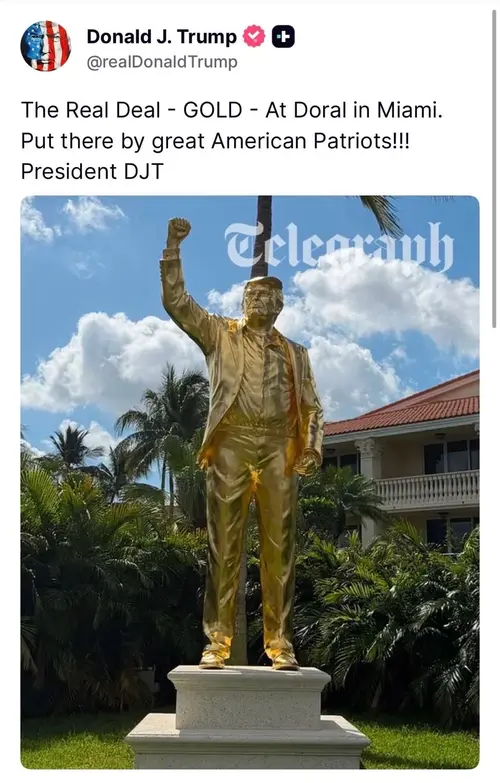
PALM BEACH, FL — In a ceremony that blended political theater with religious fervor, a new monument was unveiled this week on the grounds of Donald Trump’s private Florida club. While the United States is home to countless statues of historical figures, athletes, and even fictional characters, the dedication of this gold-leafed likeness of the former president has ignited a fierce national debate. The event has transitioned from a local dedication to a focal point of cultural criticism, reviving a decade-long metaphor used by political cartoonists: the biblical "Golden Calf."
Main Facts: The Dedication in Florida
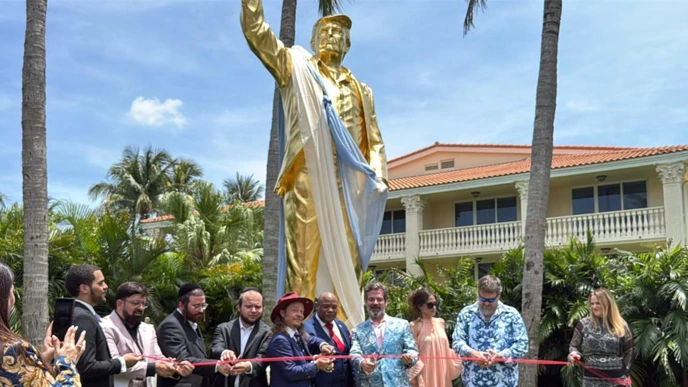
On Wednesday, May 6, 2026, a significant crowd of supporters, religious leaders, and political allies gathered for the official unveiling of a statue depicting Donald Trump. Located prominently on his private estate, the statue is cast in bronze and meticulously covered in gold leaf, giving it a shimmering, reflective finish that was visible from a distance.
The ceremony was marked by a distinct semi-religious tone. The ribbon-cutting ceremony featured several prominent religious advocates, and the keynote address was delivered by Mark Burns, an evangelical minister and pastor of the Harvest Praise & Worship Center in South Carolina. Burns, a long-time surrogate for Trump, used his platform to frame the former president’s legacy in providential terms.
The aesthetic choice of a gilded statue immediately drew comparisons to the "Golden Calf" of the Book of Exodus—an idol built by the Israelites when they lost faith in Moses’ return from Mount Sinai. As images of the ceremony circulated on social media, critics seized on the visual parallel, suggesting the event crossed the line from political admiration to religious idolatry.
Chronology: A Decade of Prophetic Satire
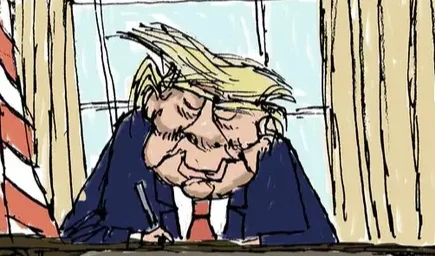
The comparison between Donald Trump and the Golden Calf is not a new phenomenon. In the world of editorial cartooning, this motif has been a recurring theme for over ten years. The recent dedication in Florida serves as a culmination of what many satirists have been "prophesying" since Trump first entered the political arena.
The Early Warnings (2015–2017)
The metaphor began as early as 2015. Cartoonist Matt Wuerker suggested the "calf-worship" dynamic during Trump’s initial primary campaign. This coincided with Pope Francis’s visit to the United States, highlighting a contrast between the Pope’s message of humility and the burgeoning "cult of personality" surrounding the real estate mogul.
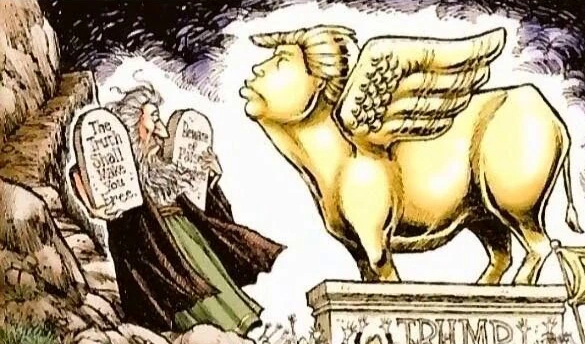
By 2017, as Trump settled into the White House, David Horsey utilized the Golden Calf motif to criticize the "idolatrous frenzy" he observed among politically active Evangelical Christians. Horsey’s work suggested that the political movement was evolving into something resembling a religious sect, where the leader’s persona outweighed traditional theological tenets.
The Institutionalization of the Image (2018–2021)
In 2018, cartoonists like Thompson and MacKay expanded the critique. Thompson focused on the "fake news" rhetoric, suggesting that the golden image of the leader was being used to obscure uncomfortable truths. MacKay, meanwhile, drew parallels between Trump’s admiration for North Korean leadership and the autocratic tradition of erecting massive statues of the "Dear Leader."
The metaphor reached a literal peak in 2021 during the Conservative Political Action Conference (CPAC). An artist created a chrome-plated fiberglass statue of Trump, painted in gold, which was wheeled through the convention hall. This prompted a wave of commentary from cartoonists like Marlette and Plante. While the Babylon Bee—a conservative satirical outlet—offered a sarcastic take based on the Book of Daniel, mainstream editorialists saw the CPAC statue as a tangible manifestation of the "Golden Calf" warnings issued years prior.
Global and Contemporary Perspectives (2023–2026)
The imagery has not been confined to American shores. In 2024, the Polish weekly magazine Polityka featured an illustration titled "God in the Service of MAGA," exploring why the religious right had tethered its identity to Trump. In early 2026, just prior to the Florida dedication, illustrators like Jeff Gates continued to explore the "White Messiah" narrative, depicting the former president as a deity-like figure to his most devoted followers.
Supporting Data: Contextualizing Modern Statuary
To understand the controversy, it is necessary to look at the broader context of statues in the United States. Monuments serve as physical markers of a society’s values, and their presence—or removal—often signals shifts in cultural power.
- Cultural Precedents: The United States has a history of honoring non-political figures with statues. Philadelphia famously hosts a statue of the fictional boxer Rocky Balboa, and dozens of stadiums across the country feature statues of real-life athletes like Michael Jordan or Jackie Robinson. However, these are generally viewed as tributes to achievement or civic pride rather than objects of veneration.
- The Removal of Old Idols: The Trump dedication occurs against a backdrop of "statue wars." For instance, the statue of St. Junipero Serra, erected in California in 1975, was removed in 2025 following years of protests regarding the mission system’s treatment of Indigenous people. The rise of a new, gilded monument to a living political figure stands in stark contrast to the national trend of re-evaluating or removing historical monuments.
- Materiality and Symbolism: While the Florida statue is bronze with gold leaf, the visual impact of "gold" is historically associated with divinity or absolute monarchy. In political science, this is often linked to the "Great Leader" theory, where a single individual is portrayed as the sole savior of a nation, a concept that often utilizes monumental architecture to reinforce its message.
Official Responses: Defense and Denial
The backlash to the Florida ceremony was swift, prompting defenders of the former president to issue clarifications.

Pastor Mark Burns’ Defense:
Addressing the "Golden Calf" comparisons directly, Pastor Mark Burns denied that the statue was intended as an object of worship. He argued that the statue was a tribute to a "great leader" who fought for religious freedoms. Burns characterized the ceremony as a celebration of American greatness rather than a religious rite, despite the presence of televangelists and the use of religious rhetoric during the speeches.
The Evangelical Divide:
The religious community remains deeply split on the issue. Christianity Today, a leading evangelical publication, has previously published editorials calling for a separation between Christian faith and Trump’s political movement. In response to the statue, some theologians have pointed to the dangers of "Christian Nationalism," where religious symbols and political power become indistinguishably blurred.
Trump Organization Statement:
Representatives for the private club emphasized that the statue was a privately funded tribute located on private property. They argued that the former president’s supporters have a right to honor his legacy in a manner they see fit, dismissing the criticism as "politically motivated outrage" from the media.
Implications: The Prophet’s Pen and the Public Square
The controversy over the gilded statue highlights several significant implications for the future of American political and cultural life.
1. The Validation of Satire
The fact that cartoonists have been drawing "Golden Calf" versions of Donald Trump for over a decade suggests that satire often functions as a leading indicator of cultural trends. What was once an exaggerated metaphor in a newspaper sidebar has become a physical reality in a Florida garden. This underscores the role of the editorial cartoonist as a "secular prophet," identifying the underlying psychological currents of a movement before they manifest in the physical world.
2. The Blurring of Sacred and Secular
The dedication ceremony illustrates the ongoing erosion of the line between political loyalty and religious devotion. When a political figure is introduced by ministers and depicted in gold, the "loyalty" requested of followers begins to mirror "faith." This shift has profound implications for the Republican Party and the American religious landscape, as traditional theological boundaries are tested by political exigencies.
3. The Future of the "Cult of Personality"
Sociologists point out that statues of living leaders are rare in healthy democracies and are more commonly associated with authoritarian regimes. The permanent installation of this statue suggests that the "MAGA" movement is transitioning into a legacy-building phase, where the goal is to cement Trump’s image as an immutable part of the American landscape, regardless of future political or legal outcomes.
4. Continued Polarizing Iconography
As the 2026 election cycle approaches, the statue is likely to become a pilgrimage site for supporters and a rallying point for protesters. In a nation already divided by how it views its history, the addition of a new, highly charged monument ensures that the "statue wars" will remain a central theme in the American dialogue for years to come.
The "Golden Vanity" of such monuments—as referenced in the folk song cited by some critics—reminds us that while gold may glitter, the weight of such icons can often sink the very ship they were meant to lead. Whether this statue remains a celebrated landmark or becomes a cautionary tale of hubris will depend on the evolving judgment of history.

Leave a Comment