
Southern Africa’s Golden Age and Diamond Dilemma: A Transformative History

Main Facts
The discovery of diamonds in Griqualand in 1867, followed by the immense gold deposits in Witwatersrand in 1886, irrevocably altered the trajectory of Southern Africa. These mineral bonanzas triggered an unprecedented influx of European financial investment, mass immigration, and fierce geopolitical competition. Britain, already a significant colonial power in the region, leveraged these discoveries to consolidate its dominance, leading to the annexation of Griqualand, the Boer republics of Transvaal and Orange Free State, and the conquest of the powerful Zulu Kingdom. The insatiable demand for cheap labour to fuel these burgeoning mines fundamentally reshaped local economies and cultures, laying the deeply entrenched foundations for a system of racial segregation and economic exploitation that would persist for over a century, culminating in the apartheid era. The wealth extracted from these lands not only adorned European crowns and filled coffers but also carved a complex and often brutal legacy into the very fabric of Southern African society.
A Century of Shifting Sands: Southern Africa Before the Rush
Prior to the mid-19th century, Southern Africa’s strategic importance to European powers, particularly Britain, largely revolved around its geographical position. The Cape Colony, established by the Dutch in the 17th century and later seized by the British in 1806, and the Cape of Good Hope served as vital maritime waypoints for ships traversing the arduous routes between Britain and its expansive Asian possessions, most notably British India. This strategic interest, however, coexisted with a relatively modest economic footprint, primarily driven by agriculture and trade.
The European presence was not monolithic. Alongside the indigenous African populations, the region was home to the Boers (meaning "farmer" in Dutch), white settlers of Dutch and French Huguenot descent who had developed a distinct cultural identity and the Afrikaans language. Tensions between the British and the Boers were a defining feature of the early 19th century. British policies, such as the abolition of slavery in 1833 and increasing population pressures around the Cape, prompted a significant exodus of over 14,000 Boers during the 1830s. This "Great Trek" saw them migrate inland in search of new lands, often clashing with or displacing African communities. Figures like Andries Waterboer asserted claims over Griqua territory north of the Orange River, a claim recognized by the British in 1834 but fiercely contested by local Tlhaping chiefs, foreshadowing future land disputes.

The Boers subsequently established independent republics: the Transvaal in 1852 and the Orange Free State in 1854. Meanwhile, Britain expanded its own colonial footprint, founding Natal in 1843. For decades, these colonies and republics sustained themselves through modest agricultural yields and nascent trade networks. The true economic and political awakening of the region, however, lay dormant beneath its sun-baked earth, awaiting the spark of discovery.
The Diamond Catalyst: From Pebble to Empire
That spark ignited in 1867 with the serendipitous discovery of diamonds in Griqualand. The tale of the very first substantial rough diamond is almost mythical: a child, oblivious to its immense value, used it as a plaything, a "pretty marble," until it was identified by a discerning eye in Grahamstown (Makhanda). Richard Southey, the colonial secretary to the Cape government, upon seeing the stone, presciently declared: "Gentlemen, this is the rock on which the future success of South Africa will be built." For white investors, colonialists, and fortune-seekers, his words would ring profoundly true. For the Black African populations, the discovery heralded a far less auspicious future.
The initial find at Hopetown was merely a prelude. In 1870, even richer diamond deposits were unearthed at what would become Kimberley, named after the Earl and colonial secretary. The most significant discovery of diamond-bearing rock occurred on the farm of Johannes Nicolas de Beer, a name that would soon become synonymous with the global diamond trade. These finds, scattered along the Orange, Harts, and Vaal rivers, unleashed a torrent of British financial investment and a massive wave of immigration. The dusty plains of Southern Africa transformed into a crucible of ambition, attracting a diverse array of individuals: seasoned prospectors from Australia and California, shrewd British entrepreneurs, wide-eyed dreamers, and an undeniable contingent of opportunists and criminals. Within an astonishing five years, the annual export value of diamonds from Griqualand soared to over £1.6 million, a staggering sum equivalent to approximately £170 million in today’s currency.
Consolidating Power: The Rise of De Beers and Cecil Rhodes

Kimberley rapidly evolved from a collection of claims into a sprawling, chaotic mining town, dominated by what became known as "The Big Hole"—a colossal, human-made crater that stood as a testament to the feverish extraction of wealth. Anthony Trollope, the renowned author, visiting in 1877, described it vividly: "It is as though you were looking into a vast bowl, the sides of which are as smooth as should be the sides of a bowl, while round the bottom are various marvellous incrustations among which ants are working with the usual energy of the ant-tribe…You look down and see the swarm of black ants busy at every hole and corner with their picks moving and shovelling the loose blue soil." This evocative description captured both the immense scale of the enterprise and the relentless, almost dehumanizing, labour it demanded.
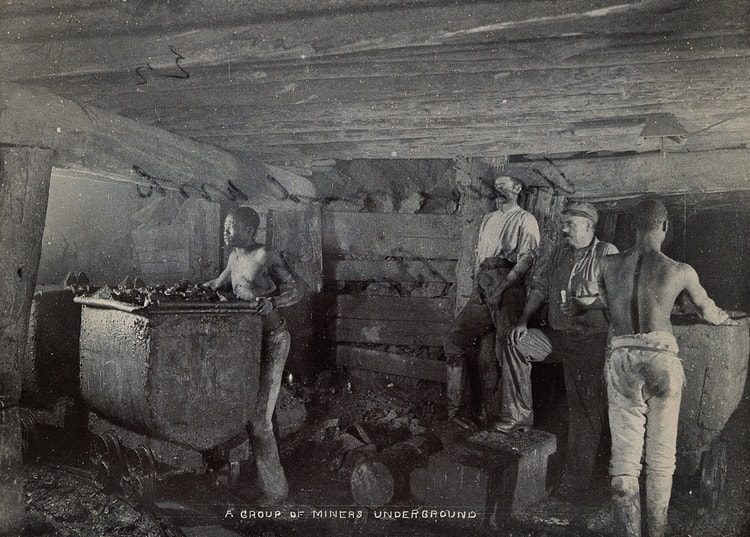
The initial chaotic scramble for diamonds eventually gave way to consolidation. Men like Alfred Beit and Barney Barnato systematically bought out smaller competitors, reducing the thousands of individual claims in 1871 to a mere 71 by 1881. The ultimate victor in this high-stakes game was Cecil John Rhodes (1853-1902). A British vicar’s son who arrived in South Africa in 1870, Rhodes quickly amassed his fortune, not just through direct mining but by shrewdly cornering essential auxiliary markets, such as the supply of pumps vital for preventing mine flooding. His strategic acumen culminated in the formation of De Beers Consolidated Mines Ltd. By 1890, South Africa had eclipsed traditional sources like Brazil to become the world’s leading diamond producer, with Rhodes and De Beers controlling an astonishing 90% of the global diamond market. This near-monopoly granted De Beers immense power: the ability to control diamond output to maintain high prices and, crucially, to drive down labour costs. In a precursor to later segregationist policies, systems like mandatory worker compounds, initially implemented to combat theft, were applied exclusively to Black African miners, not their white counterparts.
The allure of these interior riches galvanized the British government to adopt a more assertive role. Griqualand, rebranded West Griqualand, was declared a Crown Colony in 1871 and subsequently annexed by the Cape Colony in 1873. This blatant appropriation of resource-rich lands ignited bitter resentment among the Boer republics and, more fundamentally, among the Griqua chiefs, whose ancestral lands were being systematically ravaged by increasingly mechanized, vast open-pit mines. Despite a land court ruling in favour of Griqua ownership, colonial imperatives superseded legal claims, underscoring the raw power dynamics at play.
Economic Juggernaut and Social Upheaval
The "effects of this mining boom in South Africa were truly phenomenal and all-embracing," as historian A. Adu Boahen noted. The economic transformation was staggering. Exports surged dramatically, with diamonds rapidly accounting for one-third of the total. The mines became a colossal employer, drawing in some 50,000 people into the diamond industry in the 1870s alone. This potent combination of abundant capital and an increasingly available, cheap labour force generated enormous profits, though these benefits were concentrated disproportionately at the apex of the capitalist pyramid. The relentless pursuit of a permanent, inexpensive labour supply had profound and enduring consequences, as historian R. Reid observed: it "shaped social and economic policy in South Africa through the twentieth century, and around which much racial ideology was formed."
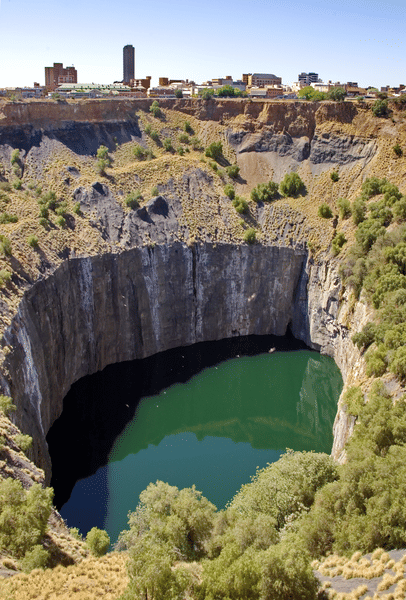
Kimberley itself experienced explosive growth, its population swelling to over 50,000 residents. This burgeoning urban center, fueled by an influx of settlers from across Southern Africa and beyond, created a robust market for foodstuffs. Initially, some African peasant farmers prospered by supplying this demand. However, this prosperity proved ephemeral. White settlers, privileged by colonial laws and access to capital, soon began to acquire land and transition to large-scale commercial farming, often at the expense of indigenous communities.
The economic boom necessitated a rapid expansion of infrastructure. Railways and roads, critical for transporting raw materials and goods, were constructed at an unprecedented pace, again relying heavily on cheap African labour. Southern Africa, which in 1860 possessed a mere 3 kilometers of railway and virtually no roads suitable for wheeled vehicles, boasted 3,300 km of railway by 1889 and an astounding 75,000 km of roads by 1914. While these developments were exceptional in their rapidity and scale compared to other African colonies, they came at a significant cost. Traditional farming communities were further disrupted, contributing to accelerating urbanization. The environmental impact was also severe, with massive deforestation occurring as vast quantities of wood were consumed as fuel for the mines and burgeoning towns. For the Griqua people, who saw their ancestral lands scarred and their way of life irrevocably altered, the discovery of that first milky-white stone in 1867 likely represented a profound curse rather than a blessing.
Imperial Ambitions and Colonial Conflicts
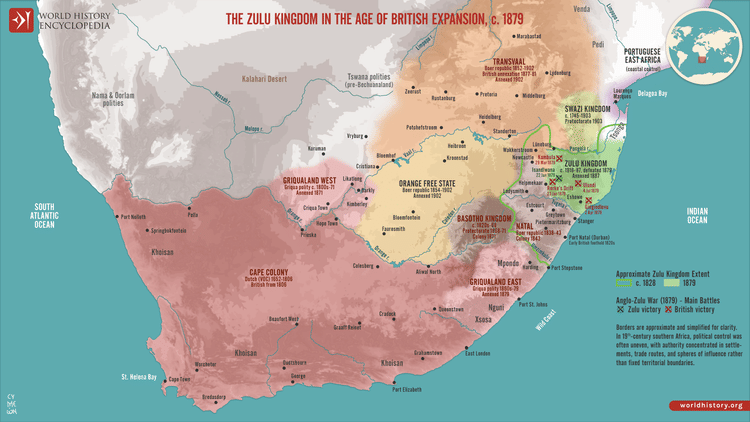
The mineral wealth fundamentally reshaped British imperial strategy in Southern Africa. The British, particularly figures like Colonial Secretary Sir Michael Hicks Beach, became determined to forge a federation uniting the Cape Colony and Natal with the two Boer republics. The Boers, however, deeply distrusted British motives, fearing the erosion of their hard-won independence. A Pedi attack on the Boers provided the British with a convenient pretext to annex the Transvaal in January 1877, claiming that only a British military presence could guarantee regional security. This move was a clear step towards consolidating control over the lucrative diamond mines and, increasingly, the broader mineral-rich interior.
The British push for federation gained further momentum with the decisive defeat of the formidable Zulu Kingdom in 1879. Zululand, a powerful independent African state, was subsequently absorbed into the British colonial sphere, becoming a crown colony in 1887 and eventually integrated into Natal by 1897. Through a series of strategic annexations and protectorate declarations, Britain rapidly expanded its territorial holdings: Basutoland (modern Lesotho) in 1884, Bechuanaland (modern Botswana) in 1885, Swaziland in 1893, and Pondoland in 1894, effectively creating a mosaic of British-controlled territories across Southern Africa.
British rivalry with the Boer republics intensified dramatically after the discovery of colossal gold deposits at Witwatersrand in the Transvaal in 1886. The economic figures were staggering: by 1890, £10 million worth of gold was being exported annually, making it Southern Africa’s leading export. This figure skyrocketed to £25 million by 1905 and between £45 and £50 million (equivalent to £5 billion today) by 1910. By 1915, South Africa was producing an astonishing 40% of the world’s gold. These immense riches fueled the expansionist dreams of imperialist adventurers like Cecil Rhodes, inspiring him to push north of the Limpopo River in the (ultimately mistaken) belief that similar mineral wealth awaited discovery there.
Rhodes, despite his often unkempt appearance, possessed an insatiable desire for British global dominance. Kimberley became the headquarters of his British South Africa Company, founded in 1889. By 1890, Rhodes was not only a diamond magnate but also the prime minister of the Cape Colony. Leveraging his immense wealth and political influence, he embarked on an aggressive campaign of empire-building, securing a royal charter to colonize a vast territory he named Rhodesia (encompassing present-day Zimbabwe, Zambia, and Malawi). Rhodes ruled this vast domain, carved out at the expense of the Mashona and Matabele people, as a virtual dictator, embodying the ruthless expansionism of the era.
As the 19th century drew to a close, Britain’s imperial ambitions clashed violently with Boer aspirations for independence, culminating in two Anglo-Boer Wars. The First Anglo-Boer War (1880-81) saw an initial Boer victory, but the Second Anglo-Boer War (1899-1902) proved to be a brutal and costly conflict, ultimately ending in a British triumph. This final victory allowed the British colonial dream to be fully realized with the formation of the Union of South Africa in 1910. This new colonial entity consolidated the Cape Colony, Natal, Transvaal, and Orange Free State, along with territories like Zululand, Tongaland, Swaziland, and Griqualand, under a single British dominion.
A Legacy Forged in Gold and Diamonds
The combined forces of gold and diamonds, which by the early 20th century accounted for 75% of South Africa’s exports, had not only led to Britain’s near-total colonization of Southern Africa but had also fundamentally reconfigured the relations between settlers and indigenous Africans. These mineral discoveries laid the deep, structural groundwork for the policies of racial segregation that would define South Africa for decades, culminating in the formal system of apartheid, which was not abolished until the late 20th century.
The economic disparities were stark and institutionalized from the outset. White miners, on average, earned more than ten times the wage of their Black African counterparts. Legislation such as the Mines and Works Act of 1911 explicitly excluded Africans from certain skilled mining jobs, while the Natives Land Act of 1913 systematically dispossessed Africans of their land, forcing them into the labour market of the mines. As R. Reid incisively summarized, these finds "would dramatically alter the balance of power, transforming southern African history and bringing about a veritable economic revolution which would ultimately destroy African self-sufficiency and lead to the creation of a capitalist economy by the end of the nineteenth century. It would lead, too, to the destruction of African political independence, at least temporarily."
The diamond mines of South Africa continue to yield dazzling gems today, serving as a powerful, albeit complex, symbol of the nation’s history. Among these, none stands more impressively than the 3,000-plus carat Cullinan Diamond, unearthed in Cullinan in 1905. This colossal stone was meticulously cut into several magnificent pieces, two of which became central to the British Crown Jewels. The 530-carat Cullinan I, also known as the Star of Africa, now graces the royal sceptre, holding the distinction of being the largest colourless cut diamond in the world. Its equally splendid counterpart, Cullinan II, the 317-carat Second Star of Africa, is proudly set into the front of the Imperial State Crown, worn by British monarchs at their coronations. These glittering symbols of imperial power and wealth serve as a tangible, enduring reminder of the profound and often painful transformation wrought upon Southern Africa by the allure of its hidden treasures.

Leave a Comment