
Yokohama Duel Reemerges: A Masterclass in Eurogame Distillation
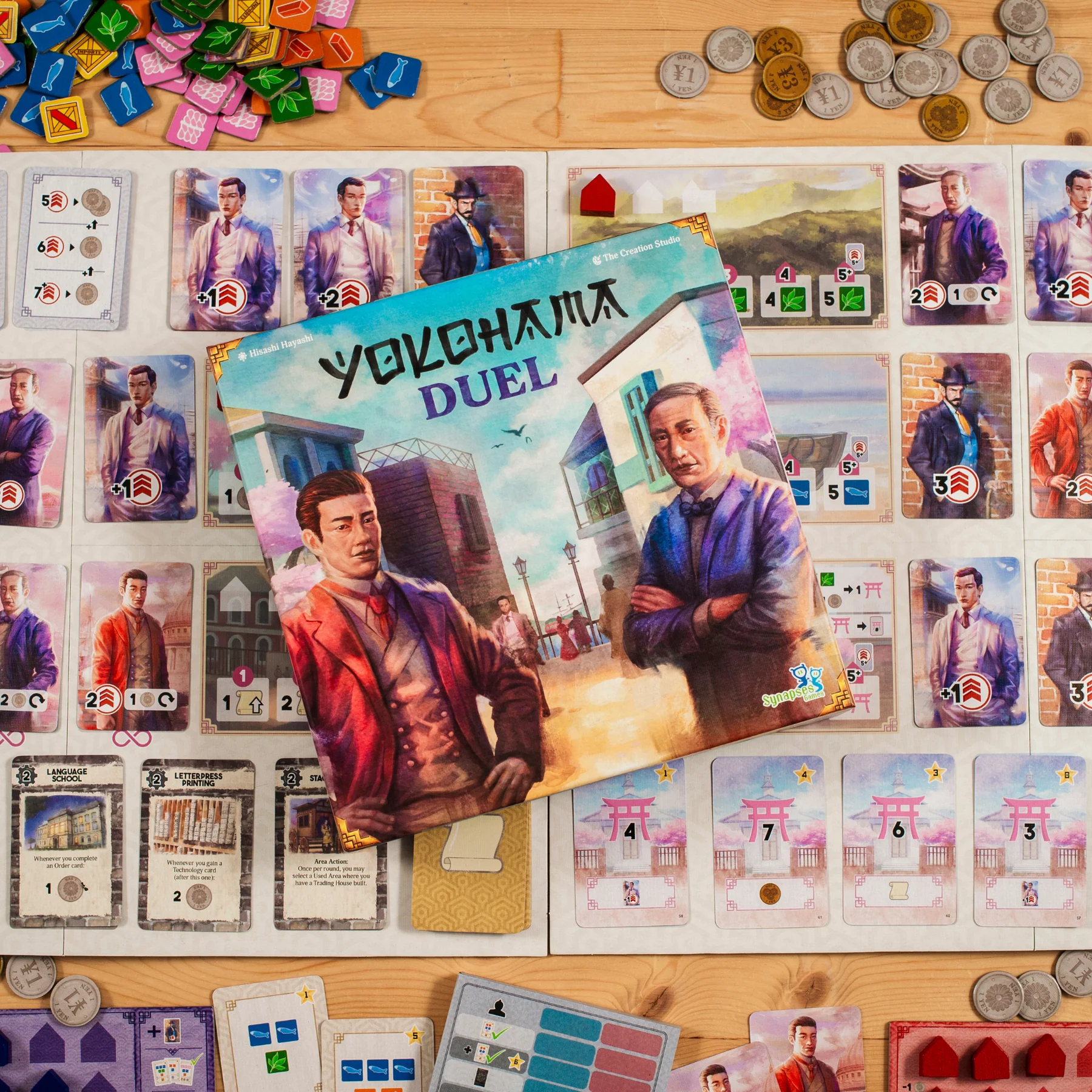
Yokohama Duel stands as a testament to intelligent game design, managing to distill the intricate strategic depth and engaging Eurogame mechanics of its acclaimed predecessor, Yokohama, into a significantly faster, more compact, and exclusively two-player experience. Far from being a mere shadow, the game retains the core joy and challenging decision-making that cemented the original’s place among the pantheon of modern board gaming classics. After a period of scarcity that saw copies exchange hands for exorbitant prices, the much-anticipated reissue by Synapses Games in 2025 promises to open up this elegant design to a new generation of players, solidifying its position as a "must-play" title for enthusiasts of competitive two-player strategy.
Main Facts: The Return of a Streamlined Classic
Yokohama Duel is a two-player adaptation that expertly condenses the expansive Eurogame experience of the original Yokohama into a tight, 45-minute strategic battle. Originally conceived by Hisashi Hayashi and released in 2018, its English edition by Tasty Minstrel Games in 2020 was tragically short-lived due to the publisher’s unfortunate demise, rendering copies rare and highly sought after.
The recent 2025 reissue by Synapses Games, following their successful 2024 re-release of the original Yokohama, marks a significant moment for the board gaming community. Priced accessibly at under £25, it offers a stark contrast to the £75 or more that collectors previously paid for the scarce first English printing. This renewed availability means that the ingenious design, which swaps traditional worker placement for a unique "power card" system, can now be appreciated by a wider audience. Players engage in a tactical tug-of-war, utilizing a hand of four power cards (values 1-4) on a compact board featuring familiar locations like Chinatown, Customs, and the Bank. The central strategic twist lies in the mandatory play of one’s weakest available card, forcing players to make crucial decisions about immediate gains versus preserving stronger actions for later turns. Despite its smaller footprint and reduced play time, Yokohama Duel is lauded for maintaining the "stressful and puzzly" essence of its larger sibling, earning it a "Must Play" recommendation for its excellent blend of tactics and strategy.
A Storied Chronology: From Big Box to Duel
The journey of Yokohama Duel is intricately tied to the legacy of its progenitor, a narrative marked by critical acclaim, publishing challenges, and ultimately, a triumphant return to accessibility.
The Genesis of Yokohama
The story begins in 2016 with the release of Yokohama, a magnum opus from Japanese designer Hisashi Hayashi, published by OKAZU Brand. This "big box" Eurogame quickly garnered immense critical acclaim, establishing itself as a standout title in a competitive genre. Its intricate design, revolving around a "caterpillar-like" worker placement mechanism, challenged up to four players to strategically deploy their president and assistants across a modular board representing the bustling port city. Players competed to collect goods, fulfill lucrative orders, secure powerful technology cards, curry favour with the church, and profit from international imports. The game’s appeal lay in its deep strategic layers, allowing for intricate chain moves and satisfying opportunities to block opponents, hallmarks of well-designed Eurogames. Its enduring popularity is reflected in its consistent presence just outside the Board Game Geek top 150 games of all time, a testament to its lasting impact and robust gameplay that typically spans 90 minutes or more.
The First Duel: A Brief Encounter
Building on the success and intricate design of the original, Yokohama Duel first emerged in 2018, seeking to distil the essence of the larger game into a more focused, two-player format. The promise was alluring: a quicker, more intimate experience that retained the strategic depth. The English edition of Yokohama Duel eventually arrived in 2020, published by Tasty Minstrel Games (TMG). However, this initial English release proved to be tragically short-lived. TMG, a prominent publisher known for bringing many excellent games to the Western market, sadly ceased operations, leading to the immediate disappearance of Yokohama Duel from shelves. This created a void for eager players, transforming what was meant to be an accessible adaptation into a rare commodity. For several years, copies of the English edition became increasingly difficult to find, changing hands for significant sums, often upwards of £75, highlighting the strong demand for this particular design despite its limited availability.
Synapses Games Revives the Legacy
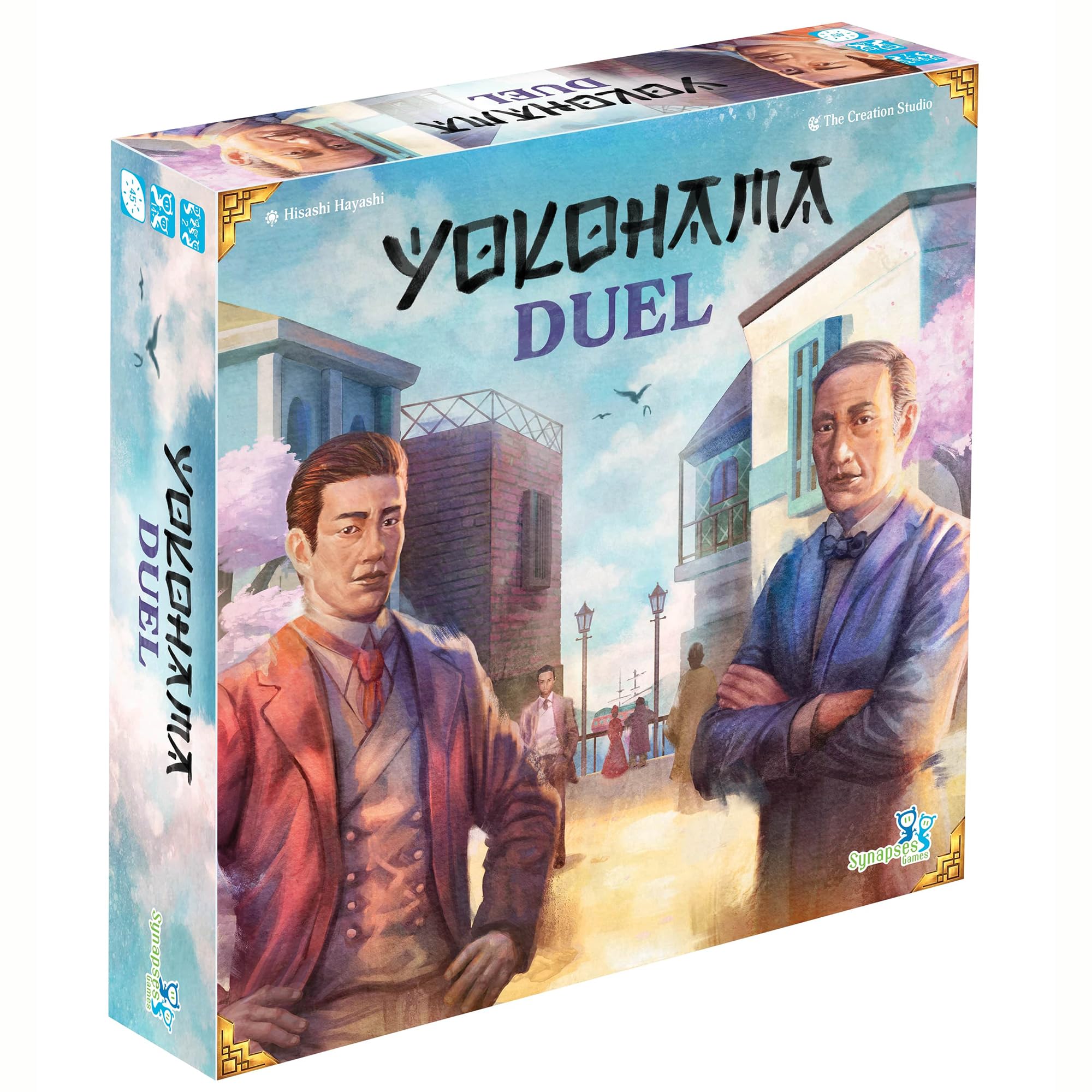
The narrative took a positive turn with the involvement of Synapses Games. Recognising the enduring appeal and quality of Hayashi’s designs, Synapses Games embarked on a mission to revive the Yokohama line. Their efforts first bore fruit in 2024 with a successful reissue of the original Yokohama. This new edition featured refreshed cover art and several minor tweaks, breathing new life into the beloved Eurogame and making it available to a new generation of players.
Following this success, Synapses Games turned their attention to Yokohama Duel. The highly anticipated re-release was unveiled at Essen SPIEL 2025, one of the world’s largest board game fairs. This event marked the official return of Yokohama Duel to widespread availability, much to the relief of fans and newcomers alike. The decision to price the new edition at less than £25 was particularly welcome, effectively dismantling the barriers of entry created by its previous rarity and high aftermarket cost. This strategic move not only makes the game financially accessible but also allows a much broader audience to experience the charms of this brilliantly condensed Eurogame without having to pay collector’s prices. Synapses Games’ commitment to preserving and reintroducing these acclaimed titles underscores a positive trend in the industry towards making classic designs available to a wider player base.
Supporting Data: Mechanics, Experience, and Design Philosophy
The enduring appeal of Yokohama Duel lies in its clever design, which manages to maintain the strategic integrity of its larger predecessor while radically streamlining its components and play time.
The Grandeur of Original Yokohama: A Primer
To fully appreciate Yokohama Duel, one must first understand the foundation laid by the original Yokohama. The 2016 Eurogame is a masterpiece of economic and worker placement strategy. Its central "caterpillar-like" worker placement system is innovative: players deploy their President and several assistants, extending lines of influence across the city. The strength of an action taken at a location depends on the total number of pieces (President plus assistants) present, allowing for powerful actions if enough resources are committed. This mechanism creates a dynamic puzzle, where players constantly evaluate the cost of extending their influence, the benefits of powerful actions, and the potential to block opponents or set up lucrative chain reactions. Victory points are accumulated through diverse avenues: fulfilling export orders by collecting goods (silk, copper, tea, seafood), establishing trading houses and shops in various districts, gaining favour from the church, securing advanced technology cards, and profiting from imports. The game is renowned for its strategic depth, requiring players to plan several turns ahead, adapt to opponents’ moves, and efficiently manage their limited resources and actions. Its comprehensive nature and interwoven scoring paths contribute to its 90+ minute playtime and its status as a benchmark Eurogame.
Yokohama Duel: A Masterclass in Distillation
Yokohama Duel is a prime example of successful game distillation, maintaining the essence of the original while radically altering the execution.
- Time and Footprint Efficiency: The most immediate and apparent difference is the drastically reduced play time and physical footprint. Yokohama Duel clocks in at a brisk 45 minutes, less than half the duration of its big brother. This makes it an ideal choice for shorter gaming sessions or when space is at a premium. The smaller board and component count contribute to this efficiency, making setup and teardown much quicker.
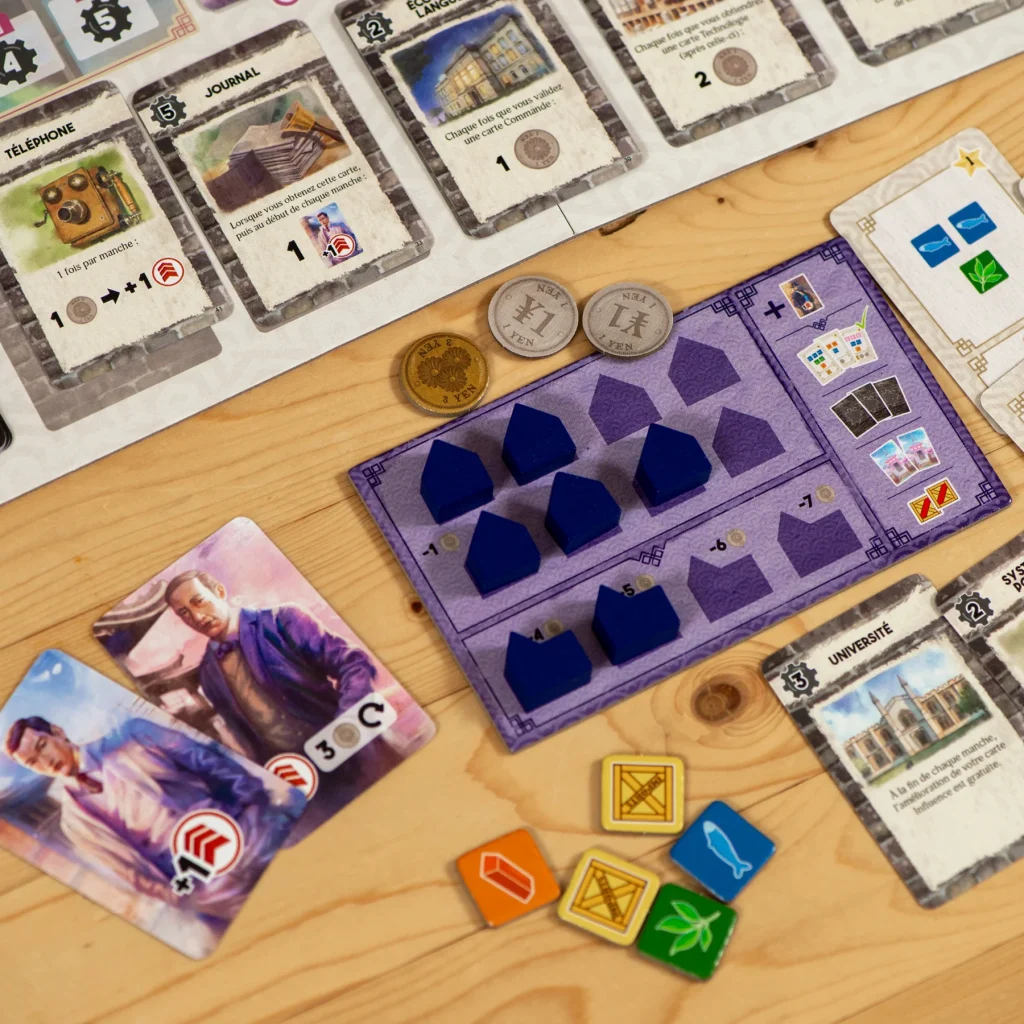
- Familiarity with a Twist: Players familiar with the original Yokohama will find themselves in comfortable territory. The core objectives and elements remain: collecting resources, fulfilling order cards, vying for foreign agents, securing church favour, and acquiring technology cards (many bearing the same names). Even the iconic locations like Chinatown, Customs, and the Bank are present. However, the most significant change is the complete overhaul of the worker placement mechanism. Gone are the numerous cubes and meeples that populated the original’s sprawling board.
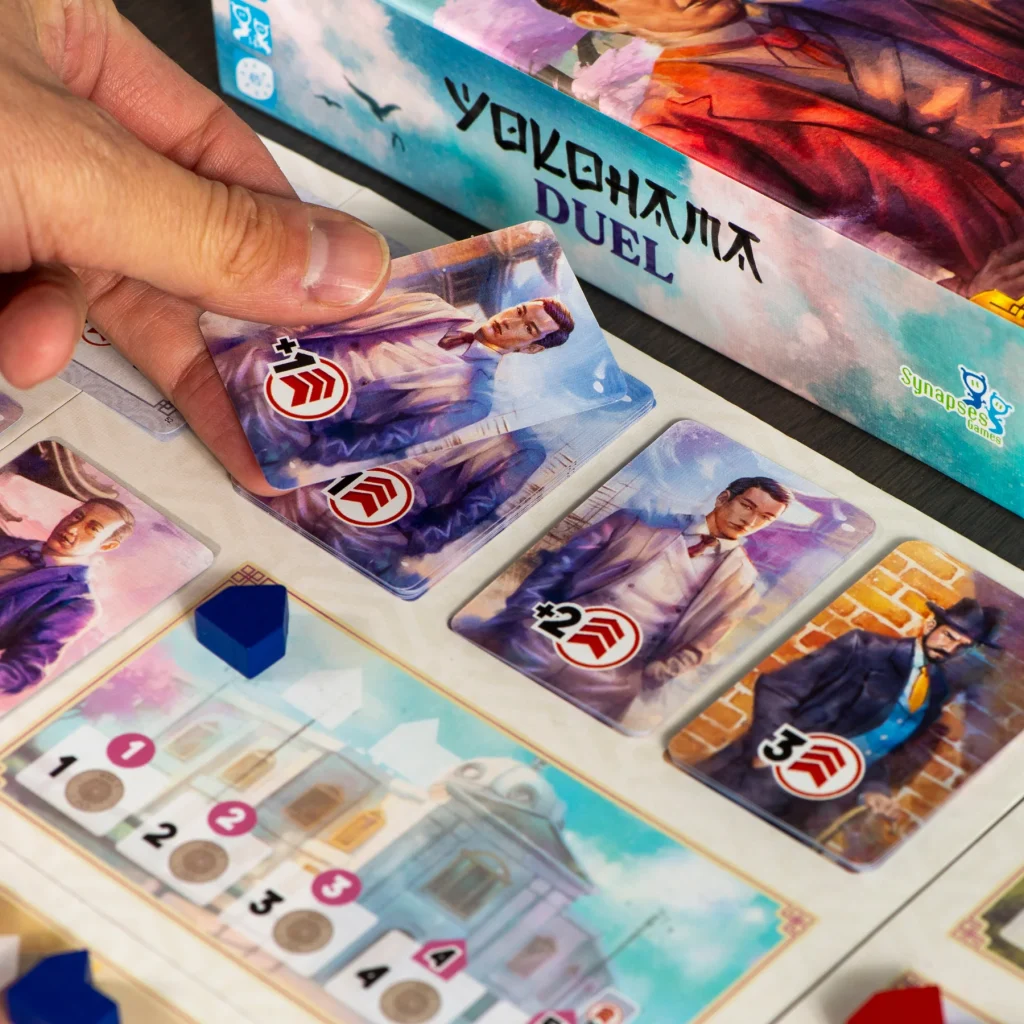
- The Innovative Power Card System: In Yokohama Duel, each of the two players starts with an identical set of four "power cards" with strengths of 1, 2, 3, and 4. These cards effectively replace the President and assistants, acting as a pool of available actions. The game board features 10 distinct spaces where these cards can be played, with only the Laboratory and Port allowing for more than one card per round. The core strategic twist is a mandatory rule: players must always play their weakest available power card from their hand onto a chosen location. This brilliant constraint introduces an immediate layer of tactical depth. Do you take a weaker action now to secure a critical resource, knowing it leaves your stronger cards available for future turns? Or do you sacrifice an early opportunity to preserve a high-power card for a more impactful move later? This decision-making process is a constant source of tension and thoughtful planning.
- Strategic Depth Unchanged: Despite the streamlined mechanics, the strategic depth of Yokohama Duel is remarkably intact. Playing a card with a total power of four (either a single ‘4’ card or combining with another card at the same location to reach 4) allows players to establish shops or trading houses, crucial for income and scoring. Achieving a combined power of five or more grants additional bonuses, encouraging strategic clustering of cards. The Foreign Agent cards, which grant an extra three-power turn usable at any location, are still present and are acquired by meeting specific criteria (e.g., completing three orders, acquiring three technologies). These agents provide vital flexibility and powerful swing turns. The reviewer, Chris Marling, notes that despite the mechanical changes, the game remains "every bit as stressful and puzzly as its predecessor," a high compliment to its design efficacy.
Production and Accessibility: A Practical Approach
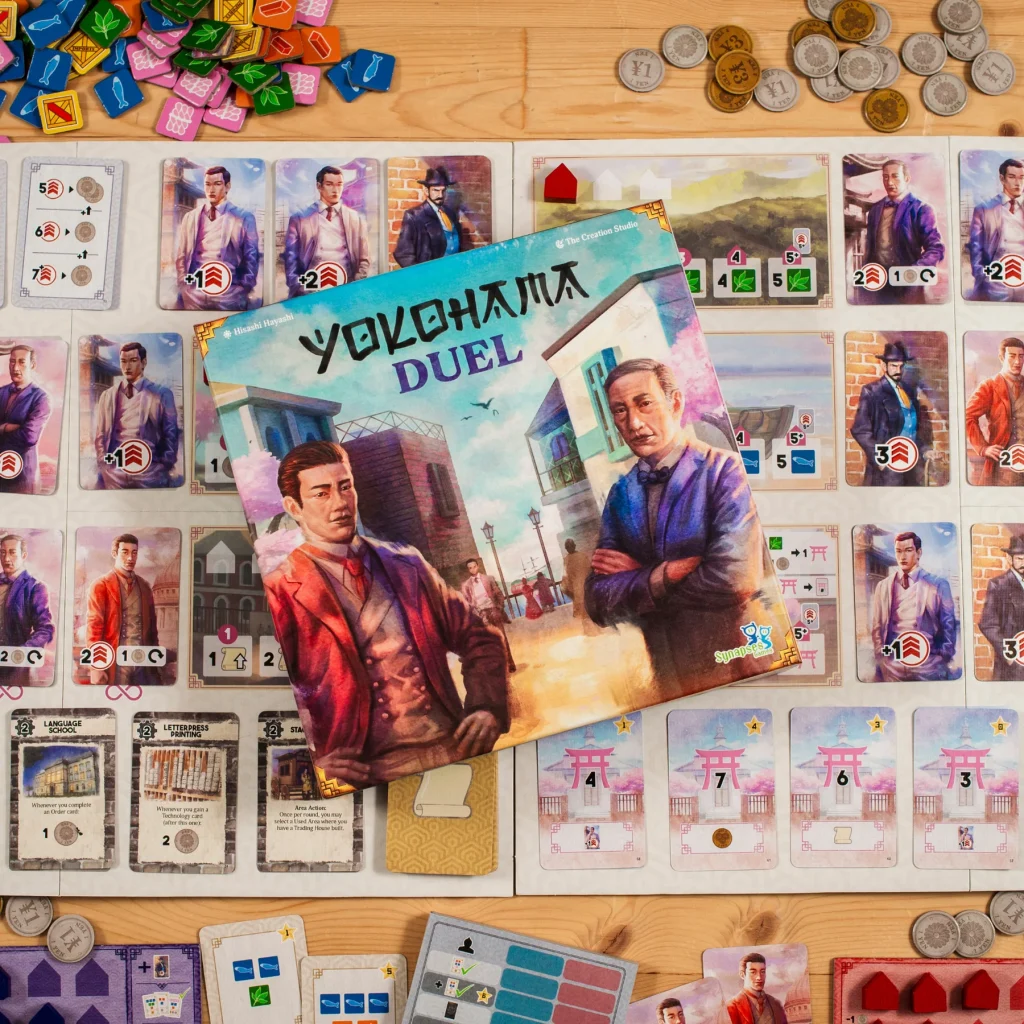
The review acknowledges that the production quality of this new edition of Yokohama Duel is "far from stellar," describing everything as "basic" and admitting it "won’t wow people as they walk past your table." However, this pragmatic approach to component quality is entirely justified by the game’s incredibly accessible price point. At less than £25, the focus is clearly on functionality and affordability rather than lavish aesthetics. The review rightly points out that "everything is functional," and crucially, "the iconography and rulebook do a great job of easing you in," regardless of whether a player is new to the Yokohama universe or a seasoned veteran. This prioritisation of gameplay and user experience over premium components is a smart move by Synapses Games, ensuring the game’s brilliance isn’t hidden behind a prohibitive price tag.
Comparative Analysis: Duel vs. Duel
The reviewer draws an interesting comparison between Yokohama Duel and The White Castle Duel, two prominent two-player Eurogame adaptations released around the same time. While both are highly praised as "excellent games" that fit the niche of "tight, competitive, brain-burny two-player Euros," Yokohama Duel ultimately edges out its competitor in the reviewer’s personal preference. The reason cited is its closer proximity to the original Yokohama in both "feel and weight," despite being "a little lighter in complexity." This suggests that Yokohama Duel successfully captures more of the strategic essence and player experience of its big box inspiration, offering a more direct and recognisable adaptation. This comparison highlights Yokohama Duel‘s achievement in translation, demonstrating how effectively it manages to compress a complex system without losing its distinctive character. The reviewer’s contentment with owning both "Duel" games, alongside the original Yokohama, underscores the distinct yet complementary experiences each offers, securing their collective place on the shelf for the foreseeable future.
Industry and Community Reception: An Unofficial Consensus
While direct "official responses" from Synapses Games beyond their re-release strategy are not detailed, the reception from the board gaming industry and community provides a clear unofficial consensus: Yokohama Duel‘s return is a triumph.
Critical Acclaim and Player Anticipation
The original Yokohama‘s stellar reputation naturally set high expectations for any adaptation, and Yokohama Duel has met these with flying colours. The "Must Play" rating bestowed by Tabletop Gaming magazine is a significant indicator of its critical success. This rating signifies a game that excels in its genre, offering an engaging experience that is both easy to learn and strategically deep. The review praises its fast setup, ease of teaching, and the perfect blend of tactics and strategy, qualities that resonate deeply with both casual and dedicated gamers. The anticipation within the community for its reissue was palpable, especially among those who missed the fleeting TMG release or were unwilling to pay the high aftermarket prices. Forums and social media buzzed with excitement as Synapses Games announced its re-release, demonstrating a clear demand for accessible, high-quality two-player Eurogames.
The Value Proposition of Reissues
Synapses Games’ strategy of reissuing beloved but rare titles like Yokohama and Yokohama Duel is highly commendable and beneficial for the industry. This approach addresses a common pain point for collectors and new players alike: the frustration of inaccessible games. By making Yokohama Duel available again at an affordable price point (under £25 compared to £75+), Synapses Games has democratized access to a fantastic design. This move not only serves the community by making sought-after games available but also highlights the enduring quality of these designs. It prevents excellent games from fading into obscurity simply due to publishing misfortunes or limited print runs, ensuring their legacy can continue to thrive.
Impact on the Two-Player Market
The re-emergence of Yokohama Duel significantly strengthens the burgeoning market for competitive two-player Eurogames. This niche has seen a surge in popularity, with players increasingly seeking deep, strategic experiences that can be enjoyed with a single opponent. Yokohama Duel, alongside titles like The White Castle Duel, provides sophisticated options for players who appreciate brain-burning tactical decisions in a condensed format. Its success reinforces the viability of creating streamlined versions of larger Eurogames, proving that complexity and strategic depth don’t necessarily require extensive components or lengthy playtimes. This trend is likely to encourage more designers and publishers to explore similar adaptations, enriching the diversity and quality of two-player offerings.
Implications for Board Gaming Enthusiasts
The re-release of Yokohama Duel carries several significant implications for the wider board gaming community, from expanding player bases to setting new standards for game adaptations.
Expanding the Audience
One of the most profound implications of Yokohama Duel‘s accessible reissue is its potential to significantly expand the audience for the Yokohama universe and Eurogames in general. The original Yokohama, while critically acclaimed, can be intimidating for newcomers due to its complexity, longer playtime, and larger physical footprint. Yokohama Duel, with its 45-minute playtime, streamlined rules, and attractive price point, offers a perfect gateway. New players can experience the core strategic brilliance and "puzzly" satisfaction of Yokohama without the initial commitment required by the big box version. This accessibility can serve as a stepping stone, potentially enticing these new players to explore the original game or delve deeper into the rich world of Eurogames. It’s an excellent example of how a well-designed adaptation can lower the barrier to entry for complex genres.
A New Standard for Adaptations
Yokohama Duel sets a high bar for how complex Eurogames can be successfully adapted into smaller, faster formats. Its ability to retain the "joy of the original" and its "stressful and puzzly" nature, despite drastically changing the core worker placement mechanism, is a testament to ingenious design. This isn’t just a simplified version; it’s a re-imagination that captures the spirit and strategic depth through new mechanics. The success of Yokohama Duel could inspire other designers and publishers to approach adaptations with similar ambition, focusing on distilling the experience rather than merely stripping down components. This could lead to a wave of "duel" or "mini" versions of other beloved Eurogames, offering diverse entry points and experiences for fans of intricate strategy.
Longevity on the Shelf
The reviewer’s declaration of keeping both Yokohama Duel and the original Yokohama on their shelves "for the foreseeable future" speaks volumes about the distinct value proposition of each game. This highlights that Yokohama Duel isn’t merely a replacement for the original but a complementary experience. There are times when a player might crave the grand, multi-player epic of Yokohama, and other times when a quick, intense two-player strategic battle is preferred. Yokohama Duel perfectly fills that latter niche, offering a deep and satisfying experience in a fraction of the time. This dual appeal ensures the longevity of both titles, as they cater to different gaming moods and group sizes, making them invaluable additions to any board game collection.
The Future of Duel Editions
The positive reception and commercial success of Yokohama Duel, alongside The White Castle Duel, suggest a promising future for "duel" or two-player adaptations of popular Eurogames. This trend acknowledges that many players primarily game with one other person, and they desire games that offer the same strategic depth and engagement as their larger counterparts, but tailored for a more intimate setting. If publishers continue to follow Synapses Games’ lead in making these adaptations both brilliant in design and accessible in price, we can anticipate a rich landscape of high-quality two-player Eurogames, further diversifying the hobby and catering to a broader range of player preferences.
In conclusion, Yokohama Duel‘s re-release is more than just a return to market; it’s a celebration of smart design, publishing foresight, and the enduring appeal of well-crafted strategy games. Its accessible price point, streamlined gameplay, and unwavering commitment to the original’s spirit solidify its status as a "Must Play" and a valuable addition to any board game enthusiast’s collection.
Review by Chris Marling

PLAY IT?
An excellent Eurogame in a small box, which sets up fast, is easy to teach and gets the mix of tactics and strategy just right.
What’s in the box?
The Synapses Games edition of Yokohama Duel typically includes:
- 1 Game Board
- 2 Player Boards
- 8 Power Cards (4 for each player, values 1-4)
- Numerous Resource Tokens (silk, copper, tea, seafood)
- Various Order Cards
- Technology Cards
- Church Cards
- Foreign Agent Cards
- Score Trackers
- First Player Token
- Rulebook
Try This if you Liked…

The White Castle Duel
If you like tight, competitive, brain-burny two-player Euros, both games fit that niche perfectly.

Leave a Comment