
Terraria: The Board Game Set to Mine New Horizons on Tabletop
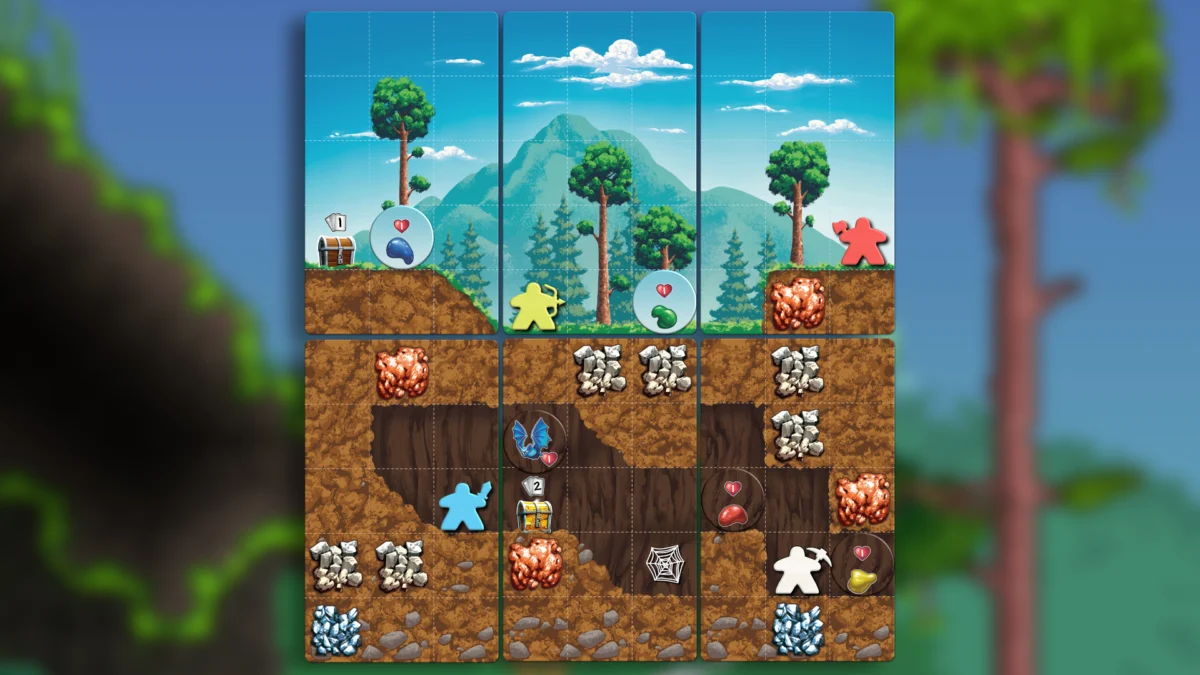
The beloved 2D sandbox adventure, Terraria, is making a highly anticipated leap from digital screens to the tabletop, with Terraria: The Board Game slated to launch its crowdfunding campaign on May 28th. Developed by Paper Fort Games in collaboration with original creator Re-Logic, this cooperative board game promises to deliver the iconic blend of exploration, crafting, combat, and base-building that has captivated millions worldwide, now in a tactile and shared experience.
Main Facts
For over a decade, Terraria has reigned as a titan in the indie gaming landscape, enchanting players with its pixelated charm, boundless creativity, and challenging gameplay. The announcement of Terraria: The Board Game last summer immediately ignited excitement among its vast fanbase, promising a faithful adaptation that translates the sprawling digital world into a physical, cooperative experience for one to four players.
Paper Fort Games, known for its commitment to innovative tabletop design, has taken on the ambitious task of reimagining Terraria‘s core loop. The board game aims to mirror the video game’s essence by generating a dynamic, 2D world across various biomes using a layout of gridded cards. Players will delve into this unique world, venturing above and below ground, confronting a diverse array of enemies and formidable bosses, meticulously mining for resources, and engaging in deep crafting mechanics to forge new equipment and construct their essential base. Early impressions from tabletop conventions suggest a thoughtful and well-considered adaptation, indicating that Paper Fort Games is on track to deliver a truly authentic Terraria experience. The upcoming Kickstarter campaign on May 28th will serve as the gateway for fans to support and secure their copy of this ambitious project, bringing the boundless possibilities of Terraria directly to their gaming tables.
Chronology
From Digital Pixels to Tabletop Realms: The Genesis
The journey of Terraria began modestly on May 16, 2011, when Re-Logic released its groundbreaking 2D sandbox-adventure game. Often described as a "2D Minecraft," Terraria quickly transcended such comparisons, establishing its own distinct identity through its emphasis on combat, deep progression systems, and extensive world exploration. Over the years, the game garnered critical acclaim and immense commercial success, selling tens of millions of copies across various platforms and fostering a dedicated community. Its sustained popularity was bolstered by numerous free content updates, transforming it from a promising indie title into a gaming phenomenon with an enduring legacy.
The idea of a tabletop adaptation, while perhaps a dream for many fans, remained largely speculative until "last summer" (referring to summer 2023, based on the article’s context) when Paper Fort Games officially announced Terraria: The Board Game. This initial reveal sent ripples of excitement through both the video game and board game communities, signaling a serious endeavor to translate the digital world’s complexities into a physical format.
A significant milestone in the game’s development was its public debut at Essen Spiel, the world’s largest board game fair, held in October 2023. Attending Essen Spiel allows developers to showcase their prototypes, gather invaluable feedback, and generate buzz among a global audience of tabletop enthusiasts and industry professionals. The positive reception at such a prestigious event, as noted by the article’s author, provided early validation for Paper Fort Games’ approach and design philosophy. It demonstrated that the core mechanics and thematic elements were resonating with players, effectively bridging the gap between the digital source material and its tabletop interpretation. This critical early exposure set the stage for the highly anticipated crowdfunding launch, culminating in the upcoming Kickstarter campaign on May 28th, which will allow the global Terraria community to directly contribute to the game’s realization and secure their own copies. The full release date for Terraria: The Board Game remains unannounced, but the crowdfunding campaign marks a crucial step towards its eventual availability.
Supporting Data
A Deep Dive into Gameplay Mechanics
Terraria: The Board Game meticulously reconstructs the video game’s intricate mechanics, translating them into engaging tabletop systems designed to immerse players in its familiar world. The adaptation focuses on four core pillars: dynamic world generation, robust combat, extensive crafting and resource management, and strategic base building.
World Generation and Exploration: At the heart of the board game’s replayability is its innovative 2D world generation system. The game utilizes a layout of gridded cards to construct unique environments for each session. These cards represent various biomes, such as lush forests, arid deserts, chilling tundras, treacherous jungles, and the perilous depths of the underground, including the Corruption or Crimson. As players explore, new cards are revealed, creating an unfolding tapestry of biomes, resources, and hidden dangers. This modular approach ensures that no two playthroughs are identical, mirroring the video game’s procedurally generated worlds and encouraging continuous discovery. Players strategically navigate this expanding map, deciding whether to delve into subterranean caverns for rare ores or venture across hazardous surface biomes in search of specific resources or enemies.
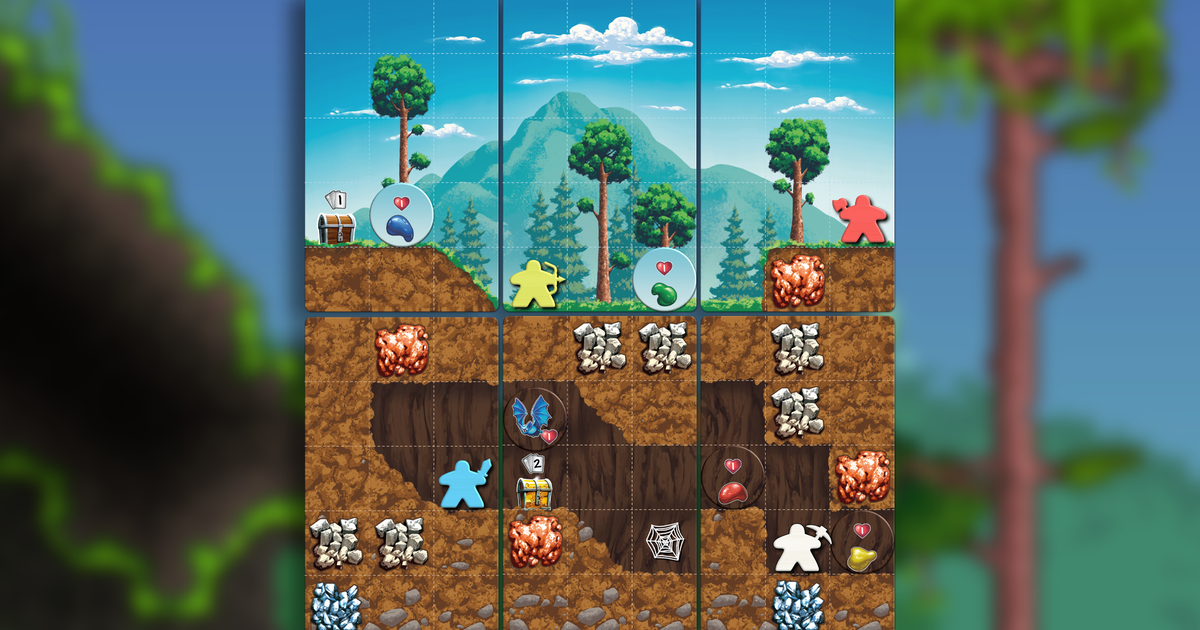
Combat and Adversaries: The dangers of Terraria are faithfully represented through a diverse bestiary. Over 30 different enemy types, ranging from common slimes and zombies to more specialized biome-specific foes, challenge players throughout their adventures. Combat resolution employs a tactical dice system, where the quality of a player’s weapon directly influences the dice rolled, offering a tangible sense of progression. This is further enhanced by action cards, which provide various buffs, special abilities, and tactical advantages, allowing players to execute powerful maneuvers or mitigate incoming damage.
The game also features six epic bosses, each serving as a climactic encounter. These formidable foes, represented by detailed modular miniatures, are a standout feature. As a boss takes damage, its miniature can be physically altered (e.g., by removing armor pieces or adding visual damage markers), providing a compelling visual and tactile representation of its weakening state. These boss battles often mark the culmination of a session’s objectives, requiring coordinated strategy from the cooperative team.
Crafting, Mining, and Resource Management: Resource gathering is as central to the board game as it is to the video game. Players will mine various ores (copper, iron, silver, gold, etc.), fell trees for wood, and collect other raw materials from defeated enemies and explored environments. These resources are then used in an extensive crafting system. A particularly "neat" innovation mentioned is the use of transparent cards for armor and gear. When players craft or loot new equipment, these transparent cards can be physically layered over their character board, visually dressing their avatar in new outfits and providing a clear, thematic representation of their current loadout. This visual feedback, combined with the mechanical benefits of improved weapons (better dice) and armor (damage reduction), reinforces the core progression loop. The strategic management of collected goods is paramount, as players must decide what to craft, when to upgrade, and what resources to save for future endeavors.
Base Building and NPC Interaction: Beyond exploration and combat, the strategic development of a player’s base is a critical component. Constructing houses and expanding the settlement invites various Non-Player Characters (NPCs) into the game. Each NPC offers unique benefits, much like their digital counterparts. These could range from merchants selling essential items, healers providing restorative services, or quest-givers offering new objectives and rewards. The presence of NPCs provides party-wide bonuses, enhancing players’ capabilities in combat, crafting, or exploration. Furthermore, building specific structures unlocks new crafting stations (e.g., a furnace for smelting ores, a workbench for basic crafting, an anvil for advanced gear), significantly expanding the array of items and equipment players can create from their gathered resources. This system encourages players to invest in their home base, making it a strategic hub for their adventures.
The Action-Point System: Terraria: The Board Game operates on an intuitive action-point system, empowering players with a wide array of choices during their turn. Players spend their available action points to perform various tasks, such as moving across the gridded map, attacking enemies, mining for resources, crafting new items, building structures, or interacting with NPCs. This flexible system is designed to emulate the open-ended sandbox nature of the video game, allowing players to prioritize different activities based on their current objectives and the evolving game state. It encourages strategic decision-making, as players must wisely allocate their limited actions to maximize their efficiency and contribute to the team’s overall success.
Session Structure and Objectives: Each game session is designed to last approximately 90 minutes to two hours, offering a complete and satisfying experience within a reasonable timeframe. The game supports 1 to 4 players, including a dedicated solo mode for those who prefer a solitary adventure. A key feature for replayability is the customizable objective system. Before each session, players can choose from a series of objectives, which dictate the primary goals of that particular playthrough. This means that one session might focus on defeating a specific boss, while another might prioritize building an elaborate base or exploring every corner of a dangerous biome. This customization ensures that each game feels fresh and offers a different strategic focus, further enhancing the game’s longevity.
The Visual and Tactile Experience
From the early glimpses, Terraria: The Board Game promises a visually rich and tactile experience. The game’s artwork, drawing heavily from the pixel art aesthetic of the original video game, is translated into vibrant illustrations on cards and components. The transparent equipment cards that layer over character boards are not just a clever mechanic but also a strong visual differentiator, making the progression of a character’s gear immediately apparent and satisfying. The modular boss miniatures add a significant level of immersion, allowing players to physically track the damage dealt to these powerful adversaries, bringing the epic boss battles to life on the table. The overall component quality, from the gridded biome cards to the various tokens and player boards, appears designed to honor the beloved source material while providing a premium tabletop experience.
Official Responses
Re-Logic’s Blessing and Paper Fort’s Vision
The successful adaptation of a beloved video game IP into a board game hinges critically on the involvement and blessing of the original creators. Re-Logic, the visionary studio behind Terraria, has clearly given its imprimatur to Paper Fort Games, signaling confidence in their ability to translate the essence of their multi-million-selling indie phenomenon. While specific direct quotes from Re-Logic were not provided in the original article, their collaboration implies a strong endorsement and a shared vision for Terraria: The Board Game. It’s reasonable to infer that Re-Logic would be "thrilled to see their meticulously crafted world brought to life in a new, tangible medium," and that they would have worked closely with Paper Fort Games to ensure "unwavering fidelity to the core mechanics, lore, and aesthetic that fans cherish." This partnership ensures that the board game isn’t just a generic fantasy game with Terraria‘s skin, but a true extension of its universe.
Paper Fort Games, in turn, has approached this adaptation with a clear design philosophy focused on capturing the sprawling, open-ended nature of the video game. The challenges of translating a real-time, sandbox digital experience into a turn-based, physical game are immense. Their design choices, such as the modular card-based world generation, the innovative transparent equipment cards, and the action-point system, all point to a deliberate effort to innovate while remaining true to the source material. The positive early impressions gathered at Essen Spiel underscore their success in this endeavor, suggesting that their vision for a "thoughtful, well-considered adaptation" is indeed resonating with players. The article’s author, having spent "hundreds of hours in Terraria: The Video Game," found themselves "mighty impressed," highlighting that the design team at Paper Fort Games has likely succeeded in identifying and prioritizing the key elements that make Terraria so compelling – its eclectic mix of exploration, crafting, combat, and survival. This synergy between the original creator’s vision and the adapter’s design prowess is often the secret ingredient to successful IP transitions.
Implications
The Broader Trend of Video Game to Tabletop Adaptations
Terraria: The Board Game is not an isolated phenomenon but rather a prominent example of a burgeoning trend in the entertainment industry: the adaptation of popular video game intellectual properties (IPs) into tabletop games. This trend has seen a significant surge in recent years, with successful board game renditions of titles such as Stardew Valley, Dark Souls, Fallout, Bloodborne, and Cyberpunk 2077, among many others. The appeal of this cross-medium translation is multi-faceted. For publishers, established video game IPs come with a ready-made, passionate fanbase, significantly reducing the marketing hurdle and generating built-in anticipation. For fans, these adaptations offer a novel way to engage with beloved universes, often leveraging nostalgia and providing a fresh perspective on familiar characters, mechanics, and lore. It’s a testament to the versatility of game design that the complex systems of digital worlds can be distilled and reimagined for the tactile, social experience of board gaming.
Terraria, in particular, is exceptionally well-suited for a board game adaptation. Its core gameplay loop—centered around exploration, resource gathering, crafting, combat progression, and base building—translates seamlessly into tabletop mechanics. The distinct biomes, diverse enemy types, iconic bosses, and the overarching goal of improving one’s character and settlement provide rich thematic material that board games excel at representing. The cooperative nature of the board game also aligns well with how many players enjoy Terraria itself, often sharing adventures with friends.
Anticipation and Crowdfunding Dynamics
The decision to launch Terraria: The Board Game via Kickstarter is a strategic one, leveraging the platform’s power to connect directly with a global audience of dedicated fans. Crowdfunding has become an indispensable tool for tabletop publishers, especially for projects involving established IPs, as it allows for direct community engagement, pre-orders, and the funding necessary for high-quality components and extensive development. Given Terraria‘s massive and loyal fanbase, the Kickstarter campaign is poised for significant success. Fans are eager to support projects that genuinely honor their favorite games, and the detailed gameplay mechanics revealed so far indicate that Paper Fort Games is doing just that.
The campaign is expected to feature various pledge tiers, likely including a standard edition, a deluxe edition with premium components, and potentially exclusive content for early backers. Stretch goals—additional content unlocked as funding milestones are met—will undoubtedly be a major draw, potentially introducing new biomes, additional enemies, more crafting recipes, alternative character classes, or even mini-expansions that delve deeper into Terraria‘s rich lore. These incentives not only encourage higher pledges but also build a sense of collective achievement within the community as new content is unlocked. The buzz generated by the Essen Spiel showcase and subsequent announcements suggests a strong start for the campaign, with high expectations for a rapid ascent towards its funding goals and beyond.
The Future of Terraria in New Mediums
The success of Terraria: The Board Game could have significant implications for the broader Terraria brand. It demonstrates the IP’s versatility and its potential to expand beyond its digital origins into other entertainment mediums. A successful board game could introduce Terraria to a new demographic of tabletop gamers who might then be inspired to try the video game, creating a synergistic effect that benefits both products. Furthermore, it could pave the way for future tabletop expansions, introducing content from Terraria‘s numerous updates, or even exploring other genres within the Terraria universe, such as a dedicated card game or a role-playing game.
For fans, this board game represents more than just another product; it’s an opportunity to physically interact with a world they’ve spent countless hours exploring digitally. It transforms a solitary or online experience into a tangible, shared activity around a table, fostering new kinds of social interaction and strategic collaboration. As the May 28th Kickstarter launch approaches, the excitement is palpable, promising to bring the endless adventure and creative spirit of Terraria to a whole new dimension of play. The future of Terraria on the tabletop looks bright, offering a thoughtfully crafted tribute to one of gaming’s most enduring and beloved titles.


Leave a Comment