
The Skywalker Legacy Reclaimed: Inside Rey’s Canonical Choice to Adopt the Iconic Surname
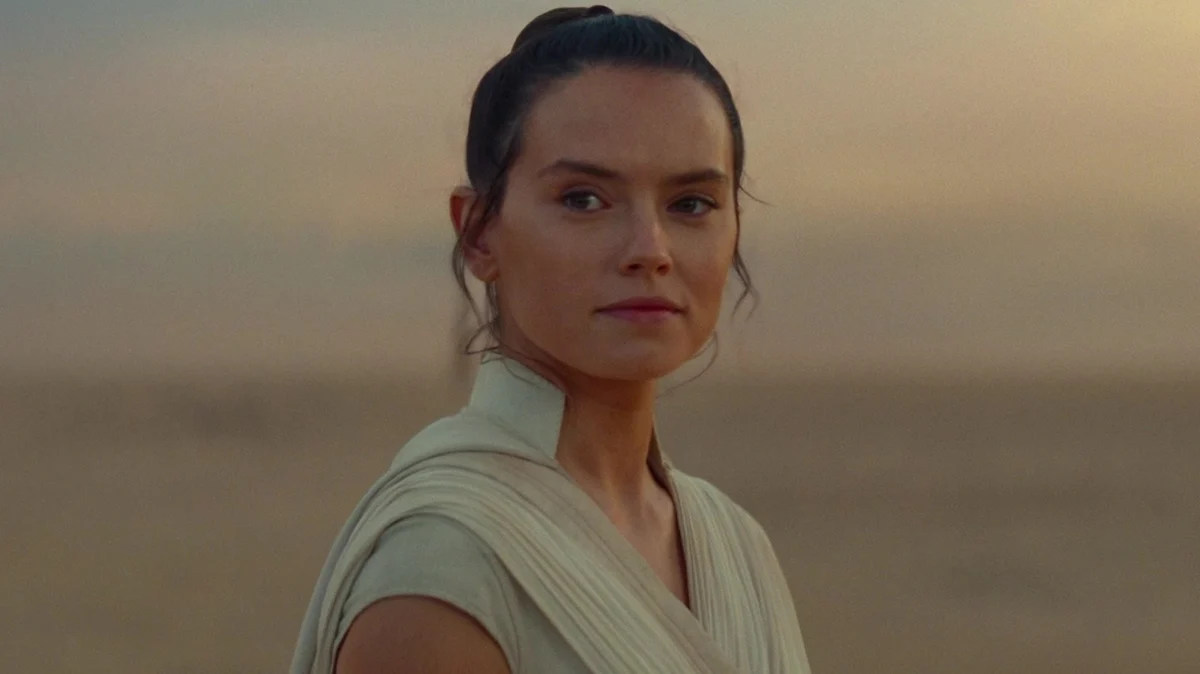
The name "Skywalker" has served as the narrative bedrock of the Star Wars franchise for nearly half a century. From the moisture farms of Tatooine to the throne room of the Death Star, the surname has been synonymous with the cosmic struggle between light and dark. However, few moments in the history of the "galaxy far, far away" have ignited as much fervent debate as the closing scene of 2019’s Star Wars: The Rise of Skywalker, in which the protagonist Rey—revealed to be a Palpatine by blood—claims the name Skywalker as her own.
For years, fans have parsed the thematic and narrative implications of this choice. Was it a rejection of her biological heritage, a tribute to her mentors, or a corporate branding exercise? New insights from a recently updated canonical text, Star Wars: The Secrets of the Jedi: The Chronicles of Luke Skywalker, have finally provided a definitive, in-universe explanation. Through the writings of Rey herself, Lucasfilm is offering a deeper look at the psychological and spiritual motivations behind one of the most controversial identity shifts in cinematic history.
Main Facts: The Canonical Justification for "Rey Skywalker"
The primary source of this newfound clarity is a book written by Marc Sumerak, framed as an in-universe collection of Luke Skywalker’s journals and subsequent additions by Rey. In the updated edition, Rey provides a poignant rationale for her decision to discard the Palpatine name—associated with the ultimate architect of galactic suffering—in favor of the name of her master.
According to the text, Rey’s choice was rooted in a sense of duty and a desire to honor the ultimate sacrifice made by Luke Skywalker on Crait and later during her own training. "I had to continue the fight and finish what he started," Rey writes in the book. "To stop Palpatine from rising again… and to proudly wear my Master’s name while doing so, in honor of his life and his sacrifice."
The explanation emphasizes that the name Skywalker is no longer merely a biological marker but a symbol of the Jedi’s resilience. Rey further notes that while Luke may have passed from the physical plane, his essence lives on through her. "Because, in the end, I am all the Jedi," she asserts, echoing her climactic line from the film. This framing positions the name "Skywalker" as a mantle—a title passed from teacher to student, transcending the traditional boundaries of family lineage.
Chronology: The Evolution of an Identity
To understand the weight of Rey’s decision, one must trace the turbulent trajectory of her character arc across the sequel trilogy, a journey defined by a desperate search for belonging.
The Nobody from Jakku (The Force Awakens)
In 2015’s The Force Awakens, Rey is introduced as a scavenger waiting for a family she barely remembers. At this stage, her identity is defined by absence. Director J.J. Abrams established a mystery box surrounding her parentage, leading to years of fan theories suggesting she was the secret daughter of Luke Skywalker, Obi-Wan Kenobi, or even a reincarnation of Anakin Skywalker.
The Subversion of Heritage (The Last Jedi)
Director Rian Johnson took a different approach in 2017’s The Last Jedi. In a pivotal scene, Kylo Ren reveals that Rey’s parents were "nobodies"—junk traders who sold her for drinking money. This was a radical departure for a franchise built on "destiny" and "royal" bloodlines. It suggested that the Force could choose anyone, regardless of their origin. Rey’s decision to seek out Luke Skywalker was not about finding a father, but about finding a purpose.
The Palpatine Revelation and the Tatooine Choice (The Rise of Skywalker)
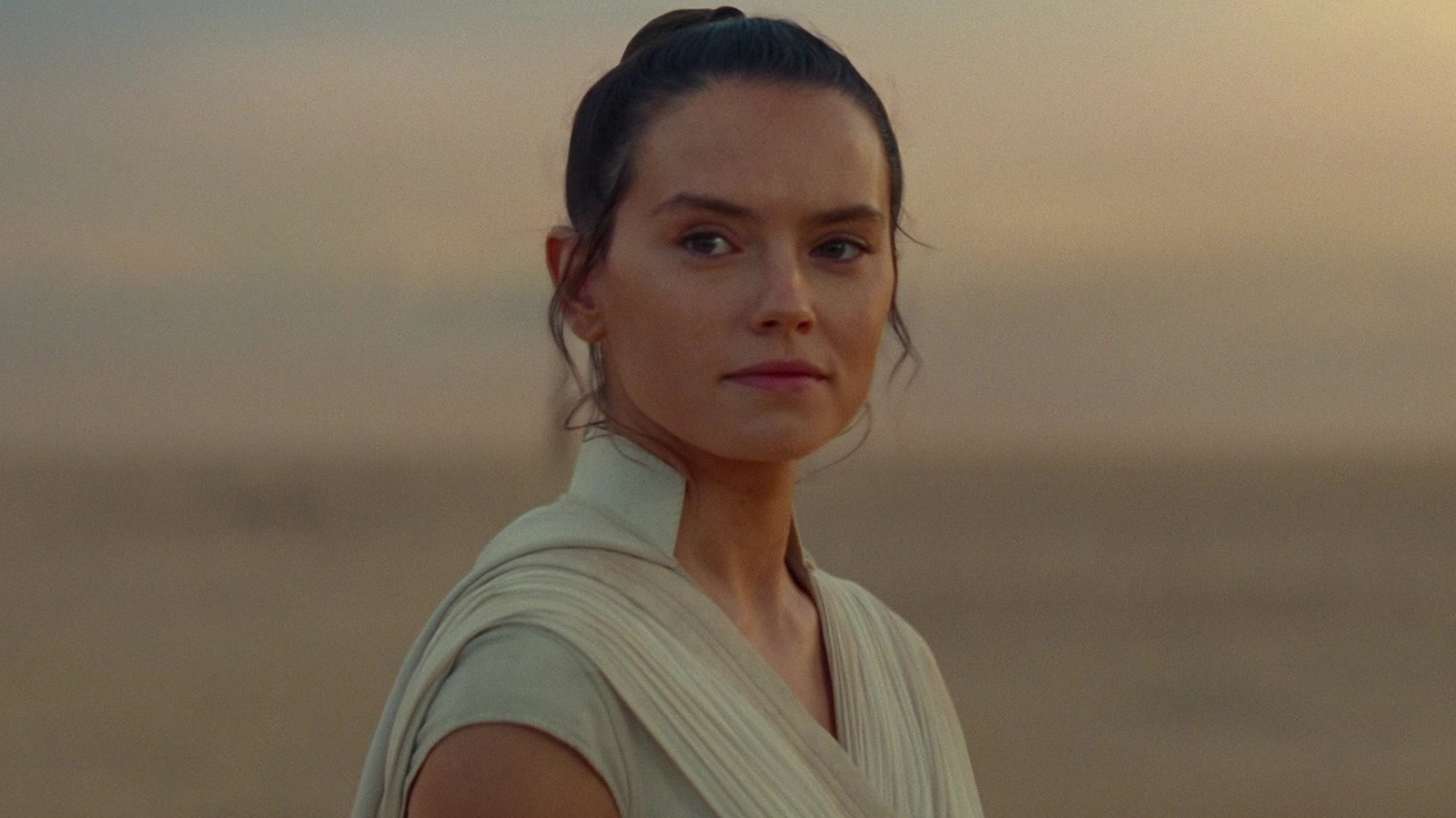
The final installment of the trilogy added a third layer of complexity. Rey was revealed to be the granddaughter of Emperor Palpatine, the ultimate personification of evil in the Star Wars universe. This revelation forced Rey to confront the "darkness" in her DNA. The trilogy concluded on Tatooine, at the abandoned Lars homestead, where Rey buried the lightsabers of Luke and Leia. When an old woman asked for her name, she looked to the Force ghosts of her mentors and replied, "Rey Skywalker."
Supporting Data: Contextualizing the Controversy
The "Rey Skywalker" reveal did not occur in a vacuum; it was the climax of a trilogy that grossed over $4.4 billion globally but faced significant internal and external pressures.
Box Office and Critical Reception
The Rise of Skywalker earned $1.074 billion at the box office, yet it remains one of the most divisive entries in the series, holding a 51% critical score on Rotten Tomatoes. Much of the criticism centered on the perceived "course correction" from the themes of The Last Jedi. For many fans, making Rey a Palpatine felt like a retreat into traditional tropes, and the adoption of the Skywalker name felt like a forced attempt to tie the nine-film saga together.
The "Mary Sue" Discourse
Daisy Ridley, the actress who portrayed Rey, spent much of her tenure defending the character against "Mary Sue" criticisms—a trope used to describe a female character who is perceived as being unrealistically powerful or lacking flaws. The debate over her name became an extension of this cultural friction. Detractors argued she hadn’t "earned" the name, while supporters pointed out that Star Wars has always been a fairy tale about chosen family.
The "Skywalker" as a Metaphor
Evidence suggests that the idea of Rey becoming a Skywalker was not a last-minute addition. In the 2020 book The Art of Star Wars: The Rise of Skywalker, a 2014 quote from Lucasfilm Story Group member Pablo Hidalgo revealed that the concept was being discussed long before the first film was even released.
"I like the idea that she’s going to be our Skywalker, but she’s not a Skywalker," Hidalgo said during a creative meeting. "Then, for our purposes, ‘the Skywalker’ is really a metaphor. It doesn’t have to be something that’s directly connected by blood." This suggests that the creative team always intended for the name to evolve into a symbol of the Jedi Order itself.
Official Responses: Insights from the Creators and Cast
The creative minds behind the sequel trilogy have often spoken about the thematic necessity of Rey’s choice. J.J. Abrams has characterized the decision as a "rejection of fate." In his view, Rey being a Palpatine by blood but a Skywalker by choice is the ultimate expression of free will. It suggests that who you are is defined by your actions and your heart, not by your ancestors.
Daisy Ridley has also addressed the backlash with grace. In various interviews, she has emphasized that Rey’s journey is about "finding home." For a character who spent her entire life alone on a desert planet, the name Skywalker represents the first time she has truly belonged to something greater than herself. Ridley has noted that the emotional resonance of the scene on Tatooine was intended to show Rey finally finding peace with her past.
Furthermore, Lucasfilm’s decision to release The Secrets of the Jedi serves as an official "patch" to the narrative. By providing Rey’s internal monologue, the studio is acknowledging that the film’s ending required more emotional scaffolding to fully land with the audience.
Implications: The Future of the New Jedi Order
The clarification of Rey’s name is not just a retrospective fix; it has massive implications for the future of the Star Wars franchise. At the 2023 Star Wars Celebration in London, Lucasfilm President Kathleen Kennedy announced that Daisy Ridley would return for a new film directed by Sharmeen Obaid-Chinoy.
The New Jedi Order
The upcoming film will be set 15 years after the events of The Rise of Skywalker and will follow Rey as she attempts to rebuild the Jedi Order. Because she carries the name Skywalker, the new Order will likely be built on the foundations of Luke’s teachings but filtered through Rey’s unique perspective as someone who rejected the Dark Side.
A New Title for the Jedi?
There has been persistent speculation among the fandom that "Skywalker" could eventually replace "Jedi" as the name for light-side Force users. If Rey views the name as a "Master’s name" and a "symbol of sacrifice," she may train her students to be "Skywalkers" rather than "Jedi," effectively ending the cycle of the old, flawed Order and starting something entirely new.
The End of the Bloodline Obsession
By cementing Rey as a Skywalker through choice, Lucasfilm is signaling a shift away from the "Great Houses" style of storytelling that dominated the first six films. This allows the franchise to expand its scope, telling stories of Force users from all corners of the galaxy who can aspire to the "Skywalker" ideal without needing a specific DNA sequence.
In conclusion, while the debate over Rey Skywalker may never fully subside, the new canonical evidence provides a clear window into the character’s soul. Rey did not take the name to steal a legacy; she took it to protect one. In the eyes of Lucasfilm, the Skywalker saga hasn’t ended—it has simply evolved from a family tree into a galactic philosophy.

Leave a Comment