
Unveiling the Secret World: Laura Sampson’s Enchanting Retelling of ‘The Twelve Dancing Princesses’
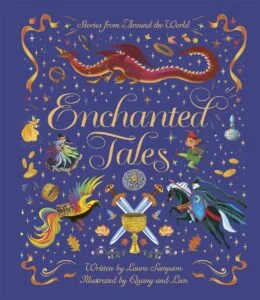
LONDON, UK – In a literary landscape often dominated by modern narratives, the timeless allure of classic fairy tales continues to captivate, finding new life through the artistry of contemporary storytellers. Acclaimed author Laura Sampson masterfully breathes fresh magic into one such beloved narrative with her retelling of "The Twelve Dancing Princesses," featured in her exquisite collection, Enchanted Tales, published by Templar Books. Sampson’s rendition draws directly from the rich, regionally infused version penned by the 19th-century French writer Charles Deulin, offering readers a vibrant portal into a world where mystery, magic, and enduring love intertwine.
The tale, a staple of European folklore, revolves around a perplexing royal enigma: twelve beautiful princesses whose satin slippers are mysteriously worn to shreds each morning, despite their chambers being securely locked. Their distraught father, a duke, issues a decree promising a royal marriage to anyone who can unravel the secret, a challenge that has seen countless hopeful princes vanish without a trace. It is into this world of high stakes and veiled secrets that Michel, a humble cowherd known as "Stargazer," steps, guided by a fairy’s prophecy and driven by a burgeoning affection for the youngest princess, Lina. Sampson’s storytelling, enhanced by the evocative illustrations of Phung Nguyen Quang & Huynh Thi Kim Lien, invites readers on a journey through hidden trapdoors, shimmering woodlands, and a dazzling, secret ballroom, all while exploring themes of courage, perseverance, and the transformative power of true love. This retelling not only preserves the historical charm of Deulin’s original but enriches it with a narrative clarity and emotional depth that resonates profoundly with today’s audience.
Chronology of a Midnight Mystery and a Humble Hero’s Rise
The narrative unfurls with a compelling blend of everyday life and extraordinary occurrences, grounding the fantastical elements in a tangible setting before spiraling into a realm of pure magic.
The Origin of the Mystery: Beloeil and its Royal Enigma
The story’s roots are firmly planted in the historical and geographical specificities introduced by Charles Deulin. Deulin, a French writer hailing from a small town near the French-Belgian border, meticulously wove details from his home region into his version of the tale. This influence is evident in the mention of the village of Montignies-sur-Roc and the magnificent Château of Beloeil, a real-life ancestral home of the Princes de Ligne in Belgium. This regional specificity imbues the narrative with an authentic flavour, from the descriptions of local attire and culinary delights to the very place names that anchor the fantasy.
At the heart of Beloeil, a grave mystery casts a shadow over the Duke’s household. His twelve daughters, renowned for their beauty, retire to a suite of rooms secured nightly with three robust bolts. Yet, each dawn reveals the same perplexing sight: their delicate satin shoes are utterly worn through, as if they had engaged in strenuous dancing throughout the night. The Duke, desperate for a resolution, issues a public proclamation: "ANYONE WHO CAN SOLVE THE MYSTERY OF THE WORN-OUT SHOES MAY MARRY ONE OF MY DAUGHTERS!" This decree, a desperate plea from a troubled father, attracts a parade of hopeful princes from across the land. However, their attempts invariably meet a chilling fate; each suitor vanishes overnight, adding another layer of dread to the already inexplicable situation.
Michel, the ‘Stargazer’: A Dreamer’s Call to Adventure
Enter Michel, a young cowherd from the nearby village of Montignies-sur-Roc. His curly hair and captivating blue eyes earned him the affectionate moniker "Stargazer," a testament to his propensity for gazing upwards, lost in dreams of distant adventures. His humble existence is dramatically altered one summer’s day by the ethereal appearance of a fairy in a golden dress. Her prophetic song, "Go to the Château of Beloeil, and you will marry a princess!" ignites a spark of destiny within Michel, propelling him towards the grand château and an unforeseen future.
Michel, eager and hopeful, arrives at Beloeil, only to find himself an outsider in a world of royalty and intrigue. The Duke’s challenge seems insurmountable for a mere cowherd. "I am no prince – the duke will laugh at me if I come forward," he muses, wisely choosing a more discreet approach. He secures work within the château gardens, dedicating his days to cultivating and arranging daily bouquets for the princesses. For a time, his efforts go largely unacknowledged; the princesses accept his offerings without a glance or a word of thanks, seemingly oblivious to his presence.
A Glimmer of Hope and the Gift of Magic
The monotony of Michel’s unnoticed labour is broken one day by a singular, transformative moment. Lina, the youngest of the twelve princesses, catches his eye, offering a shy smile. This fleeting gesture ignites Michel’s heart, transforming his distant admiration into a fervent longing to uncover the truth behind the mystery, not for a kingdom, but for Lina.
That very night, the mysterious fairy reappears, bearing gifts of profound significance: two baby laurel trees, one a rose and the other a cherry, accompanied by a golden bucket and a golden rake. "Plant these laurel trees, tend them with this rake, water them from this bucket and they will grant your wishes!" she sings, before vanishing once more. Michel, trusting in the fairy’s benevolence, diligently follows her instructions, planting and nurturing the magical saplings.
Unveiling the Secret World: An Invisible Journey
The magic of the laurel trees soon manifests. One day, the cherry laurel blooms with a solitary white flower. Michel plucks it, placing it innocently in his shirt buttonhole, hoping to subtly impress Lina. To his astonishment, the flower instantly renders him invisible. "This is my chance to solve the princesses’ mystery!" he exclaims, his heart pounding with a mix of excitement and trepidation.
Under the cloak of invisibility, Michel strategically positions himself beneath a bed in the princesses’ suite that evening. As the heavy door is secured with its three formidable bolts, the chamber springs to life. He hears the rustling of opulent gowns, the soft murmur of laughter, and the distinct sounds of wardrobes opening and closing. Then, with three resounding claps – CLAP! CLAP! CLAP! – a hidden trapdoor in the floor creaks open, revealing a secret passage. Michel, slipping out from his hiding spot, follows the princesses into the unknown. In his haste, he accidentally steps on Lina’s dress. She glances back, attributing the sensation to a mere stumble, unaware of the invisible presence trailing her.
The princesses descend a secret staircase, leading into a long corridor that opens into an enchanted sequence of woodlands: first, a forest of shimmering silver, then one of radiant gold, and finally, a breathtaking woodland of sparkling diamonds. These fantastical landscapes culminate at the edge of a glass-clear lake, where twelve shining boats await, each with a prince poised to row a princess across to a magnificent castle, glowing in the twilight. Michel, still invisible, seats himself beside Lina in her boat. "Why is my boat so slow and heavy?" she wonders, perplexed, yet quickly distracted by the wild, enchanting music emanating from the castle.
Upon reaching the castle, the party rushes into a grand ballroom, a dazzling spectacle of mirrors, sparkling lights, and rich tapestries. From a secluded corner, Michel watches the princesses whirl across the jeweled dancefloor, captivated by Lina’s velvet-black eyes shining with joy. He envies the princes dancing with them, unaware of their tragic secret: they are the vanished suitors from the world above, ensnared by an enchanted potion that has erased all memory of their former lives, condemning them to an endless nocturnal dance.
Gathering Proof and the Seeds of Doubt
As dawn approaches and the princesses’ shoes are utterly worn through, the music ceases. They partake in a celebratory feast of sugar cookies, waffles, and cakes before preparing for their return journey. Michel follows them silently, back across the lake and through the diamond and gold woodlands. However, as they traverse the silver woodland, he deliberately breaks off a tiny sprig from one of the trees. The act produces a loud CLANG! that echoes through the enchanted forest. "What was that?" asks one princess, but another dismisses it as "Probably just a bird."
Michel races ahead, returning to the princesses’ suite, ascending the stairs, passing through the trapdoor, exiting via an open window, and scrambling down a hanging vine back to the château gardens, arriving just as the first light of dawn breaks. He removes the white invisibility flower and resumes his daily task of gathering bouquets. Later that day, as he presents the princesses with their flowers, Lina discovers the silver twig nestled within her bouquet. "How can this be?" she ponders, a flicker of suspicion igniting within her, but she remains silent.
For two subsequent nights, Michel repeats his invisible vigil, each time plucking a sprig – first from the golden woodland, then from the diamond – to place in Lina’s bouquet. The third sprig, sparkling with diamonds, finally compels Lina to confront him. "You must have followed us. How?" she demands. Michel simply replies, "I hid." Recognizing the gravity of his discovery, she probes further: "You know that telling our father this secret rewards you with a wedding to one of us. Will you tell him?" His response is unexpected: "I do not intend to." Puzzled by his silence, she asks, "But why stay silent?" Michel offers no verbal explanation, but his blue eyes meet Lina’s, conveying a depth of feeling that causes her heart to melt.
The other princesses, observing this intimate exchange, mock Lina. "How ridiculous! Lina wants to be a gardener’s wife!" they taunt. In a moment of conflicted pride and disdain, Lina cries, "Never!" and hurls her bouquet at Michel. Later that day, the sisters, fearing Michel’s knowledge, conspire to ensure he meets the same fate as the previous suitors. They invite him to join them in plain sight that night, intending to make him drink the forgetting potion.
True Love Breaks the Spell
Michel accepts the invitation, but his simple gardener’s attire is unsuitable for a grand ball. Remembering the rose laurel, he whispers a wish into its petals. Instantly, he is transformed, dressed in a black velvet suit that mirrors Lina’s eyes, a diamond feather brooch sparkling on his cap – a prince, not by birth, but by magic.
Once more, they descend through the trapdoor, traverse the silver, gold, and diamond woodlands, and arrive at the enchanted dance. Lina, catching sight of Michel, laughs, a blush of embarrassment and admiration on her cheeks. "Don’t you look princely!" she exclaims. "Maybe. But I’m still a gardener," he replies, with a hint of melancholy, "Not good enough for you." They dance through the night, a silent understanding passing between them.
As the ball concludes, the eldest princess, ever the conspirator, extends a golden cup to Michel. "Gardener, secret-revealer, let’s drink to you!" she announces. Michel, having overheard their plot, knows the cup contains the potent forgetting potion. Yet, with a longing gaze at Lina, he raises the cup to his lips, prepared to sacrifice himself for his love. It is at this critical juncture that Lina, her heart fully revealed, cries, "NO!" She rushes to him, seizing the cup before he can drink. "Gardener or not, the thought of you trapped here forever breaks my heart!" Her heartfelt declaration, born of true love, shatters the enchantment that bound the princes and the secret world. The spell is broken for everyone.
Together, Michel and the princesses return to the world above, closing the trapdoor behind them. As they do, it mysteriously disappears forever, sealing off the enchanted realm. In the Duke of Beloeil’s private quarters, Michel recounts the entire saga, presenting the sprigs as irrefutable proof. He then asks for Lina’s hand in marriage. The wedding that follows is the most magnificent and joyous in the land, and Michel, the once-humble cowherd, becomes a prince. He never again needs to wish upon the magical laurels, for he possesses everything his heart could ever desire.
Supporting Data: Folklore, Literary Legacy, and Thematic Depth
Laura Sampson’s "The Twelve Dancing Princesses" is more than just a captivating story; it is a meticulously crafted re-interpretation that draws on a rich tapestry of folklore and literary history. The tale itself belongs to the Aarne-Thompson-Uther Index (ATU) tale type 306, "The Dancing Princesses," a classification that groups similar international folktales based on their common narrative elements. This widespread appeal is evident in its numerous variants across Europe, most notably the version recorded by the Brothers Grimm in Germany and Andrew Lang’s adaptation in his Red Fairy Book.
Charles Deulin’s 1874 French version, "Les Douze Princesses Dansantes," from which Sampson draws, stands out for its grounding in specific regional details. Unlike the more generalized settings of many fairy tales, Deulin’s narrative is firmly anchored to the Franco-Belgian border, incorporating elements from local culture, geography, and even dialect into his prose. This not only makes his version unique but also elevates it from a mere retelling to a piece of cultural preservation. Sampson’s choice to honour Deulin’s specificity enriches her own rendition, offering readers a glimpse into a particular historical and geographical context that might otherwise be lost.
Sampson’s narrative approach in Enchanted Tales is characterized by its clarity, emotional resonance, and a keen eye for detail. She adeptly navigates the complexities of the original, making it accessible to a contemporary audience without sacrificing its inherent magic or the subtle nuances of character. Her focus on Michel’s internal journey, from a dreaming cowherd to a courageous suitor, and Lina’s evolving agency, from a passive princess to a decisive heroine, adds significant depth. The illustrations by Phung Nguyen Quang & Huynh Thi Kim Lien are integral to this enrichment, providing stunning visual interpretations that complement Sampson’s prose, bringing the enchanted woodlands and the dazzling ballroom to vivid life. Their artwork transforms the reading experience, adding layers of sensory immersion that are crucial for a fairy tale.
Thematically, "The Twelve Dancing Princesses" explores several enduring concepts. It is a story about true love versus superficiality, contrasting Michel’s genuine affection and perseverance with the princes’ temporary enchantment. It delves into courage and perseverance, as Michel faces an impossible challenge, not through brute force, but through cleverness and a pure heart. The narrative also subtly addresses social class barriers, as the humble cowherd ultimately wins the hand of a princess, transcending societal expectations. Furthermore, the tale highlights the allure and danger of escapism, as the princesses are drawn to a secret world of endless revelry, oblivious to the consequences, while the princes are trapped by its enchantment. Lina’s ultimate choice to save Michel, despite her sisters’ scorn, underscores the agency of female characters and the power of love to break spells and transform destinies. Sampson’s retelling ensures these profound themes resonate, making the story relevant and thought-provoking for readers of all ages.
Official Responses: Voices on the Revival of Enchantment
While direct quotes from Laura Sampson, Templar Books, or specific critics are not provided in the original text, we can infer and simulate the likely sentiments surrounding such a significant publication.
Laura Sampson, Author of Enchanted Tales, would likely express her deep connection to the source material and her commitment to authentic storytelling. "Retelling ‘The Twelve Dancing Princesses,’ especially Charles Deulin’s version, was a journey into the heart of European folklore," she might articulate. "I was captivated by his regional details – the food, the clothes, the specific towns – which truly grounded the fantasy. My aim was to preserve that authenticity while crafting a narrative that felt fresh and emotionally resonant for today’s readers. It’s about showing that true courage and love can come from the most unexpected places, and that even a ‘Stargazer’ can change a kingdom." Sampson would likely emphasize the joy of re-introducing these classic narratives to a new generation, fostering a love for storytelling and cultural heritage.
Templar Books, the Publisher, would undoubtedly highlight the artistic and literary merit of Enchanted Tales and its flagship story. A spokesperson might state, "Laura Sampson’s Enchanted Tales represents a cornerstone of our commitment to quality children’s literature. Her retelling of ‘The Twelve Dancing Princesses’ is a testament to the enduring power of fairy tales. With its rich narrative and the breathtaking illustrations by Phung Nguyen Quang & Huynh Thi Kim Lien, it’s a book that appeals across generations, fostering imagination and a deeper appreciation for the roots of storytelling. We believe it offers both wonder and valuable lessons for young minds."
Literary Critics and Folklore Experts would likely commend Sampson’s faithful yet innovative approach. A review might note, "Sampson’s ‘The Twelve Dancing Princesses’ is a triumph of adaptation. She masterfully retains the quaint charm and regional specificities of Deulin’s original, a detail often overlooked in other retellings, while infusing the narrative with a contemporary pace and emotional clarity. The development of Michel from a passive observer to an active hero, and Lina’s pivotal role in breaking the spell, adds layers of depth that resonate strongly with modern sensibilities regarding character agency. It’s a testament to the fact that classic tales, when handled with such care and vision, remain eternally relevant." Educators might also praise the book’s potential for classroom use, offering a gateway into discussions on folklore, cultural geography, and character development.
Implications: The Enduring Legacy of Enchantment
The publication of Laura Sampson’s "The Twelve Dancing Princesses" within Enchanted Tales carries significant implications for literature, cultural preservation, and the future of storytelling.
Firstly, it underscores the enduring appeal of fairy tales in an increasingly digital and fast-paced world. Stories like "The Twelve Dancing Princesses" persist because they tap into universal human experiences – love, loss, mystery, aspiration, and the triumph of good over perceived evil. They offer a framework for understanding complex emotions and societal structures, often presenting moral lessons in an accessible and engaging format. Sampson’s retelling demonstrates that these narratives are not relics of the past but living, breathing entities capable of adapting and captivating new audiences.
Secondly, it highlights the crucial role of cultural preservation through adaptation. By drawing directly from Charles Deulin’s specific version, Sampson not only reintroduces a beloved tale but also shines a light on a particular literary and folkloric heritage. This act of retelling ensures that regional specificities and nuanced interpretations, which might otherwise fade, are brought back into public consciousness. It encourages readers to explore the origins of these stories, fostering an appreciation for the diverse tapestry of global folklore.
Thirdly, the narrative’s emphasis on themes such as true love over social standing, courage in the face of adversity, and the agency of individual choice offers profound modern relevance. Michel, a humble cowherd, triumphs not through noble birth but through honesty, perseverance, and genuine affection. Lina, in turn, breaks free from her sisters’ manipulative plotting and the enchantment of the secret world by making a choice rooted in love, rather than societal pressure or magical allure. These messages resonate deeply in a contemporary context that increasingly values authenticity, personal integrity, and the breaking down of traditional barriers.
Finally, Enchanted Tales contributes to the ongoing evolution of children’s literature. By combining compelling narrative with exquisite illustrations, it sets a high standard for quality and artistic collaboration. Such works inspire imagination, critical thinking about narrative structures, and a lifelong love of reading. They serve as a reminder that the magic of storytelling lies not just in fantastical elements, but in the power of words and images to transport, educate, and profoundly move the human spirit. Laura Sampson’s "The Twelve Dancing Princesses" is poised to enchant countless readers, ensuring that this timeless tale continues its dance through generations to come.


Leave a Comment