The Fourteenth Amendment to the United States Constitution stands as a monumental achievement, a foundational pillar erected during one of the nation’s most tumultuous periods. Ratified in 1868 amidst the profound societal upheaval of the Reconstruction Era (circa 1863-1877), it fundamentally reshaped the landscape of American citizenship and civil rights. Its core tenets—defining American citizenship as belonging to "all persons born or naturalized in the United States," establishing the principle of ‘birthright citizenship,’ and guaranteeing "equal protection of the laws" and "due process" to all citizens—were revolutionary.
Conceived primarily to secure the hard-won liberties of the millions of formerly enslaved people, the Fourteenth Amendment extended federal protection against state infringements on individual rights, a radical departure from the pre-Civil War constitutional framework. Far from being a relic of the past, this amendment remains exceptionally relevant in contemporary US political discourse and is, by a significant margin, one of the most frequently litigated parts of the US Constitution. Its broad language and expansive principles have served as the bedrock for landmark Supreme Court decisions, impacting everything from racial equality and voting rights to personal autonomy and civil liberties, solidifying its status as an indispensable guarantor of individual freedom in the United States.
Reconstructing a Nation: From Emancipation to Uncertainty
The thunderous conclusion of the American Civil War in 1865 heralded not just the end of a bloody conflict but also the abolition of slavery, a practice that had stained the nation’s conscience for centuries. While President Abraham Lincoln’s Emancipation Proclamation of 1863 had freed enslaved people in the rebellious Confederate states, it was the Thirteenth Amendment, ratified in December 1865, that truly abolished slavery nationwide, save for its use as punishment for a crime. Millions of individuals, once chattel, were now liberated, theoretically free to forge their own destinies. Yet, the promise of freedom was fragile, overshadowed by a profound national dilemma: what would be the precise status of these newly freed Black Americans within a society that had long denied their humanity? Would they be recognized as full citizens, endowed with the same rights and privileges as their white counterparts, including the fundamental right to vote?
President Lincoln, a visionary leader, understood that true national healing could only begin once these questions were decisively addressed. In early 1865, he, along with the staunchly anti-slavery Republican Party, established the Freedmen’s Bureau. This federal agency was tasked with the immense challenge of assisting formerly enslaved people in their transition to freedom. Bureau agents provided vital supplies, facilitated access to education, and even drew up ambitious plans to redistribute confiscated Confederate farmlands to freedpeople – a policy that famously gave rise to the enduring slogan "forty acres and a mule." Lincoln’s commitment extended to political rights; on April 11, 1865, shortly after the Confederate surrender at Appomattox, he publicly advocated for the enfranchisement of Black Americans, particularly those who had bravely served in the Union Army. His promising vision, however, was tragically cut short just days later by an assassin’s bullet, plunging the nation into renewed uncertainty.
Presidential Reconstruction Under Andrew Johnson: A Retreat from Progress
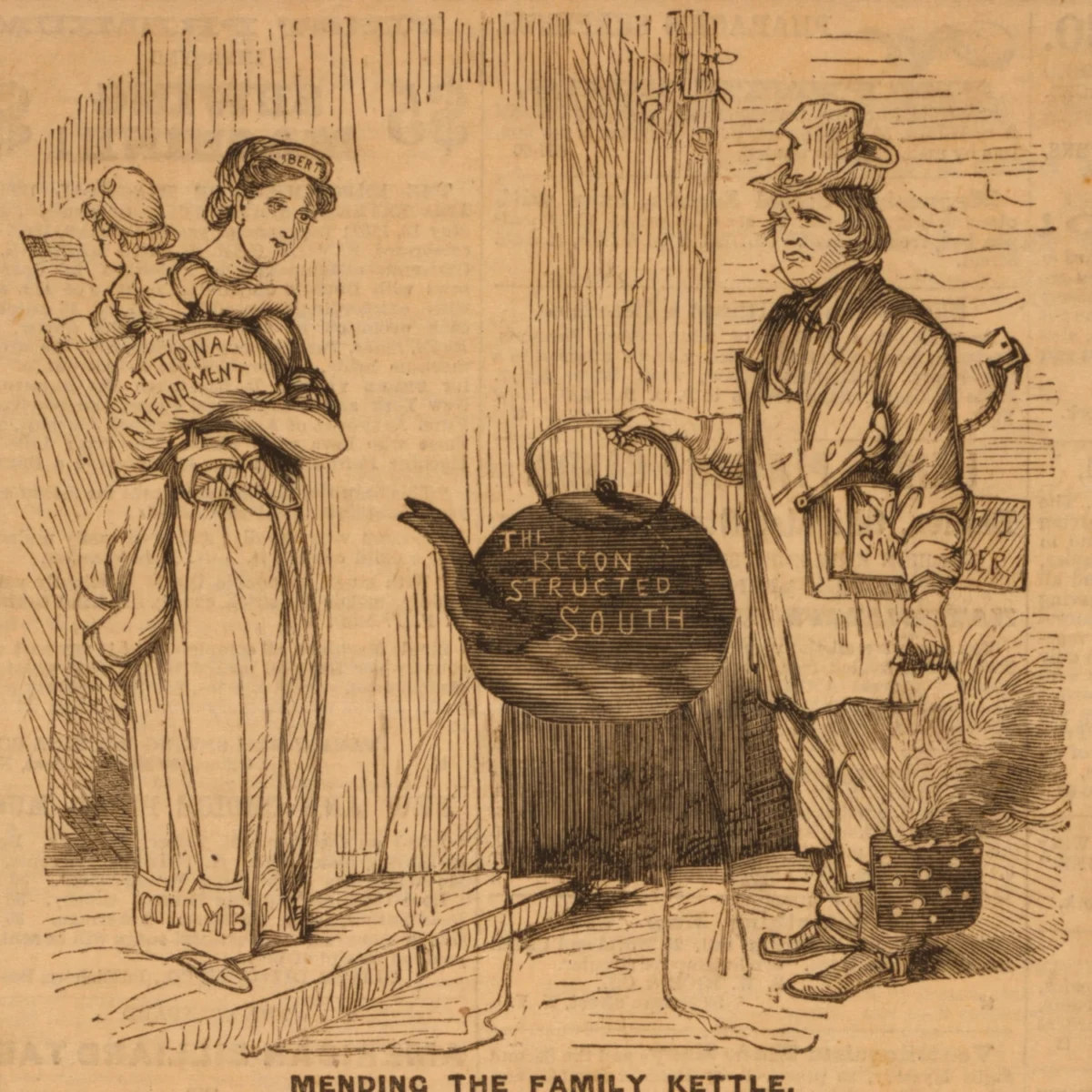
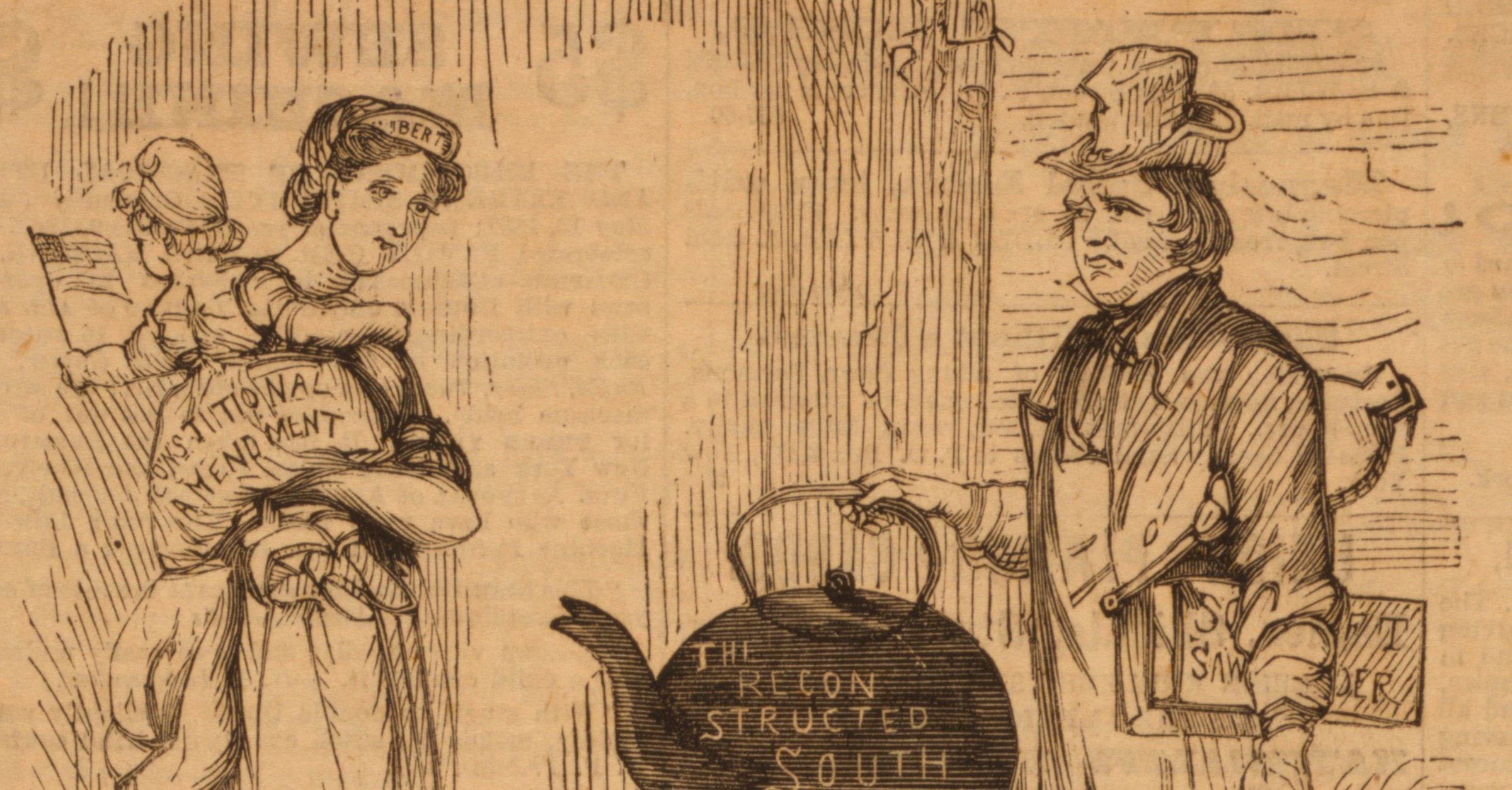
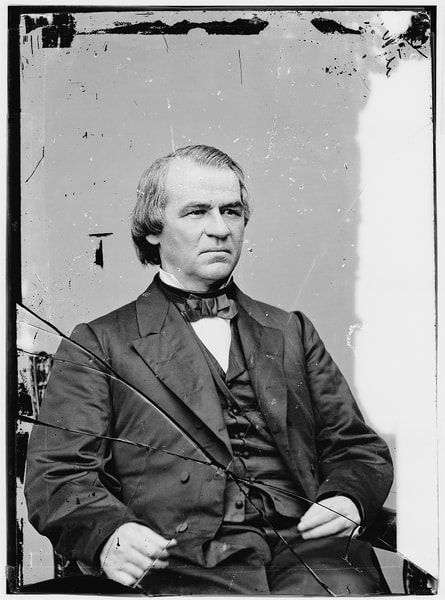
Lincoln’s successor, Vice President Andrew Johnson, a Democrat from Tennessee with deep Southern roots, possessed neither his predecessor’s political acumen nor his dedication to securing Black Americans’ rights. Johnson’s primary objective was to swiftly conclude Reconstruction, a process he viewed as burdensome and punitive to the South. To this end, he implemented a lenient policy of amnesty for most ex-Confederates, restoring their property and political influence. This move effectively undermined the Freedmen’s Bureau’s plans for land redistribution, snatching away a crucial pathway to economic independence for freedpeople. Johnson’s antagonism towards the bureau was evident in his vetoes of the Freedmen’s Bureau Bills, legislative efforts designed to expand and strengthen the agency’s vital work across the South.
This phase, dubbed ‘Presidential Reconstruction,’ emboldened the defeated Southern states. Emboldened, they swiftly returned many of their pre-war leaders to positions of power and enacted a series of discriminatory legislative policies known as the ‘Black Codes.’ These codes, reminiscent of the old slave codes, severely restricted the freedoms and civil liberties of Black Americans, effectively attempting to re-establish a system of racial hierarchy and forced labor. When the Republican-controlled Congress reconvened, its members, particularly the ardent advocates for Union and Black liberties known as Radical Republicans, were aghast. They perceived Johnson’s policies as a betrayal of the Union’s wartime sacrifices and a dangerous resurgence of the very slave-holding aristocracy they had fought to dismantle, jeopardizing the very essence of Reconstruction.
The Congressional Crucible: Debates and Drafting of a Landmark Amendment
The Republican-controlled Congress, reconvening in late 1865, found itself on a collision course with President Johnson and the resurgent Southern power. Their immediate response was to refuse to seat newly elected Southern congressmen, a strategic move to buy time and prevent the reversal of hard-won Civil War gains. This period saw an explosion of legislative activity, with no fewer than 70 constitutional amendments introduced in January 1866 alone, each grappling with the intricate and contentious issues of Black liberties and the future of Reconstruction.
A central problem was the issue of congressional representation. Before the war, Southern states counted three-fifths of their enslaved population for representational purposes, artificially inflating their political power despite denying these individuals any voice. With slavery abolished, the South could now count its entire Black population, yet largely continued to deny them the right to vote. This meant Southern states would gain even greater influence in Congress and the Electoral College, disproportionate to their actual voting citizenry. A Republican congressman starkly warned that without intervention, "unrepentant…traitors" would seize control of the federal government, intent on reversing the course of Reconstruction (Foner, 252).
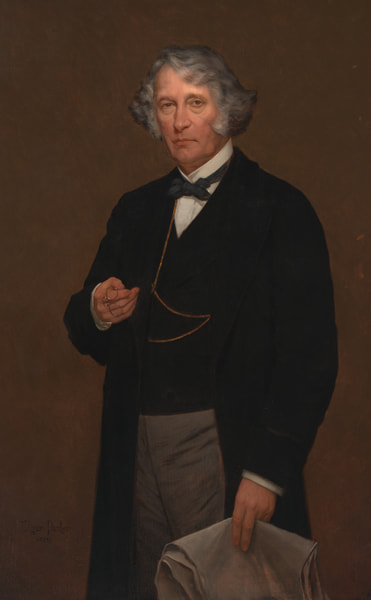
In response, the Joint Committee on Reconstruction proposed an amendment in late January 1866 that aimed to penalize states that disenfranchised male citizens by proportionately reducing their congressional representation. While it passed the House of Representatives, it stalled in the Senate. Opposition came not only from Democrats but also from some Radical Republicans who felt it didn’t go far enough. Senator Charles Sumner of Massachusetts, a leading Radical voice and fervent abolitionist, rejected the amendment, arguing it offered insufficient protection for Black voters. He steadfastly refused to compromise on moral principles, echoing the sentiments of revered abolitionists like Frederick Douglass. House Radical Republican leader Thaddeus Stevens, while acknowledging the amendment’s imperfections, chastised Sumner and his allies, asserting that political progress required compromise among "men and not among angels" (Sinha, 91). Nevertheless, without the necessary two-thirds majority in the Senate, the amendment failed, forcing Republicans back to the drawing board. The political atmosphere was fraught with tension, as one Republican congressman lamented, "The President has gone over to the enemy, and our friends are all split up among themselves" (Foner, 253). With crucial midterm elections looming, the imperative to craft an agreeable and comprehensive amendment became paramount.
Anatomy of a Transformative Document: A Section-by-Section Analysis
The monumental task of drafting the comprehensive amendment fell largely to Ohio Congressman John A. Bingham, already renowned for prosecuting the conspirators involved in Abraham Lincoln’s assassination. Bingham was acutely aware of the potential for states to deny citizenship to Black Americans and strip them of the fundamental liberties enshrined in the Bill of Rights. His vision, deeply rooted in the principle of universal rights, would shape the future of American jurisprudence.
Section 1: The cornerstone of the amendment, this section fundamentally redefined American citizenship. Bingham and his collaborators preempted state-level discrimination by declaring, "All persons born or naturalized in the United States, and subject to the jurisdiction thereof, are citizens of the United States and of the State wherein they reside." This crucial clause enshrined ‘birthright citizenship,’ ensuring that all individuals born on American soil, regardless of their parents’ status, were full citizens. This provision, revolutionary in its scope, opened the door for children of immigrants to receive the full rights and privileges of citizenship, a principle still debated today.
Furthermore, Section 1 guaranteed federal protection against state actions that would abridge citizens’ rights, asserting that "No State shall make or enforce any law which shall abridge the privileges or immunities of citizens of the United States; nor shall any State deprive any person of life, liberty, or property, without due process of law; nor deny to any person within its jurisdiction the equal protection of the laws." The "Privileges or Immunities Clause" was initially intended to be a broad guarantor of fundamental rights, though its interpretation was unfortunately narrowed by the Supreme Court in the Slaughterhouse Cases (1873). However, the "Due Process Clause" and the "Equal Protection Clause" have proven immensely powerful. Scholars like Manisha Sinha highlight Bingham’s deliberate choice of the word "person" instead of "male" when referring to those entitled to due process and equal protection. This prescient linguistic choice laid the groundwork for future generations of marginalized groups, including women and LGBTQ+ individuals, to successfully claim equality before the law, extending the amendment’s reach far beyond its immediate post-Civil War context.
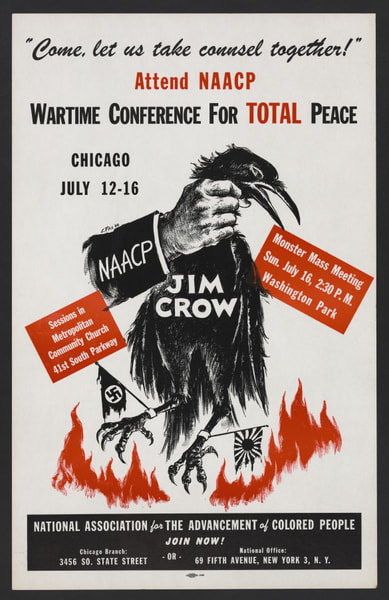
Section 2: This section addressed the vexing issue of political representation. It abolished the contentious Three-Fifths Clause, stipulating that "Representatives shall be apportioned among the several States according to their respective numbers, counting the whole number of persons in each State, excluding Indians not taxed," referring to Native Americans confined to reservations. Crucially, it introduced a penalty: if any state denied or restricted the right to vote for any group of adult male citizens, that state’s congressional representation would be proportionally reduced. While a powerful deterrent on paper, this penalty was rarely invoked, particularly during the Jim Crow era when Southern states brazenly disenfranchised Black men without significant federal repercussions.
Section 3: Designed to prevent former Confederate leaders from regaining political power, this section decreed that any person who had previously sworn an oath to support the Constitution but then engaged in rebellion against the United States would be barred from holding federal or state office. However, Congress retained the power to override this restriction with a two-thirds vote, allowing for individual pardons. While intended as a deterrent, critics like Sinha noted that "Never have traitors felt the hand of law so lightly" (Sinha, 93), indicating that the punishment for ex-Confederate leaders was often less severe than many desired.
Section 4: This section served to solidify the Union’s financial standing and repudiate the Confederacy’s legitimacy. It upheld the validity of the US national debt, including debts incurred for pensions and bounties related to suppressing the rebellion. Conversely, it explicitly prohibited the United States or any state from assuming or paying any debt incurred by the Confederacy or compensating for the loss or emancipation of enslaved people, declaring all such claims "illegal and void."
Section 5: The final section provided Congress with the vital authority to enforce the amendment’s provisions "by appropriate legislation." This enforcement clause was crucial, empowering the federal government to actively protect the rights guaranteed by the Fourteenth Amendment, a significant expansion of federal power over states.
After extensive debate and refinement, the Fourteenth Amendment was swiftly approved by both houses of Congress on June 13, 1866. Secretary of State William H. Seward then initiated the arduous process of sending it to the states for ratification.
The Full Text of the Fourteenth Amendment
Section 1: All persons born or naturalized in the United States, and subject to the jurisdiction thereof, are citizens of the United States and of the State wherein they reside. No State shall make or enforce any law which shall abridge the privileges or immunities of citizens of the United States; nor shall any State deprive any person of life, liberty, or property, without due process of law; nor deny to any person within its jurisdiction the equal protection of the laws.
Section 2: Representatives shall be apportioned among the several States according to their respective numbers, counting the whole number of persons in each State, excluding Indians not taxed. But when the right to vote at any election for the choice of electors for President and Vice-President of the United States, Representatives in Congress, the Executive and Judicial officers of a State, or the members of the Legislature thereof, is denied to any of the male inhabitants of such State, being twenty-one years of age, and citizens of the United States, or in any way abridged, except for participation in rebellion, or other crime, the basis of representation therein shall be reduced in the proportion which the number of such male citizens shall bear to the whole number of male citizens twenty-one years of age in such State.
Section 3: No person shall be a Senator or Representative in Congress, or elector of President and Vice-President, or hold any office, civil or military, under the United States, or under any State, who, having previously taken an oath, as a member of Congress, or as an officer of the United States, or as a member of any State legislature, or as an executive or judicial officer of any State, to support the Constitution of the United States, shall have engaged in insurrection or rebellion against the same, or given aid or comfort to the enemies thereof. But Congress may by a vote of two-thirds of each House, remove such disability.
Section 4: The validity of the public debt of the United States, authorized by law, including debts incurred for payment of pensions and bounties for services in suppressing insurrection or rebellion, shall not be questioned. But neither the United States nor any State shall assume or pay any debt or obligation incurred in aid of insurrection or rebellion against the United States, or any claim for the loss or emancipation of any slave; but all such debts, obligations and claims shall be held illegal and void.
Section 5: The Congress shall have power to enforce, by appropriate legislation, the provisions of this article.
The Arduous Path to Ratification: Executive Opposition and Radical Resolve
The ratification of the Fourteenth Amendment was far from a foregone conclusion. It represented perhaps the most significant constitutional change since the Bill of Rights and was a crowning achievement of what would become known as ‘Radical Reconstruction.’ However, it faced immediate and fierce opposition from President Andrew Johnson, Democrats, and, predictably, the former Confederate States. Detractors argued that the amendment constituted an unprecedented federal overreach, forcing states to adhere to a national standard of rights and thereby eroding the principle of states’ rights. Congressman Bingham, the amendment’s chief architect, countered this argument, clarifying that it "takes from no State any right…but it imposes a limitation upon the States to correct their abuses of power" (Foner, 259). This debate over federal versus state power would echo through American history.
The former Confederate states, with the notable exception of Tennessee, remained defiant, their state legislatures resolutely refusing to ratify the amendment. The Radical Republicans, however, were not to be deterred. After solidifying their control of Congress in the 1866 midterm elections—a clear public mandate for their approach to Reconstruction—they enacted a series of Reconstruction Acts in 1867. These acts imposed martial law on the Southern states and stipulated that they would not be readmitted into the Union until they formally ratified the Fourteenth Amendment. This legislative strong-arming ultimately broke the Southern states’ resistance. Although some states, like Kentucky, held out for decades, only ratifying the amendment in March 1976, the requisite number of 28 states ratified the Fourteenth Amendment. It was officially adopted into the US Constitution on July 9, 1868, marking not only a pivotal moment in the history of Reconstruction but also a profound transformation in the constitutional framework of the United States.
A Living Document: The Fourteenth Amendment’s Enduring Legacy and Legal Evolution
The Fourteenth Amendment’s ratification was a watershed moment, fundamentally altering the relationship between the federal government, state governments, and individual citizens. Its concepts of ‘birthright citizenship’ and ‘equality before the law’ were deeply embedded into the constitutional fabric, yielding long-lasting and far-reaching consequences throughout American history. Indeed, Section 1, encompassing the Due Process and Equal Protection Clauses, is arguably the most litigated portion of the entire Constitution.
The amendment’s broad language has served as the legal foundation for some of the most transformative US Supreme Court decisions, shaping the nation’s social and political landscape:
Brown v. Board of Education (1954): Utilizing the Equal Protection Clause, this landmark ruling declared state-sponsored racial segregation in public schools unconstitutional, dismantling the "separate but equal" doctrine established by Plessy v. Ferguson (1896).
Loving v. Virginia (1967): Again relying on the Equal Protection Clause, the Court struck down state bans on interracial marriage, asserting that the freedom to marry could not be denied on racial grounds.
Roe v. Wade (1973): This controversial decision, based on a constitutional right to privacy inferred from the Due Process Clause of the Fourteenth Amendment, guaranteed federal protection for access to abortions. Its overturning in Dobbs v. Jackson Women’s Health Organization (2022) highlighted the dynamic and often contentious nature of constitutional interpretation.
Obergefell v. Hodges (2015): The Court ruled that the Due Process Clause and the Equal Protection Clause guarantee the right to marry for same-sex couples, legalizing same-sex marriage nationwide.
Beyond these celebrated cases, the Fourteenth Amendment has been instrumental in the "incorporation doctrine," applying most of the protections of the Bill of Rights to the states, ensuring that individual liberties are safeguarded from both federal and state infringement. It has also been invoked in debates concerning immigrant rights, voting rights, and even the legal status of corporations as "persons" under the law.
From its origins as a response to the injustices of slavery and the challenges of national reunification, the Fourteenth Amendment has evolved into a living document, a testament to the enduring American struggle for equality and justice. Its principles continue to be debated, interpreted, and applied, affirming its irreplaceable role as a cornerstone of American democracy and a testament to the nation’s ongoing pursuit of a more perfect Union.
FOR IMMEDIATE RELEASE London, UK – [Date of Publication] – A groundbreaking new compendium, "Fascinating Folklore," is set to captivate enthusiasts and newcomers alike, offering an unprecede
Mesopotamia, a cradle of civilization, gave birth to a pantheon of deities whose stories shaped the understanding of the universe. Among them, Anu, the primordial sky god, stands as a foundational fig
[City, Date] – Folklore, often relegated to the dusty archives of history or the whimsical realms of fiction, is undergoing a quiet but profound re-evaluation. For many, it conjures images of arcane r