
The Evolution of Cinematic Horror: An In-Depth Analysis of Supermassive Games’ Directive 8020
The landscape of interactive horror is undergoing a seismic shift, led by the pioneers of the "cinematic survival" genre, Supermassive Games. With their latest installment, Directive 8020, the studio is not merely adding another chapter to The Dark Pictures Anthology; they are fundamentally reimagining the mechanics of player agency and narrative consequence. Set against the cold, unforgiving backdrop of deep space, Directive 8020 blends high-stakes science fiction with the visceral dread of body horror, creating an experience that challenges both the player’s reflexes and their moral compass.
Main Facts: A New Frontier for The Dark Pictures
Directive 8020 marks the ambitious commencement of "Season Two" for The Dark Pictures Anthology. Moving away from the terrestrial ghosts and historical curses of previous entries like Little Hope and House of Ashes, this title propels players into the far reaches of the galaxy. The story follows the crew of the spaceship Cassiopeia as they embark on a desperate mission to save humanity.
The primary setting is the exoplanet Tau Ceti f, a world intended to be the cradle for a new human colony. However, the mission quickly devolves into a struggle for survival when the crew encounters a shapeshifting alien entity. The game is built on a foundation of choice-based narrative, but it introduces a revolutionary mechanic known as "Turning Points," which allows players to manipulate the flow of time and the outcome of critical events in ways previously unseen in the genre. Available on platforms including Steam, the game emphasizes high-fidelity visuals and a claustrophobic atmosphere reminiscent of genre-defining classics.
Chronology: From Deep Space Exploration to Biological Nightmare
The narrative arc of Directive 8020 is meticulously paced, designed to transition from clinical scientific exploration to frantic, visceral survival.
The Arrival at Tau Ceti f
The story begins with a sense of clinical optimism. The crew of the Cassiopeia, a team of elite scientists and engineers, arrives at the Tau Ceti system. Their objective is clear: assess the viability of Tau Ceti f as a permanent residence for the thousands of colonists following in their wake. The early stages of the game focus on world-building and character dynamics, establishing the professional and personal tensions that define the crew.

The Breach and First Contact
The atmosphere shifts abruptly when an unidentified alien lifeform—referred to as "The Entity"—infiltrates the ship. This marks the end of the mission’s scientific phase and the beginning of a tactical retreat. Unlike traditional horror antagonists, The Entity does not merely hunt; it mimics. By the time the narrative reaches its middle chapters, the crew can no longer trust their own eyes, as the alien begins to replicate the biology and memories of the ship’s personnel.
The Bio-Mass Escalation
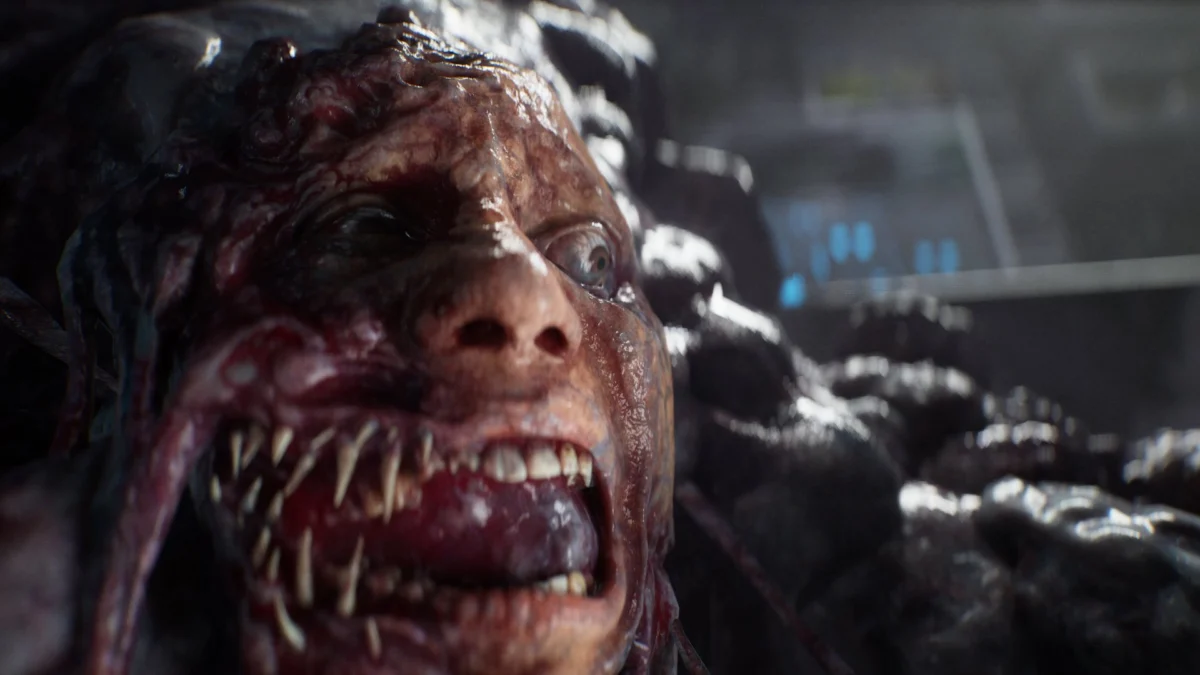
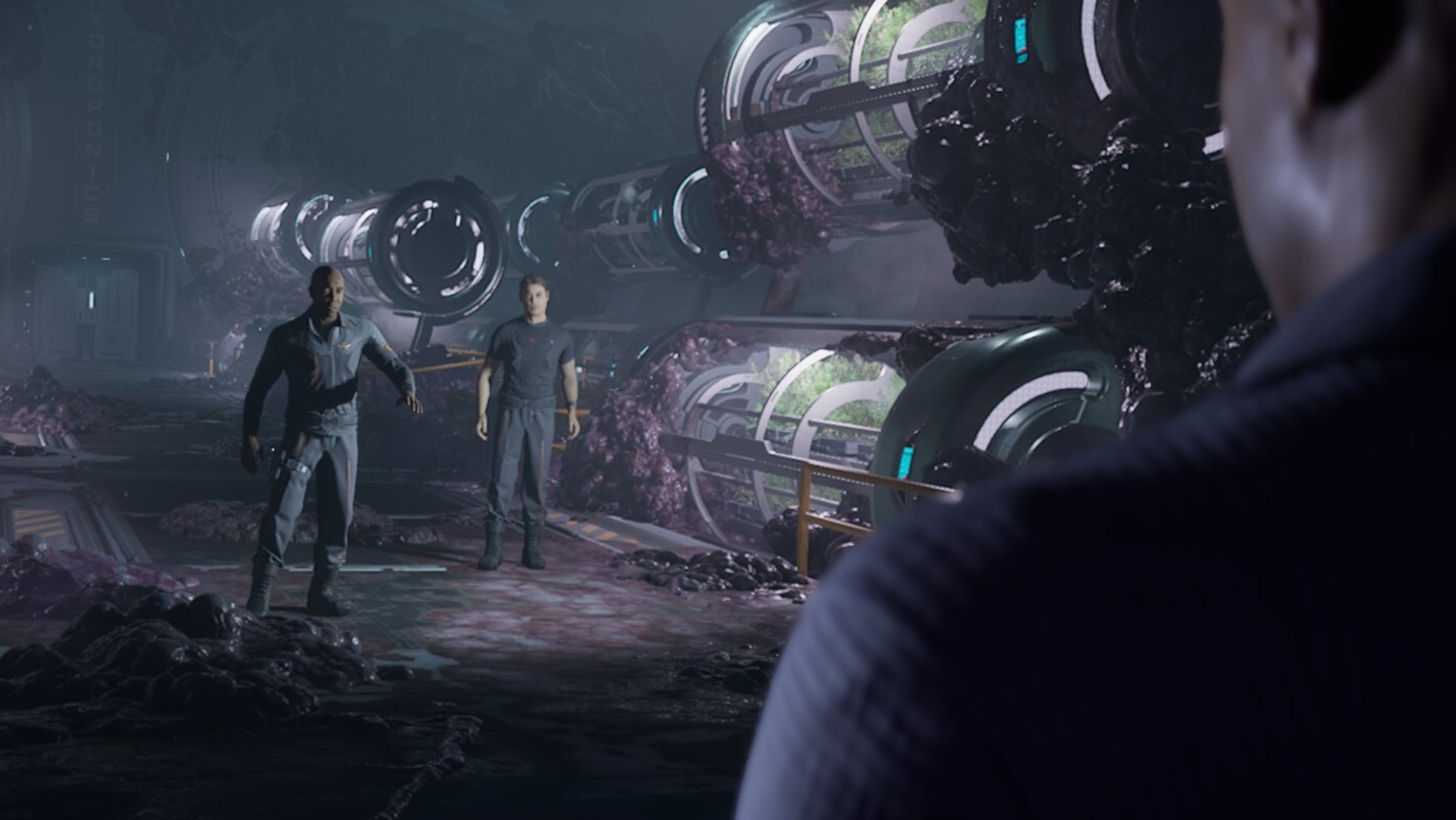
By Episode 5, the Cassiopeia is no longer a sterile vessel of human ingenuity. It has become a living organism. The Entity’s biomass begins to engulf the ship’s corridors, leaving trails of bones, teeth, and sentient biological matter. Players are forced to navigate through a "wretched biomass," where the environment itself is an extension of the predator. This leads to the game’s various climaxes, where the player’s accumulated choices determine who—if anyone—escapes the nightmare.
Supporting Data: The Mechanics of Fear
What distinguishes Directive 8020 from its predecessors is the data-driven depth of its gameplay systems. Supermassive Games has implemented several layers of interactivity that cater to different player temperaments.
The "Turning Points" System
The most significant innovation is the "Turning Points" mechanic. In traditional Supermassive titles, a failed Quick Time Event (QTE) or a poor dialogue choice often led to the permanent death of a character, forcing players to restart the entire game to see a different outcome.
Turning Points functions as a "horror puzzle" layer. It allows players to:

- Redo botched QTEs: Reducing the frustration of "reflex-based" failure.
- Retrace Steps: Players can return to specific decision nodes to observe how different choices manifest in future reactions.
- Unlock Interim Scenes: The game contains a vast web of "interim" content—scenes that only trigger if specific personality traits are balanced or specific arguments are won.
Survivor Mode vs. Standard Play
For purists, Supermassive includes "Survivor Mode." This mode effectively disables the safety nets of Turning Points, delivering a classic, high-stakes experience where every mistake is final. This creates a dual-layered replayability value: the first run is typically a "Survivor" run for maximum tension, while subsequent runs use Turning Points to "solve" the narrative puzzle and unlock all possible endings.
Mortality and Graphic Fidelity
The game features a staggering 44 unique death scenes. This is not merely a cosmetic statistic; it represents the breadth of the branching narrative. The developers have leaned heavily into body horror, with death sequences described as so graphic they challenge the player’s ability to remain looking at the screen. The Entity’s ability to morph and consume its victims allows for a variety of "biological failures" that are rendered with gruesome anatomical detail.
Official Responses: The Developer’s Vision
While the primary source for this analysis is rooted in player experience and initial reviews, the design philosophy of Supermassive Games provides context for Directive 8020‘s direction. In various industry briefings, the studio has emphasized that Season Two of the Anthology is focused on "technological and mechanical evolution."
The studio’s creative leadership has often spoken about the "uncanny valley" of horror—the point where something looks human but is fundamentally wrong. Directive 8020 is their most direct attempt to gamify this concept. By utilizing advanced motion capture and more complex AI for "The Entity," the developers aim to make the shapeshifting aspect feel like a psychological threat rather than just a scripted jump-scare.
Furthermore, the inclusion of the "Turning Points" system is an official response to the "YouTube-ification" of the genre. Supermassive recognizes that many players enjoy exploring every possible branch of a story. By integrating tools to facilitate this exploration within the game itself, they are catering to a modern audience that views narrative games as complex puzzles to be solved rather than just movies to be watched.
Implications: A New Benchmark for Sci-Fi Horror
The release of Directive 8020 has significant implications for the future of the horror genre and the trajectory of interactive storytelling.
The Shift from Reflex to Strategy
By introducing the "horror puzzle" element, Supermassive is shifting the genre’s focus. The tension no longer comes solely from "Can I press the ‘X’ button fast enough?" but rather from "Do I understand these characters well enough to predict their survival?" This elevates the writing and character development, as players must pay attention to personal histories and psychological cues to navigate the "Turning Points" successfully.
The "The Thing" Legacy
Directive 8020 serves as a spiritual successor to the paranoid horror of John Carpenter’s The Thing and the atmospheric dread of Alien: Isolation. Its success suggests that there is a massive appetite for "smart" body horror—games that use biological revulsion to explore themes of identity and trust. The "Entity" is not just a monster; it is a mirror that reflects the crew’s insecurities and failures.
The Future of the Anthology
As the flagship for Season Two, Directive 8020 sets a high bar for technical fidelity. The shift to more complex sci-fi settings allows for more creative gameplay mechanics, such as zero-gravity sequences or advanced environmental scanning, which were absent in the more grounded Season One titles. This suggests that future entries in The Dark Pictures Anthology will continue to push the boundaries of what is possible within the "cinematic" sub-genre.
In conclusion, Directive 8020 is a masterclass in atmospheric tension and mechanical innovation. By providing players with the tools to dissect and manipulate the narrative through "Turning Points," Supermassive Games has created a title that is as much a psychological study as it is a survival horror game. For those who seek to confront the "neverending nothingness" of space and the grotesque possibilities of alien biology, the Cassiopeia awaits.



Leave a Comment