
The Prosperity Paradox: UK Comics Industry Booms as Creators Face Financial Precarity
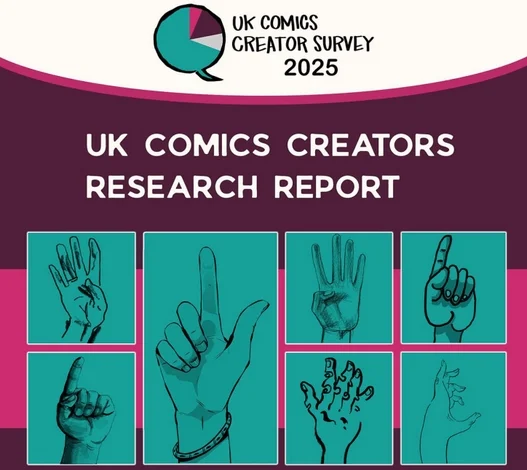
LONDON — The United Kingdom’s comic book and graphic novel industry is currently navigating a profound and unsettling paradox. According to the newly released UK Comics Creators Research Report 2026, the sector is enjoying record-breaking commercial success, with annual sales reaching historic heights. However, the individuals responsible for this creative output—the writers, illustrators, and cartoonists—are facing a landscape of financial instability, chronic overwork, and increasing reliance on state intervention.
The report, which synthesizes data from a comprehensive survey of nearly 700 creators conducted in late 2025, paints a "sobering" picture of an industry where the "people who make comics thrive are, more often than not, struggling to survive."
Main Facts: A Sector Divided by Success and Struggle
The headline findings of the 2026 report reveal a stark disconnect between market value and creator compensation. While the UK comics market reached a valuation of £78.7 million in 2025—a 13.9% increase over the previous year—the vast majority of those producing the work are living below the poverty line.
Key statistics from the report include:
- The Wage Gap: 89% of creators earning through traditional publishing avenues make less than the UK National Living Wage (approximately £22,308).
- The Survival Strategy: 72% of respondents rely on employment outside the comics industry to sustain themselves, including freelance, temporary, or permanent roles in unrelated sectors.
- State Dependency: 13% of creators are now relying on UK state benefits to meet basic living costs, a significant increase from 9% in 2020.
- The Talent Drain: Only 20% of respondents who wish to pursue comics as a full-time career are actually able to earn the majority of their income from the medium.
The report identifies "lack of financial income" (63%) and "lack of time to create" (57%) as the primary hurdles preventing the professionalization of the craft. For many, the dream of being a full-time cartoonist has been replaced by a grueling "juggling act" of administrative tasks, multiple part-time jobs, and the rising costs of living.
Chronology: From the 2020 Baseline to the 2026 Crisis
The 2026 report is the most extensive follow-up to the landmark 2020 survey, which first alerted policymakers to the fragility of the comics ecosystem.
In Autumn 2025, a coalition of industry bodies—including the Comics Cultural Impact Collective (CCIC), the Association of Illustrators (AOI), and the Society of Authors (SoA)—launched a massive data-collection initiative. This effort was led by former UK Comics Laureate Hannah Berry and funded by Arts Council England and Arts University Bournemouth.
The timeline of the research reflects a period of intense volatility:
- 2020: The initial survey established that while the medium was culturally influential, its creators were economically vulnerable.
- 2021–2024: The UK saw a massive surge in graphic novel sales, particularly in the "Children’s Comic Strip Fiction" category, fueled by a post-pandemic reading boom.
- Late 2025: The survey of 689 creators was conducted to assess whether the "boom" had translated into better conditions for workers.
- May 2026: The final report is issued, confirming that despite the 13.9% market growth, creator conditions have actually deteriorated, with benefit dependency rising by 4%.
Supporting Data: Diversity, AI, and the Funding Gap
Beyond the financial headlines, the report provides a granular look at the demographics and emerging threats within the UK comics community.
A Diverse but Economically Homogeneous Workforce
The report highlights that the comics community is significantly more diverse than the general UK population in several key metrics, yet it remains stubbornly exclusionary in others:
- LGBTQ+ Representation: 42% of creators identify as LGBTQ+, compared to a much lower national average.
- Gender Identity: 13% of respondents identify as non-binary.
- Disability and Neurodivergence: 25% of creators are disabled, and 44% are neurodivergent.
However, the report notes a troubling lack of ethnic diversity: 89% of creators are white, compared to 82% of the general UK population. Analysts suggest that the "low-pay, high-entry-cost" nature of the industry acts as a barrier to those from lower socioeconomic backgrounds, who are statistically more likely to be from ethnic minority communities.
The GenAI Threat
The 2026 report is the first to officially quantify the impact of Generative Artificial Intelligence (GenAI) on the sector. While only 4% of creators admit to using GenAI in their own production workflows, a staggering 36% believe or know they have lost work or income due to the technology. This suggests that while creators are rejecting AI as a creative tool, clients and publishers are increasingly using it to bypass human labor for commercial assignments.
The Public Funding Desert
Perhaps the most damning data point for cultural policy is the lack of institutional support. Only 6% of respondents have ever received public funding from arts councils.
- Arts Council England: 4%
- Creative Scotland: 2%
- Arts Council Wales / NI: 0%
This lack of support underscores a "cultural blind spot," where comics are viewed as a commercial product rather than a protected art form worthy of the same subsidies as opera, theater, or traditional literature.
Official Responses: Industry Leaders Call for Action
The release of the report has prompted a wave of responses from the UK’s leading literary and artistic organizations.
Hannah Berry, the driving force behind the study, emphasized that the current trajectory is unsustainable. In her statements accompanying the release, she pointed out that while the sector is "booming," the landscape for creators is "increasingly precarious."
Heidi MacDonald, Editor-in-Chief of Comics Beat, summarized the sentiment of the report’s reception: "Comics are doing great. Cartoonists? Not so much." She noted that the "eloquent statement" of the report confirms what many have known anecdotally: the traditional publishing model is failing to provide a living wage, with the average income from comics work falling well below the £22,308 threshold.
Andy Oliver of Broken Frontier described the findings as "sobering reading," noting that this is the most comprehensive survey of the realities of the art form to date. He highlighted the "chronic overwork" that defines the lives of most UK creators.
The Society of Authors (SoA) and the Association of Illustrators (AOI) issued joint recommendations alongside the report, calling for:
- Vocational Training: Developing comics-specific training to help creators manage the business and administrative side of their careers.
- Practical Guidance: Creating resources to help creators navigate contracts and the threat of AI.
- Policy Recognition: Urging the UK government to recognize comics as a "cultural art form" in official policy, which would open doors for more public funding and tax breaks.
Implications: The Future of the "Ninth Art" in Britain
The implications of the 2026 Research Report extend far beyond the drawing board. If the current trends continue, the UK risks a "creative exodus," where talented creators are forced to abandon the medium entirely due to economic exhaustion.
The "Children’s Boom" Misnomer
The report includes NielsenIQ BookScan figures showing that children’s comic strip fiction and graphic novels reached £25.9 million in 2025—the biggest sales year ever recorded. However, the report clarifies that this wealth is concentrated. The "blockbuster" success of a few major titles (often licensed properties or international imports) does not trickle down to the independent or mid-list creators who form the backbone of the UK’s domestic creative output.
The Threat to Innovation
With 57% of creators citing a "lack of time" as a primary challenge, the industry faces a stagnation of innovation. When creators are forced to work 40 hours a week in non-creative jobs just to pay rent, the time available for the "deep work" required to produce complex graphic novels vanishes. This could lead to a future where only the independently wealthy can afford to be comic book creators, further narrowing the diversity of voices in the medium.
A Call for Structural Reform
The report concludes that the "invisible labor" of comics creators must be made visible to policymakers. The recommendation to recognize comics as a cultural art form is seen as the first step toward a more equitable system. Without a shift in how arts councils distribute funds and how publishers structure advances and royalties, the UK’s £78.7 million industry may find itself with plenty of readers, but no one left to draw the stories.
As the industry digests these findings, the message is clear: commercial success is a hollow victory if it is built on the financial ruin of the artists. The 2026 report serves as both a warning and a roadmap for a more sustainable future for the "Ninth Art" in the United Kingdom.


Leave a Comment