
The Great Divide: Norakuro, the New Manga-School Group, and the Evolution of Japanese Visual Narrative
By Academic Dispatch and Journalistic Reportage
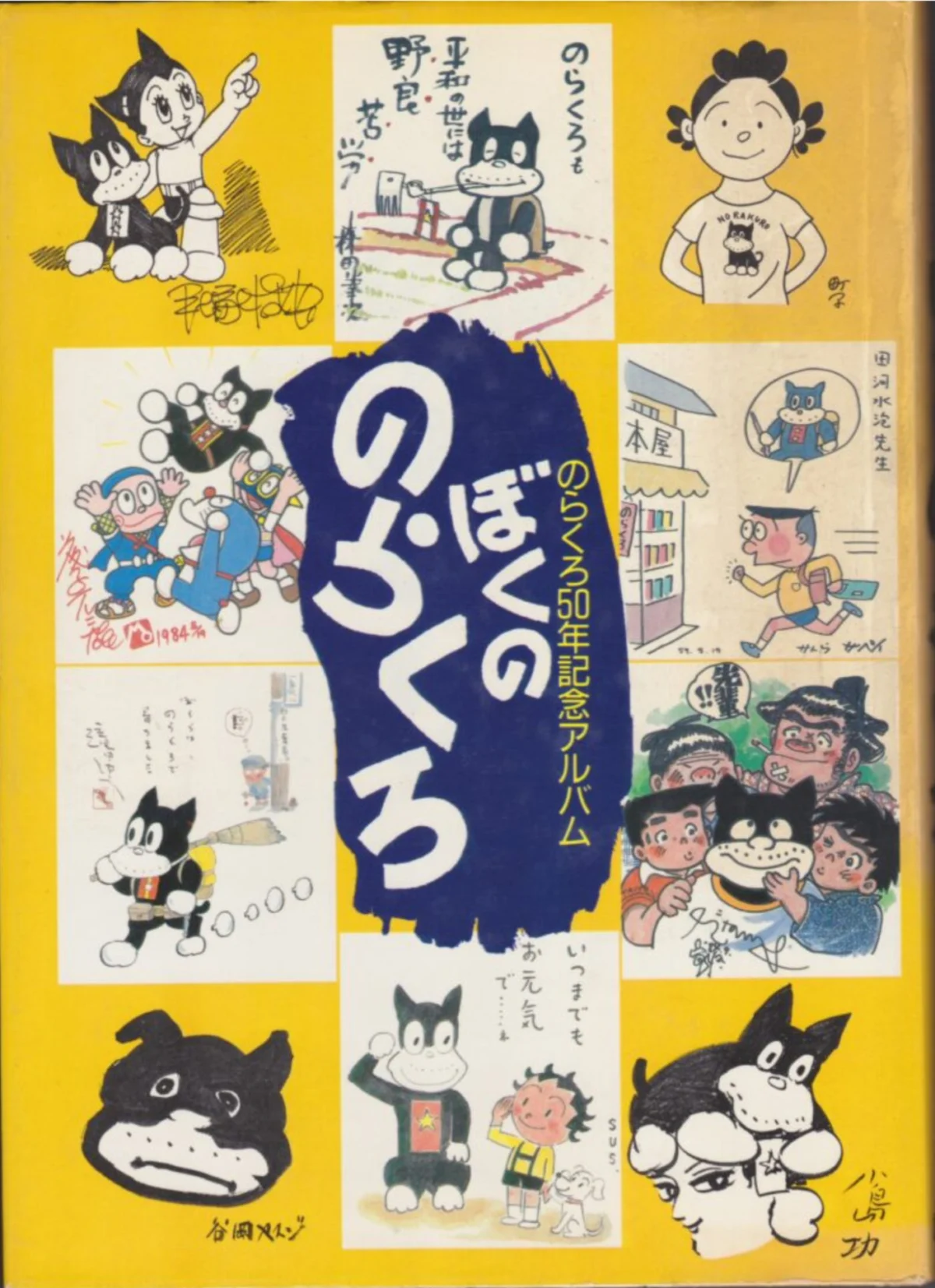
In the vast historiography of Japanese sequential art, few figures loom as large—or as enigmatically—as Tagawa Suihō and his creation, Norakuro (Black Stray). While modern global audiences often view the history of manga through the transformative lens of Osamu Tezuka, a recent retrospective by noted scholar and critic Natsume Fusanosuke, translated by Jon Holt and Teppei Fukuda for The Comics Journal, sheds new light on the complex, often fractured landscape of pre-World War II Japanese comics. By examining the 1984 commemorative volume My Norakuro: 50th Anniversary Norakuro Album, Natsume uncovers a profound bifurcation in the medium: a cultural and aesthetic tension between the "earthy" narratives of children’s manga and the "sophisticated," Western-influenced "nonsense" manga favored by adult urbanites.
Main Facts: The Legacy of the Black Stray
At the center of this inquiry is Norakuro, a series serialized in Kodansha’s Shōnen Club (Shōnen kurabu) from 1931 to 1941. During the interwar period, Norakuro was not merely a comic; it was a cultural phenomenon. It boasted the highest circulation and the largest number of tankōbon (collected volumes) of any series in the prewar era. Its protagonist, an anthropomorphic black dog in the imperial army, mirrored the nationalistic spirit of the time while maintaining a slapstick humor that resonated deeply with the youth of Japan.
The 1984 publication of My Norakuro served as a rare bridge between generations. At the time of its release, the creator, Tagawa Suihō, was still alive at eighty-five. The book featured contributions from a "who’s who" of manga history, including Hasegawa Machiko (creator of Sazae-san), Fujiko Fujio (Doraemon), and the "God of Manga" himself, Osamu Tezuka.
However, Natsume’s analysis focuses on a specific roundtable discussion within the album. This "crosstalk" revealed a startling truth: many of the most prominent manga artists of the mid-20th century—specifically those belonging to the Shin Manga-ha Shūdan (New Manga-School Group)—viewed Tagawa’s success with a mixture of professional jealousy, ideological distance, and outright neglect. This revelation challenges the monolithic view of manga history, suggesting that the industry was divided into two distinct, almost non-communicating camps.
Chronology: From Proletarian Roots to Postwar Dominance
The evolution of these artistic factions follows the turbulent trajectory of Japanese history in the 20th century.
1931–1932: The Rise of the New Schools
In 1931, Norakuro began its decade-long dominance. Concurrently, in 1932, a group of young, ambitious artists formed the Shin Manga-ha Shūdan (New Manga-School Group). Founded by Sugiura Yukio, Kondō Hidezō, and Yokoyama Ryūichi, this group positioned itself as the vanguard of "modern" manga. The name was intentionally provocative; using the suffix -ha (school/branch) and shūdan (group) signaled a connection to European art movements and contemporary sociological theories often associated with left-wing thought.
The War Years: Survival and Propaganda
During the late 1930s and through World War II, the ideological "Marxist boys" of the New Manga-School Group underwent a necessary, if jarring, metamorphosis. Like many intellectuals of the era, they were co-opted into the state machine, producing military propaganda. Tagawa’s Norakuro also served as a mascot for the era’s militarism, though its serialization ended in 1941 as the war intensified and paper shortages grew.
1945–1950s: The Postwar Pivot
Following Japan’s defeat, the members of the New Manga-School Group—now rebranded simply as the Manga Shūdan (Manga Group)—shifted their allegiance once more, aligning with populist and democratic movements. It was during this period that a young Osamu Tezuka began to revolutionize the medium with his "cinematic" style. While the veterans of the Manga Group focused on adult-oriented "nonsense" and political cartoons, Tezuka took the kodomo manga (children’s manga) tradition of Tagawa Suihō and transformed it into the modern story-manga format.
Supporting Data: The "Buttery" vs. the "Earthy"
The cultural divide described by Natsume is supported by the starkly different publication venues of the 1930s.
On one side was the "buttery" smell of the urban intelligentsia. Magazines like Shinseinen (New Youth) and Asahi Graph championed a style known as "nonsense manga." These works were heavily influenced by American and European cartooning traditions, characterized by a sophisticated, cosmopolitan air. They were "buttery" in the sense that they felt foreign, rich, and modern—qualities that appealed to the "modern boys" (moga) and "modern girls" (mobo) of Tokyo but rarely penetrated the domestic sphere of the average Japanese family.
On the opposite side was the "earthy" smell of homegrown narratives. Shōnen Club, the home of Norakuro, was the pinnacle of this category. Published by Kodansha, it was a magazine for the masses. Its stories were grounded in domestic sensibilities and traditional virtues, even when dressed in the uniform of a stray dog soldier.
Data from the era indicates that while the Manga Group artists were critical darlings in the press, Tagawa’s Norakuro achieved a level of commercial penetration that was unprecedented. By 1984, when the anniversary album was released, the B5-sized hardcover format itself signaled a transition of the comic from disposable entertainment to a respected object of cultural heritage.
Perspectives: The Roundtable Revelations
The most revealing aspect of Natsume’s report is the candidness of the veteran artists. The roundtable included Sugiura Yukio and Katō Yoshirō, both pillars of the Manga Group. Their testimony suggests that the professional divide was so deep that they intentionally ignored Tagawa’s work.
Sugiura Yukio admitted, "As his rival, I didn’t want to recognize Tagawa getting to be so famous… I would complain about it… I was not looking all that closely at what Tagawa was doing." This sentiment was echoed by Katō Yoshirō, who noted that he felt a similar competitive friction toward Yokoyama Ryūichi and, later, Osamu Tezuka.
Katō’s admission is particularly striking: "When it came to Tezuka Osamu’s manga, I would barely read any of his stuff." For an artist who was a chief officer of the Manga Artists Association and a ubiquitous figure in the Asahi Shinbun, this lack of engagement with the most influential figure in the medium highlights a massive generational and generic disconnect.
Natsume argues that these artists were "playing it loose." They could contribute to a book celebrating Norakuro while simultaneously admitting they had never truly respected or even read the series during its heyday. This frankness, Natsume suggests, was a hallmark of the manga circles of the time—a world of partisan cliques where "adult" cartoonists looked down upon "children’s" illustrators, regardless of the latter’s massive popularity.
Implications: Re-evaluating Manga Historiography
The implications of this "Great Divide" are twofold. First, it forces a reconsideration of the "Tezuka-centric" narrative. While Tezuka is often credited with inventing modern manga, Natsume’s analysis suggests that he was actually the bridge that finally closed the gap between the two prewar streams. Tezuka possessed the sophisticated visual vocabulary of the "buttery" Manga Group (as evidenced by his masterful mosha, or copy-drawings, of Tagawa’s style) but applied it to the "earthy" heart of children’s storytelling.
Secondly, the study highlights the importance of context in understanding cultural shifts. The fact that Manga Group artists could pivot from left-wing roots to military propaganda and then back to populist democracy without a sense of "betrayal" suggests a professional identity that was tied more to the craft of cartooning and the survival of their clique than to rigid political dogma.
Natsume concludes that if we do not account for this disparity between adult/nonsense manga and children’s manga, we cannot have a "full three-dimensional view" of history. The "simple opposition" of prewar vs. postwar is a trap. The reality was a messy, competitive, and highly bifurcated ecosystem where the seeds of modern manga were sown in the tension between the dirt of the countryside and the butter of the city.
As we look back from the vantage point of 2026, the story of Norakuro and the New Manga-School Group serves as a reminder that the history of any art form is rarely a straight line. It is instead a series of overlapping circles, rivalries, and silent gaps that only come to light when we look past the icons and into the "yarns" of the artists themselves.

Leave a Comment