
The Jameson Raid: A Catalyst for War in Southern Africa
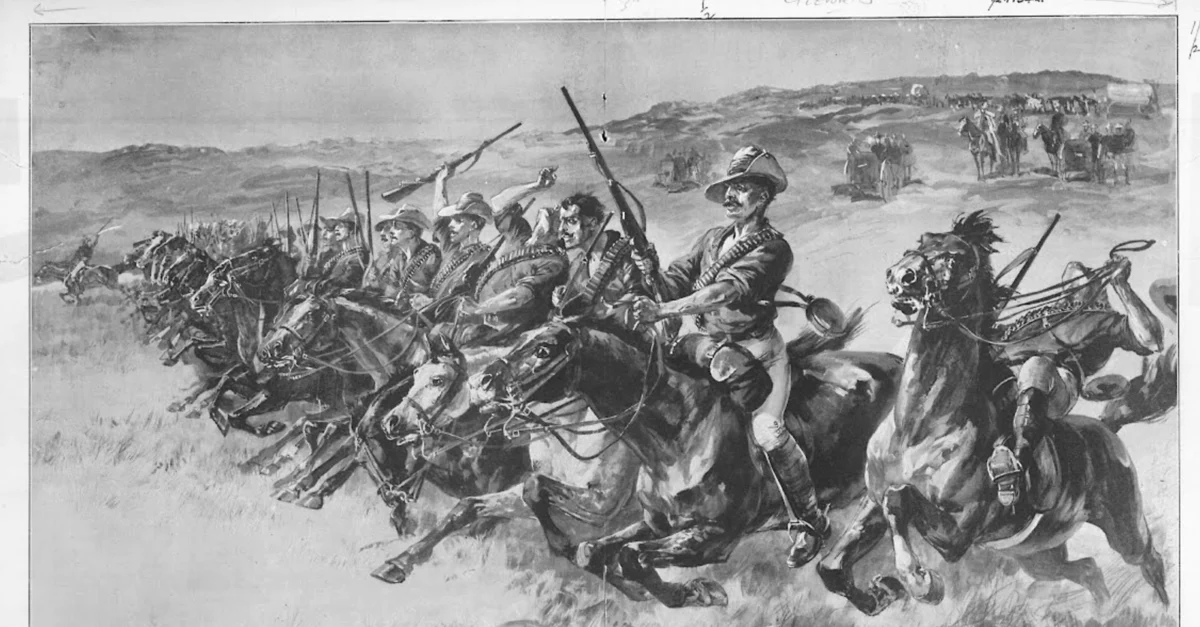
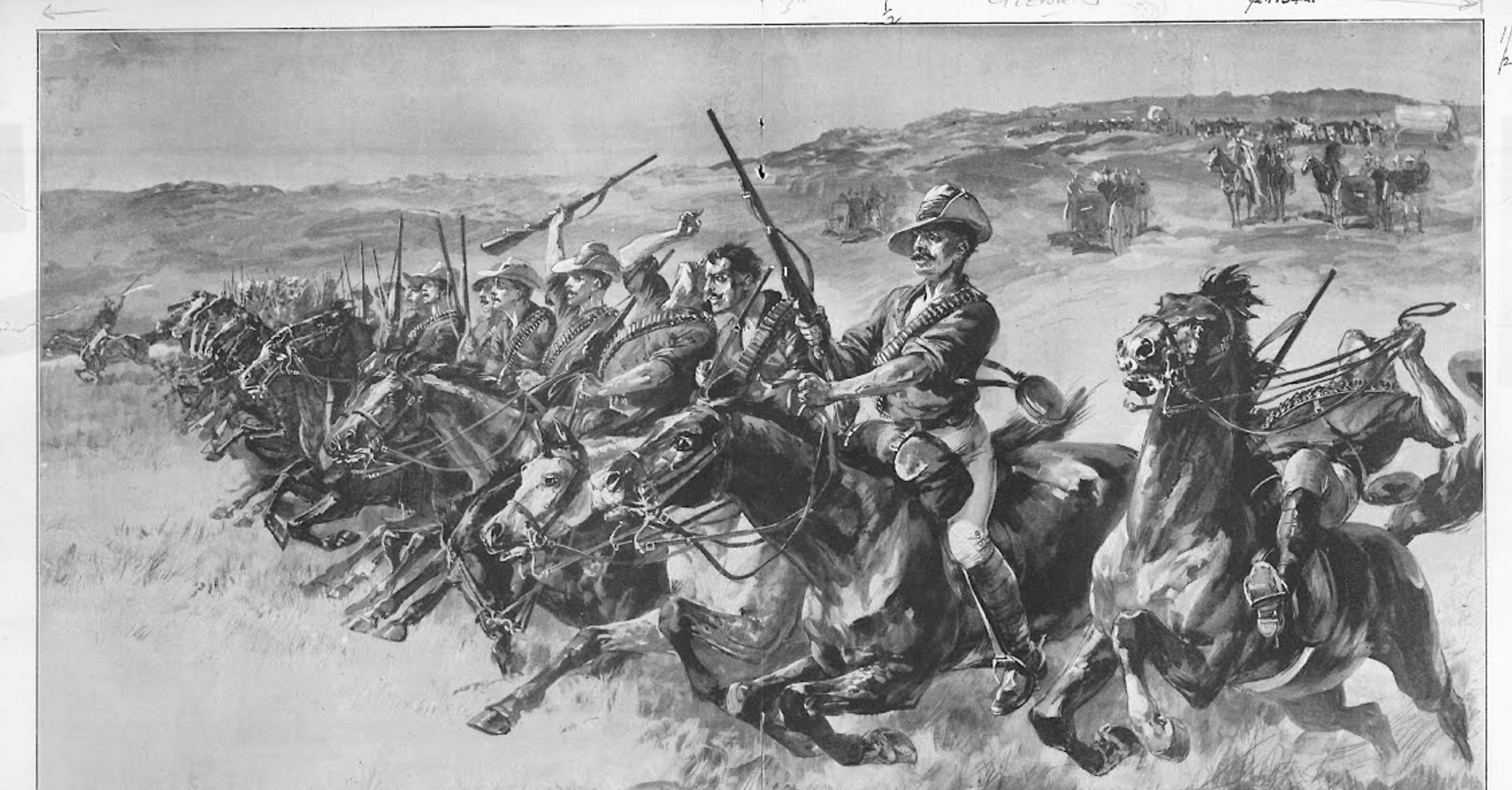
December 1895 witnessed a clandestine and disastrous attempt by British imperialists to seize control of the gold-rich Boer Republic of Transvaal in Southern Africa. Masterminded by the ambitious millionaire Cecil Rhodes, the Jameson Raid, as it became known, was an unofficial and ill-fated venture that failed to ignite a promised uprising among the immigrant community within Transvaal and was swiftly quashed. The fallout from this audacious fiasco irrevocably discredited Rhodes, a titan of British imperialism, and severely exacerbated the already tense relationship between the British and the Boers, ultimately serving as a direct prelude to the devastating Second Anglo-Boer War (1899-1902).
Main Facts: A Failed Coup and its Immediate Aftermath
The Jameson Raid was a meticulously planned, yet ultimately amateurishly executed, paramilitary operation aimed at overthrowing the government of the South African Republic (Transvaal). Launched on December 29, 1895, the raid involved a force of approximately 500-600 mounted men, primarily from the British South Africa Company (BSAC) police, led by Dr. Leander Starr Jameson. Their objective was to ride swiftly from Bechuanaland into Transvaal, ostensibly to support a supposed uprising by British Uitlanders (foreigners) in Johannesburg, who were agitating for greater political rights and economic reforms.
However, the Uitlander uprising, which Rhodes and his co-conspirators believed was imminent, never materialised. Forewarned by its intelligence services, the Transvaal government, under President Paul Kruger, mobilised its highly effective Boer commandos. The raiders, exhausted and undersupplied, were intercepted and decisively defeated at Doornkop on January 1, 1896, suffering 16 killed and 56 wounded, compared to a single Boer fatality. Jameson and his men were captured, bringing an ignominious end to an enterprise that had been conceived in the highest echelons of British colonial power.
The immediate consequences were severe. Cecil Rhodes, then Prime Minister of the Cape Colony and director of the BSAC, was exposed as the chief architect of the plot. Though the British Crown officially disowned the raid, condemning it as an unauthorised act, the subsequent public inquiries in both Cape Colony and London revealed Rhodes’ deep complicity. He was forced to resign from his positions, his reputation irrevocably tarnished. Jameson, despite a relatively light sentence of 15 months imprisonment in England for violating the Foreign Enlistment Act, later made a remarkable political comeback, becoming Prime Minister of the Cape Colony in 1904. More significantly, the raid profoundly deepened the mutual suspicion between the British and the Boers, transforming a simmering rivalry into an overt and seemingly unavoidable path to full-scale conflict.
Chronology: The Scramble for Southern Africa and the Seeds of Conflict
The Jameson Raid did not occur in a vacuum; it was the culmination of decades of escalating imperial ambitions, settler expansion, and resource-driven conflict in Southern Africa.
British Ascendancy and Colonial Expansion
Great Britain’s formal presence in Southern Africa began in 1806 with the establishment of the Cape Colony, a strategic acquisition that secured the vital sea route around the Cape of Good Hope – a crucial stopping point for ships traversing to and from British possessions in Asia, particularly India. By 1843, another British colony, Natal, had been founded, further solidifying Britain’s imperial footprint.
The British encountered competition not only from indigenous African communities but also from the Boers, white settlers of Dutch and French Huguenot ancestry. Known as "farmers" (the meaning of "Boer"), or Afrikaners due to their unique language, Afrikaans, these communities had developed a distinct cultural and political identity. Discontent with British rule, particularly the abolition of slavery in the 1830s and increasing pressure on land and resources around the Cape, prompted over 14,000 Boers to embark on the "Great Trek." This mass migration led to the formation of two independent Boer republics in the interior: Transvaal (established in 1852) and the Orange Free State (founded in 1854). These republics fiercely guarded their sovereignty, viewing it as a hard-won right against British encroachment.
The Diamond and Gold Rushes: A Transformed Landscape
Southern Africa, once largely rural with an economy based on modest agricultural trade, underwent a dramatic transformation following the discovery of immense mineral wealth. Diamonds were unearthed at Kimberley in Griqualand in 1867, triggering a rush that drew prospectors and fortune-seekers from across the globe. Just two decades later, in 1886, the discovery of massive gold deposits at Witwatersrand in Transvaal proved even more revolutionary, turning a pastoral republic into an economic powerhouse.
In the period between these two monumental discoveries, the British had steadily expanded their control across the region. Griqualand, renamed West Griqualand, was annexed as a crown colony in 1871. The powerful Zulu Kingdom was defeated by a British army in 1879, with Zululand becoming a crown colony in 1887. Further annexations and protectorates followed, including Basutoland (modern Lesotho) in 1884, Bechuanaland (modern Botswana) in 1885, Swaziland in 1893, and Pondoland in 1894. This patchwork of territories reflected Britain’s relentless drive to consolidate its dominance over the southern cone of the continent.
The Dream of Union and Early Conflicts
The overarching ambition of British colonialists, particularly figures like Cecil Rhodes, was to unite these disparate territories into a single, unified state of South Africa under the British flag. The Boers, however, cherished their hard-won independence and vehemently resisted the prospect of absorption into the British Empire. They had already experienced a taste of British ambition when Transvaal was temporarily annexed between 1877 and 1881, under the pretext of protecting it from African tribal attacks. This annexation ignited the First Anglo-Boer War (1880-81), a smaller-scale conflict that saw the Boers decisively defeat the British at Majuba Hill, securing the return of their independence. While a British humiliation, this victory emboldened the Boers and left little doubt that a larger, more decisive confrontation was only a matter of time. The colossal fortunes being made from gold in Transvaal only served to hasten this impending crisis, driven by the powerful mining magnates who saw the Boer republics as obstacles to their wealth and influence.
Supporting Data: Motivations, Magnates, and Grievances
The Jameson Raid was a desperate gamble fueled by a complex interplay of imperial ambition, economic greed, and political frustration.
British Strategic Concerns and Economic Stakes
In the final years of the 19th century, the British government harboured mixed sentiments regarding Southern African affairs. One faction favoured a gradual, "natural" expansion of British control, believing that an influx of British immigrants would eventually outnumber the Boers, rendering them a powerless minority in their own republics. This strategy avoided direct military confrontation. However, a more pressing concern was the potential for a gold-rich Transvaal to forge alliances with rival colonial powers, particularly Germany. Such a partnership could seriously jeopardise British interests, not only in Southern Africa but across the wider imperial network. Furthermore, British financial investments in Transvaal were substantial, totalling over £350 million by 1899, with two-thirds of the lucrative Witwatersrand mines owned by British shareholders. Protecting these vast economic interests became a paramount consideration.
The ‘Randlords’ and ‘Gold Bugs’: A Conflict of Interests
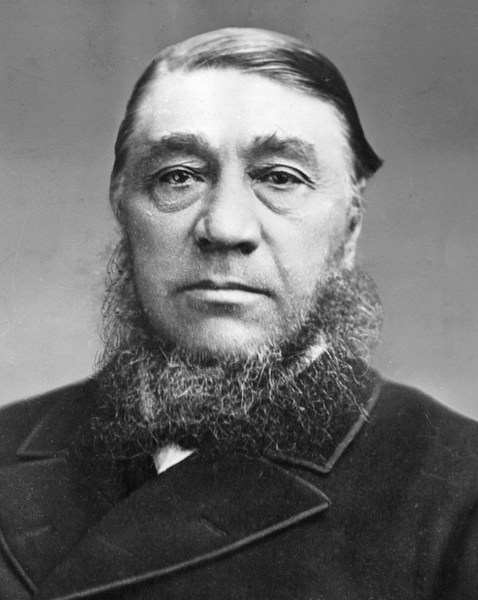
The owners of the Witwatersrand gold mines formed an elite and immensely powerful group, including luminaries such as Julius Wernher, Barney Barnato, Alfred Beit, and, most prominently, Cecil Rhodes. These individuals, already deeply involved in the diamond mines of Kimberley, were collectively known to the British as the ‘Randlords.’ Transvaal’s President, Paul Kruger, a staunch defender of Boer independence, contemptuously labelled them the ‘Gold Bugs,’ seeing them as parasitic exploiters of his nation’s wealth. While not entirely unified in their approach – some magnates preferred peaceful lobbying while others were prepared for more extreme measures – their collective objective was to maximise profits and influence within Transvaal.
The Uitlander Question: A Pretext for Intervention
By the mid-1890s, Johannesburg, the heart of the goldfields, had swelled to a population of 100,000, attracting immigrants from around the world. The Boers, fiercely protective of their cultural identity and political dominance, enacted a series of discriminatory laws through the volksraad, their legislature. These laws effectively disenfranchised the new white workers, known as Uitlanders (‘Outsiders’), denying them voting rights and full citizenship. Kruger’s most contentious law mandated a 14-year residency period before a white immigrant could even qualify to vote in political elections.
This policy ignited widespread resentment. The mine magnates, many of whom were British subjects, were particularly incensed by restrictions placed on their skilled workforce, viewing it as an impediment to economic efficiency. The Uitlanders themselves, many of whom paid taxes and were obligated to perform military service for the Transvaal government, felt they were being subjected to "taxation without representation." The British colonial authorities in the Cape Colony and Natal seized upon this discrimination against British subjects as a potent moral justification for intervention in Transvaal affairs, lending a veneer of legitimacy to what was fundamentally an imperial land grab.
Economic Grievances: Alcohol, Taxes, and Monopolies
Beyond political rights, several economic issues fuelled the Randlords’ antagonism towards the Transvaal government. Mine owners frequently cited statistics indicating that 15-25% of their Black labourers were incapacitated by alcohol, significantly impacting productivity. They pressed for a prohibition law, a call largely ignored by Kruger until 1896, and even then, inconsistently enforced.
Furthermore, the government’s tax laws disproportionately affected the deeper, more capital-intensive mines favoured by the magnates, while small-time surface prospectors faced fewer burdens. Compounding these issues were the Transvaal government’s monopolies over key sectors such as railways and dynamite. These controls inflated the costs of extracting gold from what was already a technically challenging and expensive endeavour, given the low grade of the gold-bearing ore. For the Randlords, Kruger’s government was not merely politically restrictive but economically obstructive, hindering their pursuit of even greater wealth.
Cecil Rhodes: The Imperialist Architect
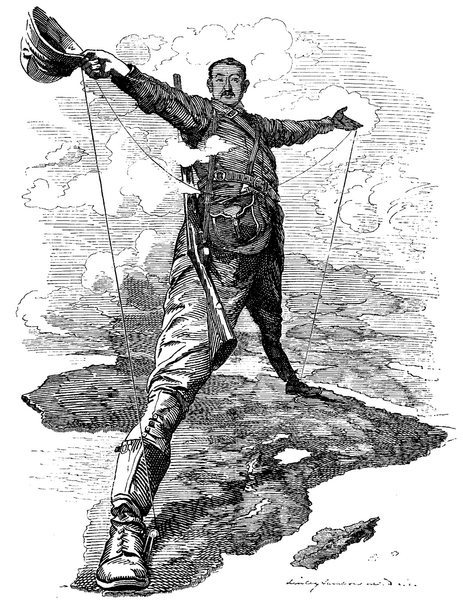
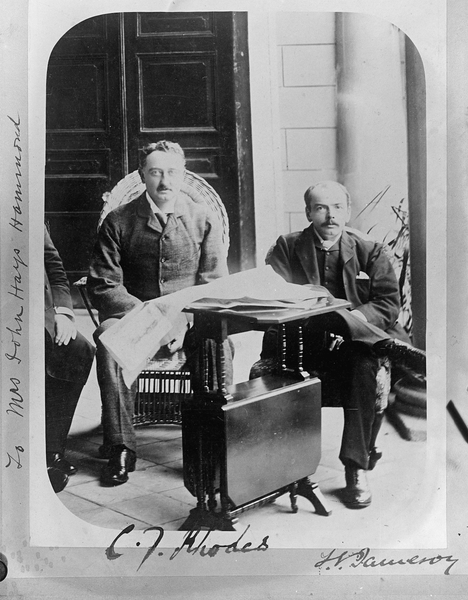
At the heart of the takeover plot was Cecil Rhodes (1853-1902), a figure of colossal ambition who had served as Prime Minister of the Cape Colony since 1890. Historian M. Corey aptly described him as "an extravagant, dominating man, given to grandness in his actions, whether it was building a railway bridge across Victoria Falls or entertaining international guests at Groote Schuur, the personal palace he renovated in Dutch colonial style in Cape Town." Rhodes was a fervent believer in British imperial expansion and the racial superiority of Europeans, a conviction that led him to dispossess vast numbers of Black Africans and contribute to generations of racial conflict in Southern Africa. His ultimate vision was a "Cape to Cairo" British dominion, and the independent Boer republics, particularly the wealthy Transvaal, stood directly in the way of this grand design.
Rhodes’ initial attempts to undermine Transvaal focused on economic leverage, such as trying to purchase the republic’s only independent railway access to a seaport, Lourenço Marques (then in Portuguese hands). German diplomatic intervention prevented this sale, pushing Rhodes towards more drastic measures. He secretly orchestrated a plot to violently overthrow the Transvaal government, recruiting troops from his own British South Africa Company (BSAC). Established in 1895, the BSAC held a royal charter to colonise lands north of Transvaal, which became known as Rhodesia (modern Zimbabwe, Zambia, and Malawi). Critically, this territory lacked the mineral riches of Transvaal, further intensifying Rhodes’ desire to control the Witwatersrand goldfields.
The Ill-Fated Plot: Jameson’s Role and the Uitlander Betrayal
Rhodes entrusted the leadership of the military coup to Dr. Leander Starr Jameson (1853-1917), a colonial administrator, magistrate, and veteran of the BSAC’s campaigns in Matabeleland. Jameson was, in the words of one observer, "an extremely foxy and belligerent former physician." The raiding party he commanded was intentionally small, as Rhodes anticipated that it would be augmented by a mass uprising of Uitlanders in Johannesburg. The Uitlander Reform Committee, a group that had been agitating for greater rights for years, had secretly received significant financial backing and arms from mine owners like Rhodes, Beit, and Wernher, all in preparation for this anticipated revolt.
Jameson’s force, comprising 500-600 cavalry, predominantly BSAC policemen, was given a stirring but deceptive pep talk by Colonel Grey of the Bechuanaland police. They were told their mission was "to fight for the supremacy of the British flag in South Africa," but explicitly informed that neither Queen Victoria nor the British government was aware of the plot. Equipped with the latest Lee-Metford magazine rifles, eight Maxim machine guns, and three artillery pieces, the raiders were militarily formidable for their size.
Despite Rhodes’ agents distributing cash incentives and weapons, the crucial Uitlander uprising in Johannesburg failed to materialise. Internal divisions, a lack of widespread popular support for a violent overthrow, and concerns about potential British government disavowal contributed to this critical failure. Rhodes left the final decision to proceed with the raid to Jameson, who, despite the absence of the Uitlander revolt, decided to press on regardless. The invaders crossed into Transvaal from their mustering points at Pitsani and Mafikeng in the Bechuanaland Protectorate on December 29, 1895. The expedition had been meticulously planned, with sympathisers in Transvaal awaiting them with food supplies and fresh horses. The force aimed to cover the 170 miles (273 km) to Johannesburg in just three days, a rapid dash that ironically still found room for "a large keg of brandy and a couple of cases of champagne."
Official Responses: Disavowal, Diplomatic Fallout, and Punishments
The immediate aftermath of the Jameson Raid sent shockwaves across Southern Africa and beyond, forcing official responses from all involved parties.
Transvaal’s Decisive Victory
Crucially for the Boers, their intelligence service was well aware of the impending raid. They had not only discovered one of Jameson’s hidden supply caches but had also mobilised a "reception committee." While an initial Boer commando from Lichtenburg missed Jameson’s party, a second, larger commando was swiftly mobilised. Under the Boer system, all able-bodied white men between 16 and 60 were expected to serve the state when required. This force, led by the astute General Piet Cronjé, strategically positioned itself near Krugersdorp, close to Johannesburg.
The two forces clashed on January 1, 1896. Cronjé’s numerically superior Boer commandos easily outmanoeuvred and defeated Jameson’s exhausted column. The raiders retreated to the rocky outcrop of Doornkop, hoping for a defensive stand, but quickly ran low on ammunition. The arrival of a heavy field gun for the Boers sealed their fate. Jameson was compelled to surrender, and his entire force was captured. The battle was a resounding victory for the Boers, costing them just one fatality compared to the raiders’ 16 killed and 56 wounded.
British Disavowal and Political Fallout
The British Crown, faced with international condemnation and the embarrassment of an unsanctioned military adventure, quickly disowned the raid. The British government, led by Prime Minister Lord Salisbury, officially condemned Jameson’s actions and insisted it had no prior knowledge of the plot, a claim met with considerable skepticism in some quarters.
Official inquiries were subsequently conducted in both the Cape Colony and London, exposing Cecil Rhodes’ profound involvement. Under immense pressure, Rhodes was forced to resign from his influential positions as Prime Minister of the Cape Colony and as a director of the British South Africa Company in 1896. His once-unassailable political career lay in ruins, though his vast wealth and underlying influence remained.
Jameson himself was ultimately extradited to England, where he was tried and imprisoned for 15 months under the Foreign Enlistment Act for enlisting in a foreign army. Despite this, the imprisonment did surprisingly little lasting harm to his colonial career, and he would later return to politics with a remarkable rehabilitation, becoming Prime Minister of the Cape Colony in 1904. The Uitlander Reform Committee members who were implicated in the plot were tried by the Transvaal government, with four leaders initially sentenced to death (later commuted to heavy fines) and others imprisoned.
International Reaction: Kaiser Wilhelm’s Telegram
The Jameson Raid also had significant international repercussions, particularly with Germany. Kaiser Wilhelm II of Germany, keen to assert his nation’s growing imperial ambitions and wary of British dominance in Southern Africa, sent a highly publicised telegram to President Kruger, congratulating him on his successful repulsion of the raid. This "Kruger Telegram" was perceived as a direct challenge to British authority and a provocative act of interference in what Britain considered its sphere of influence. It severely strained Anglo-German relations, contributing to the escalating tensions between European powers in the years leading up to World War I. For Britain, the raid was not just a domestic embarrassment but a diplomatic humiliation on the global stage.
Implications: The Inevitable Road to War
The Jameson Raid, while a military failure, was a political disaster that had far-reaching and profound implications, irrevocably altering the course of Southern African history and directly precipitating the Second Anglo-Boer War.
Heightened Suspicion and an Arms Race
The raid confirmed the Boers’ deepest fears about British imperial ambitions. It solidified their conviction that Britain sought to extinguish their independence and seize their mineral wealth. As Jan Smuts, the future Prime Minister of South Africa, famously declared, "The Jameson Raid was the real declaration of war in the Anglo-Boer conflict."
In the four years following the raid, President Kruger and the Transvaal government embarked on an aggressive rearmament program. They quadrupled their military budget and, significantly, signed a defensive alliance with the Orange Free State. Kruger equipped his Boer commandos with an impressive arsenal of 80,000 of the latest German Mauser rifles and 80 million rounds of ammunition, transforming his rural militia into a formidable fighting force capable of resisting a major power. This arms race directly escalated tensions and made future conflict almost inevitable.
Alfred Milner: The Architect of Confrontation
While some argue that Colonial Secretary Joseph Chamberlain, in London, was not intentionally stoking hostilities with the Boers, the actions of Alfred Milner, the British High Commissioner in South Africa from 1897 to 1905, leave little room for doubt. As historian S. C. Smith notes, Milner was a staunch imperialist who believed in the absolute necessity of British supremacy in South Africa. He actively "manipulated the press in both South Africa and Britain" to create a climate of opinion that made compromise increasingly difficult.
Milner consistently exaggerated the grievances of the Uitlanders and presented the Transvaal government as intransigent and anti-British. He saw Kruger’s government as an anachronistic obstacle to progress and imperial unity. His uncompromising stance was evident at the Bloemfontein Conference in June 1899, convened to discuss Uitlander rights. Milner deliberately cut the conference short, rejecting Kruger’s concessions and shattering any remaining Boer confidence in British good faith. His actions were instrumental in pushing both sides towards a military confrontation.
The Second Anglo-Boer War and its Legacy
Perhaps inevitably, the simmering tensions ignited into full-scale conflict in October 1899, marking the beginning of the Second Anglo-Boer War. This bitter and protracted clash, which lasted until 1902, proved to be far more extensive and brutal than the first. Britain committed vast resources, deploying an army of nearly 500,000 men, making it the largest conflict Britain had engaged in since the Napoleonic Wars.
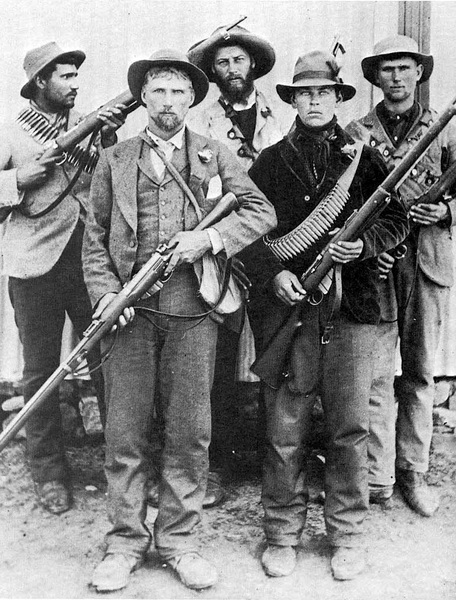
The war was marked by the Boers’ effective guerrilla tactics and, in response, Britain’s controversial use of scorched-earth policies and civilian concentration camps to intern Boer women and children. These tactics, which led to tens of thousands of deaths from disease and starvation, severely damaged Britain’s international reputation and sparked widespread condemnation.
Ultimately, Britain emerged victorious in 1902, but at a tremendous cost in lives, resources, and moral standing. The Treaty of Vereeniging brought the Boer republics under British rule. In 1910, the two former Boer Republics (Transvaal and the Orange Free State) and the two British colonies (Cape Colony and Natal) were formally united to form the Union of South Africa, achieving Rhodes’ long-held dream of a unified British dominion. However, the legacy of the Jameson Raid and the subsequent war – of deep-seated animosity, racial division, and imperial overreach – continued to shape the complex political and social landscape of South Africa for generations to come. The raid stands as a stark reminder of the often-unforeseen consequences of imperial ambition and the dangerous interplay of economic interest and political maneuvering.

Leave a Comment