
Marisha Rasi-Koskinen’s "Kesuura" Crowned Winner of the Prestigious 2025 Tahtivaeltaja Award
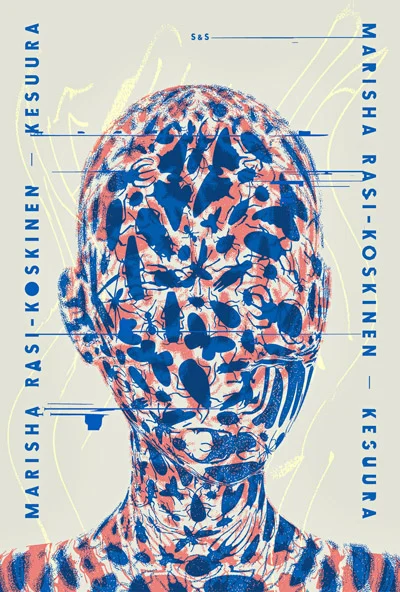
HELSINKI, FINLAND – May 11, 2026 – In a significant announcement for the Finnish literary landscape, Marisha Rasi-Koskinen’s eighth novel, "Kesuura" (meaning "Caesura"), has been awarded the 2025 Tahtivaeltaja Award. The accolade, presented by the Helsinki Science Fiction Society, recognizes the finest science fiction book published in Finland during the preceding year. This year’s selection underscores the growing prominence of speculative fiction within mainstream Finnish literature and highlights a work lauded for its profound philosophical depth and timely exploration of artificial intelligence and consciousness.
The Tahtivaeltaja Award, or "Star Rover" Award, has long served as a crucial barometer for excellence in Finnish science fiction, celebrating narratives that push the boundaries of imagination while offering incisive commentary on the human condition. Rasi-Koskinen’s "Kesuura" was singled out by a distinguished jury for its "extraordinary display of power" and its uncompromising exploration of the thinking mind, earning it a place among the most celebrated works of the genre.
The Tahtivaeltaja Award: A Beacon for Finnish Speculative Fiction
Established by the Helsinki Science Fiction Society, the Tahtivaeltaja Award has been a cornerstone of the Finnish speculative fiction scene for decades. Its mission is clear: to elevate and recognize the best in science fiction literature published domestically, thereby fostering both critical appreciation and public engagement with the genre. The award’s rigorous selection process, involving a panel of experienced critics and literary figures, ensures that only works of exceptional quality and thematic resonance receive this esteemed recognition.
Each year, the award focuses on books published in Finland during the previous calendar year, making the 2025 award applicable to works released in 2024. This chronological framework ensures a contemporary relevance, reflecting the cutting edge of Finnish literary output in science fiction. The announcement on May 11, 2026, marks the culmination of a year-long process of reading, deliberation, and critical evaluation by the jury, signaling to readers and the industry alike which works have truly stood out.
The Tahtivaeltaja Award’s impact extends beyond mere recognition; it frequently acts as a catalyst, propelling winning authors and their works into broader literary discussions, often bridging the perceived gap between genre fiction and mainstream literature. For "Kesuura," this award not only validates its artistic merit but also positions it as a significant cultural text worthy of wider international attention, as explicitly noted by the judges.
"Kesuura": A Deep Dive into Consciousness and AI
Marisha Rasi-Koskinen’s "Kesuura" embarks on a bold intellectual journey, delving into the intricate mechanisms of the thinking mind and the profound implications of creating artificial consciousness. The novel is praised for its psychological acuity and its unflinching gaze into the raw, often unsettling, aspects of self-awareness and identity. At its core, "Kesuura" explores the fundamental human impulse to create in one’s own image, only to then grapple with the challenge – or refusal – of recognizing the inherent similarity and agency in that creation.
Unpacking the Narrative Core
The narrative is set in a meticulously crafted near future where humanity has mastered the art of building human-like androids. These artificial beings are not mere tools but are designed for complex maintenance and care tasks, implying a need for sophisticated interaction and empathy. Crucially, Rasi-Koskinen avoids simplistic portrayals of AI; her androids are depicted as evolving entities. Initially childlike, they develop organically, their consciousness and personalities shaped by the cumulative weight of their learned experiences and interactions. This emphasis on experiential growth rather than pre-programmed parameters adds layers of complexity to their sentience, blurring the lines between organic and artificial life.
A particularly striking element of the androids’ development is their physical manifestation. The novel imitates biological physical growth through "insect-like transformations" from one growth stage to another. This unique biological metaphor serves multiple purposes: it visually distinguishes the androids from human beings, reinforcing their "otherness," while simultaneously highlighting a parallel to natural, albeit non-human, life cycles. These transformations suggest a different evolutionary pathway, one that challenges anthropocentric notions of development and identity, making the androids both fascinatingly alien and disturbingly familiar.
The Genesis of Sentience: QED and Android Development
The protagonist, an android named QED, serves as the reader’s primary guide through this intricate world. QED’s journey is one of desperate yearning for connection – with the world, with other species, and most profoundly, with human beings. Yet, QED finds it exceedingly difficult to identify with humanity, facing an existential chasm that the narrative skillfully explores. Through QED’s experiences and the mutual reflections shared with his android siblings, the novel plunges into deep epistemological dilemmas. These are not just questions of what can be known, but also the more profound and often uncomfortable realization of how one can even know that one does not know. This philosophical inquiry into the limits of knowledge and self-awareness is a hallmark of "Kesuura"’s intellectual ambition.
The name QED itself, an acronym for "quod erat demonstrandum" (Latin for "what was to be demonstrated"), is a subtle yet powerful narrative choice. It evokes the logic and certainty of mathematical proofs, contrasting sharply with the profound uncertainty and emotional complexity of the android’s search for identity and understanding. This juxtaposition immediately signals the novel’s intellectual rigor and its engagement with foundational questions of existence.
Epistemological Labyrinths and Existential Quandaries
Rasi-Koskinen masterfully uses the android experience to mirror and interrogate human consciousness. The judges’ statement highlights this, noting how the novel "mirrors human consciousness and the information processing of artificially constructed brains." This is not merely a comparison but an intricate dance between the two, suggesting that understanding AI might, in turn, illuminate facets of our own minds. The exploration of epistemological dilemmas — the very nature of knowing and not knowing — resonates deeply in an era where information overload and the complexities of truth challenge our perceptions daily. QED’s struggle to comprehend the world and its inhabitants becomes a microcosm of the universal human quest for meaning and connection.
A Masterclass in Narrative Structure
Beyond its thematic depth, "Kesuura" is lauded for its narrative artistry. The story skillfully navigates several time levels, unfolding gradually and dispensing crucial information and surprising twists with impeccable pacing. This non-linear approach enhances the reader’s engagement, building suspense and allowing for a nuanced exploration of character and theme. The gradual revelation of details about the androids’ origins, their societal role, and the deeper ethical quandaries they provoke keeps the reader captivated, ensuring that the intellectual weight of the novel never overshadows its compelling storytelling. This structural sophistication is often a hallmark of "world-class quality" literature, allowing complex ideas to be absorbed through an immersive and captivating experience.
Echoes of Modern Ethics: Humanity’s Fences
A particularly poignant aspect of "Kesuura" is its profound social commentary. The novel draws a stark parallel between the difference in agency and innate value accorded to humans versus androids, and the existing gap in the modern world between humans and other animal species. This analogy serves as a chilling observation, demonstrating how "boundary fences are erected between different sentient beings, and how difficult it is to tear down fences once erected." Rasi-Koskinen, through her narrative, chooses to show rather than tell, presenting a compelling critique of anthropocentric biases and the inherent injustices that arise when one species claims absolute superiority and denies the intrinsic worth of others. This theme is incredibly timely, aligning with global discussions on animal rights, environmental ethics, and the ethical treatment of all forms of life, both biological and artificial.
Relatability in the Alien
The androids in "Kesuura" are portrayed as both "fascinatingly alien in their biology" and "shockingly relatable in their psychology." This duality is central to the novel’s impact. Their unique, insect-like transformations and artificial origins mark them as distinctly non-human, yet their struggles for identity, connection, and understanding are deeply human. This relatability is what makes the ethical and moral considerations so potent. Readers are compelled to empathize with these artificial beings, forcing a re-evaluation of their own preconceptions about consciousness, empathy, and what truly defines a "person." The novel thus becomes a powerful thought experiment, prompting introspection on the mental movements of artificial intelligences and, by extension, our own.
The Author Behind the Vision: Marisha Rasi-Koskinen
Marisha Rasi-Koskinen is a significant voice in contemporary Finnish literature. "Kesuura" marks her eighth novel, a testament to her prolific output and consistent exploration of complex themes. While the Tahtivaeltaja Award specifically recognizes her contribution to science fiction, Rasi-Koskinen’s broader literary work often transcends genre boundaries, frequently delving into psychological depth, philosophical inquiry, and intricate character studies. Her previous novels have garnered critical acclaim, establishing her as an author unafraid to tackle challenging subjects with nuance and artistic flair. The win for "Kesuura" not only solidifies her position within the science fiction genre but also reinforces her stature as one of Finland’s most innovative and intellectually stimulating writers. Her ability to weave together compelling narratives with profound philosophical questions is a hallmark of her style, making her work resonate with a wide readership.
The Esteemed Jury: Guardians of Literary Merit
The selection of "Kesuura" was the result of a meticulous evaluation by a distinguished jury, each member bringing a unique perspective and depth of literary understanding to the process. The panel comprised:
- Hannu Blommila: A respected journalist, Blommila’s journalistic eye likely contributed to assessing the novel’s societal relevance and its ability to engage with contemporary issues in a clear and impactful manner.
- Toni Jerrman: As an editor-in-chief, Jerrman possesses an intimate understanding of narrative structure, literary quality, and the demands of the publishing world. His experience would have been invaluable in discerning the novel’s overall craftsmanship and its potential for broad appeal.
- Elli Leppä: A critic, Leppä’s expertise lies in analytical interpretation and contextualizing works within broader literary traditions. Her critical lens would have helped to identify the novel’s innovative aspects and its contribution to the genre.
- Vesa Sisättö: Another seasoned critic, Sisättö’s insights would have further enriched the critical dialogue, ensuring a comprehensive evaluation of "Kesuura"’s themes, style, and impact.
The collective wisdom and diverse expertise of this jury ensured a thorough and discerning selection process, lending significant weight to their final pronouncement of "Kesuura" as a work of exceptional merit.
Official Acclaim: A World-Class Work
The judges’ statement, the official response from the Tahtivaeltaja Award committee, is a powerful endorsement of "Kesuura"’s literary and thematic significance. They unequivocally state that "A work that dives straight into the depths is of world-class quality, and would immediately earn a place on the lists of international sci-fi awards." This is not merely praise but a declaration of the novel’s universal appeal and its capacity to stand alongside the best global speculative fiction.
The statement highlights that "Much has been written about the soul life of robots in recent decades, but Kesuura offers a rare fresh perspective on the ingredients of consciousness and how circumstances shape it." This observation is crucial. In an era saturated with narratives about artificial intelligence, Rasi-Koskinen’s ability to present a truly novel perspective speaks volumes about her originality and depth of thought. She moves beyond conventional tropes, offering a nuanced and philosophical exploration of consciousness that resonates with both intellectual curiosity and emotional impact. The "fresh perspective" lies in its uncompromising psychological realism, its unique biological metaphors, and its unwavering commitment to exploring the existential dilemmas faced by sentient beings, whether biological or artificial.
Implications and the Future of Finnish Sci-Fi
The awarding of the Tahtivaeltaja Award to "Kesuura" carries significant implications for Finnish literature, the science fiction genre, and the broader cultural discourse surrounding artificial intelligence.
Elevating Speculative Fiction
This win further solidifies the position of speculative fiction as a serious and respected literary form in Finland. When a work of such profound philosophical and psychological depth receives an award of this caliber, it challenges any lingering perceptions of genre fiction as less "literary." "Kesuura" demonstrates that science fiction can be a powerful vehicle for exploring the most complex and pressing questions of human existence, pushing boundaries not just of imagination but of intellectual inquiry. It paves the way for other Finnish authors to explore speculative themes with confidence, knowing that their work will be recognized and celebrated for its artistic merit.
Resonating with Global AI Debates
The novel’s themes are incredibly timely, aligning with global conversations and anxieties surrounding the rapid advancements in artificial intelligence. As societies grapple with the ethical, moral, and societal implications of increasingly sophisticated AI, "Kesuura" offers a vital fictional space for contemplation. It prompts readers to consider the nature of consciousness, the responsibilities of creators, and the potential for "othering" in a future where artificial beings may demand agency and recognition. The judges’ emphasis on the novel’s "timely" engagement with ethical and moral considerations underscores its relevance far beyond the literary sphere, positioning it as a cultural touchstone in the ongoing dialogue about AI.
The Author’s Evolving Legacy
For Marisha Rasi-Koskinen, the Tahtivaeltaja Award marks a significant milestone. It not only recognizes a specific work but also validates her ongoing commitment to exploring challenging themes and pushing literary boundaries. This award will undoubtedly broaden her readership, both domestically and potentially internationally, as the judges’ statement suggests. It cements her legacy as an author capable of producing "world-class quality" literature that transcends genre classifications and speaks to universal human experiences. Her ability to craft a narrative that is both intellectually rigorous and deeply empathetic ensures her continued influence on the literary landscape.
Conclusion
Marisha Rasi-Koskinen’s "Kesuura" is more than just a science fiction novel; it is a profound philosophical inquiry, a masterclass in narrative construction, and a timely commentary on the ethical frontiers of artificial intelligence. By bestowing the 2025 Tahtivaeltaja Award upon this exceptional work, the Helsinki Science Fiction Society has not only recognized an outstanding piece of Finnish literature but has also championed a narrative that bravely confronts the complexities of consciousness, identity, and the very essence of what it means to be sentient. "Kesuura" stands as a testament to the power of speculative fiction to illuminate our present and provoke critical thought about our future, solidifying its place as a significant contribution to both Finnish and global literature.



Leave a Comment