
Fran Wilde’s "A Mermaid Looks at 40" Resonates with a Timeless Tale of Self-Reclamation Amidst Environmental Decay
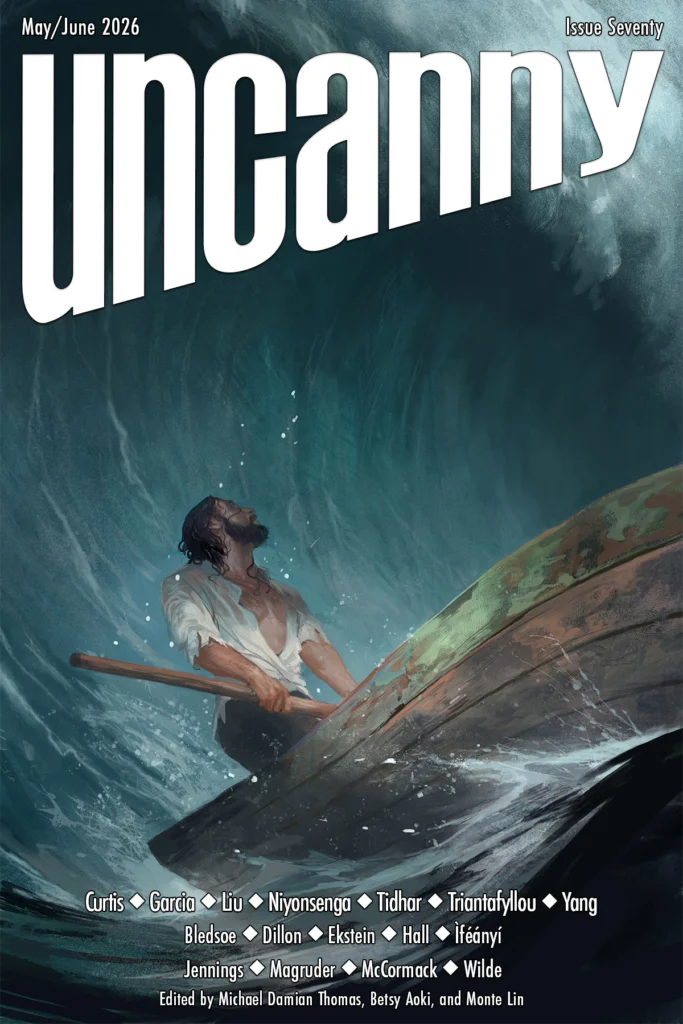
NEW YORK, NY – Award-winning author Fran Wilde, known for her intricate world-building and profound thematic explorations, has once again captivated readers with her latest poem, "A Mermaid Looks at 40," featured in Uncanny Magazine Issue Seventy. The piece, a poignant and evocative meditation on sacrifice, identity, and environmental reckoning, offers a contemporary twist on the classic mermaid myth, striking a powerful chord with its raw honesty and timely relevance.
The poem, which is also available as an audio rendition by Erika Ensign on the Uncanny Magazine Podcast, Episode 70A, transcends its fantastical premise to deliver a searing commentary on the personal and ecological costs of self-erasure. Wilde, a two-time Nebula Award winner and a prominent voice in speculative fiction, uses the mermaid’s journey as a powerful metaphor for the universal human experience of confronting past compromises and reclaiming an authentic self, particularly as the world around them succumbs to visible decay.
A Forty-Year Reckoning: The Main Facts
"A Mermaid Looks at 40" centers on an unnamed mermaid who, in her youth, willingly trades her intrinsic identity—her voice and scales—for a terrestrial existence, driven by a love-mad, air-drunk pursuit of happiness. For years, she maintains this land-bound peace, believing her self-sacrifice contributes to the collective happiness of those around her, and by extension, her own. However, as she reaches the pivotal age of forty, a stark reality sets in. Environmental degradation—"air fills with smoke," "land’s eroding," and she finds herself "running hot"—serves as a visceral catalyst for her personal awakening. Her scales and voice return, albeit "rougher," signaling a reclamation of her true self.
The poem culminates in her defiant return to the sea, no longer a creature of simple happiness or singular identity. She sinks into the water, "not quite one thing or another any more," and vehemently rejects those who found it "useful" for her to change so they could remain complacent. This narrative arc, compressed into just over 200 words, delivers an impactful punch, demonstrating Wilde’s masterful ability to convey complex emotional and societal truths with poetic economy.
A Chronology of Self-Sacrifice and Awakening
The poem unfolds with a clear, albeit condensed, narrative chronology, charting a profound journey of self-discovery:
The Initial Bargain: Air Drunk, Love Mad
The narrative begins with a flashback to a youthful, impetuous decision: the mermaid’s swift, seemingly joyful abandonment of her aquatic nature. "I didn’t think much / About trading my voice and scales away / When I fell into the air / and happily drowned." This imagery of "happily drowning" is immediately paradoxical, hinting at the self-deception inherent in her choice. She embraces the land world, proclaiming, "As long as we’re happy / I happily said, air drunk / Love mad—" It’s a classic fairytale premise, echoing tales of sirens and selkies, but imbued with a modern sense of impulsivity and the intoxicating allure of perceived love. The sacrifice of her voice and scales—her very essence and means of navigation in her natural world—is presented as a small price for the promise of shared happiness.
Years of Silent Compromise: Keeping the Peace
Following her initial transformation, the mermaid enters a long period of maintaining this new, altered existence. "I continued, happily / All the years after / Keeping peace / Between sea and land / Ensuring everyone was happy / Because I thought that meant / I was happy too." This stanza reveals the insidious nature of her sacrifice. Her "happiness" is conditional, a performance tied to the happiness of others. She becomes a mediator, a placater, her identity subsumed by the role she plays for the comfort of those around her. The repetition of "happily" becomes ironic, underscoring the hollowness of a joy not authentically her own. This extended period highlights the slow erosion of self that can occur when personal truth is suppressed for the sake of external harmony.
The Catalyst at Forty: Environmental and Personal Upheaval
The turning point arrives abruptly, marked by the significant milestone of "40," a traditional age of introspection and re-evaluation. The internal shift is mirrored and triggered by external environmental decay: "But now I’m running hot / And the water feels better / And my scales have returned / With my voice, rougher, / As the air fills with smoke, / The land’s eroding and / I better understand my bargains / With love and happiness." The physical discomfort of "running hot" and the allure of water signify her body’s rejection of her terrestrial form and a yearning for her original element. The return of her scales and "rougher" voice indicates a difficult, perhaps painful, re-emergence of her authentic self, stripped of its former polished compromises. Crucially, this personal metamorphosis is explicitly linked to the escalating environmental crisis—"smoke" and "eroding land"—suggesting an inextricable connection between the health of the planet and the health of the individual soul. The realization that she "better understand[s] my bargains" marks a profound shift from naive acceptance to informed disillusionment.

Reclamation and Defiance: Not Happy With Anyone
The poem concludes with the mermaid’s resolute return to her origins, but not without a newfound clarity and a potent sense of defiance. "I hear the sea call / And I sink into it / Not quite one thing or / Another any more / And definitely not happy / With anyone / Who thought it useful / For me to change / So they could stay the same." Her descent into the sea is not a blissful reunion but a complex re-integration. She is no longer merely a mermaid, nor fully human; she occupies a liminal space, transformed by her experiences. The final lines deliver a powerful indictment of those who benefited from her self-effacement, revealing her anger and refusal to accept the status quo. Her happiness is no longer a performative act for others but a fiercely guarded, hard-won truth, even if that truth means embracing discomfort and righteous indignation.
Supporting Data and Thematic Richness
Fran Wilde’s "A Mermaid Looks at 40" is not merely a narrative; it’s a rich tapestry woven with literary allusions, psychological insights, and acute social commentary, leveraging the author’s extensive background in speculative fiction.
Fran Wilde’s Literary Pedigree
Wilde’s impressive bibliography provides a crucial context for understanding the depth of "A Mermaid Looks at 40." As a two-time Nebula Award-winner, her work consistently explores themes of transformation, identity, resilience, and the intricate relationship between individuals and their environments. Her debut novel, Updraft, and her Nebula-winning Middle Grade novel Riverland, both delve into worlds defined by unique physical laws and the characters’ struggles to navigate them while finding their own voice. Short stories like "Clearly Lettered in a Mostly Steady Hand" (a Nebula, Hugo, and World Fantasy finalist) and "A Catalog of Storms" (a Hugo, Locus, and Nebula finalist) demonstrate her consistent engagement with complex emotional landscapes and the costs of adaptation. This poem, therefore, is not an outlier but a concise and potent distillation of thematic concerns that permeate her larger body of work, specifically her interest in characters who must confront difficult truths about themselves and their worlds.
Archetypal Resonance: The Mermaid Reimagined
The mermaid archetype itself carries centuries of cultural baggage, often symbolizing liminality, temptation, and sacrifice for love (most famously in Hans Christian Andersen’s The Little Mermaid). Wilde’s poem both acknowledges and subverts these traditional narratives. While the initial sacrifice for love is present, Wilde’s mermaid’s journey is less about achieving a fairy-tale ending and more about the painful process of self-reclamation. She doesn’t pine for a prince; she rejects the very premise of her bargain. This reinterpretation positions the mermaid not as a tragic figure of lost love, but as a symbol of agency, awakening to the true cost of assimilation and demanding authenticity.
Key Thematic Explorations:
- Identity and the Cost of Self-Sacrifice: At its core, the poem interrogates the profound implications of sacrificing one’s authentic self for the sake of perceived love or societal acceptance. The mermaid’s voice and scales are not just physical attributes but emblems of her true nature, her power, and her connection to her heritage. Their initial abandonment highlights the seductive illusion that external validation can compensate for internal emptiness. Her eventual reclamation of these elements, albeit in a "rougher" form, signifies a difficult but necessary return to self, embracing imperfections that come with authenticity.
- Environmental Decay as a Catalyst for Personal Truth: One of the poem’s most striking aspects is its explicit linking of the mermaid’s personal crisis to external environmental degradation. The "air fills with smoke," "land’s eroding," and her own body is "running hot." These are not just atmospheric details; they are integral to her awakening. The dying planet mirrors her dying spirit, suggesting that ignoring the health of our environment is akin to ignoring the health of our souls. This connection imbues the poem with urgent contemporary relevance, resonating deeply with anxieties surrounding climate change and ecological collapse. The physical discomfort she feels ("running hot") is a direct response to the ailing world, forcing her to confront her own "bargains."
- The Illusion of Happiness and External Validation: The poem critiques a superficial understanding of happiness, particularly one derived from external sources or the approval of others. The mermaid’s belief that "ensuring everyone was happy / Because I thought that meant / I was happy too" exposes the trap of performative joy and conditional contentment. Her eventual realization that she is "definitely not happy / With anyone / Who thought it useful / For me to change / So they could stay the same" is a powerful rejection of this societal expectation, championing a more profound, albeit perhaps less comfortable, form of authentic contentment.
- The Power of a Reclaimed Voice: The return of the mermaid’s voice, described as "rougher," is highly symbolic. It suggests that the voice she reclaims is not the smooth, melodious one she may have once possessed, but one honed by experience, pain, and truth. It is a voice no longer modulated to please or conform, but one capable of expressing raw, unvarnished reality. This "rougher" quality speaks to the resilience and strength forged through hardship, a voice that commands attention precisely because it has been earned through struggle.
- Midlife Reckoning and Transformation: The significance of "40" in the poem’s title cannot be overstated. It marks a traditional point of midlife introspection, a time when individuals often re-evaluate their life choices, relationships, and priorities. For the mermaid, this age becomes a threshold for profound transformation, a moment when the accumulated compromises of decades finally demand reckoning. It suggests that true self-discovery is often a process, catalyzed by time and experience, rather than an instantaneous revelation.
Official Responses and Contextual Relevance
While "A Mermaid Looks at 40" is a poem and not a political statement eliciting official responses, its publication within Uncanny Magazine and its podcast adaptation speak to its critical reception and accessibility.
- Uncanny Magazine’s Platform: Uncanny Magazine has established itself as a leading venue for "genre-bending" speculative fiction, known for publishing works that are intellectually stimulating, emotionally resonant, and often socially conscious. Its consistent inclusion of authors like Fran Wilde underscores its commitment to literary excellence and stories that push boundaries. Publishing "A Mermaid Looks at 40" within its pages signifies its editorial recognition of the poem’s artistic merit and its powerful thematic resonance within contemporary discourse.
- The Power of Audio Storytelling: The decision to feature the poem as an audio reading by Erika Ensign on the Uncanny Magazine Podcast further amplifies its reach and impact. Poetry, by its very nature, is often designed for oral performance, and Ensign’s reading allows the nuances of Wilde’s language and the emotional weight of the narrative to be fully appreciated. This multimodal approach makes the poem accessible to a broader audience, emphasizing its potential to provoke thought and discussion beyond the printed page.
- Authorial Intent (Inferred): Given Fran Wilde’s consistent exploration of complex themes of identity, agency, and environmentalism across her diverse body of work, "A Mermaid Looks at 40" can be understood as a deliberate and focused artistic statement. It aligns perfectly with her established reputation for crafting narratives that are both deeply personal and universally resonant, encouraging readers to look beyond the surface of fantastical elements to engage with profound truths about the human condition and our collective future.
Broader Implications and Societal Resonance
"A Mermaid Looks at 40" transcends its poetic form to offer profound implications for contemporary society, touching upon pressing issues from climate change to personal authenticity.
- A Mirror to Climate Change Anxiety: The poem’s vivid depiction of a world "running hot," with "smoke" and "eroding land," serves as a potent metaphor for the global climate crisis. It captures the creeping dread and tangible effects of environmental degradation that many feel today. The mermaid’s awakening, triggered by these ecological shifts, implies that ignoring the health of our planet will inevitably lead to a personal and collective reckoning. Her return to the sea can be seen not just as a personal choice but as an allegorical plea for humanity to reconnect with and prioritize the natural world from which we’ve distanced ourselves.
- The Call for Authentic Living: In an era dominated by social media and curated identities, the mermaid’s journey from performative happiness to raw authenticity resonates deeply. The poem challenges individuals to examine their own "bargains with love and happiness," urging a critical look at where personal integrity might have been sacrificed for the comfort or approval of others. It champions the difficult but ultimately liberating path of self-reclamation, even if it means disrupting the peace or confronting those who benefited from one’s compromises.
- Feminist Readings and Reclaiming Agency: The mermaid narrative has historically been fertile ground for feminist interpretations, often focusing on themes of objectification, voicelessness, and sacrifice for patriarchal love. Wilde’s poem firmly positions its mermaid as an agent of her own destiny. Her initial choice, though flawed, is her own, and her eventual rejection of those who desired her stasis is a powerful act of reclaiming agency. The return of her "rougher" voice symbolizes a refusal to be silenced or to conform to expectations, echoing contemporary calls for women to speak their truth and assert their power.
- Midlife as a Catalyst for Growth: The poem reframes the often-maligned "midlife crisis" not as a period of decline or despair, but as a necessary crucible for profound personal growth and re-evaluation. Reaching forty becomes an opportunity for clarity, for shedding illusions, and for embarking on a new, more authentic phase of life. It suggests that wisdom is gained through confronting difficult truths and that true happiness might lie in radical self-acceptance, rather than in external validation.
- Fran Wilde’s Enduring Voice: "A Mermaid Looks at 40" solidifies Fran Wilde’s position as a vital and evolving voice in speculative literature. It demonstrates her continued ability to use the fantastical to illuminate the deeply human, to weave together personal introspection with global concerns. The poem’s concise yet impactful nature ensures it will linger in the minds of readers, prompting reflection on their own lives, their relationships with the environment, and the true meaning of happiness. As the poem asserts, sometimes understanding our bargains is the most crucial step towards reclaiming ourselves.
© 2026 Fran Wilde


Leave a Comment