
Warhammer 40,000 11th Edition: Week Two Reveals Unpack Knights, Psychic Might, and Granular Customization
Main Facts
The second week of Games Workshop’s Faction Focus reveals for the 11th Edition of Warhammer 40,000 has concluded, offering a deeper look into the evolving strategic landscape of the grimdark future. This latest wave of previews has cast a spotlight on several iconic factions, including the colossal Imperial and Chaos Knights, the elegant yet deadly Emperor’s Children, the teleporter-wielding Grey Knights, the elusive Drukhari, and the sorcerous Thousand Sons. Beyond individual faction insights, the reveals also delved into crucial core rule adjustments concerning movement (specifically for units with the FLY keyword), the nuanced ‘Upgrade’ system for Enhancements, and a significant buff to Psychic attacks. Simultaneously, initial Datasheet previews from the upcoming Armageddon box set have surfaced, providing tangible examples of these new mechanics, albeit with some notable inconsistencies that suggest these might not be the final Codex iterations. The overarching theme emerging from these disclosures points towards an edition prioritizing granular list-building, strategic terrain interaction, and a re-evaluation of how traditionally elite or "skewed" armies engage with objective play.
Chronology: A Week of Unveiling the 11th Edition’s Nuances
Following an initial flurry of previews, the second week of Faction Focus articles continued the steady drip of information, building anticipation for the full release of Warhammer 40,000 11th Edition. This period saw dedicated deep dives into six distinct factions: Imperial Knights, Chaos Knights, Emperor’s Children, Grey Knights, Drukhari, and Thousand Sons. Each focus provided a glimpse into their forthcoming Detachment options, showcasing how Games Workshop intends to shape their playstyles in the new edition.
Beyond faction-specific rules, several critical core mechanics were formally introduced or clarified. The ‘Take to the Skies’ rule dramatically alters the strategic utility of the FLY keyword, offering unprecedented tactical mobility. The ‘Upgrade’ keyword for Enhancements signaled a return to more detailed, customizable list construction, moving away from some of the more streamlined approaches of previous editions. Furthermore, the PSYCHIC keyword received a substantial boon, enhancing the offensive capabilities of psyker-heavy armies.
In parallel with these Faction Focus articles, Games Workshop also released a handful of Datasheets directly from the forthcoming Armageddon launch box. These included specific unit profiles for Space Marine Eradicators and a Land Speeder, as well as Ork Wartrakks and a selection of Ork Leaders, complete with new keywords like ‘Suppressed’ and the intriguing ‘SUPPORT’ ability for Leaders. These early Datasheet previews, while exciting, have also prompted discussions regarding potential differences between box-set rules and final Codex entries, highlighting a need for caution when interpreting their long-term implications. The current pace of reveals suggests that a Faction Focus for every faction is on track to be released by early June, setting the stage for a comprehensive understanding of the 11th Edition’s landscape.
Supporting Data: Dissecting the New Rules and Detachments
Detachment Design and the Challenge of Asymmetric Scoring
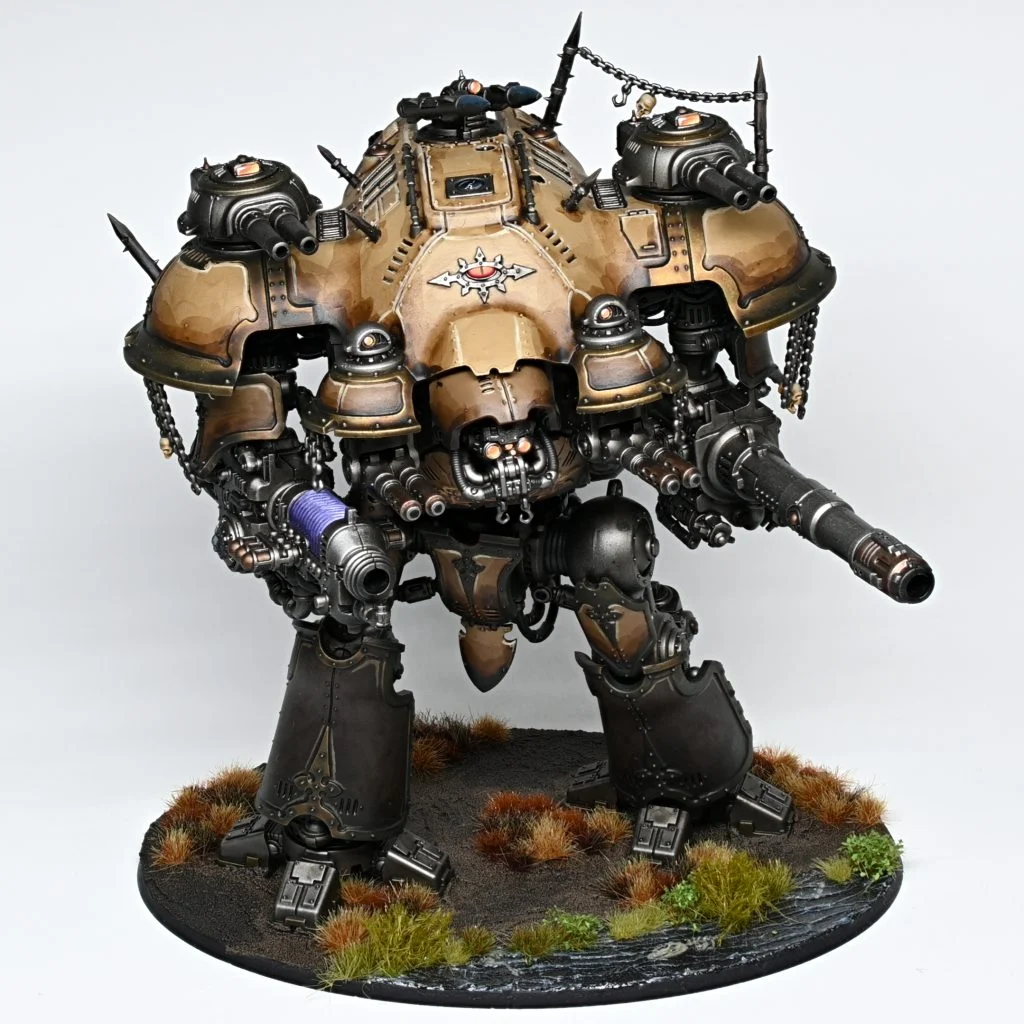
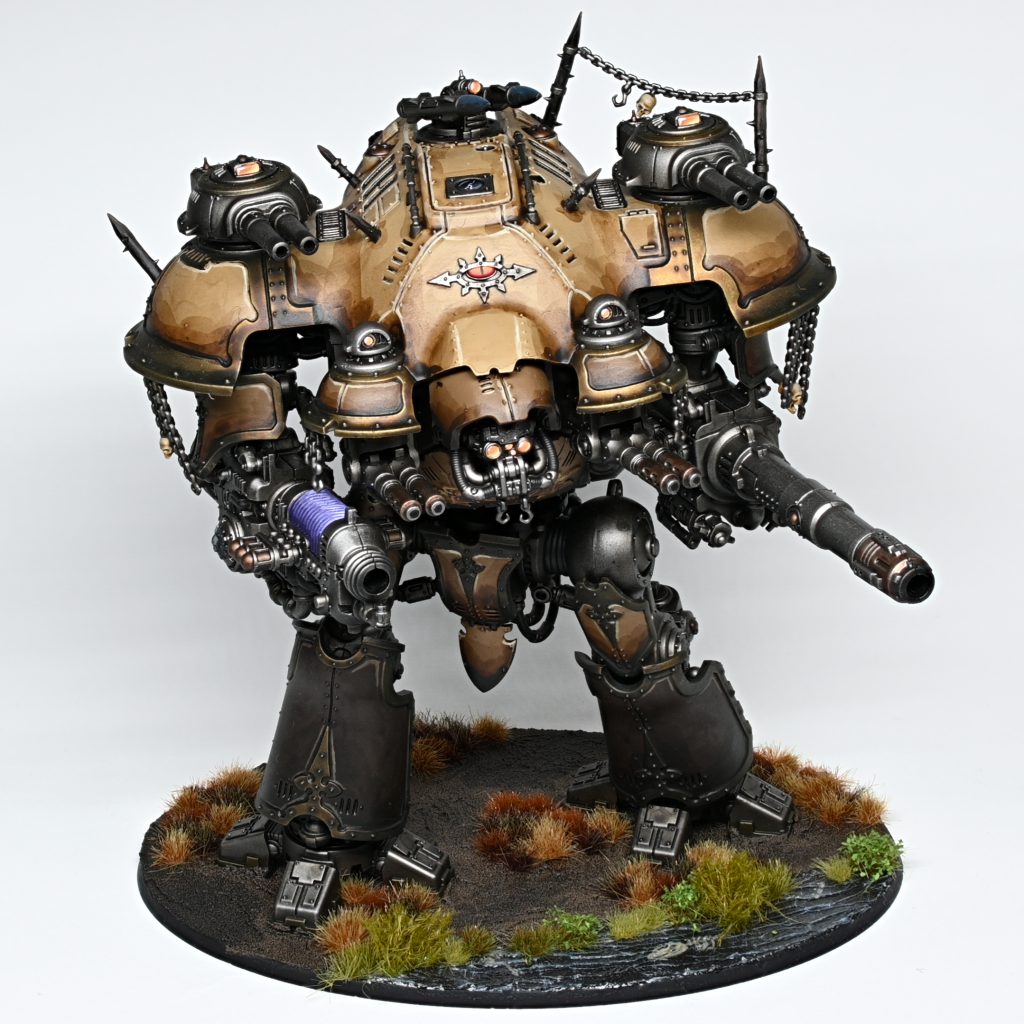
A foundational shift in 11th Edition is the introduction of Force Dispositions for Detachments, which directly influences how armies score Primary Victory Points (VP). This mechanic is particularly impactful for factions that inherently field fewer models, such as the Knights. Historically, one of the primary strategies to defeat a Knight army, especially without sufficient anti-armour firepower, was to outscore them on objectives. With a low model count, Knights were often disadvantaged in holding multiple objective markers simultaneously, a fundamental opportunity cost for their inherent durability and offensive power. The concept of asymmetric scoring was always destined to confront the unique "skew" playstyle of Knight armies head-on.
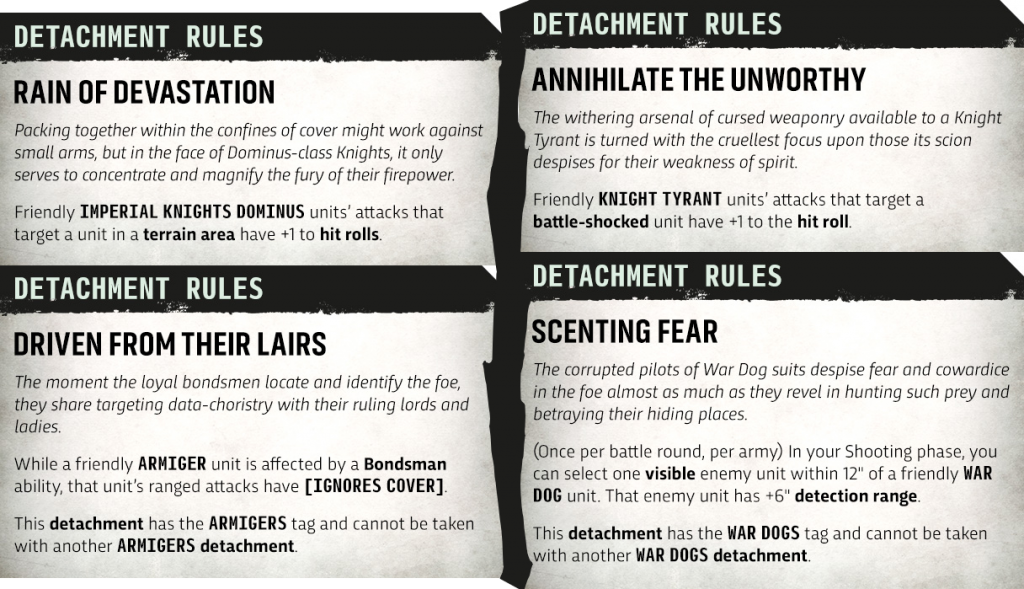
The initial Knight Detachment reveals, mirrored for both Imperial and Chaos factions, are 1 Detachment Point (DP) options, focusing on the largest non-Horus Heresy chassis (the Dominus/Tyrant) paired with the smaller Armigers. While specific rules were not fully detailed, the design philosophy appears to be an attempt to mitigate some of the inherent challenges Knights face in the new scoring paradigm. Notably, there was a strong implication that not all Knight Detachments would be 1DP, with suggestions that the broader Questor Forgepact and its Chaotic equivalent might be 2DP. This tiered approach to Detachment cost reflects Games Workshop’s balancing efforts, especially considering the potential for certain factions (like Skitarii Rangers with their free-sticky objectives) to exploit objective play.
From a design perspective, the 1DP Knight Detachments have been met with some skepticism. Critics suggest they feel somewhat "hand-holdy," attempting to circumvent 11th Edition changes that might otherwise penalize Knight players. This perceived design choice, in an edition reportedly priding itself on more terrain-forward gameplay and nuanced objective control, presents a potential philosophical conflict.
Granular Customization: The ‘Upgrade’ Keyword
The 11th Edition is leaning heavily into player choice and list-building granularity, a trend exemplified by the introduction of the ‘Upgrade’ keyword for certain Enhancements. This keyword signifies that an Enhancement can be taken multiple times, allowing players to invest more deeply in kitting out specific key units. This stands in contrast to previous systems where Enhancements were often one-per-army or limited in scope.
This granular approach extends beyond Enhancements. Games Workshop has indicated a return to individual point costs for certain weapon options, such as the main guns for units like Riptide Battlesuits. This level of detail empowers players to fine-tune their lists, creating "powerful bricks" of units like Terminators, where multiple upgrades can stack to create truly formidable combat elements. This design choice is lauded for allowing greater differentiation between 1DP Detachments and their base Datasheets, providing strategic depth for players looking to specialize their forces without needing to pick and choose between mutually exclusive buffs.
Emperor’s Children: Rewarding Thematic Excess
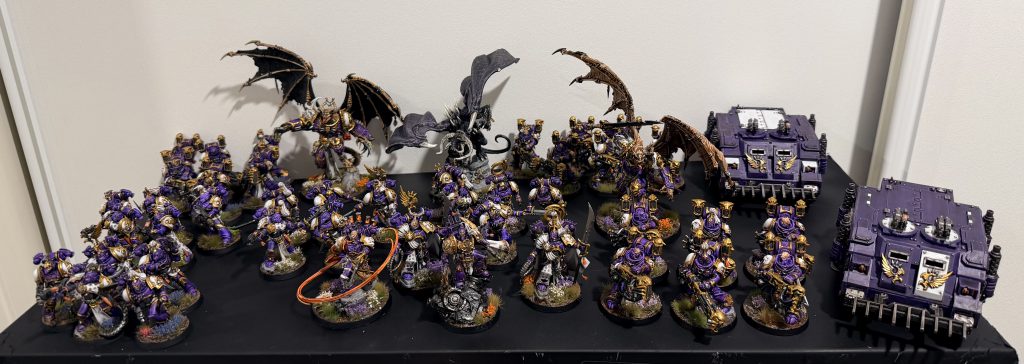
Acknowledging the comparatively thin model range for Emperor’s Children (and to a lesser extent, World Eaters) within the broader Chaos Space Marines faction, the revealed Detachments for the Slaanesh-devoted legion aim to incentivize specific, thematic playstyles. Whether players prefer massed waves of pink-clad troops, haughty Daemonette-like swordsmen, or durable bricks of Terminators, the Detachments reward playing these units "in excess." This design philosophy directly encourages players to build "skewed" lists, leaning heavily into one particular unit type to unlock powerful synergistic effects.
While the specific rules for these Detachments were not fully disclosed, the intent is clear: to provide strong, specialized options that allow Emperor’s Children players to define their force around a particular unit or playstyle, a welcome change from more generic Detachments. The potential for jamming cheap Terminators into an opponent’s backline with powerful buffs, for example, offers compelling tactical options for risk-averse players. The only notable omission highlighted by observers is a dedicated Noise Marine-centric option, though this is widely expected to be addressed later in the edition’s lifecycle.
Flying Units: A Tactical Repositioning
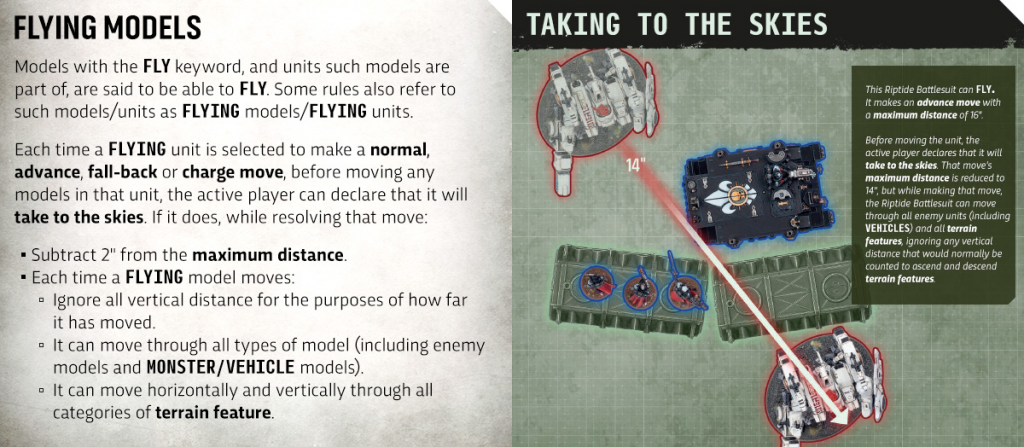
A significant core rule change comes with the new interpretation of the FLY keyword. Units with FLY can now choose to ‘Take to the Skies’, sacrificing 2 inches of their movement to ignore other units and Terrain Features during their move. This mechanic provides unparalleled tactical flexibility, particularly for "shoot-and-scoot" units like Drukhari Scourges, allowing them to reposition safely after engaging, or bypass obstacles to secure advantageous firing lines.
The ability to ‘Take to the Skies’ can be activated during Normal, Advance, Fall-back, or Charge moves, but notably not during Surge moves. Given the prevalence of mid-board terrain in 11th Edition, this rule is expected to see frequent use, enabling dynamic gameplay and rewarding precise positioning. The trade-off of 2 inches of movement is often a small price to pay for the strategic advantage of ignoring obstacles, especially for already fast-moving flying units. The interaction with the new Surge rules, and whether certain out-of-phase movements will be reclassified, remains a key detail to watch.
Grey Knights: Purging with Purpose
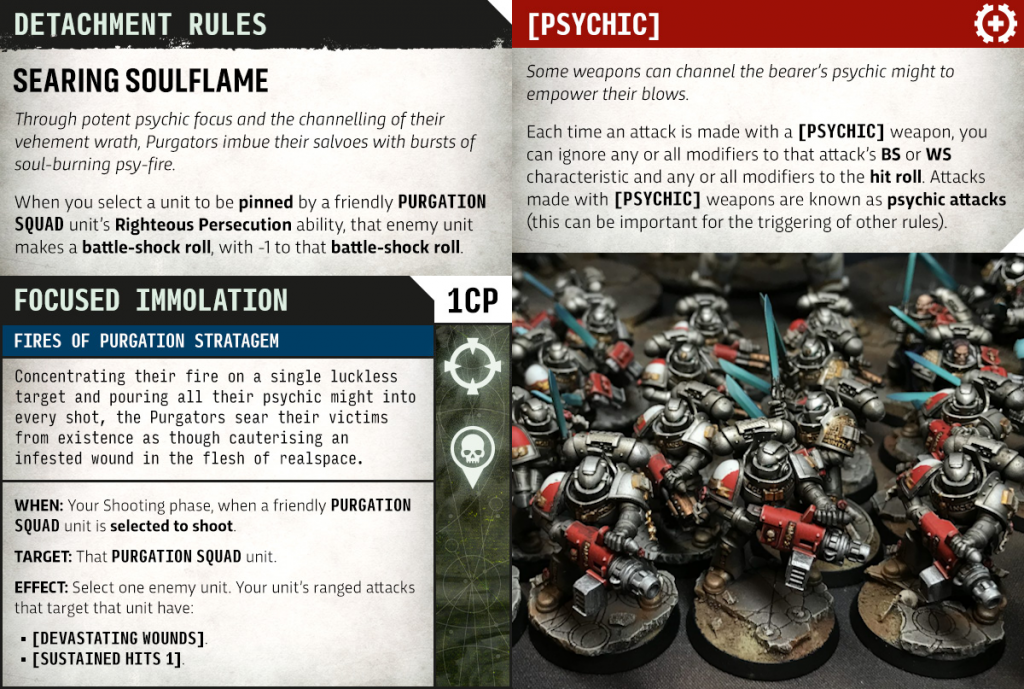
Similar to the Emperor’s Children, the Faction Focus for Grey Knights emphasizes specialization, a sensible approach for an elite army with a relatively modest model range. The three 1DP Detachments showcased each provide substantial benefits to a single Datasheet. While these options are focused, they are expected to be complemented by broader, more generalist options within the Grey Knights Codex, ensuring a balanced approach to list construction.
The Detachments highlight units that saw varied play in 10th Edition. Purgation Squads, with access to potentially brutal shooting, appear to be an obvious winner. However, the movement benefits offered by options like ‘Immaterial Interdiction’ could prove equally powerful, especially depending on the final mechanics of Ingress and Surge Moves. These specialized Detachments aim to elevate previously underutilized units, providing new strategic avenues for Grey Knight players.
Drukhari: Divided and Conquering
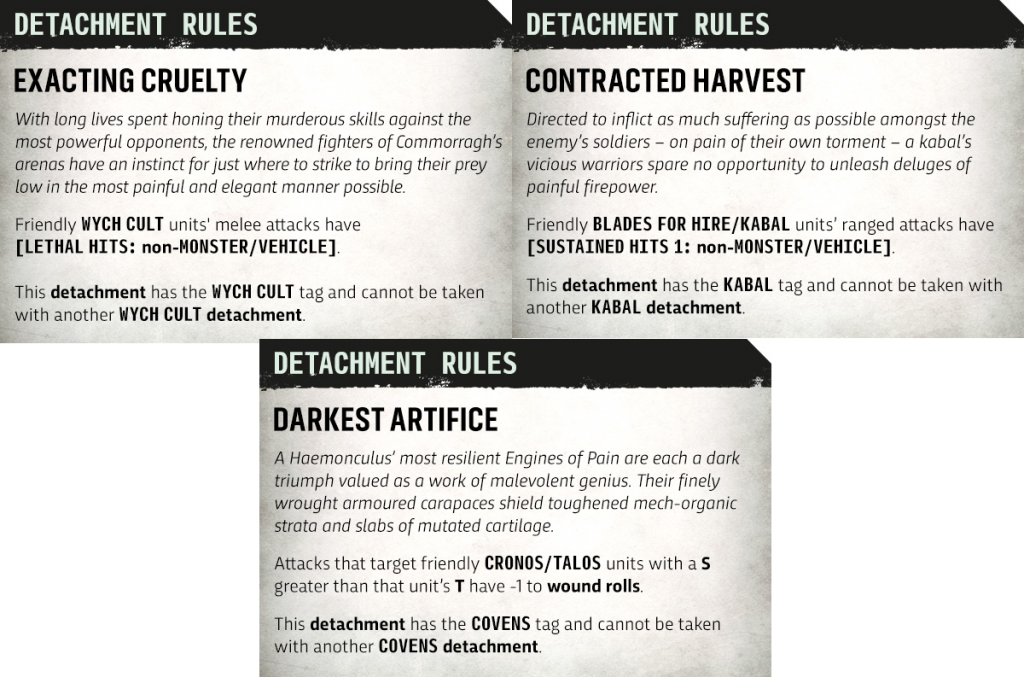
The Drukhari receive three distinct 1DP Detachments in 11th Edition, mirroring the faction’s traditional tripartite structure of Kabals, Wych Cults, and Covens (though the latter’s representation has been reduced following the removal of Grotesques in 10th Edition). This design philosophy encourages players to either "soup" these sub-factions together or to field a generalist Detachment with a specific focus on one branch.
A crucial design element is the use of relevant tags (e.g., ‘KABAL’ for ‘Kabalite Agonysts’), likely preventing these specific 1DP Detachments from being used in conjunction with their dedicated branch Detachments (e.g., ‘Kabalite Cartel’). This mechanism ensures that players make meaningful choices about their army composition without simply stacking buffs. These Detachments aim to bolster the remaining tools in the Drukhari arsenal, making units like Scourges even more potent. The reveals also showcased "conditional weapon keywords," a detail that suggests a broader effort to condense and streamline rules across the board through precise keyword usage.
Thousand Sons: Psychic Dominance Ascendant
The 10th Edition Thousand Sons Codex was well-received, particularly for its thematic and potent return of Psychic abilities. This trend continues into 11th Edition, with the PSYCHIC keyword receiving a substantial buff: attacks with this keyword now ignore negative modifiers to hit, Ballistic Skill (BS), or Weapon Skill (WS). This change fundamentally alters the defensive landscape for Psychic-heavy armies, making their attacks far more reliable against units relying on Stealth or other hit/skill modifiers.
The Thousand Sons Faction Focus revealed two "big winner" Detachments that solidify previously emerging build paths. The ‘Sekhetar Cohort’ appears to support a mechanized Thousand Sons force, a niche list that could become highly viable with the arrival of units like the Defiler. The ‘Cult of Mutation’ caters to mutant-focused builds, offering new synergies for specific unit types. While ‘Servants of Change’ was noted as a potential outlier or "dud," the overall impression is that Thousand Sons are exceptionally well-positioned for 11th Edition, capitalizing on the enhanced PSYCHIC keyword and offering diverse strategic options.
Armageddon Datasheet Previews: A Partial Picture
The Armageddon launch box has provided the first tangible Datasheets for 11th Edition, offering a glimpse into unit profiles and new keywords.
- Space Marines: The Eradicator Squad with Heavy Bolters appears to be a solid choice for clearing Marine-equivalent units, delivering ample D2 shots. The Land Speeder is positioned as a potentially cheap, fast unit with FLY and the ability to move after shooting, making it ideal for rapid objective contesting or "corner-peeking" tactics around terrain.
- Orks: The Wartrakk introduces the ‘Suppressed’ keyword, inflicting a -1 to hit on units it targets, which can stack with cover bonuses for significant defensive advantages. The previews also detailed several Ork Leaders. The Warboss datasheet, notably, showed a Power Klaw, implicitly confirming that the box-set Datasheets are likely simplified versions, as a Warboss without a Power Klaw in the full Codex would be met with player dissatisfaction.
- The intriguing ‘SUPPORT’ keyword for Leaders was highlighted, allowing units to attach an additional Leader beyond their standard one. Examples included the Bigboss (granting SUSTAINED HITS 1 in melee and +1 to Charge) and the Bannernob (providing a 5+ Invulnerable Save and +1 Toughness while the Waaagh! is active).
- The Weirdboy received a substantial glow-up, gaining powerful buffs based on the number of models in his attached unit (+1 Strength and +1 Damage on his ranged attack for every 5 models, with a commensurate HAZARDOUS keyword if 10+). ‘Da Jump’ returns, usable on the first turn, though curiously, the Weirdboy can now only be legally attached to Boyz units, ending the "Breaka Boyz" tech. The Painboy received an updated model and remains largely similar to his prior incarnation. The prospect of a Weirdboy amidst a mosh pit of 20 Boyz, combined with changes to the HAZARDOUS keyword making it less punitive, is a thematic and strategically exciting prospect.
A key observation arising from these Datasheet previews is a potential inconsistency in rule wording. For instance, the Eradicators’ ‘Overlapping Detonations’ rule lacks the concise, keyworded phrasing (e.g., BLAST 1: non-MONSTER/VEHICLE) seen with Drukhari rules. This, coupled with the Wartrakk initially showing a ‘SUPPORT’ ability for Warbikers (which are not in the Armageddon box), strongly suggests that these are not the final Codex Datasheets but rather simplified or box-specific rules. Players are advised to approach these initial sheets with a degree of skepticism until official Codex releases.
Official Responses: The Guiding Philosophy of 11th Edition
While Games Workshop does not always issue direct "official responses" to community feedback on previews, their design choices and accompanying commentary often reveal their underlying philosophy for a new edition. For 11th Edition, a few key intentions can be inferred:
- Terrain-Forward Gameplay: Repeated emphasis has been placed on the strategic importance of terrain. Rules like ‘Take to the Skies’ and the ‘Suppressed’ keyword for the Wartrakk, which interacts with cover, reinforce this commitment. The goal is to make board positioning and terrain utilization more impactful than ever before.
- Granular Customization and Player Choice: The ‘Upgrade’ keyword, individual weapon point costs, and diverse Detachment options for single Datasheets all point towards empowering players with more choices during list construction. This suggests a desire to move away from overly generic army builds and foster unique, specialized forces.
- Faction Identity and Thematic Play: The Detachments for factions like Emperor’s Children, Grey Knights, and Thousand Sons clearly aim to reinforce their core identities and encourage thematic playstyles, even when model ranges are limited. This provides players with strong reasons to build around specific units or archetypes.
- Addressing "Skew" and Asymmetric Play: The introduction of Force Dispositions and varying Detachment Point costs, particularly for factions like Knights, indicates a conscious effort to balance "skew" lists that historically relied on extreme durability or high damage output. The goal is to ensure these armies still interact meaningfully with objective play.
- Refining Core Mechanics: The significant changes to FLY and PSYCHIC keywords demonstrate a willingness to re-evaluate and refine fundamental game mechanics to enhance strategic depth and address long-standing balance concerns.
Implications: The Evolving Landscape of 11th Edition
Potential Balance Concerns and Design Conflicts
While many of the 11th Edition reveals have been met with enthusiasm, some of the mechanics introduced this week, particularly concerning Grey Knights, Thousand Sons, and Knights, raise potential balance concerns. The core issue lies in their ability to circumvent or negate key defensive mechanics, specifically around terrain and negative modifiers.
The buff to the PSYCHIC keyword, allowing attacks to ignore negative modifiers to hit, BS, or WS, is a powerful boon for psyker-heavy armies. While this can be seen as a necessary counterbalance to specific anti-PSYKER keywords, granting what effectively amounts to army-wide +1 to hit (or negating -1s) feels potent. In an edition heavily emphasizing terrain and defensive keywords like Stealth and Cover, allowing certain attacks to bypass these easily could undermine the core design ethos. If factions can consistently ignore cover bonuses or other defensive debuffs, it makes balancing armies that rely on these mechanics significantly more challenging. The prospect of Knights and Thousand Sons, already known for their durability and offensive prowess, further negating common defensive strategies creates a "problem child" scenario that will demand careful scrutiny and potential adjustments.
Strategic Shifts for Players
The changes introduced this week will undoubtedly lead to significant shifts in player strategy:
- Dynamic Movement: The ‘Take to the Skies’ rule for FLY units introduces a new layer of dynamic movement. Players will need to master its use for optimal positioning, threat saturation, and objective play, turning fast, flying units into even more potent tactical instruments.
- Deep List Customization: The ‘Upgrade’ keyword and granular point costs for weapons will empower players to craft highly specialized and optimized units. This encourages creative list building and offers more avenues for competitive differentiation.
- Specialized Detachments: Faction-specific Detachments that reward themed play (e.g., Emperor’s Children’s "excess" builds, Thousand Sons’ mechanized lists) will push players towards distinct army compositions, potentially fostering a more diverse meta than editions that favored generic "good stuff" lists.
- Leader Synergy: The ‘SUPPORT’ keyword for Ork Leaders (and potentially others) opens up exciting possibilities for building powerful unit "bricks" with multiple attached characters, combining buffs and abilities to create formidable combat elements.
Future Outlook and Anticipated Events
The reveals thus far paint a picture of an 11th Edition that is both familiar and fundamentally different. The focus on terrain, granular customization, and re-evaluated core mechanics suggests a more strategically deep game. Next week’s Faction Focus for Genestealer Cults is anticipated to continue the trend of 1DP options for single-character units, further expanding the toolkit for diverse army construction.
Crucially, the Warhammer 40,000 community is eagerly awaiting the first live-streamed games of 11th Edition on May 25th. Featuring six prominent community members, these games will pit Space Marines against Orks, T’au against Death Guard, and two factions yet to receive their focus articles – Adeptus Mechanicus against Aeldari. These live demonstrations will provide the first real-world glimpse into how these new rules, Detachments, and Datasheets interact on the tabletop, offering invaluable insights into the edition’s flow, balance, and strategic depth. As more pieces of the puzzle fall into place, the shape of 11th Edition becomes clearer, promising an engaging and evolving experience for Warhammer 40,000 enthusiasts.



Leave a Comment