
The Architect of Baroque Surrealism: Jesús Aguado’s Journey from Illustration to Fine Art Mastery
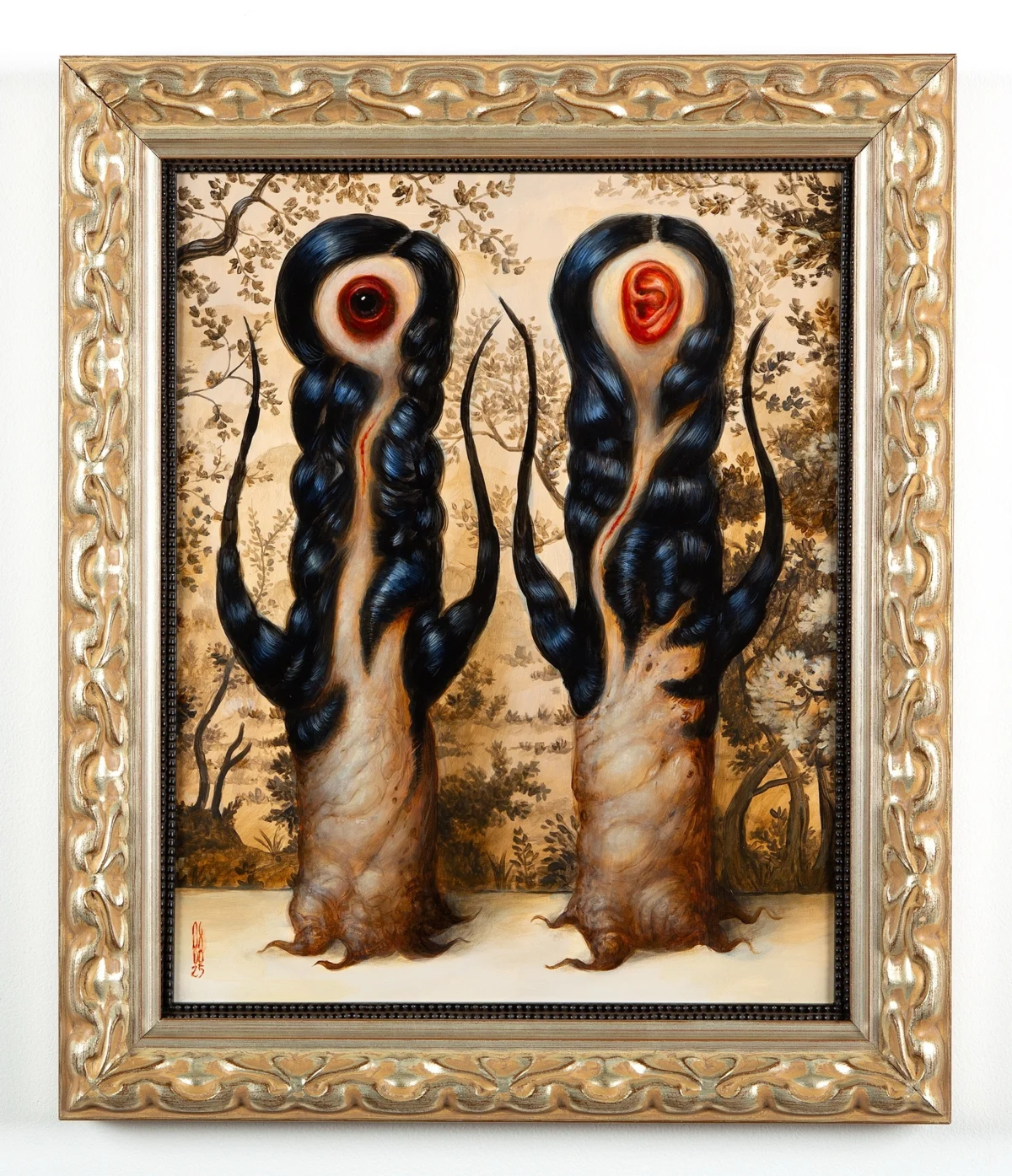
Main Facts: The Synthesis of Commercial Precision and Surrealist Depth
In the contemporary art landscape, a tension often exists between the "lowbrow" accessibility of commercial illustration and the intellectual "highbrow" demands of fine art. Spanish artist Jesús Aguado (b. 1976) has spent the better part of the last decade dissolving this boundary. Emerging from a twenty-year career as a world-class editorial illustrator, Aguado has successfully transitioned into the realm of fine art, creating a unique visual dialect known as "Baroque Surrealism."
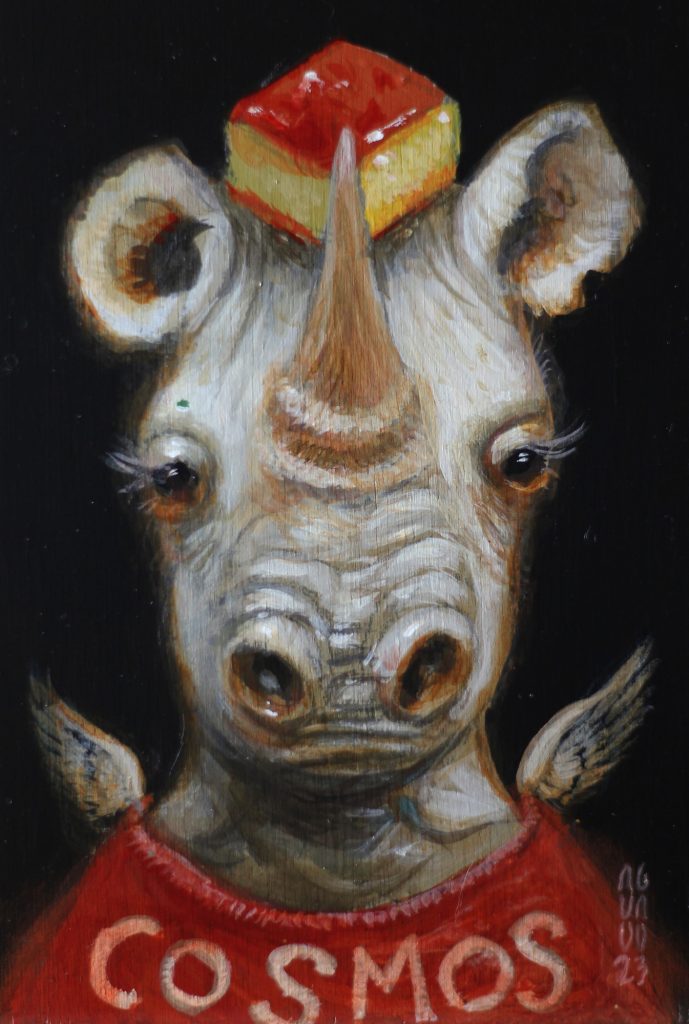
Aguado’s work is characterized by a sophisticated fusion of Old Master techniques—specifically the dramatic chiaroscuro of Caravaggio and the dense compositions of Rubens—with the irreverent, vibrant energy of modern comic books. His canvases are populated not by humans, but by a complex bestiary of chimerical, anthropomorphic creatures that serve as universal vessels for human emotion and metaphysical inquiry.

Currently, Aguado is the focus of significant international attention due to his third solo exhibition, Life Milestones, hosted by the prestigious Arch Enemy Arts gallery in Philadelphia. The exhibition, running from May 24 to June 15, 2025, represents a pivotal moment in his career, showcasing a body of work inspired by the transformative experience of fatherhood and the existential paradoxes of human development. By leveraging his background in universal visual communication, Aguado has created a sanctuary for overstimulated minds, offering art that is simultaneously endearing, disturbing, and profoundly accessible.
Chronology: From the Editorial Trenches to the Gallery Walls
1976–2000: The Foundations in Valladolid and Salamanca
Jesús Aguado was born in Valladolid, Spain, in 1976. His early years were defined by a dual passion for classical art and the burgeoning world of comic books. This duality would eventually become the cornerstone of his professional identity. He pursued formal training at the University of Salamanca, earning a degree in Fine Arts. Unlike many of his peers who immediately sought entry into the gallery circuit, Aguado turned toward the rigorous world of professional illustration, where he began honing the technical discipline that would later set him apart in the surrealist movement.

2000–2017: Two Decades of Visual Communication
For twenty years, Aguado worked in the "trenches" of commercial publishing. His client list was as prestigious as it was diverse, including the Spanish textbook giant Santillana, the globally renowned National Geographic, and numerous children’s publishers stretching from Europe to Taiwan.
This period was a masterclass in visual storytelling. Working for international publishers required Aguado to develop a "universal language"—a way to convey complex narratives and emotions without relying on cultural shorthand or text. The constraints of editorial deadlines and specific client briefs did not stifle his creativity; rather, they built a reservoir of technical skill and creative pressure that would eventually find its outlet in his personal paintings.

2017–2018: The Great Pivot
Around 2017, Aguado began a deliberate transition from the digital and graphic tools of illustration to the traditional mediums of oil and acrylic painting. This was not merely a change in tools but a fundamental shift in purpose. He began to explore the "chimerical figures" that had haunted his sketches for years, bringing them to life on wood panels. By 2020, his work had caught the attention of Arch Enemy Arts in Philadelphia, leading to a series of successful solo exhibitions that cemented his status as a leading voice in Pop Surrealism.
2023–2025: Fatherhood and "Life Milestones"
The birth of Aguado’s son in 2023 marked the most significant biographical shift in his career. This event prompted a deep re-evaluation of his thematic focus. He moved away from purely aesthetic surrealism toward a more "metaphysical" exploration of life’s transitions. This culminated in the Life Milestones series, which explores the "crucial moments" of personal development through a lens of absurd yet symbolic satire.

Supporting Data: Technical Alchemy and the "Density Principle"
The Mechanics of Glazing and Support
Aguado’s work is distinguished by its luminous quality, achieved through a painstaking process of acrylic glazing. By applying multiple translucent layers of paint, he allows light to penetrate the surface and bounce back through the pigment, creating a shimmer that makes his impossible creatures feel tangibly present.
Furthermore, his choice of support is a direct nod to the Renaissance. He paints on traditional wood panels and birch supports. This choice serves two purposes:

- Durability and Gravitas: The physical weight of the wood lends a sense of historical permanence to subjects that might otherwise seem whimsical.
- Surface Interaction: The smooth, non-porous nature of treated wood allows for finer detail and smoother gradients than traditional canvas, facilitating his "academic poetry" style.
The Bestiary of Dualities
Aguado’s iconography is a carefully constructed system of symbols. In his latest works, he employs a recurring cast of animals to represent internal human states:
- Dragons: Representing raw ferocity and the untamed aspects of the psyche.
- Rabbits: Embodying "cuteness" and vulnerability, often placed in threatening or grotesque environments.
- Invertebrates (Worms/Lobsters): Suggesting the grotesque or the alien nature of biological growth.
By banishing humans from his work, Aguado avoids the "demographic barrier." A viewer in Philadelphia can project themselves onto a winged caterpillar just as easily as a viewer in Madrid, making the emotional resonance truly global.

The "Horror Vacui" and the Digital Age
Aguado utilizes the "Density Principle," or horror vacui (the fear of empty space). His canvases are often "strategic overwhelms," packed with narrative threads, flora, and fauna. Critics argue that this density mirrors the information-heavy environment of the 21st century. However, whereas digital noise is often "exhausting," Aguado’s density is harmonious, inviting the viewer to slow down and engage in "sustained looking."
Official Responses: Critical Reception and Institutional Standing
Critical Acclaim: "Renaissance Beauty Impregnated with the Darkest Baroque"
Art critics have praised Aguado for his ability to maintain "academic poetry" while embracing the irreverence of contemporary pop culture. He has been described as a "visual novelist," with reviewers noting that his work captures a "vivacious ecstasy of tranquil joy." The consensus among critics is that Aguado has successfully engineered a "new kind of surrealism" that invites the viewer in with beauty before challenging them with emotional and psychological complexity.

Institutional Confidence: Arch Enemy Arts
The relationship between Aguado and Arch Enemy Arts (AEA) is a testament to his rising institutional value. AEA, a cornerstone of the New Contemporary Art scene in the United States, has hosted three of his solo exhibitions since 2020. Noah Sahady, director of Arch Enemy Arts, has positioned Aguado as a central figure in their roster, highlighting his "sophisticated fusion of classical techniques with existential themes." This sustained partnership indicates a high level of market confidence and a recognition of Aguado’s role in bridging the gap between lowbrow roots and fine art longevity.
The Artist’s Perspective
Aguado himself views his art as a "pressure valve." In interviews, he has stated that his mission is to create spaces where "joy and darkness coexist." He describes his studio process as an exploration of "life’s paradoxes," noting that "light and love are appreciated after experiencing darkness." For Aguado, the goal is to provide a "psychological sanctuary" for minds tired of the "constant opinions and information" of the modern world.
Implications: The Future of Accessible Profundity
Redefining the "Commercial" Artist
The career of Jesús Aguado serves as a powerful case study for the evolution of the modern artist. It challenges the "starving artist" trope and the idea that commercial work "contaminates" fine art. Instead, Aguado’s trajectory suggests that the discipline of commercial illustration—learning to speak to a global audience and meeting rigorous technical standards—can be a "fine art superpower." This may influence how future art programs balance technical vocational training with conceptual exploration.
Surrealism as a Cultural Prescription
As the world becomes increasingly digital and information-dense, the demand for art that offers "psychological refuge" is likely to grow. Aguado’s work implies that the next phase of surrealism will not be about random "dream logic" (as seen in the early 20th century) but about "symbolic satire" and "metaphysical exploration." His ability to tackle heavy themes like mitosis, motherhood, and existential transitions with humor and beauty provides a blueprint for how art can address contemporary anxiety without becoming nihilistic.

The "And/Both" Solution
Ultimately, Jesús Aguado’s legacy is the creation of an "and/both" visual vocabulary. He is both a master of the Renaissance technique and a fan of comic books; his work is both endearing and disturbing; it is both commercially accessible and intellectually deep. In a cultural moment defined by polarization and "either/or" thinking, Aguado’s Baroque Surrealism offers a more complex, nuanced, and ultimately more human way of seeing the world.
Exhibition Details:
- LIFE MILESTONES by Jesús Aguado
- Venue: Arch Enemy Arts, Philadelphia
- Dates: May 24 – June 15, 2025
- Opening Reception: June 6, 2025 (First Friday)
- More Information: archenemyarts.com/lifemilestones2025



Leave a Comment