The Unyielding Legend: Revisiting Games Workshop’s Original "Heavy Metal" Thunderhawk
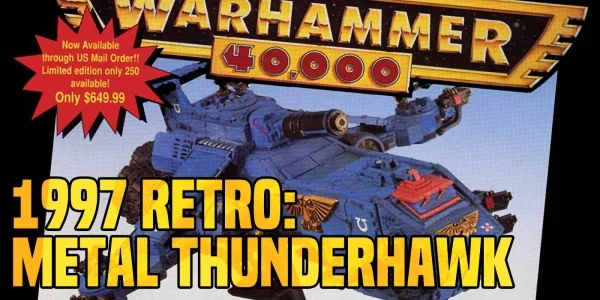
A quarter-century ago, a legend was forged in the crucible of Games Workshop’s workshops – not from plastic or resin, but from a formidable mass of white metal. The original Thunderhawk Gunship, launched in 1997, stands as a monumental testament to an era of ambitious miniature design, a symbol of unparalleled dedication for hobbyists, and a prized artifact for collectors. As Games Workshop recently rolled out its first plastic Thunderhawk (albeit at a smaller scale), it’s an opportune moment to journey back to the genesis of this iconic aerial behemoth and explore the "heavy metal" monster that truly defined its time.
Main Facts: The Genesis of a Gilded Giant
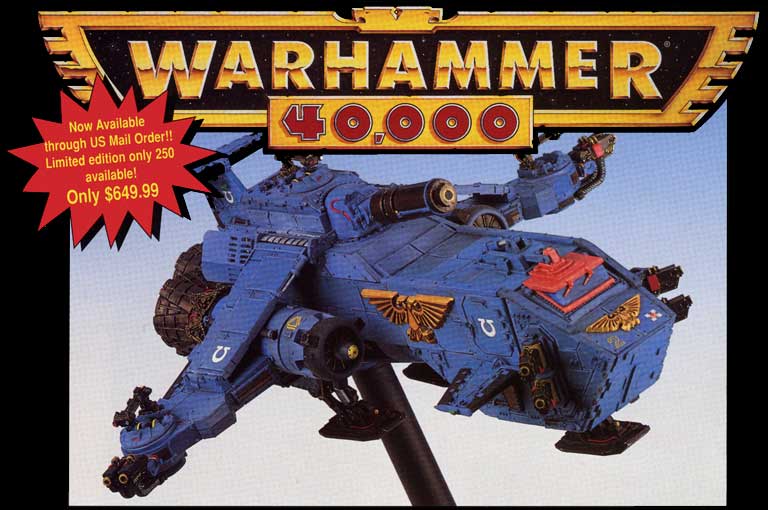
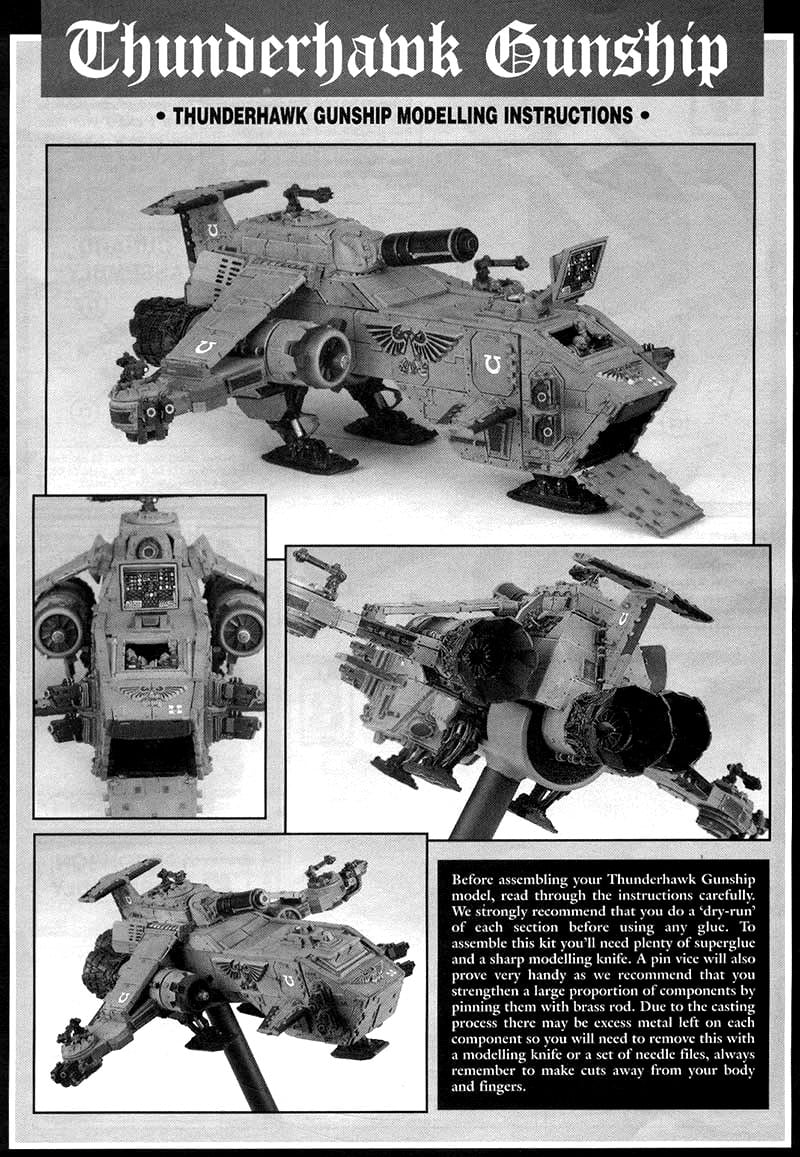
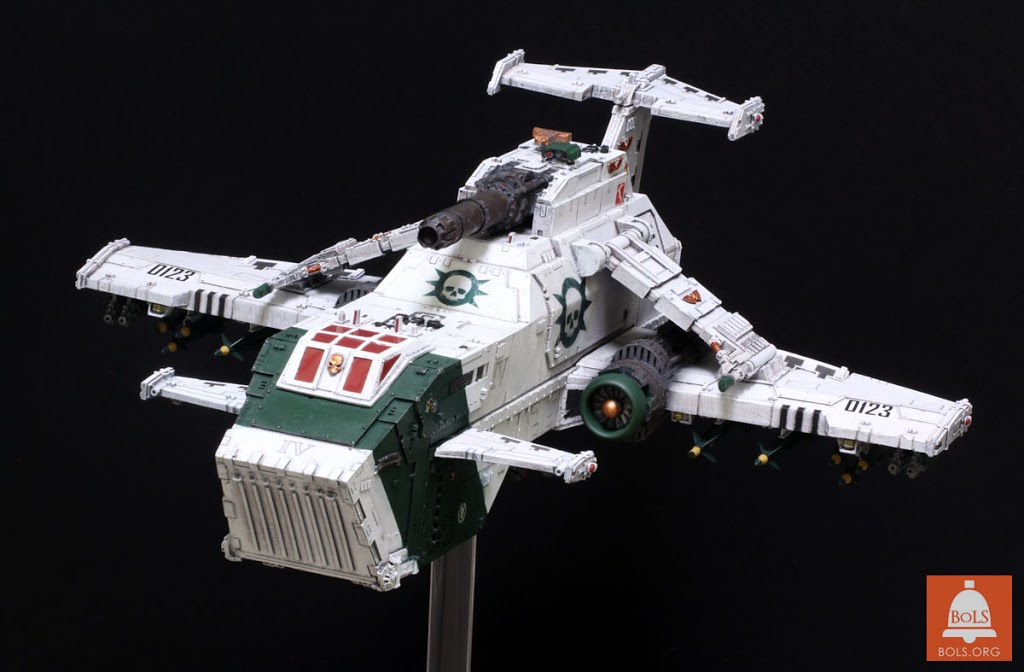
The year 1997 heralded the arrival of the first full-scale Thunderhawk Gunship miniature from Games Workshop, a model that would etch itself into the annals of Warhammer 40,000 history not just for its imposing presence but for its sheer material composition. Crafted entirely from white metal, this colossal kit was a marvel of engineering ambition and a formidable challenge for even the most seasoned hobbyist. It quickly earned a reputation as GW’s most "HEAVY METAL" miniature, a moniker that spoke both to its physical weight and its uncompromising construction.
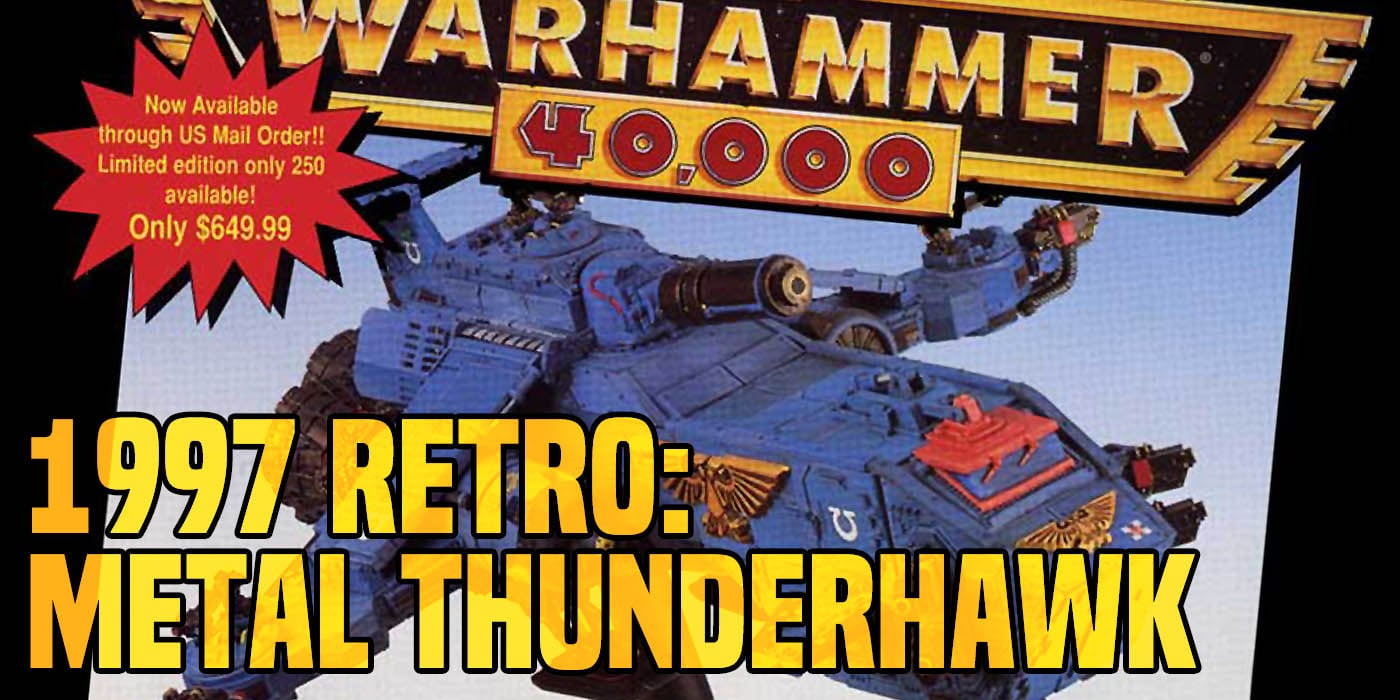
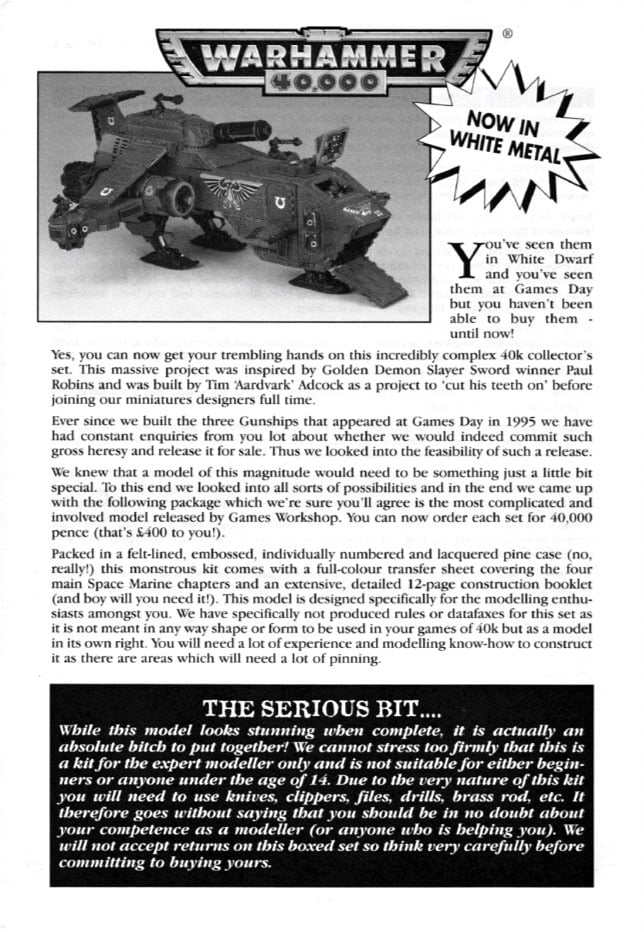
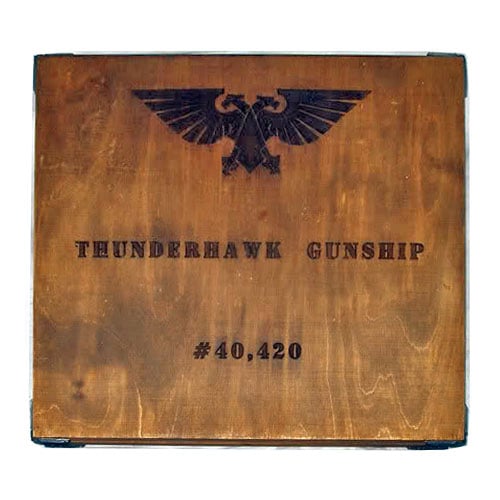
Priced at an astounding £400 upon its release, the metal Thunderhawk was an aspirational purchase, a true luxury item in the hobby world. Its packaging alone hinted at its exclusivity: arriving in a velvet-lined wooden box, each kit bore its own individual production number, transforming it into an instant collector’s item. However, this grandeur came with a notorious caveat, openly acknowledged by GW itself: "it is actually an absolute bitch to put together!" This blunt admission underscored the immense difficulty inherent in assembling a multi-part, heavy metal model of such scale, a challenge that demanded patience, skill, and an ample supply of superglue (or, more realistically, industrial-strength epoxy).
Before the advent of Forge World, which would later revolutionize large-scale resin casting for Games Workshop, the metal Thunderhawk represented the pinnacle of what could be achieved in miniature production with the available technology. Its existence is inextricably linked to the burgeoning 3rd Edition of Warhammer 40,000, appearing subtly in the background of an epic Ultramarines Chapter display that showcased GW’s painting prowess. Today, these original metal Thunderhawks are exceedingly rare, often commanding staggering prices on the secondary market, a testament to their enduring legacy and the mystique that surrounds them.

Chronology: Tracing the Thunderhawk’s Trajectory
The story of the metal Thunderhawk is a fascinating chronicle of design, ambition, and the evolving landscape of miniature production.
The Dawn of a Legend: 1997
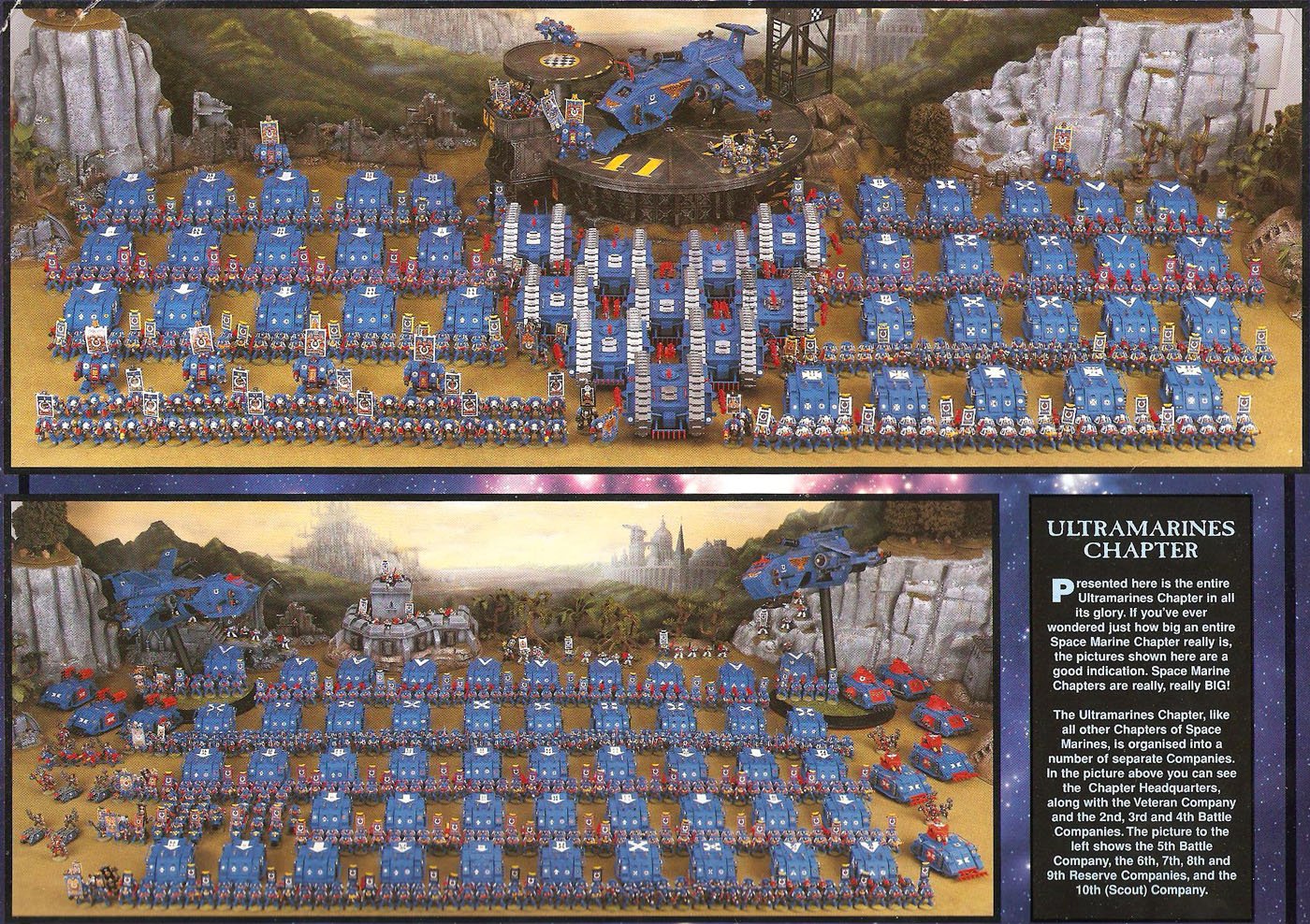
The stage for the Thunderhawk’s debut was set in 1997, a pivotal year for Warhammer 40,000 as it ushered in the leaner, more tactical 3rd Edition. This period saw Games Workshop pushing boundaries in its visual presentations. A standout achievement was the iconic image featured in the 3rd Edition Space Marine Codex: a breathtaking, single photograph depicting an entire Ultramarines Chapter meticulously painted and arrayed. This wasn’t the result of digital wizardry; it was a monumental physical undertaking, a testament to the dedication of GW’s studio painters.
Eagle-eyed enthusiasts poring over this sprawling tableau would have noticed something extraordinary lurking in the background – not one, but three Thunderhawks, majestic and imposing. At this point, the concept of Forge World, GW’s specialist resin casting division, was still several years away. These magnificent models were a precursor, a tantalizing glimpse of a future product that would soon be made available to the most dedicated of hobbyists. The subtle inclusion served as a powerful, almost subliminal, advertisement for what was to come.
The Official Unveiling: Citadel Journal 22
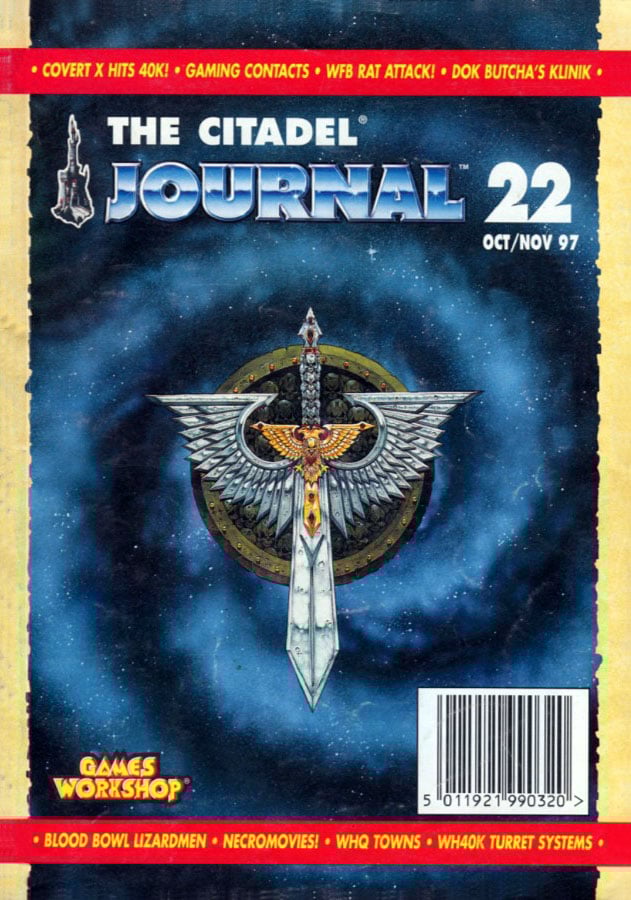
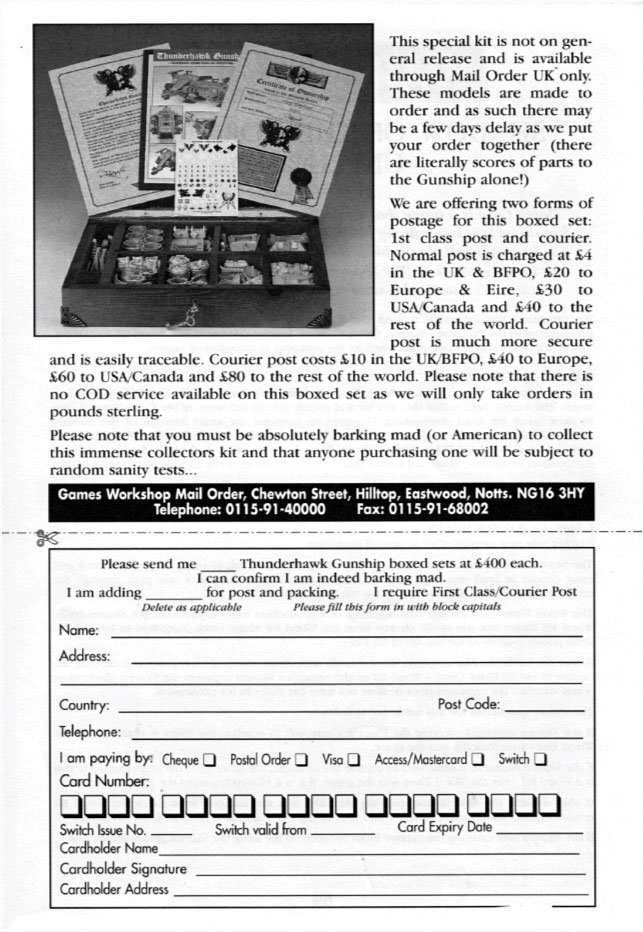
The mystery surrounding these background titans was swiftly resolved with the release of Citadel Journal 22, the official Games Workshop hobby magazine, in October-November of 1997. Within its pages, nestled among articles on Blood Bowl and Necromunda, lay a spectacular two-page advertisement that officially introduced the metal Thunderhawk Gunship to the world.
The advertisement was a bold declaration, showcasing the model in all its glory. It detailed the impressive scale and intricate design, leaving no doubt about the Thunderhawk’s status as a premier miniature. The price point was prominently displayed: a princely £400, a sum that, even in 1997, represented a significant investment. This cost, coupled with additional shipping fees, firmly positioned the Thunderhawk as a luxury item. The ordering process itself was a relic of its time: a quaint mail-in order form, requiring customers to physically fill out details and send their payment via post, a stark contrast to today’s instantaneous online transactions.
Crucially, the advertisement also contained a remarkably candid piece of advice from Games Workshop itself. In bold lettering, the company warned potential buyers that the kit "is actually an absolute bitch to put together!" This unprecedented honesty spoke volumes about the inherent challenges of the model, setting expectations for what would undoubtedly be a demanding assembly project.
The Kit Itself: A Metal Marvel
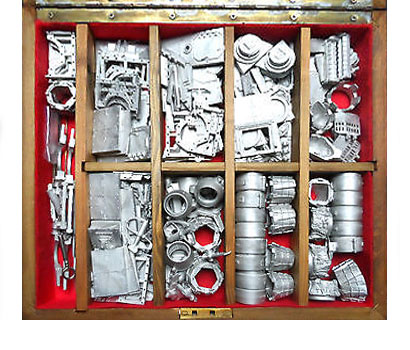
Acquiring the metal Thunderhawk was an experience in itself. Unlike standard blister packs or cardboard boxes, the kit arrived in a velvet-lined wooden box, lending it an air of bespoke craftsmanship and luxury. Each lid proudly displayed an individual production number, immediately elevating the model to the status of a limited-edition collectible. Opening this opulent container revealed a vibrant red or green velvet interior, densely packed with an astonishing array of metal components.
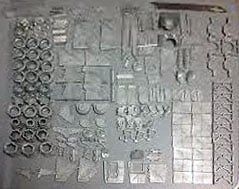
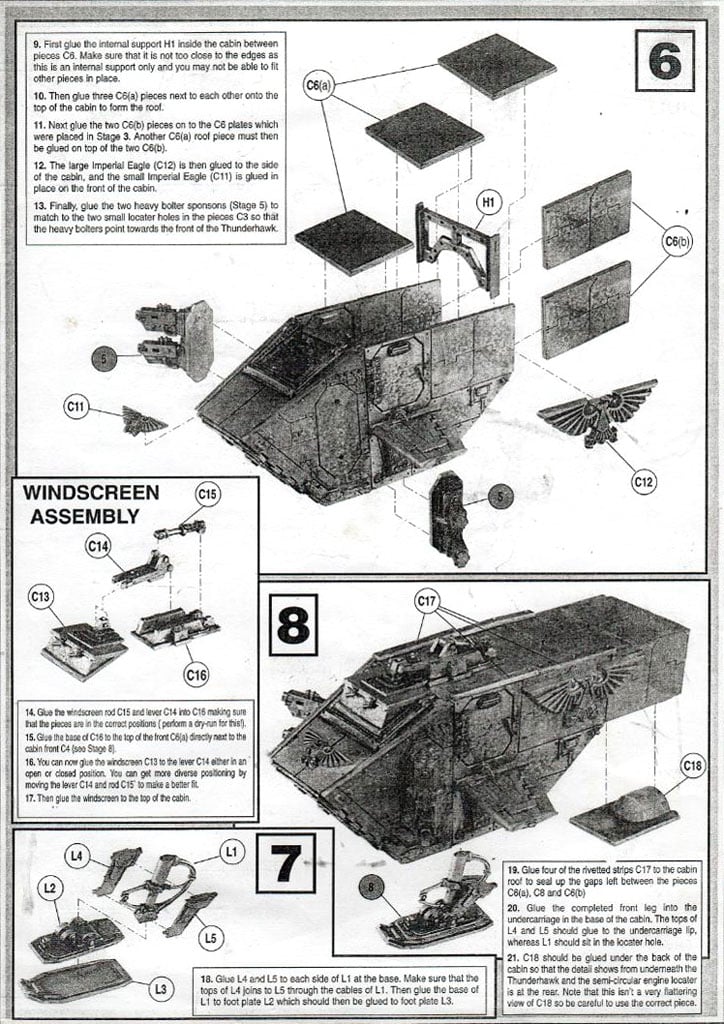
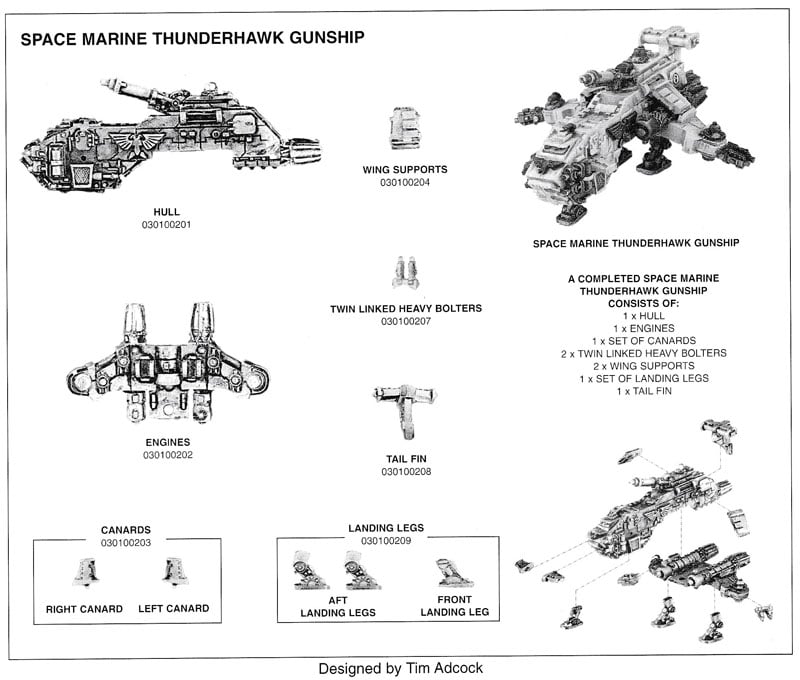
These parts, numbering in the dozens, were cast in white metal, a heavy alloy that gave the model its incredible heft. Laying them out offered a daunting glimpse into the complexity that awaited the assembler. The sheer volume and weight of the individual pieces hinted at the monumental task of construction. To guide the intrepid hobbyist, GW provided a comprehensive 12-page assembly guide – an extensive document for a miniature kit of that era.
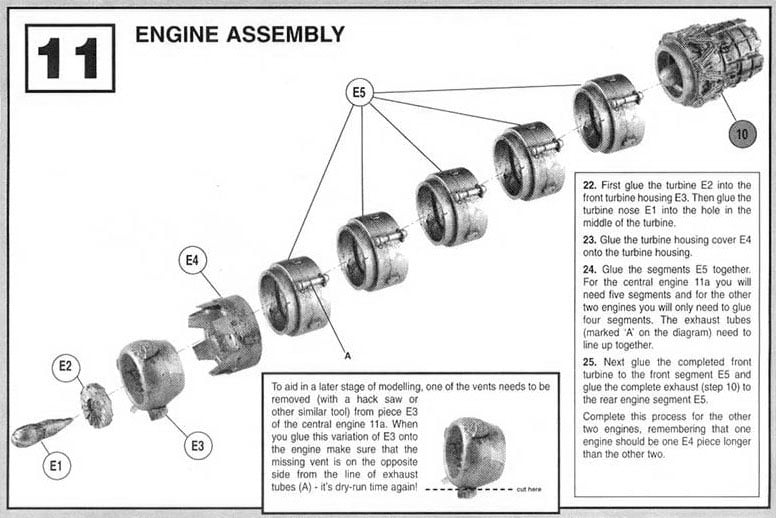
The guide primarily assumed the use of superglue, the common adhesive for metal miniatures. However, for a model of this size and weight, the inherent brittleness of superglue bonds quickly became apparent. Many experienced builders quickly realised that industrial-strength epoxy resin would be far more appropriate, with superglue relegated to temporarily tacking parts into place while the stronger adhesive cured. The assembly diagrams illustrated intricate subcomponent complexity, particularly for the forward fuselage and the engines. Each step required meticulous alignment and careful handling to prevent the heavy parts from shifting or breaking their nascent bonds. The finished model, while not as large as subsequent resin versions, was enormous by metal miniature standards, a truly imposing physical object.
The Rise of Resin: Forge World’s Era
The challenges posed by the metal Thunderhawk, both in manufacturing and assembly, likely contributed to Games Workshop’s strategic shift in producing large, detailed models. Within five years of the metal Thunderhawk’s release, Forge World was established. This specialist division embraced resin casting, a material that offered significant advantages: it was lighter, allowed for much finer detail, and was generally easier to work with for large, complex kits.
The first Forge World resin Thunderhawk, which debuted around 2004, marked a dramatic improvement. It was larger, boasted an unprecedented level of sculpted detail, and, crucially, was significantly easier to assemble due to the lighter material and often better-fitting components. While today’s hobbyists might consider even the early Forge World kits somewhat rudimentary by modern standards, they represented a monumental leap forward from the laborious metal predecessor. The resin Thunderhawk effectively superseded the metal version, ushering in a new era for large-scale Warhammer 40,000 models. The original metal Thunderhawks, no longer in production, gradually faded from general availability, transitioning into the realm of rare collectibles.
Modern Resurgences and Rarity
The metal Thunderhawk’s rarity and historical significance have only appreciated over time. In 2021, an almost unbelievable event transpired on eBay: an original 1997 metal Thunderhawk kit, likely complete and in good condition, sold for an astonishing £25,600.00. This eye-watering sum underscored its status as one of the most coveted and valuable miniatures in the hobby’s history. Such sales are exceedingly rare, with years often passing between public auctions of this legendary kit.
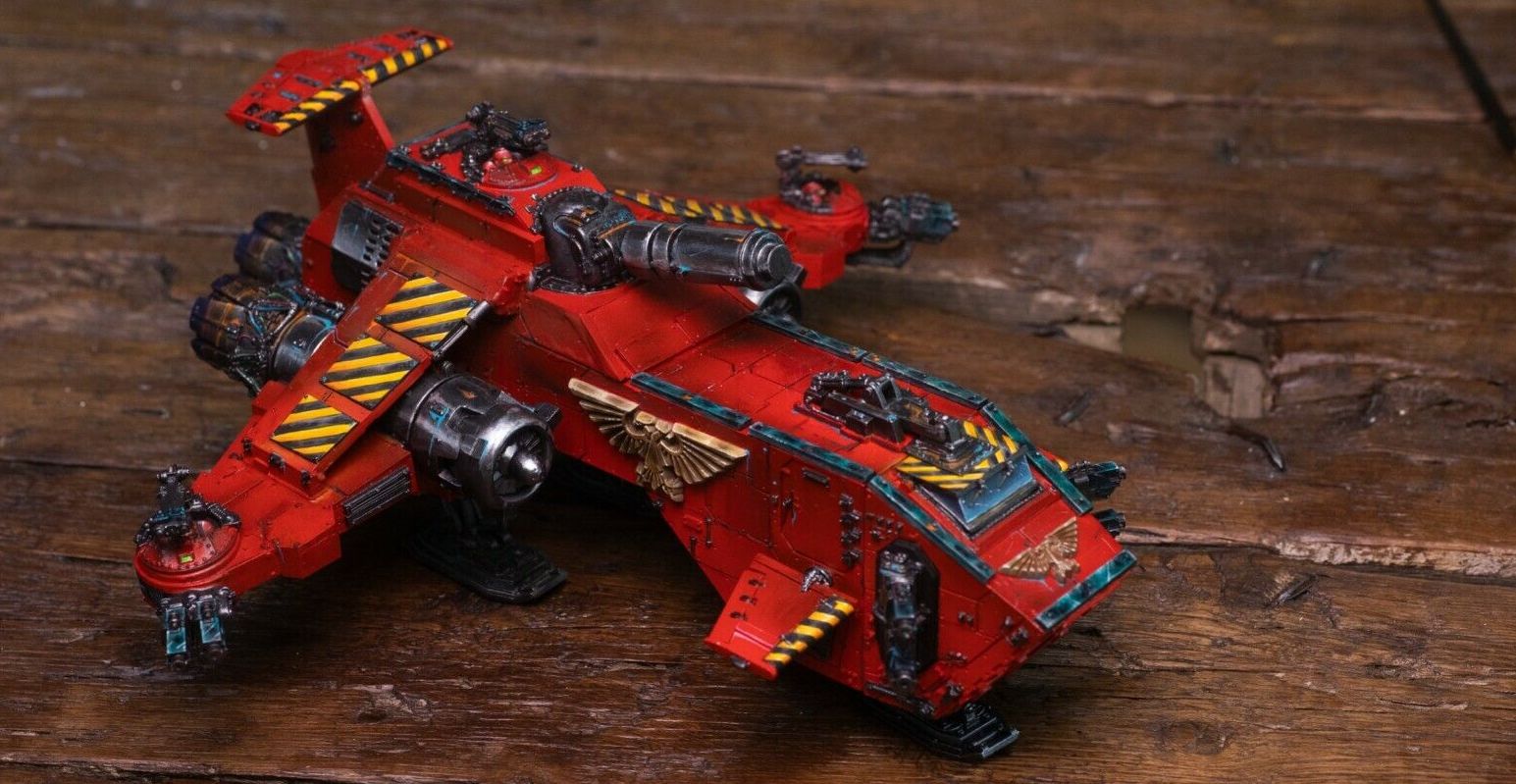
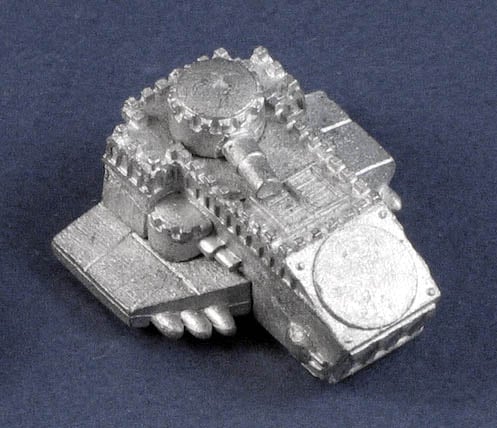
In more recent times, the Thunderhawk has seen new incarnations, albeit at vastly different scales. Aeronautica Imperialis and, subsequently, Legions Imperialis, introduced "plastic Thunderhawks." These exquisitely detailed models are indeed made of plastic but are designed for epic-scale aerial combat, making them tiny compared to their 40K counterparts. While they offered the long-desired "plastic Thunderhawk," it was not in the scale many long-time fans had anticipated. The current flagship Thunderhawk for the 40K scale remains the updated Forge World resin version, continuing the legacy established by its metal ancestor.
Supporting Data: The Lore, Labour, and Loss of a Legend
The metal Thunderhawk is more than just a miniature; it’s a nexus of intricate hobby challenges, economic phenomena, and enduring legends that continue to resonate within the Warhammer community.
The "Bitch to Assemble" Reality
Games Workshop’s blunt warning about the kit’s assembly difficulty was not hyperbole. Building the metal Thunderhawk was a monumental undertaking, demanding a level of skill and patience that would challenge even the most experienced hobbyists. The primary culprits were the material and the sheer weight. Metal components, while robust, are unforgiving. Unlike plastic, which can be easily trimmed, sanded, or bent into position, metal requires precision cutting, filing, and often, significant cleaning of mould lines and flash.
The weight of the individual parts meant that typical hobby superglue, designed for lighter plastic or smaller metal figures, struggled to form lasting bonds. Large sections, such as the wings or the main fuselage, exerted considerable leverage, putting immense stress on the nascent glue joints. Many hobbyists quickly discovered the necessity of using stronger, two-part epoxy resins, which provide a more robust and permanent bond, albeit with longer curing times. Even then, the assembly process often involved clamping, pinning (drilling holes and inserting metal rods for reinforcement), and careful balancing acts as sub-assemblies were joined.
Comparing this to modern kits, whether plastic or even contemporary resin, highlights the vast improvements in manufacturing and design. Modern kits feature interlocking parts, clear alignment points, and lighter materials that make assembly far more user-friendly. The metal Thunderhawk, in contrast, was a true test of a hobbyist’s mettle, a rite of passage that few successfully completed to a high standard.
Economic & Collectible Value
The initial £400 price tag in 1997, adjusted for inflation, would be roughly equivalent to over £800 today. This positioned the Thunderhawk as a high-end luxury item, accessible only to a dedicated few. It wasn’t merely a game piece; it was a statement, a centrepiece.
The staggering £25,600 sale in 2021 illustrates the profound impact of rarity, historical significance, and collector demand. Several factors contribute to this exponential increase in value:
- Extreme Rarity: Very few metal Thunderhawks were ever produced, and even fewer likely survive intact and unbuilt. Many were assembled, painted, and eventually damaged or lost over the decades.
- Historical Significance: It represents a unique moment in GW’s production history, a transitional piece before the advent of Forge World. It’s a tangible link to the hobby’s past.
- Condition: An unbuilt, complete kit in its original velvet-lined box is the holy grail for collectors, indicating pristine condition and untouched potential.
- Iconic Status: The Thunderhawk itself is one of Warhammer 40,000’s most enduring and recognizable vehicles.
- Investment Appeal: For a select few, rare miniatures have transcended being mere hobby items to become legitimate investment pieces, attracting affluent collectors willing to pay premium prices for unique artifacts.
The fact that the model can go over a year without appearing for auction underscores its profound scarcity, driving up prices whenever one does surface.
The Fates of Thunderhawks: Lost at Sea
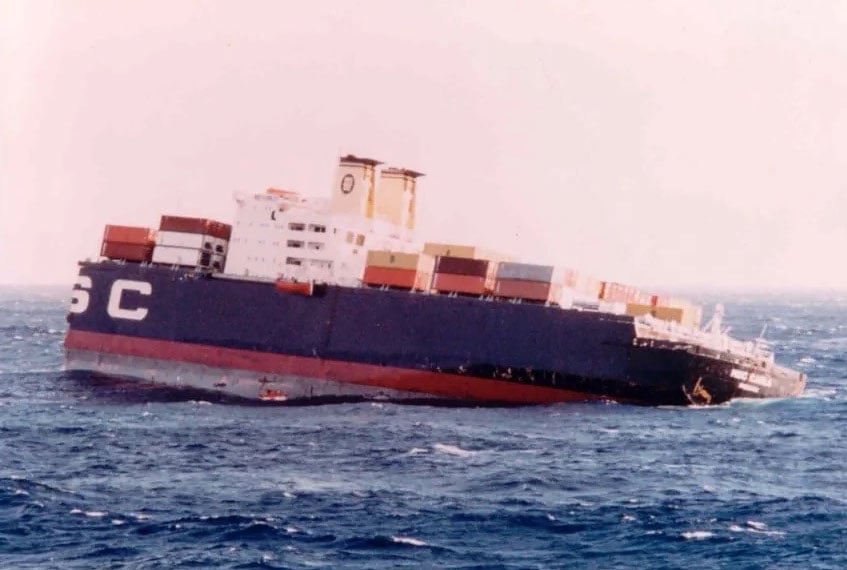
One of the most enduring and tragic legends surrounding the metal Thunderhawk involves the ill-fated voyage of the freighter MSC Carla. In November 1997, just as the metal Thunderhawk was being launched, the MSC Carla embarked from the United Kingdom en route to Boston, USA. Caught in a ferocious storm in the unforgiving waters of the Atlantic, the vessel tragically broke in half, losing its entire cargo of containers to the deep.
Among the lost containers was a shipment of immense significance to the Warhammer community: thousands of the brand new plastic Eldar Falcons, a highly anticipated release at the time, destined for the American market. But perhaps even more poignant, nestled within that same consignment, was one metal Thunderhawk. This unique, individual model, a symbol of extreme dedication and luxury, was lost forever to the crushing depths of over 9,000 feet.
This semi-legendary mishap is still whispered about on dark, spooky game nights, a cautionary tale and a poignant reminder of the fragility of even the most sought-after treasures. The image of that lone metal Thunderhawk, consigned to the cold abyss, adds another layer of mystique and melancholic charm to its already legendary status.
Other Thunderhawks: A Scale Comparison
While the 1997 metal Thunderhawk was the first full-scale version, it wasn’t the first Thunderhawk miniature. The design had earlier appeared in Games Workshop’s Epic scale games, offering vastly smaller, more manageable versions:
- EPIC Space Marine (Original): The very first Thunderhawk miniature was a rudimentary "flying breadbox" design, reflecting the simpler aesthetic of early Epic scale models.
- Later EPIC Metal Thunderhawks: As Epic evolved, so did its Thunderhawk. A later, more detailed metal version was released, offering greater fidelity to the iconic design, though still tiny compared to its 40K counterpart. These were relatively easy to assemble, often comprising just a few parts.
More recently, the Aeronautica Imperialis and Legions Imperialis games have introduced exquisitely detailed plastic Thunderhawks. These models, while technically "plastic Thunderhawks," operate at a much smaller scale (around 8mm) for mass aerial combat, not the 28mm heroic scale of Warhammer 40,000. This created a humorous disconnect for some long-time fans who had yearned for a large plastic Thunderhawk, only to receive a beautifully crafted miniature one. These smaller versions, however, perfectly capture the iconic silhouette and intricate details of the gunship, demonstrating how far miniature production has come.
Official Responses: Candidness and Evolution
Games Workshop’s "official response" to the metal Thunderhawk was perhaps most eloquently, and surprisingly, delivered within its own advertisement: the blunt admission that it was "an absolute bitch to put together!" This level of candidness from a company promoting its own flagship product was highly unusual and speaks volumes about the known challenges of the kit. It wasn’t a warning designed to deter buyers, but rather an honest appraisal for those embarking on a truly ambitious hobby project. This statement became part of the model’s lore, a testament to its formidable nature.
Beyond this direct warning, Games Workshop’s subsequent actions can be interpreted as an implicit official response to the limitations of metal casting for large models. The establishment of Forge World within five years of the metal Thunderhawk’s release marked a significant shift in production strategy. Forge World’s embrace of resin casting for large-scale vehicles and characters directly addressed many of the issues inherent in metal:
- Weight: Resin is significantly lighter than metal, making models easier to handle, assemble, and transport.
- Detail: Resin can capture much finer detail and sharper edges than traditional white metal casting, allowing for more intricate designs.
- Assembly: While resin kits still require skill, they generally offer better fit and are easier to modify or repair than heavy metal components.
- Manufacturing Costs/Scalability: While still a niche, resin casting offered a more scalable and cost-effective method for producing complex, large models than the highly labor-intensive process of casting and cleaning large metal pieces.
The eventual production of a plastic Thunderhawk, even at a smaller scale for Aeronautica Imperialis/Legions Imperialis, signifies a further evolution in GW’s manufacturing capabilities and its desire to make iconic vehicles more accessible. While a full-scale plastic Thunderhawk for Warhammer 40,000 remains a highly anticipated dream for many, the smaller plastic versions demonstrate the company’s continuous innovation in material science and production techniques.
Implications: A Legacy Cast in Metal
The original metal Thunderhawk Gunship holds a unique and indelible place in the history of tabletop gaming, shaping not only Games Workshop’s production methods but also the very culture of the Warhammer 40,000 hobby.
Legacy in the Hobby
The metal Thunderhawk stands as a towering symbol of a bygone era in miniature production. It represents a time when ambitious designs pushed the limits of available materials, resulting in models that were as much engineering challenges as they were game pieces. For many veteran hobbyists, it embodies a certain "old school" charm and a testament to the dedication required in the early days of the hobby. It’s a "holy grail" for collectors, a tangible link to the origins of epic-scale Warhammer 40,000 vehicles. Its legend has been passed down through generations of gamers, inspiring awe and a touch of fear regarding its assembly.
Evolution of Miniatures Manufacturing
The Thunderhawk’s journey from heavy metal to intricate resin and eventually detailed plastic illustrates the profound evolution of miniatures manufacturing. The difficulties inherent in the metal kit undoubtedly contributed to Games Workshop’s decision to explore alternative materials for large models. Forge World’s success with resin casting proved that complex, large-scale models could be produced with superior detail and a more manageable assembly process. This transition democratized access to such elaborate models, moving them from the realm of the ultra-elite metal collector to a broader segment of dedicated hobbyists. The subsequent mastery of plastic injection molding for even smaller, more intricate components, as seen in the Aeronautica Imperialis Thunderhawks, highlights the continuous push for innovation, aiming for easier assembly, greater detail, and broader accessibility without compromising quality.
Cultural Impact on Warhammer 40,000
The Thunderhawk Gunship, regardless of its material, has an enduring iconic status within the Warhammer 40,000 universe. It is the quintessential Space Marine assault craft, a symbol of their overwhelming might and strategic flexibility. The original metal model cemented this visual identity, establishing the core design elements that would persist through all subsequent iterations. Beyond its aesthetic impact, the stories surrounding the metal Thunderhawk – its legendary difficulty, its staggering cost, and the tragic tale of the MSC Carla – have woven themselves into the fabric of Warhammer lore. These shared narratives connect hobbyists across generations, fostering a sense of collective history and appreciation for the hobby’s roots.
The Collector’s Market
The metal Thunderhawk has profoundly influenced the collectible market for vintage miniatures. Its meteoric rise in value, culminating in the astounding 2021 eBay sale, demonstrates that certain iconic pieces can transcend their original purpose and become highly sought-after artifacts. This has cultivated a vibrant, albeit niche, secondary market where rarity, condition, and historical significance dictate astronomical prices. For collectors, owning a metal Thunderhawk is not just about possessing a model; it’s about holding a piece of history, a tangible relic from a foundational period of the Warhammer 40,000 universe. It underscores how deeply enthusiasts connect with the physical manifestations of their beloved fictional worlds, transforming mere toys into invaluable pieces of cultural heritage.
The original metal Thunderhawk Gunship remains a monumental achievement and a fascinating historical artifact. It challenged hobbyists, pushed manufacturing boundaries, and ultimately paved the way for the sophisticated miniature production we see today. Its legacy, heavy in metal and rich in lore, continues to inspire awe and conversation, proving that some legends, once forged, never truly fade.