
Reclaiming Our Core: Why Nervous System Regulation is the Foundation of All Healing

In an era marked by relentless stress and pervasive disconnection, a growing chorus of voices, from ancient philosophers to modern neuroscientists, is urging humanity to return to its most fundamental truth: the wisdom of the body. Far from being a mere vessel, our physical form is increasingly understood as the primary gateway to profound healing, meaning, and wholeness.
"I have been and still am a seeker, but I have ceased to question stars and books; I have begun to listen to the teaching my blood whispers to me," wrote Hermann Hesse, a sentiment echoed by modern somatic expert Ann Weiser Cornell: "Come back to your body; that’s where the truth is." These profound statements underscore a paradigm shift in our understanding of well-being, suggesting that the answers to our deepest struggles lie not "out there" in external tools or intellectual pursuits, but within the intricate landscape of our own physiological experience.
Across society, millions grapple daily with a constellation of debilitating symptoms: chronic stress, hypervigilance, poor sleep, persistent aches and pains, bouts of depression, debilitating brain fog, a pervasive sense of numbness and meaninglessness, and a profound disconnection from self, others, and life itself. These mental, emotional, and psychosomatic manifestations are often met with a fervent search for external remedies – the next self-improvement book, the latest therapeutic workshop, or a new spiritual practice. While these avenues may offer temporary relief, many find themselves cycling back to the same issues, caught in a loop of unresolved discomfort. The overlooked truth, according to a burgeoning field of research and practice, is our profound disconnection from our bodies, and specifically, a dysregulated nervous system.
The Shifting Paradigm: From Mind-Body Duality to Embodied Wholeness
For centuries, Western thought, heavily influenced by Cartesian philosophy, has perpetuated a stark duality between the mind and the body. The mind, often deemed superior, was the realm of intellect, consciousness, and spirit, while the body was a mere biological machine. This pervasive split led to healing modalities that frequently prioritized cognitive understanding and psychological analysis, often sidelining the body’s crucial role in storing and processing experience, particularly trauma.

However, the 20th century witnessed a gradual but significant re-evaluation. Pioneers like psychoanalyst Wilhelm Reich, in the 1930s, challenged this duality, positing that psychological conflicts were not merely abstract but were physically embodied in what he termed "body armor"—chronic muscular tension patterns reflecting repressed emotions and unresolved trauma. His work laid the groundwork for "body psychotherapy" and highlighted the body’s role as a living archive of our life experiences. Alexander Lowen, a student of Reich, further popularized these ideas in the 1970s with Bioenergetics, emphasizing that "the body is the unconscious made visible," and that true healing necessitates engaging with this somatic manifestation of our inner world.
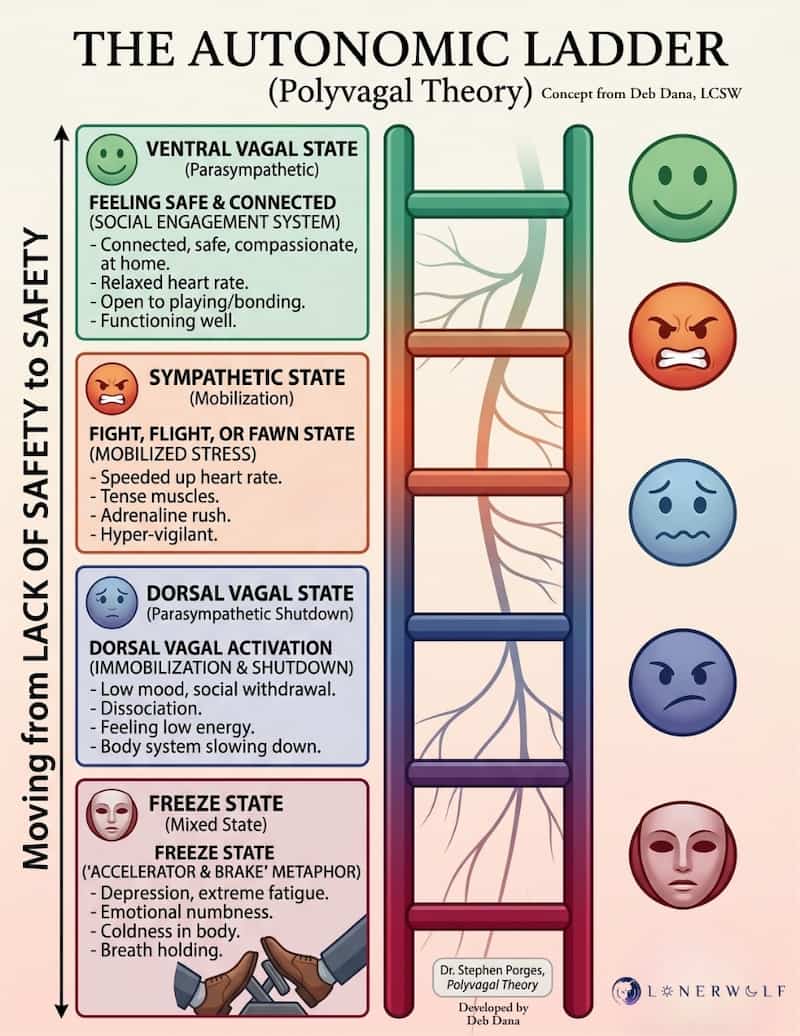
More recently, neuroscience has provided robust scientific validation for these earlier insights. Dr. Stephen Porges’s groundbreaking Polyvagal Theory, developed in the early 1990s, revolutionized our understanding of the autonomic nervous system’s role in regulating our responses to safety and threat, and its profound impact on our emotional, social, and physical health. His work, alongside that of therapists like Deb Dana who developed the "autonomic ladder," has firmly established nervous system regulation as a cornerstone of modern psychotherapeutic and holistic healing practices. This chronological progression marks a vital shift from an intellectualized approach to well-being towards an embodied, integrated understanding where the body is recognized not just as a symptom-bearer, but as the primary pathway to healing and authentic living.
The Intricacies of the Nervous System and Its Dysregulation
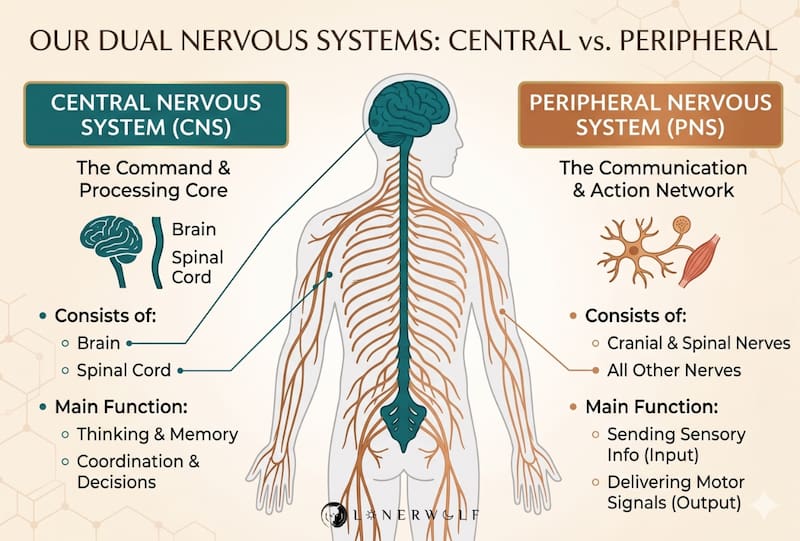
To truly appreciate the significance of nervous system regulation, it is essential to understand its fundamental architecture and function. Our nervous system, the body’s command center, is broadly divided into two main components:
- The Central Nervous System (CNS): Comprising the brain and spinal cord, it is responsible for integrating sensory information and coordinating motor responses.
- The Peripheral Nervous System (PNS): Extending beyond the CNS, it connects the brain and spinal cord to the rest of the body, relaying information to and from the CNS.
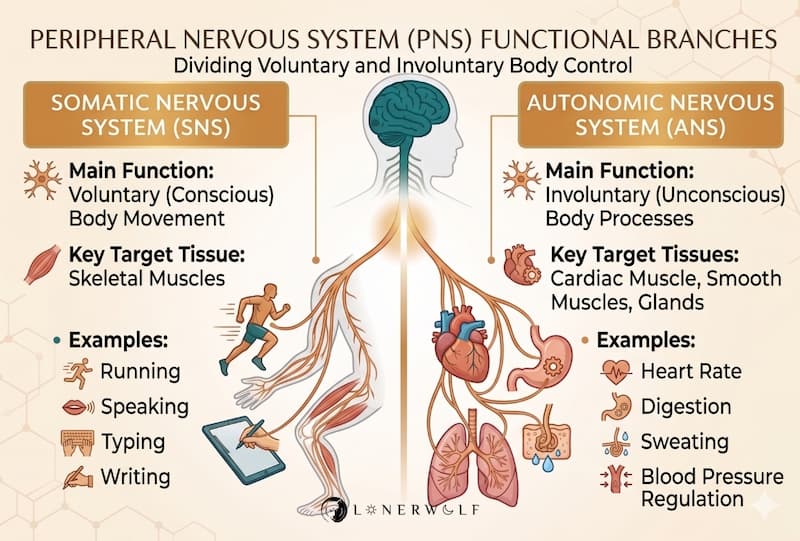
Within the PNS, there are two further critical branches:
- The Somatic Nervous System: Controls voluntary movements, such as walking, speaking, or typing.
- The Autonomic Nervous System (ANS): Operates largely unconsciously, managing involuntary bodily processes vital for survival, including heart rate, digestion, respiration, and sexual arousal. It is the ANS that is at the heart of nervous system regulation.
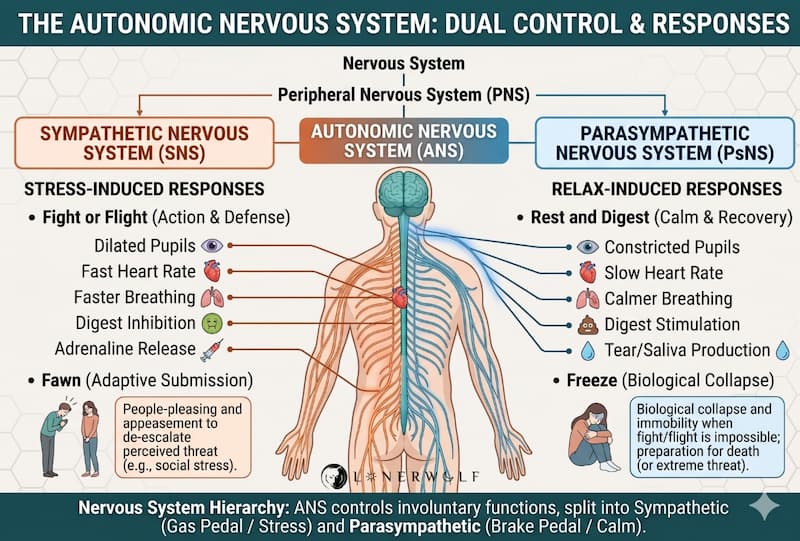
The ANS itself is further subdivided into two antagonistic, yet complementary, systems:
- The Sympathetic Nervous System (SNS): Often called the "fight, flight, or freeze" system, it activates the body’s stress response. In moments of perceived threat, it increases heart rate, dilates pupils, inhibits digestion, and releases stress hormones like cortisol and adrenaline, preparing the body for immediate action.
- The Parasympathetic Nervous System (PSNS): Known as the "rest and digest" system, it promotes relaxation, slows heart rate, stimulates digestion, and conserves energy, returning the body to a state of calm and homeostasis.
The Autonomic Ladder: Understanding Our States of Being
Dr. Porges’s Polyvagal Theory introduces a nuanced understanding of the ANS, proposing three distinct pathways or states, often visualized as an "autonomic ladder" by Deb Dana, reflecting our evolutionary responses to safety and threat:
- Ventral Vagal State (The "Social Engagement System"): At the top of the ladder, this is our optimal state of safety and connection. Governed by the myelinated vagus nerve, it allows for feelings of calm, groundedness, connection, and curiosity. In this state, we are capable of social engagement, empathy, clear thinking, and creativity. Our heart rate is regulated, digestion is active, and our body feels relaxed and present.
- Sympathetic State (Mobilization): A step down, this state is activated when we perceive a threat that requires action. This is the classic "fight or flight" response. We become hypervigilant, anxious, irritable, and may experience restlessness, anger, or panic. Physiologically, heart rate and blood pressure increase, muscles tense, and digestion slows. It’s a state designed for rapid, decisive action to escape danger.
- Dorsal Vagal State (Immobilization/Freeze): At the bottom of the ladder, this is an older, more primitive response to overwhelming threat, particularly when fight or flight is not possible. Governed by the unmyelinated vagus nerve, it leads to a state of shutdown, dissociation, numbness, and collapse. Individuals may feel helpless, hopeless, depressed, or completely detached from their bodies and surroundings. Physiologically, heart rate and blood pressure drop, energy collapses, and a sense of profound stillness or "playing dead" takes over.
Beyond these primary states, individuals can also experience blended states, such as "fawn," where one attempts to appease or please a perceived threat to avoid harm, often a blend of sympathetic activation with a desperate attempt at social engagement.
Regulation, therefore, is not about eliminating stress or avoiding these states altogether. It is about the capacity to fluidly move between them, to activate the appropriate response when necessary, and crucially, to return to a baseline of ventral vagal calm and connection. Chronic nervous system dysregulation occurs when an individual becomes "stuck" in a sympathetic (hyper-aroused) or dorsal vagal (hypo-aroused) state, leading to persistent mental, emotional, and physical health issues.
The Body is the Unconscious: Embodied Trauma and Its Manifestations
The profound link between the nervous system and our inner world is perhaps best captured by the idea that "the body IS the unconscious." As Marilyn Ferguson eloquently stated, "The unconscious is the body." This means that our unresolved traumas, suppressed emotions, core wounds, and "shadows" are not merely abstract psychological constructs; they are deeply embedded and expressed within our physical being.
Jennifer Mann and Karden Rabin, authors of The Secret Language of the Body, highlight this by noting, "Oftentimes, nervous system dysregulation is the manifestation of wounds to our developmental self or inner child." Similarly, therapists Connie Zweig and Steve Wolf, in Romancing the Shadow, reveal how "The shadow wears the camouflage of physical symptoms. We may lie, but the body does not. We may forget an abuse, but the body does not." Our bodies, acting as shock absorbers, accumulate the wear and tear of emotional experience, eventually speaking their truth through physical symptoms if we fail to consciously address the hidden patterns of stress and trauma lodged within our muscles and cells.
This embodied truth explains why attempts at healing through purely cognitive means often fall short. Without addressing the physiological underpinnings of distress, self-love practices, inner child work, or shadow integration efforts can be undermined. The body, perceiving a lack of safety due to past experiences, may resist change, sabotaging efforts to create lasting transformation. Hence, starting with the body is not just advisable; it is a fundamental prerequisite for any deep inner work.
Expert Consensus and Foundational Therapeutic Approaches
The understanding of nervous system regulation as foundational is gaining widespread acceptance across mental health and holistic wellness communities. Dr. Bessel Van Der Kolk, a leading psychiatrist and trauma researcher, in his seminal work The Body Keeps the Score, emphasizes that "trauma makes people feel like either some body else, or like no body. In order to overcome trauma, you need help to get back in touch with your body, with your Self." This consensus underscores that trauma is not just a story we tell ourselves, but a physiological imprint that demands somatic engagement for resolution.
The shift in therapeutic approaches reflects this understanding. Modalities like Somatic Experiencing, Hakomi, and various forms of bodywork are specifically designed to help individuals process and release stored trauma by tracking bodily sensations and facilitating natural discharge processes. Even traditional talk therapies are increasingly incorporating somatic techniques to enhance their effectiveness. The core message from experts is clear: without establishing a sense of physical grounding, embodiment, and safety, the capacity for deep introspection, emotional processing, and sustainable change remains severely limited. This physiological foundation is the bedrock upon which all subsequent psychological and spiritual growth must be built.
Pathways to Embodied Healing and Wholeness: Practical Applications
Recognizing the body’s central role, various practices offer powerful avenues for nervous system regulation and embodied healing. These are not merely supplementary techniques but essential skills for cultivating resilience and reclaiming our authentic selves.
Grounding: Anchoring in the Present Moment
Grounding is the foundational skill for nervous system regulation. It involves bringing awareness to the present moment and connecting with the physical sensations of the body and its environment. The opposite of grounding is dissociation, a common trauma response where an individual feels detached from their body, emotions, or reality. As the Buddha observed, "The body is anchored in the here and now while the mind travels into the past and future."
Practical Grounding Techniques:
- Body Scan Meditation: Systematically bringing awareness to different parts of the body, noticing sensations without judgment.
- Connecting with Earth: Feeling the soles of your feet on the ground, or lying on the earth, sensing gravity’s pull.
- Deep Pressure: Hugging yourself, using a weighted blanket, or receiving a gentle massage to activate the parasympathetic nervous system.
- Sensory Focus: Engaging one or more senses – noticing five things you can see, four things you can feel, three things you can hear, two things you can smell, and one thing you can taste.
- Mindful Movement: Practices like walking, yoga, Tai Chi, or Qigong, which integrate movement with present-moment awareness.
- Temperature Awareness: Holding a cool stone, splashing cold water on your face, or taking a warm bath.
Breathwork: Mastering the Internal Rhythm
The breath is a direct bridge to the autonomic nervous system, offering immediate access to regulation. Shallow, rapid breathing (chest breathing) signals danger and activates the sympathetic nervous system, increasing tension and hypervigilance. Conversely, deep, diaphragmatic breathing (belly breathing) stimulates the vagus nerve and activates the parasympathetic "rest and digest" system, promoting calm. As Alexander Lowen noted in Bioenergetics, "only through breathing deeply and fully can one summon the energy for a more spirited and spiritual life."
Effective Breathwork Techniques:
- Lengthening the Exhale: The simplest and most potent technique. Exhaling for longer than inhaling directly slows the heart rate and shifts the body into a relaxed state. Examples include inhaling for a count of 4 and exhaling for 6 or 8.
- Box Breathing (4-4-4-4): Inhale for 4, hold for 4, exhale for 4, hold for 4. This creates a rhythmic, calming pattern.
- Diaphragmatic Breathing: Placing a hand on the belly and focusing on expanding the abdomen with each inhale and contracting it with each exhale, rather than lifting the chest.
The Vagus Nerve: Your Body’s Reset Button
The vagus nerve, the longest cranial nerve, plays a critical role in regulating numerous involuntary bodily functions and is central to the parasympathetic nervous system. It extends from the brainstem to the abdomen, influencing heart rate, digestion, mood, and immune response. Stimulating the vagus nerve enhances "vagal tone," improving the body’s ability to respond to stress and return to a calm state.
Ways to Activate the Vagus Nerve:
- Humming or Chanting: The vibrations stimulate the nerve.
- Gargling: This engages the muscles at the back of the throat, which are innervated by the vagus nerve.
- Cold Exposure: Splashing cold water on the face, taking a cold shower, or holding ice packs briefly.
- Deep, Slow Breathing: As discussed, this directly impacts vagal tone.
- Laughter and Social Connection: Positive social interactions and genuine laughter are potent vagal stimulants.
- Singing: Similar to humming, singing vibrates the vocal cords and stimulates the vagus nerve.
Releasing What the Body Holds: Somatic & Physical Approaches
Sometimes, simple grounding or breathwork isn’t enough to release years of "metastasized stress stored within our flesh." As Clarissa Pinkola Estes writes in Women Who Run With the Wolves, "The body remembers, the bones remember, the joints remember, even the little finger remembers." Deeper somatic and physical approaches are often necessary to unravel these deeply held patterns.
Advanced Somatic & Physical Modalities:
- Somatic Experiencing (SE): Developed by Peter Levine, SE helps individuals gently release traumatic shock from the body by tracking sensations and allowing the natural "completion" of fight/flight/freeze responses.
- Myofascial Release: A hands-on therapy that targets restrictions in the fascia (connective tissue) to alleviate chronic pain and improve mobility, often releasing emotional tension simultaneously.
- Hakomi: A mindfulness-centered, body-oriented psychotherapy that uses guided exploration of present-moment experience to access unconscious material and facilitate healing.
- Yoga and Movement Therapies: Specific poses and sequences can help release tension, improve body awareness, and integrate emotional experiences.
- Therapeutic Screaming or Shaking: Under expert guidance, these primal expressions can help discharge pent-up energy and emotional blocks.
- Acupuncture: Traditional Chinese Medicine practice that can rebalance the body’s energy pathways and address psychosomatic symptoms.
- Diet and Nutrition: A gut-brain axis connection means that nourishing, clean, and grounding foods can significantly support nervous system health.
Creative & Expressive Regulation: Giving Voice to the Unconscious
For sensitive and artistic individuals, creative expression offers a powerful means to process emotions, digest old traumas, and regulate the nervous system. Activities like drawing, sculpting, writing, dancing, or crafting bypass the analytical mind, allowing access to deeper emotional and unconscious material. As D.H. Lawrence articulated, "My belief is in the blood and flesh as being wiser than the intellect. The body-unconscious is where life bubbles up in us." Creative expression fosters a profound mind-body connection, giving voice to the soul and facilitating integration.

Nervous System Regulation as a Spiritual Path: Embodied Spirituality
It is crucial to understand that nervous system regulation is not merely a therapeutic technique; it is the fundamental foundation of all inner work and can itself become a profound spiritual path. "You may think somehow that being aware of your body is not an important spiritual practice, but that is not correct," observed Zen master Thich Nhat Hanh. "Any physiological, psychological, or physical phenomenon can be a door to full realization."
Embodied spirituality, rooted in the here-and-now of our daily existence, is arguably the most authentic form of spiritual practice. It moves beyond abstract intellectual concepts to a felt experience of presence, authenticity, and connection. When we speak of "integration" in healing, we are literally speaking of "embodying the message"—bringing insights and changes into the body so they become lived realities rather than fleeting ideas. This work is not a luxury but an essential first step in the journey of healing and "soul recovery"—the reclamation of our wise, wild, warm, welcoming, and whole Self.
Conclusion: Your Body is Wise Beyond Measure
In the words of Ann Weiser Cornell, "The truth is that our bodies are wise in many ways hardly ever acknowledged by our culture. Our bodies carry knowledge about how we are living our lives, about what we need to be more fully ourselves, about what we value and believe, about what has hurt us emotionally and how to heal it." Learning to regulate your nervous system is more than just a pathway to alleviate symptoms; it is an initiation into a deep, intrinsic wisdom.
By befriending your body and learning its language, you come back home to the present moment. You become more embodied, more ensouled, more alive, and more capable of navigating life’s challenges with resilience and grace. This journey of nervous system regulation is the vital first step toward true healing and the cultivation of an authentic, integrated, and deeply fulfilling life. The wisdom of your body awaits your conscious attention, ready to guide you toward profound transformation.




Leave a Comment