
The Final Gift: How Intentional End-of-Life Planning Transforms the Burden of Grief
By [Your Publication Name] Staff
The passing of a loved one is an inevitability of the human condition, yet it remains one of the most complex experiences to navigate. Beyond the emotional vacuum left by a departure, survivors are often thrust into a secondary, more pragmatic crisis: the management of a lifetime’s worth of physical possessions, financial entanglements, and unresolved legacies.
Joe Darago, Executive Director of the non-profit organization The Hope Effect, recently shared a poignant account of his Aunt Liz’s final year. His reflections offer more than just a personal eulogy; they provide a blueprint for what sociologists and estate planners call "intentional leaving." By taking three specific, proactive steps before her passing, Darago’s aunt transformed a potentially chaotic period of probate and "death cleaning" into a season of clarity and connection.
Main Facts: The Three Pillars of an Easier Farewell
Darago’s account centers on the realization that while a person’s legacy is defined by how they made others feel, the experience of their death for those left behind is often defined by the preparation—or lack thereof—made in advance. According to Darago, his Aunt Liz utilized a three-pronged approach to mitigate the burden on her survivors:
- The Legal and Financial Framework: The establishment of a living trust to bypass the complexities of probate.
- Physical Simplification: A late-life commitment to "Swedish Death Cleaning," or the intentional downsizing of a lifetime of accumulation.
- The Verbal Legacy: Engaging in "difficult conversations" regarding death, responsibilities, and the distribution of sentimental heirlooms while still of sound mind.
These actions served to decouple the grieving process from the administrative burden, allowing the family to focus on celebration rather than litigation or logistical exhaustion.
Chronology: From a House Full of History to a Legacy of Peace
The Foundation of Presence
The story begins in Northeast Ohio, in a household defined by the "laughter, noise, and life" of six siblings. Amidst this bustling environment, Darago’s father’s sisters, Aunt Marilyn and Aunt Liz, became constants. Though they never had children of their own, they invested their time and resources into their nieces and nephews. For decades, they were the "family cloud"—the keepers of records, the attendees of every graduation, and the senders of every birthday card.
The Accumulation Phase
As the aunts aged, they faced the health challenges common to the elderly. In an act of mutual support, they moved into a shared home to consolidate expenses and provide care for one another. However, while they consolidated their living space, they did not initially consolidate their belongings. The home became a repository for generations of family history: documents from a great-grandfather, furniture from a grandmother’s estate, and remnants from a long-defunct family store stored in a musty basement.
The Pivot Toward Preparation
Approximately one year before her death, sensing her health was in terminal decline, Aunt Liz began a shift in perspective. She moved from being a "keeper" of things to a "steward" of a legacy. This final year was marked by a flurry of intentional activity—organizing files, labeling photographs, and establishing legal structures.
The Final Goodbye
This past month, Darago returned to Ohio to oversee Aunt Liz’s funeral in his capacity as the family pastor. He noted a stark contrast: while the house still contained the artifacts of her life, the process of handling her departure was remarkably smooth. At the service, no one spoke of her coin collection or her real estate; they spoke of her presence. Because the "stuff" had been handled, the "spirit" of her life could be the focus.
Supporting Data: The Growing Need for "Death Cleaning"
The challenges faced by the Darago family are reflective of a broader demographic shift. The "Great Wealth Transfer," currently underway as the Baby Boomer generation ages, involves the passing of trillions of dollars in assets. However, it also involves the passing of an unprecedented volume of physical goods.
The Psychology of Clutter and Grief
Research in the field of "Grief Psychology" suggests that the "administrative burden of death"—the weeks spent sorting through closets and filing paperwork—can lead to "delayed grief" or "complicated mourning." When survivors are forced to make hundreds of micro-decisions about a decedent’s socks, letters, and kitchenware, the emotional processing of the loss is often suppressed by decision fatigue.
The Rise of "Döstädning"
Darago’s aunt’s second step—simplifying where she could—aligns with the Swedish concept of Döstädning, or "death cleaning." Popularized by author Margareta Magnusson, the practice encourages individuals over the age of 50 to begin removing unnecessary belongings so that their children (or executors) do not have to.

The Legal Advantage of Trusts
The use of a trust, as Aunt Liz did, is a critical data point in estate management. According to the American Bar Association, probate (the court-supervised process of authenticating a will) can take anywhere from six months to two years and consume 3% to 7% of an estate’s value in fees. By placing her two homes and retirement accounts into a trust, Liz ensured that her executor (Darago’s sister) could settle the estate almost immediately, avoiding the public and costly probate process.
Official Responses and Expert Perspectives: How to Approach the End
While Darago’s account is personal, it echoes the advice of professional estate planners and end-of-life doulas. Experts suggest that the "gift" Aunt Liz gave her family can be replicated through three specific behaviors.
1. Initiating the "Awkward" Conversation
Financial advisors often state that the greatest source of family discord is not the amount of money left behind, but the ambiguity of its distribution. Experts recommend starting conversations with aging relatives by using "I" statements, such as: "I want to make sure I can honor your wishes perfectly when the time comes. Can we talk about where you keep your important documents?"
2. The Preservation of Narrative
Darago noted that his aunt was the family historian. Experts in "Legacy Wealth" argue that the story behind an object is often more valuable than the object itself.
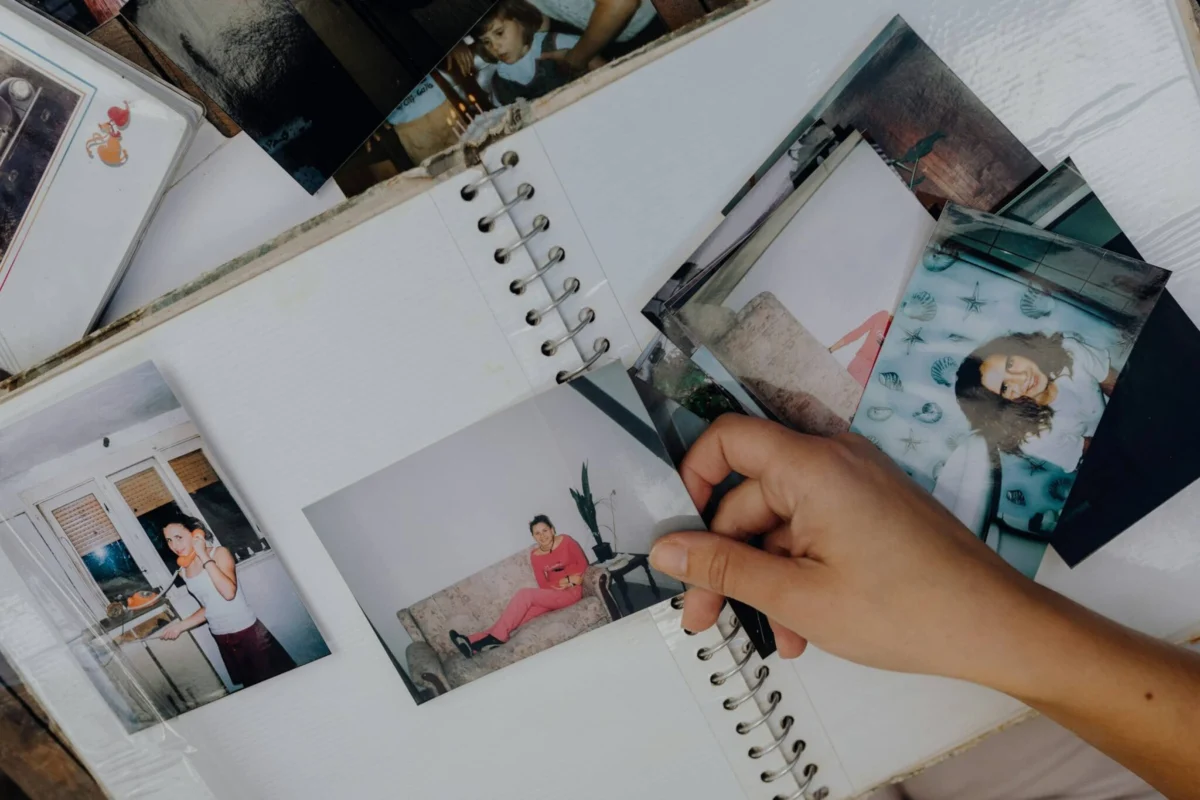
- The "Pro-Tip": Professional archivists recommend writing names, dates, and locations on the backs of physical photos using acid-free pens. Without this context, a 100-year-old family heirloom often becomes a "mystery item" that ends up in a donation bin.
3. The "Living Eulogy"
Perhaps the most profound takeaway from Darago’s experience is the importance of the "Living Eulogy." In his role as a pastor, Darago observed that many beautiful things were said at the funeral that the deceased never heard. Psychologists suggest that "expressing gratitude in the present" significantly reduces the "guilt of the unspoken" that often haunts survivors.
Implications: Minimalism as an Act of Love
The story of Aunt Liz serves as a case study for a more intentional approach to minimalism. In the context of Joe Darago’s work with The Hope Effect—an organization dedicated to changing how the world cares for orphans by focusing on family environments—the theme of "family legacy" is central.
Redefining Minimalism
Minimalism is frequently marketed as an aesthetic choice for the young and trendy. However, Darago’s account reframes minimalism as a final act of service. By reducing her "footprint" in her final year, Aunt Liz ensured that her physical presence did not overshadow her spiritual legacy.
The Impact on the Next Generation
When an estate is organized, the survivors are gifted something more valuable than money: time. Time to mourn, time to share stories, and time to maintain family traditions. Darago’s acceptance of the role of "family historian" was made possible because he wasn’t spending his time arguing over who owned a specific piece of furniture.
A Call to Action
The implications of this story are clear for anyone with aging parents or for those who are aging themselves. The process of saying goodbye is inherently difficult, but it does not have to be traumatic. Through the "three things" Aunt Liz did—legal preparation, physical downsizing, and honest communication—she proved that the best way to be remembered is to leave behind a path that is clear, rather than a house that is full.
As Darago concludes, minimalism isn’t just about letting go of "stuff"; it is about "living with purpose and preparing with love." In an era of mass accumulation, the ultimate luxury may be leaving behind a legacy that requires no sorting, only remembering.
About Joe Darago:
Joe Darago has served as the Executive Director of The Hope Effect since 2015. Based in Edmond, Oklahoma, his work focuses on pioneering family-based care for orphaned children globally, rooted in the belief that every child deserves a family. His personal experiences with loss and legacy continue to inform his advocacy for intentional, value-driven living.


Leave a Comment