
"Long Story Short": Raphael Bob-Waksberg Delves Deeper into the Human Condition with Critically Acclaimed Animated Series
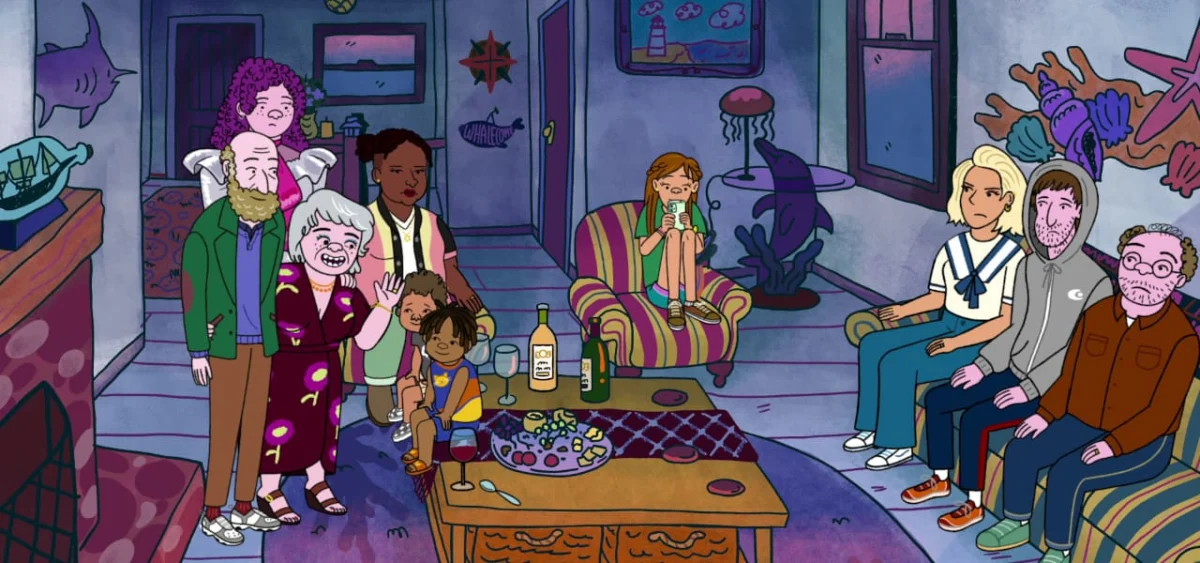
Los Angeles, CA – May 29, 2026 – Raphael Bob-Waksberg, the visionary creator behind the seminal adult animated series BoJack Horseman, is once again captivating audiences and critics with his latest offering, Long Story Short. The critically lauded comedy, which premiered on Netflix in August 2025, has already secured a coveted second season renewal, a testament to its immediate impact and the enduring appeal of Bob-Waksberg’s distinctive narrative voice. Notably, the renewal came even before the first season’s wide release, following a highly positive reception from early screenings for critics.
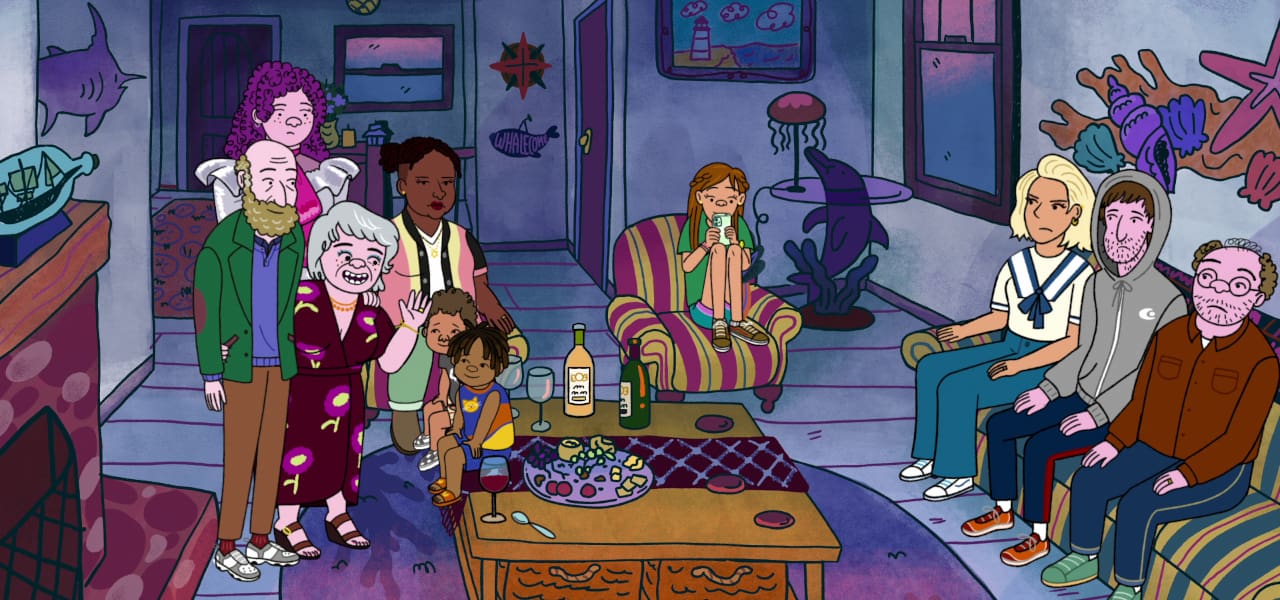
Long Story Short marks a significant reunion for many of the creative minds behind BoJack Horseman, most notably supervising producer and production designer Lisa Hanawalt, whose unique artistic sensibility has once again been instrumental in shaping the show’s visual identity. The series centers on the Schwooper siblings, voiced by a talented ensemble including Ben Feldman, Abbi Jacobson, and Max Greenfield. Through a non-linear narrative that masterfully navigates decades, the show chronicles the intricate tapestry of a middle-class, West Coast Jewish family, exploring their triumphs, disappointments, joys, compromises, and inevitable tragedies.
In an exclusive interview ahead of the show’s one-year anniversary of its world premiere at the Annecy International Animation Film Festival, Bob-Waksberg sat down with Cartoon Brew to discuss the deeply personal nature of Long Story Short, the inherent advantages of animation’s deliberate pace, and the valuable satire lessons he’s carried forward from his groundbreaking work on BoJack Horseman.
A Deep Dive into the Personal and the Universal
Cartoon Brew: Long Story Short feels remarkably personal, drawing heavily from your own life and upbringing. What is the experience like to infuse a project with such a significant part of yourself and then release it into the world for public consumption?
Raphael Bob-Waksberg: It’s an interesting question, and honestly, I don’t feel that this is entirely unique to this show. I often feel like I pour a substantial amount of myself into everything I create. While I understand why Long Story Short might appear more overtly personal to an audience, those who were deeply engaged with BoJack Horseman often found that show to be intensely personal as well. For me, neither project is strictly autobiographical, but they are undoubtedly imbued with personal resonance.
Every creative endeavor carries an inherent risk because it stems from genuine intent and conviction. My primary goal is to craft shows that are not only entertaining and visually appealing but also possess a deeper meaning for the audience. When you invest that level of personal significance into a project, it naturally exposes you to vulnerability. The fear is that any rejection will feel like a personal repudiation of the very things you hold dear. Therefore, I am genuinely delighted, and I hope I’m using that word correctly [laughs], by the positive reception. It feels as though the audience is truly connecting with the core of what I’m trying to communicate, and the show continues to evolve and resonate.
Animation’s Cadence: A Gift for Timely Storytelling
Cartoon Brew: The series offers one of the most insightful and nuanced portrayals of the COVID-19 pandemic era. Given the extended production timelines inherent in animation, how did this temporal distance influence your ability to capture such a specific and evolving moment in time?
Raphael Bob-Waksberg: I actually believe that the extended production timeline proved to be a significant advantage for us. It’s exceptionally challenging to accurately articulate and capture the essence of a moment while you are still immersed within it. The passage of several years between the peak of the pandemic and when we began conceptualizing the show provided us with the necessary space for deliberate reflection. This allowed us to approach the subject matter with a thoughtfulness that might have been difficult for productions actively engaged during the height of the crisis. We were able to truly grapple with what we wanted to say about that period, and how it continued to shape our present reality. Animation, with its inherent need for time and meticulous development, is exceptionally well-suited for this kind of contemplative storytelling. Unlike rapid-fire productions such as South Park, animated series necessitate a more considered and profound approach to narrative construction.
I recall an instance during the BoJack era where I had a strong desire to create an episode centered on Bill Cosby. My thinking was, "Why isn’t anyone discussing this more openly? He’s on the verge of releasing a major special on Netflix." My executive team provided feedback, suggesting, "Could we make this feel a little less specifically about Bill Cosby?" At the time, I was… well, I was the opposite of delighted. I mistakenly assumed their note was driven by a desire to protect their association with him. Consequently, we altered several specific details. Then, as production progressed, the public conversation around Bill Cosby erupted, becoming ubiquitous. By the time the episode aired, it was no longer breaking news. I was immensely relieved that we had obscured the specifics enough to allow the episode to convey a broader, more universal point.
In retrospect, I was perhaps too quick to judge. The truth was, they possessed a foresight that I lacked. They recognized that the story would resonate more profoundly if it wasn’t tethered to a single, immediate event. This experience fundamentally shifted my perspective on satire. Now, when I approach satirical storytelling, I consistently ask myself, "Will this still hold relevance and interest a year from now? How can I craft it in a way that feels evergreen, rather than merely a reaction to the prevailing zeitgeist?"
.png)
Navigating the Tightrope of Satire
Cartoon Brew: Your work often ventures into dark and provocative territory, fearlessly tackling sensitive topics. Yet, it consistently avoids feeling gratuitous or like mere provocation. How do you approach the delicate balance of addressing such subjects without crossing into what could be perceived as trolling?
Raphael Bob-Waksberg: I prefer not to comment on the approaches of other creators or shows. However, for my own work, I found myself growing weary of the "Ain’t I a stinker?" attitude that permeated BoJack. There was an initial thrill in pushing boundaries, in asking, "Can you believe I’m saying this? Can you believe I’m getting away with this?" You can observe this nascent energy in the first season of BoJack. Early on, the prevailing sentiment was, "Okay, what can we get away with? When will they finally tell us to stop?" I quickly realized that they wouldn’t, and that necessity prompted a degree of self-governance. Once I understood that I had considerable creative freedom, the crucial question became: "What do I actually want to say?"
Some comedic approaches prioritize meanness for its own sake, and I find that approach to be rather uninteresting. With BoJack, for instance, there was a creative curiosity in exploring a topic like abortion. The challenge was to move beyond superficial humor and delve into what we genuinely wanted to communicate about it, rather than simply assembling a collection of "tee-hee" moments. In Long Story Short, there is even less of that superficiality. Because the series is grounded in a more realistic and relatable world, certain character behaviors can appear more outrageous precisely because they are juxtaposed against the backdrop of the everyday. A single action or decision can elicit a gasp from the audience simply because they have developed a connection with these characters. In a more broadly exaggerated or fantastical setting, such a moment might not even register.
A Deliberate Visual Departure
Cartoon Brew: Visually, Long Story Short stands in stark contrast to BoJack Horseman. At a time when many series from similar creative teams tend to maintain a visual continuity, almost relying on a familiar aesthetic, this departure feels notably bold. Was this a conscious decision from the outset?
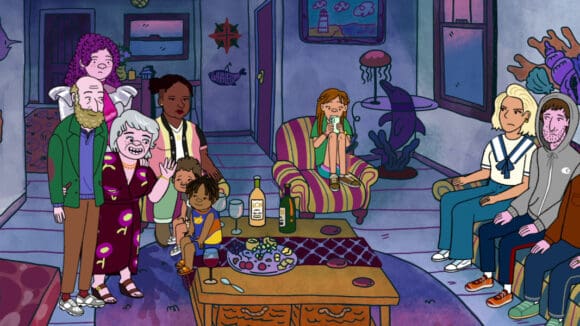
Raphael Bob-Waksberg: I don’t believe it was a particularly courageous choice on our part. Perhaps the bravery lay with the studio that embraced this divergence and did not push back against it. For myself, and I believe for Lisa [Hanawalt] as well, this was an exhilarating opportunity to explore something different. Establishing a distinct visual identity was a paramount objective from the project’s inception. Our primary question was, "How do we ensure this doesn’t feel like a mere echo of BoJack or Tuca & Bertie?" I was eager to collaborate with Lisa precisely because of her exceptional talent and my deep understanding of her artistic range. I never doubted that we could create something visually unique while retaining the warmth and emotional core that audiences have come to expect. When we embarked on BoJack, both Lisa and I were relatively new to television animation, still learning the established conventions. Now, a decade later, we possess the confidence to challenge some of those norms and to infuse the creative process with a much stronger sense of our individual tastes and sensibilities.
Sustaining Narrative Momentum in the Streaming Era
Cartoon Brew: Considering the current landscape of streaming television, where shows can sometimes face abrupt cancellations, do you envision Long Story Short as a world to which you can continually return? There used to be a prevailing notion that streaming shows were somewhat "cursed" after approximately three seasons.
Raphael Bob-Waksberg: I would argue that this is not a curse, but rather a consequence of decisions made by studio executives. My experience with BoJack was one of organic growth; each subsequent season surpassed the last in scope and impact. In fact, I believe its artistic and cultural footprint is now larger than it was at the time of its cancellation. I sincerely hope that Netflix will learn from these experiences and afford Long Story Short the time and space it needs to develop and mature. If they are seeking the next BoJack Horseman, they cannot afford to base their initial assessments solely on early viewership numbers, as these figures do not always reflect the full potential and long-term trajectory of a series. I will continue to voice this perspective to anyone who will listen, though I am not entirely certain how many are truly paying attention.
As for my own involvement, I am committed to continuing the series for as long as the platform allows. This narrative universe is remarkably deep, and the characters and their relationships are inherently complex and compelling. While it’s possible that at some point I may experience creative ennui, for the present moment, I feel we are only just beginning to explore the rich possibilities that Long Story Short offers.



Leave a Comment